

Supply chain self-sufficiency - A matter of survival for the textile and garment industry.
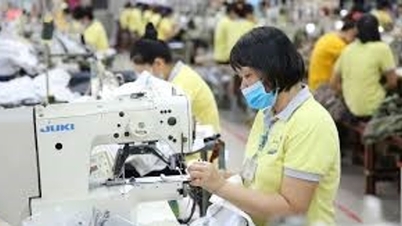
A "Made in Vietnam" shirt sold in the US or Europe is often made from imported yarn, fabric, and accessories from various countries. This isn't a new story, but in the context of major markets tightening rules of origin and green standards, achieving self-sufficiency in the supply chain is no longer just about enhancing competitiveness, but has become a matter of survival.
In the first five months of the year, textile and garment exports reached $17.8 billion – a modest figure compared to the nearly $50 billion target for the whole year. To achieve double-digit growth in this era of development, the textile and garment industry must find solutions to the problem of self-sufficiency.
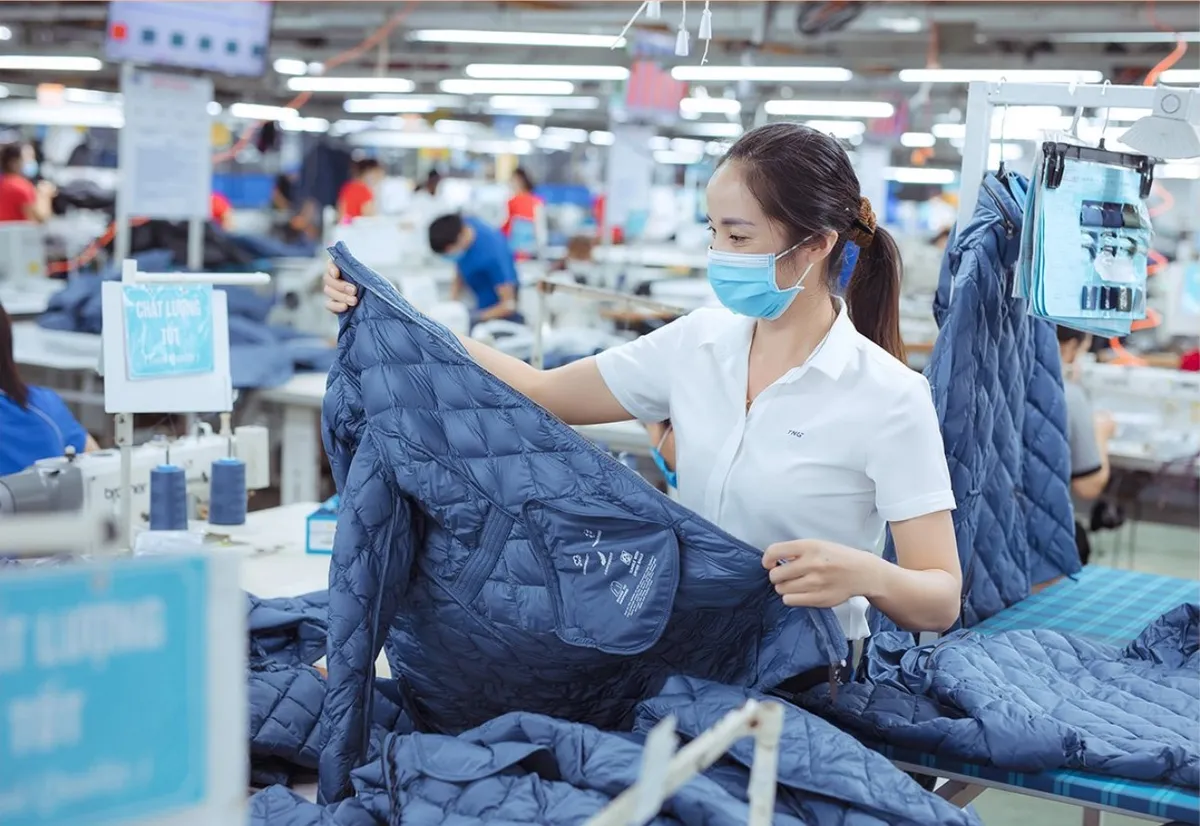
As markets tighten rules of origin and green standards, building domestic supply chains becomes a decisive factor in the industry's competitiveness.
Currently, the textile and garment industry imports approximately 7.2 billion square meters of fabric annually, equivalent to 70% of its needs. This dependence is becoming a major obstacle for the entire industry in improving production capacity and traceability.
Ms. Nguyen Thi Thao, Deputy General Director of Regina Miracle Vietnam, stated: "For example, Regina will import approximately $193 million worth of raw materials from abroad in 2025. If we could source such a large quantity of raw materials domestically, it would greatly encourage domestic production. However, Vietnamese businesses only offer what they have, without researching what foreign businesses actually use."
"If Vietnam violates origin regulations, it will be immediately cracked down on at the port. In 2024-2025, some businesses were already caught because the brands that purchased fabric could not trace its origin," said Mr. Vu Duc Giang, Chairman of the Vietnam Textile and Garment Association (VITAS).
To achieve self-sufficiency, many corporations have embarked on building complete supply chains, but they face bottlenecks related to environmental regulations or tax procedures, reducing their competitiveness even in their own market.
"It's very difficult to obtain wastewater permits. Provinces usually only allow a maximum of 1,000 m3/day. Developing domestic capacity is also facing many difficulties," said Mr. Dang Vu Hung, Chairman and CEO of PPJ Group.
Mr. Than Duc Viet, General Director of May 10 Company, expressed his opinion: "It is unreasonable to pay VAT on domestically produced raw materials and components that are then exported without being consumed in Vietnam. After paying the VAT, businesses have to borrow money to pay the remaining tax, wait for a refund, and incur interest charges. This is very difficult for businesses financially."
As trade barriers increasingly shift from tariffs to rules of origin and sustainable development, supply chain self-reliance will determine how far Vietnamese textile and garment businesses can stand firm and go in global competition.
The government stands alongside businesses.
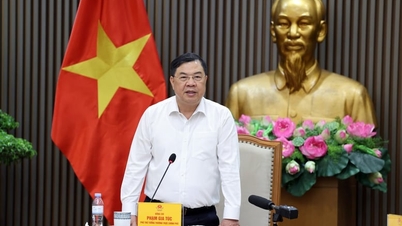
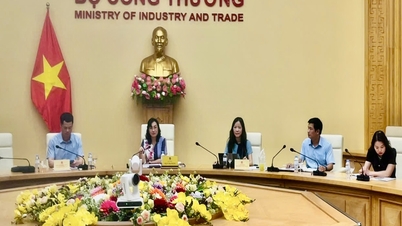
During a recent working session with the textile and footwear industries, Comrade Pham Gia Tuc, Member of the Political Bureau and Standing Deputy Prime Minister, affirmed that the Government will always stand alongside and remove bottlenecks in mechanisms, land, capital, and the application of science and technology to support businesses in achieving breakthroughs and contributing to the double-digit growth target of the economy.
According to the Ministry of Finance leadership, they are currently developing a tax management mechanism in the coming months to begin implementing the "green channel" classification, shifting from pre-audit to post-audit, but this will only apply to businesses with good tax compliance.
Mr. Cao Anh Tuan, Deputy Minister of Finance, stated: "There is a mechanism to classify businesses that comply well and immediately refund them, not refunding them before inspection, but refunding them before inspection. Many compliance support programs are connected to tax authorities."
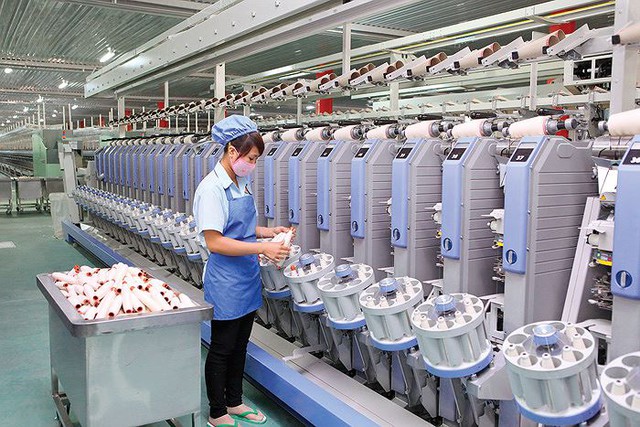
Businesses and regulatory agencies are working together to remove barriers, aiming to form a complete production chain from raw materials to branding.
Alongside financial mechanisms, the establishment of Research and Development (R&D) centers and workforce support are also prioritized to build a sustainable ecosystem.
"We have agreed to have two centers for fashion, logistics, raw material production, and research and development. We will even create centers for tourists to visit and showcase traditional Vietnamese products," said Mr. Truong Thanh Hoai, Deputy Minister of Industry and Trade.
Mr. Nguyen Manh Khuong, Deputy Minister of the Ministry of Interior, stated: "Creating a good working environment, applying science and technology, and offering better salaries will attract workers. In the coming time, we will amend the Labor Code in the spirit of listening to the opinions of the delegates."
Deputy Prime Minister Pham Gia Tuc requested that the textile and garment industry develop a proactive development strategy, enhance its competitiveness, and make a stronger contribution to the country's economic growth.
Deputy Prime Minister Pham Gia Tuc emphasized: "You must develop development plans with an offensive approach. Achieve double-digit growth, increase exports, improve working conditions for workers, raise the living standards of workers, and contribute to the overall growth of localities and the country. Strengthen contributions to building national brands."
The Vietnamese textile and garment industry is facing a crucial need to move deeper into the global value chain. This requires not only more factories or orders, but also the construction of a complete domestic production ecosystem, from raw materials to technology and branding.
By achieving self-sufficiency in the supply chain, the textile and garment industry will enhance its resilience to global fluctuations and generate greater added value. At that point, it will still be a "Made in Vietnam" garment, but the value remaining in Vietnam will be significantly higher.
Source: https://vtv.vn/go-nut-that-chuoi-cung-ung-de-det-may-but-pha-100260603061432804.htm


![[Photo] Delegation attending the 14th Congress of the Vietnam Trade Union visits the Mausoleum of President Ho Chi Minh.](https://vphoto.vietnam.vn/thumb/1200x675/vietnam/resource/IMAGE/2026/06/03/1780451842301_ndo_br_img-3824-jpg.webp)















![[Image] Affirming the aspirations and new standards of the Vietnamese real estate market in the new era.](https://vphoto.vietnam.vn/thumb/1200x675/vietnam/resource/IMAGE/2026/06/03/1780441948766_giai-thuong-bat-dong-san-2026-minh-duy-6-7364-jpg.webp)




























































Comment (0)