

According to Government Decree No. 179/2026/ND-CP dated May 20, 2026, undergraduate students, graduate students, and doctoral candidates in basic sciences , key engineering fields, and strategic technologies, if they meet the eligibility criteria, will receive scholarships ranging from VND 3.7-5.5 million per month (for undergraduates); VND 5.5-7.4 million per month (for graduate students); and VND 7.4-8.4 million per month (for doctoral candidates). This policy applies to applicants enrolling from 2025 onwards, with scholarship disbursement starting from September 1, 2026.
Basic science, engineering, and technology are generally considered "difficult" fields of study. Furthermore, job opportunities and income are often lower than in many other professions; therefore, many fields are currently facing significant difficulties in student recruitment. According to the Ministry of Education and Training , the percentage of students studying STEM (science, technology, engineering, and mathematics) in Vietnam is currently only about 27-31%, lower than many countries in the region and the world (this rate is 46% in Singapore, 50% in Malaysia, and 39% in Germany...). These fields have not yet truly attracted a large number of students, including talented individuals, and lack groundbreaking mechanisms. Therefore, despite achieving encouraging results, the pace of development, as well as the scale, potential, level of science, technology, and innovation in our country, still lag far behind developed countries. In this context, the aforementioned scholarship policy is expected to contribute to creating a "boost" to attract and improve the quality and effectiveness of training, research, and innovation in this important field.
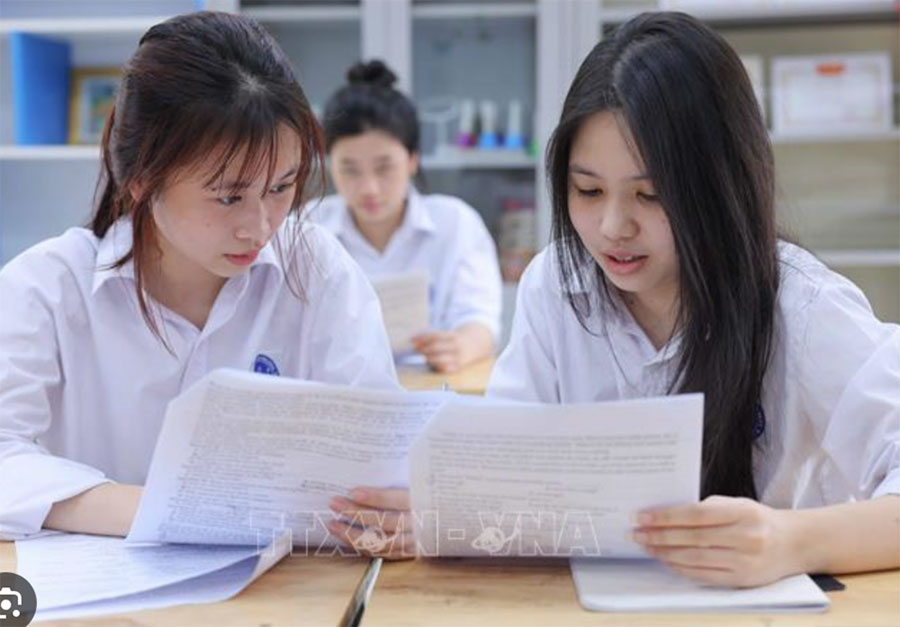 |
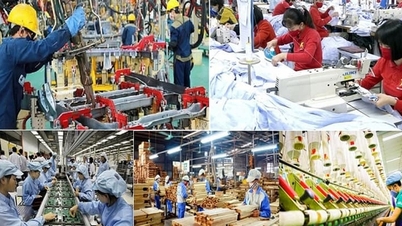
| Illustrative photo: VNA |
Practical experience shows that the extensive growth model based on resources, cheap labor, capital, and large-scale production is no longer suitable for the times. Instead, an intensive growth model based on science, technology, innovation, and high added value is needed. Science, technology, and innovation have become the foundation and main driving force determining rapid, sustainable growth and national competitiveness. From this perspective, it is clear that investing in training human resources in science and technology is not only an educational policy but also a strategic decision for the country's future, requiring synchronized policies and solutions and the involvement of the entire political system. Scholarship policies for students studying basic sciences, key engineering fields, and strategic technologies are necessary and timely. However, to create real change, along with financial support, it is necessary to continue improving mechanisms and policies to build a modern, open, and creative research and working environment with appropriate remuneration for intellectuals and scientists, while removing barriers in thinking, management mechanisms, and institutions that are hindering the development of science, technology, and innovation...
Source: https://www.qdnd.vn/giao-duc-khoa-hoc/cac-van-de/goc-nhin-giao-duc-cu-hich-hoc-bong-can-thiet-1042194




















![[Photo] Reception to welcome General Secretary and President To Lam and his wife on their State visit to the Philippines](https://vphoto.vietnam.vn/thumb/1200x675/vietnam/resource/IMAGE/2026/06/01/1780295488620_vna-potal-chieu-dai-chao-mung-tong-bi-thu-chu-tich-nuoc-to-lam-va-phu-nhan-tham-cap-nha-nuoc-toi-philippines-8798060-7855-jpg.webp)



























































Comment (0)