

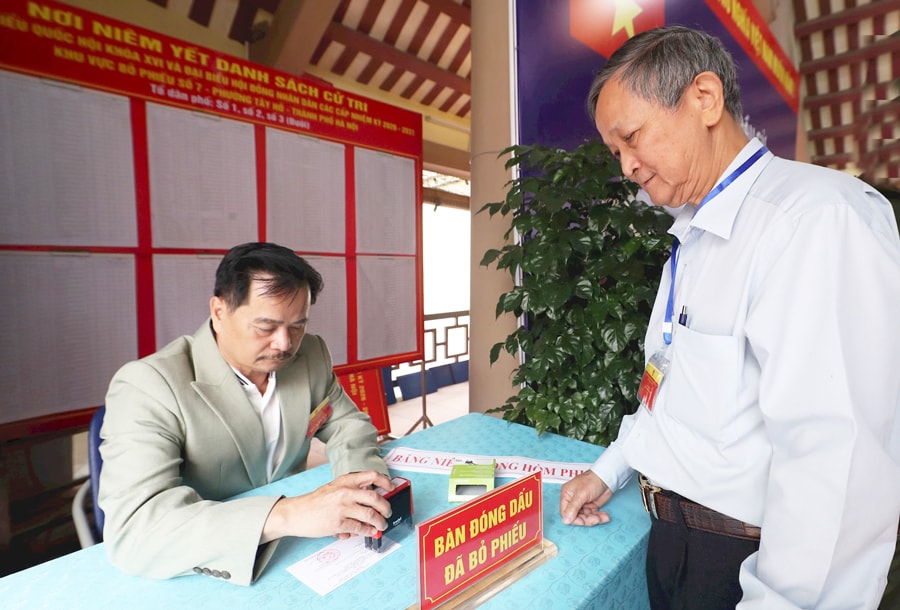
The ballot – where citizens exercise their right to self-governance.
Elections for National Assembly and People's Council representatives are among the most important political events in the country, where the people's right to self-governance is most clearly demonstrated. Through their ballots, voters directly choose those who represent their will and aspirations to participate in state power organs.
The principles of direct, secret, and equal voting are clearly stipulated in the 2013 Constitution and the Law on Election of National Assembly Deputies and People's Council Deputies. Accordingly, each voter casts their vote independently, secretly choosing their representative, and every ballot has equal value. These principles create a solid democratic foundation for elections, ensuring that the will of the people is truthfully reflected.
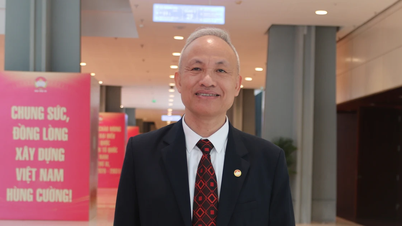
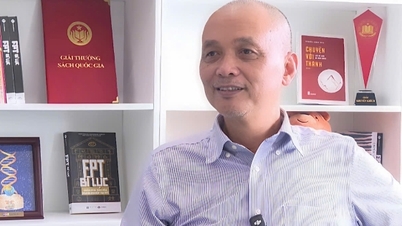
According to Professor Hoang Van Cuong, elections are a way for people to express their views on the country's development path, choose capable leaders, and make appropriate decisions. "Only through elections can people express their will and aspirations, and choose who will represent them to lead the country," Professor Hoang Van Cuong emphasized.
In Vietnam, the construction of a socialist rule of law state also requires strongly promoting the people's right to self-governance. Elections, therefore, are not only a political procedure, but also a mechanism for citizens to participate in the process of state and social management.
These days, in many localities of Hanoi , preparations for the National Election Day are being carried out urgently. In Bat Trang commune, polling stations have been inspected and fully prepared. At Polling Station No. 8, ballot boxes and writing desks have been arranged respectfully. Besides preparing the facilities, local authorities are also stepping up propaganda efforts to ensure voters understand their rights and obligations when participating in the election.
Mr. Nguyen Quoc Viet, Secretary of Hamlet 1, Giang Cao, Bat Trang Commune, said that widespread propaganda efforts have been implemented to help people understand the legal regulations on elections, thereby raising their sense of responsibility when casting their votes. "We hope that every voter understands their rights and obligations, so that when they go to vote, they can choose truly worthy representatives," Mr. Nguyen Quoc Viet shared.
Elections and the voter's responsibility to monitor
According to the Law on Election of National Assembly Deputies and People's Council Deputies, each voter has the right to cast one ballot for a National Assembly deputy and one ballot for a People's Council deputy, corresponding to each level. Voters must go to the polls in person and cast their ballots directly into the ballot box.
In cases where voters are unable to write their ballots themselves, they may ask someone else to write for them, but they must still cast their ballots in person. For elderly, sick, or disabled voters who cannot come to the polling station, the election committee will bring a supplementary ballot box to their location to ensure citizens' right to vote.
Immediately after the voting period ends, the vote count will be conducted publicly at the polling station in the presence of voters and relevant representatives. The process of vote counting, recording, and announcing the results is clearly stipulated by law to ensure transparency and objectivity.
However, according to experts, the responsibility of voters does not stop at simply casting their ballots. Professor Hoang Van Cuong argues that the law stipulates that elections are both a right and a responsibility of citizens. Voters have the right to choose their representatives, but at the same time, they are also responsible for that choice. After casting their votes, voters need to monitor whether their chosen representatives fulfill their commitments and complete their duties.
According to Professor Hoang Van Cuong, if elected representatives are ineffective, voters should also reflect on their own responsibility in the selection process. Therefore, before casting their ballots, each voter should thoroughly research information about the candidate, their action plan, and their capabilities and qualities.
Following the elections, voter oversight continues to play a crucial role in ensuring that representatives fulfill their responsibilities. “The activities of National Assembly and People's Council representatives are now very transparent. Voters can monitor sessions, speeches in parliament, and voter outreach activities to assess whether representatives truly reflect the voice of the people,” emphasized Professor Hoang Van Cuong.
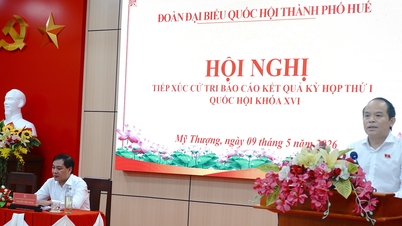
Meetings with constituents before and after each parliamentary session serve as a forum for citizens to express their opinions and aspirations, and also as a place for voters to question their representatives about the commitments they made before being elected. Through these activities, voters can gain a clearer understanding of the responsibility and effectiveness of their representatives.
Highlighting the significant importance of the election of deputies to the 16th National Assembly and People's Councils at all levels for the 2026-2031 term, Central Committee member, Deputy Secretary of the Hanoi City Party Committee, and Chairman of the Hanoi People's Committee, Vu Dai Thang, expressed his hope that on National Day, March 15th, voters would exercise their civic rights to choose the best candidates to participate in the National Assembly, People's Councils at all levels, leading the country, leading the capital city, and leading communes and wards into a new phase of development - a brilliant phase of national development.
Thorough preparation by relevant authorities, coupled with the sense of responsibility of voters, will contribute to ensuring that the election is democratic, safe, and conducted in accordance with the law. Each ballot cast not only represents a citizen's rights and responsibilities but also entrusts their faith in their representatives within the state apparatus.
Election Day, therefore, is not just a political procedure but truly becomes a national celebration, where every citizen demonstrates their sense of responsibility and ownership. Because the ballot represents the people's trust in the future of the country. When millions of voters participate in the election, the will and aspirations of the people will be powerfully expressed, contributing to building a state of the people, by the people, and for the people.
Source: https://hanoimoi.vn/gui-gam-niem-tin-va-khat-vong-738546.html

![[Photo] General Secretary and President To Lam receives Amazon's Senior Vice President David Zapolsky](https://vphoto.vietnam.vn/thumb/1200x675/vietnam/resource/IMAGE/2026/05/22/1779466547770_a1-bnd-3513-6601-jpg.webp)































































Comment (0)