

Within the realm of folk music , songs about Vietnamese villages always possess enduring vitality, touching listeners' hearts with their simplicity and sincerity.
Drawing inspiration from familiar images of his homeland, "My Duc, a Song" by author Dang Van Canh - Secretary of the Party Committee of My Duc commune - opens up a gentle musical space, evoking a rural area undergoing transformation after the administrative boundary merger.
The song is not only a heartfelt invitation to visit one's homeland, but also a harmonious blend of love for one's country, pride in its people, and a land rich in cultural and historical traditions.
The song begins with a simple invitation: "Come visit my homeland..." Hidden behind this line is not only hospitality, but also a longing for sharing. The author doesn't describe his homeland with grand concepts, but starts with the most familiar things, as if leading a friend through each road, each realm of memories.
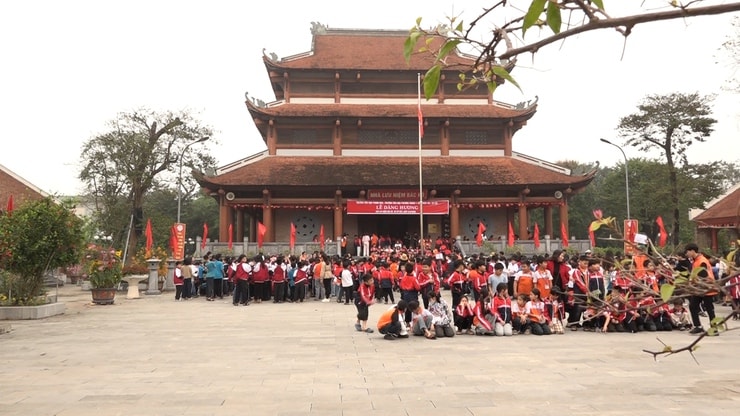
The author Dang Van Canh's love for his homeland is revealed through specific, familiar images: from the "lively streets" of Dai Nghia to the "land of learning, rice and flowers in all four seasons" of Dai Hung. Simple yet evocative words portray a My Duc that is both modernizing and preserving its traditional beauty.
It's easy to see that this love is nurtured by a deep understanding of each region and place. Phu Luu Te is depicted with the "winding Day River," Hop Thanh is mentioned as a land of "spiritual significance and talented people," and An Phu is associated with the image of "fragrant lotus blossoms"... Each place name is not just a name, but also a symbol of the culture, nature, and people of this place.
In each lyric, listeners can recognize familiar place names, regions that once had their own names, now united under one common name: My Duc.
The appearance of these place names serves not only as an introduction but also as a reminder of different parts of memory, now coexisting within a new whole. What is valuable is that the change in administrative boundaries does not diminish identity; on the contrary, it is perceived as an extension.
The depth of the song also lies in the way the author incorporates traditional cultural values. The image of "Tế Tiêu puppetry passed down through generations" evokes a unique form of folk art, deeply marked by the life of the countryside. Along with that, the "resonant Chèo melody" is like a silent but enduring stream, nurturing the spiritual life of the people through many generations. These values do not belong only to the past, but are still present, contributing to the identity of today.
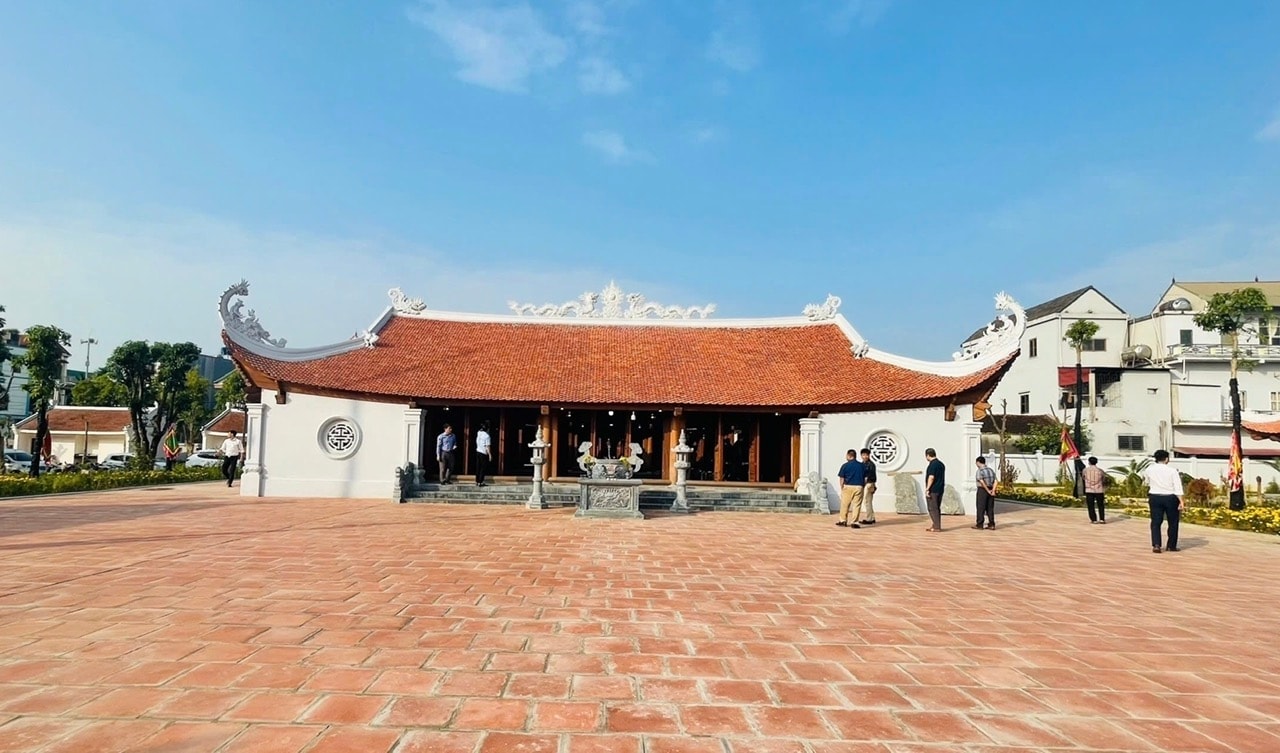
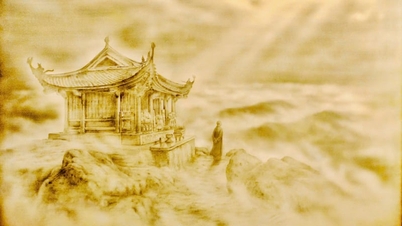
In particular, the author shows great respect when mentioning the Temple of King Dinh, a sacred historical site where people commemorate the contributions of their ancestors. The song "remembering the gratitude to our ancestors, never forgetting it" is not only an expression of gratitude but also reflects the principle of "drinking water, remembering the source," a beautiful tradition of the Vietnamese people. Through this, listeners can feel the depth of culture and spirit of the people of My Duc: always looking back to their roots, cherishing history, and preserving their national identity.
Beyond the layers of memory and culture, the song also opens up a rhythm of the present. The image of the people of My Duc emerges with unity, camaraderie, and a desire to rise above adversity. The author mentions the "Ho Chi Minh Memorial House," a place preserving the memories and teachings of President Ho Chi Minh . This is not just a place, but also a spiritual symbol, a guiding principle for the actions of the local people.
"We pledge to follow His example" - a simple song, yet it encapsulates a profound determination: to learn from and emulate Uncle Ho's moral example in order to build an increasingly prosperous and beautiful homeland.
This spirit is emphasized through songs about unity: "Joining hands in solidarity to enrich our homeland," "Working together to rise up." Not merely slogans, these lyrics reflect a reality unfolding, where people are adapting to the changes after the merger, building a new image while preserving their cultural core.
From a purely agricultural rural area, My Duc today is gradually changing, integrating into modern life while still preserving its unique identity. The author conveys his belief in the future through the concluding line: "My Duc confidently moves forward into the future" - an affirmation full of optimism and hope.
Source: https://hanoimoi.vn/gui-tron-tinh-yeu-trong-tung-giai-dieu-747903.html

![[Image] Hanoi's urban life under the challenge of a "scorching hot" environment](https://vphoto.vietnam.vn/thumb/1200x675/vietnam/resource/IMAGE/2026/05/25/1779706979265_nang-nong-t5-2026-minh-duy-7-4636-jpg.webp)
![[Image] Close-up view of the interchange connecting the two expressways and Long Thanh Airport.](https://vphoto.vietnam.vn/thumb/1200x675/vietnam/resource/IMAGE/2026/05/25/1779703378210_ndo_br_z7863716673926-224453a31600126cce10622af6290afd-4549-jpg.webp)



























































Comment (0)