

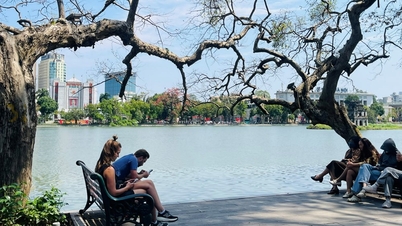
There is a Hanoi shrouded in the sediments of time.
During his lifetime, President Ho Chi Minh instructed: “The whole country looks to our capital. The world looks to our capital. All of us must strive to maintain order and security, making our capital a peaceful, beautiful, and healthy capital, both materially and spiritually.”
Hanoi, the capital city, is a land that embodies layers of history, culture, and national intellect spanning over a millennium. During the reign of King Ly Thai To, the decree to move the capital from Hoa Lu to Dai La and rename it Thang Long marked the beginning of the capital's more than a thousand-year history. From then until now, Hanoi has gone through many names such as Dong Do, Dong Quan, Dong Kinh, Ke Cho…, but it has consistently maintained its role as the political , cultural, and educational center of the nation.
Hanoi's cultural heritage is first and foremost reflected in its tradition of valuing education and respecting teachers. For example, the Temple of Literature – National University, built during the Ly Dynasty, became Vietnam's first university. Here, there are still 82 doctoral steles, inscribed with the names of 1,304 doctoral graduates who passed the examinations from 1442 to 1779 under the Le and Mac dynasties.
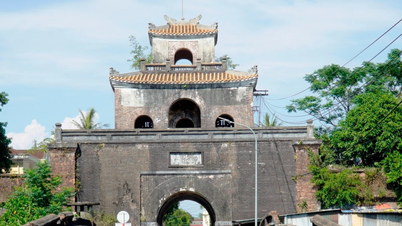
Hanoi is also a place where unique tangible and intangible cultural values are concentrated. According to statistics, the capital currently has more than 5,900 historical and cultural relics, the largest number in the country; including one World Heritage site (Thang Long Imperial Citadel, recognized by UNESCO in 2010), about 21 to 22 special national relics, and thousands of national and city-level relics.

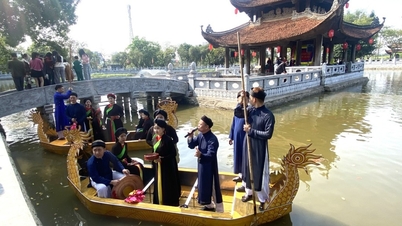
Alongside its tangible heritage, Hanoi is also the cradle of many outstanding intangible cultural heritages. For example, Ca Tru, a scholarly art form once associated with the intellectual life of Thang Long (Hanoi), was inscribed by UNESCO as an Intangible Cultural Heritage in need of urgent safeguarding in 2009. In addition, there are traditional festivals such as the Giong Festival (recognized as a Representative Intangible Cultural Heritage of Humanity in 2010), the Huong Pagoda Festival, the Co Loa Festival, etc., reflecting the rich spiritual life and strong community spirit of the people of Hanoi.
In harmony with the nation's rising era.
In the era of national progress, Hanoi is entering a new phase of development with the aspiration to become a capital city that is "cultured, civilized, and modern." The city is constantly expanding its urban space, promoting digital transformation, building a digital government and a knowledge-based economy, while preserving its millennia-old historical values. Metro lines, smart cities, and innovation centers are being developed alongside historical and cultural relics.
To create strong momentum for the sustainable development of Hanoi, the Party and State have issued many important policies and guidelines with long-term orientations. Entering the end of 2025, information from the Vietnam National Tourism Administration indicates that in November, the total number of international visitors to Vietnam reached over 19.1 million, an increase of 20.9% compared to the same period in 2024. This is a record high, surpassing the 18 million visitors recorded in 2019 before the Covid-19 pandemic.

Strong. (Photo: Huong Ngoc)
In an interview with a reporter from the Vietnam Law Newspaper, Dr. Nguyen Thi Hiep – a heritage expert from the International Technical Cooperation Agency - Expertise France (French Ministry of Foreign Affairs) – stated that Hanoi possesses exceptional potential for developing in-depth cultural tourism experiences, if properly and strategically invested in, with digital technology playing a key role. According to her, first and foremost, it is necessary to promote scientific research to accurately identify the value of each historical site and cultural space within the overall historical urban landscape of Thang Long – Hanoi. Each temple and pagoda is not only an architectural structure but also a repository of community memory and urban history; therefore, when developed for tourism, these values must be explained scientifically, vividly, and in an easily accessible manner.
Furthermore, integrating university education with conservation is a sustainable approach, by creating opportunities for students to participate in surveys, collect materials, and develop tourism products, thereby fostering a love for heritage and forming a team of future experts. She also emphasized the role of close coordination between management agencies, experts, and local communities, because when people participate in and directly benefit from heritage, they will become active agents in preserving cultural values in the long term. In particular, all tourism activities need to go hand in hand with conservation, with impact assessments and a rational allocation of tourists to avoid overloading the historical sites and surrounding environment.
Regarding specific solutions, Dr. Nguyen Thi Hiep proposed promoting the digitalization of heritage sites and building smart search and experience platforms, such as the Hanoi Heritage (H-Heritage) mobile application and interactive map system. This model is still new in Vietnam and rare in the world, allowing tourists to access scientific, multilingual information on topics characteristic of Vietnamese culture right at the destination. In addition, Hanoi could develop tourism products based on seasonal festivals, traditional crafts, urban stories, or historical figures, combining sound, images, on-site experiences with artificial intelligence technology, helping tourists "accompany heritage" in the vibrant flow of history.
These products need to be flexibly designed for various target groups, from mass tourists and in-depth researchers to students, thereby ensuring the full transmission of heritage values while providing a reliable source of academic materials for research and education.
Source: https://baophapluat.vn/ha-noi-oi-mot-trai-tim-hong.html















![[Photo] Reception to welcome General Secretary and President To Lam and his wife on their State visit to the Philippines](https://vphoto.vietnam.vn/thumb/1200x675/vietnam/resource/IMAGE/2026/06/01/1780295488620_vna-potal-chieu-dai-chao-mung-tong-bi-thu-chu-tich-nuoc-to-lam-va-phu-nhan-tham-cap-nha-nuoc-toi-philippines-8798060-7855-jpg.webp)








































Comment (0)