

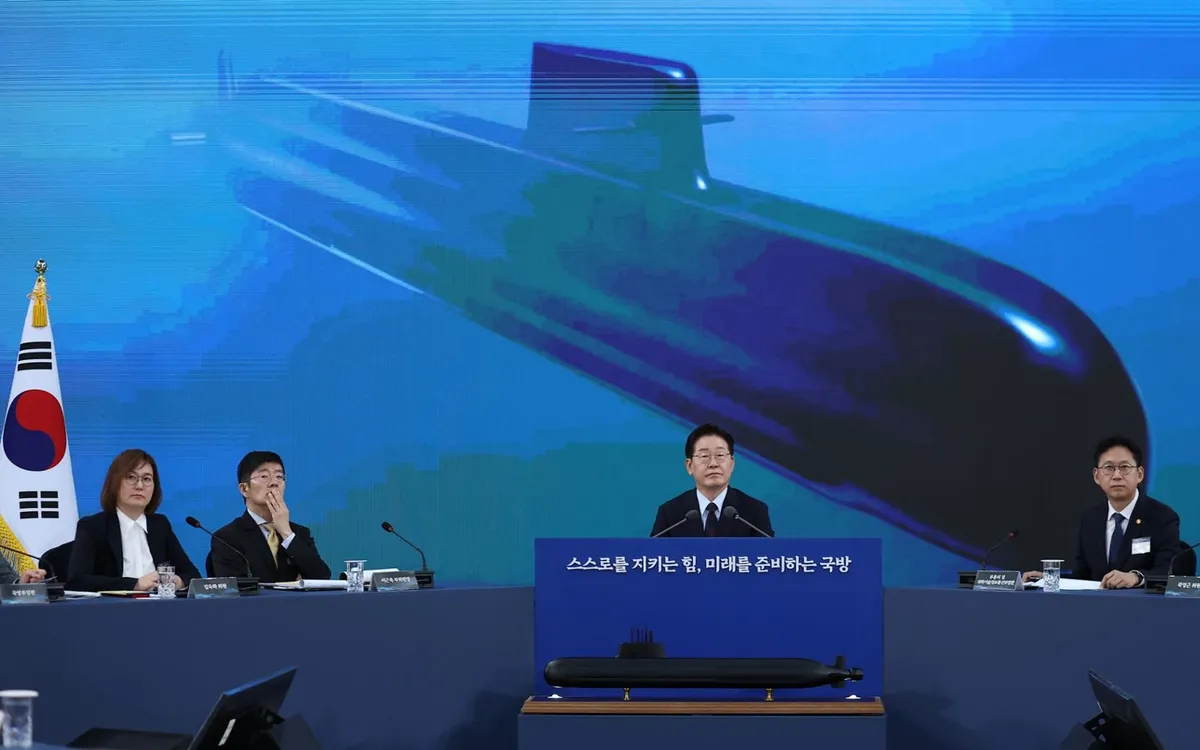
The South Korean president attends the opening meeting of the Future Defense Strategy Committee in Changwon city, Gyeongsang Nam province, on May 26 (Photo: Yonhap).
South Korea's move to accelerate its nuclear submarine program comes amid a continuous strengthening of defense capabilities by countries in the region. The South Korean government announced on May 26th that it aims to build its first nuclear-powered submarine by the mid-2030s.
According to the South Korean Ministry of Defense , shipbuilding will be carried out domestically instead of at US shipyards to ensure self-reliance in procurement, maintenance, and long-term operation.
On the same day, South Korean President Lee Jae Myung also announced that the country aims to launch its first nuclear-powered submarine by the mid-2030s.
South Korea is committed to using low-enriched uranium fuel and complying with international nuclear non-proliferation obligations.
The South Korean Ministry of Defense has released the first roadmap for the development of a nuclear submarine, outlining the approach to developing and procuring the platform, and publicly presenting the project framework.
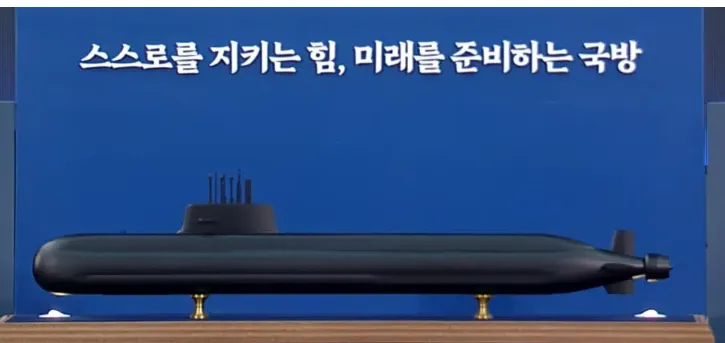
(Photo: MND)
The plan was put forward following an agreement reached during the summit between President Lee Jae Myung and US President Donald Trump in October 2025. In that agreement, Washington expressed support for Seoul's development of nuclear submarines and its pursuit of a civilian uranium enrichment program, as well as the reprocessing of spent nuclear fuel for peaceful purposes.
According to this roadmap, the South Korean government aims to launch its first nuclear submarine in the mid-2030s and put it into service by the end of the 2030s.
This submarine will offer significantly enhanced operational capabilities compared to conventional diesel-powered submarines, thanks to its longer underwater operating time and greater maneuverability, surpassing South Korea's current submarines.
South Korea's goal of acquiring nuclear submarines is seen as potentially significantly altering the security balance and military competition at sea in the Asian region.
Source: https://vtv.vn/han-quoc-tang-toc-chuong-trinh-tau-ngam-hat-nhan-100260527135154583.htm
![[Photo] Standing Committee member of the Party Central Committee Tran Cam Tu working with the Central Inspection Committee](https://vphoto.vietnam.vn/thumb/1200x675/vietnam/resource/IMAGE/2026/05/28/1779969579668_ndo_br_bnd-2495-jpg.webp)

























































Comment (0)