

Maintaining a top position in the world.
According to the latest report from the Ministry of Agriculture and Rural Development, in the first eight months of 2023 alone, rice exports earned $3.17 billion, an increase of 36.1% compared to the same period last year.
The average export price of rice in the past eight months reached US$542 per ton, an increase of 11.5% compared to the same period in 2022. This is also the highest average export price in history after more than 30 years of Vietnamese rice flowing into the world market.
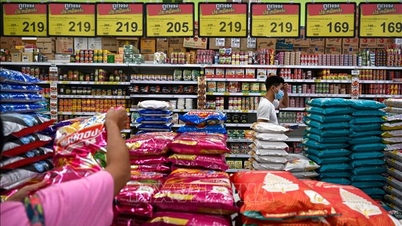
In particular, over the past month, since India and several other countries banned rice exports, the price of this commodity in Vietnam has immediately skyrocketed and repeatedly broken historical records.

Data from the Vietnam Food Association (VFA) shows that in the trading session on August 31, the export price of 5% broken rice from Vietnam reached US$643/ton, an increase of 20.6% compared to July 19. Compared to January 1 of this year, the current price of 5% broken rice from Vietnam has increased by US$185/ton, equivalent to 40.3%.
The export price of 25% broken rice also surged from $438/ton (on January 1st) to $628/ton on August 31st, an increase of $190/ton (43.4%).
Compared to other top rice exporting countries, Vietnam's export prices for 5% broken rice and 25% broken rice are currently the highest in the world. Specifically, they are $10/ton and $63/ton higher than similar products from Thailand, respectively.
With rice exports of 6-8 million tons per year, Vietnam is currently among the top 3 rice exporting countries in the world, behind only India and Thailand. At certain times, Vietnam has even risen to the second position in the world in terms of rice exports.
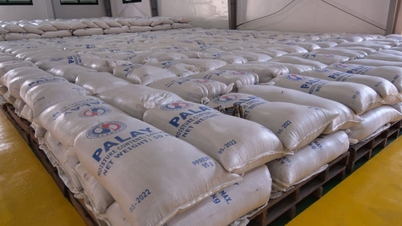
Vietnamese rice is exported to 150 countries and territories worldwide. As of mid-August this year, the Philippines, China, and Indonesia are the three largest rice export markets for Vietnam, with market shares of 40.3%, 14%, and 12.1% respectively.
Ms. Bui Thi Thanh Tam, Vice President of the VFA, said that 10 years ago, we relied on a few specific markets for exports. If they didn't buy, we didn't know who to sell our rice to. However, the industry restructuring plan has improved the quality of Vietnamese rice. With good quality rice, we have the right to choose our markets.

Notably, Vietnam's rice yield has increased from 4.88 tons/ha in 2008 to 6.07 tons/ha this year. Currently, our country's rice yield is the highest in the ASEAN region. This has also helped Vietnam rise to the 5th position in the world in terms of rice production.
According to calculations from the Ministry of Agriculture and Rural Development, in 2023 Vietnam planted approximately 7.1 million hectares of rice, with an estimated yield of over 43 million tons of paddy, equivalent to 27-28 million tons of milled rice. After deducting domestic consumption, Vietnam has about 7-8 million tons of rice available for export.
As of August 15th, Vietnam had exported 5.35 million tons of rice, meaning there are still approximately 2.15-2.65 million tons of various types of rice available for export from now until the end of the year.
The Vietnam Food Association (VFA) predicts that the global rice production and trade market will be subject to significant fluctuations and risks in the coming period due to the rice import and export policies of some countries, unusual weather patterns, and the paramount importance of national food security.
Given the response measures from many countries and the increasingly tight rice supply, experts in this sector believe that export rice prices may continue to rise. However, from now until the end of the year, they will likely remain around 600-800 USD/ton, making it very difficult to reach the 1,000 USD/ton mark seen in 2008.
Vietnamese rice grains are entering a new revolution.
In the development of rice cultivation, just a few years ago, the quality of Vietnamese exported rice was still low, so it was only sold to low-income countries. Now, more than 90% of Vietnamese exported rice is high-quality, affirming the position of Vietnamese rice in the world market.
Professor Vo Tong Xuan believes that thanks to good rice varieties, the quality of Vietnamese rice has gradually improved. This is also partly why the price of Vietnamese rice exports has consistently been among the highest in the world in recent years.

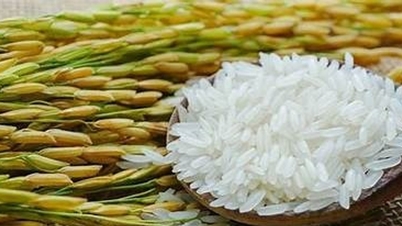
Vietnamese rice will embark on a new journey based on quality, circularity, and reduced emissions (Photo: Minh Hue)
More importantly, our country has inherited years of production experience to cope with climate change and maintain stable rice production.
According to Mr. Nguyen Nhu Cuong, Director of the Department of Crop Production, the drought and salinity intrusion in the Mekong Delta in 2015-2016 resulted in a loss of over 1 million tons of rice.
In 2019-2020, El Nino returned and was more severe. However, we avoided drought and salinity thanks to short-duration rice varieties and flexible cropping patterns based on local irrigation water resources. Therefore, even with El Nino, it did not affect the yield and production of rice in our country.
"With our previous experience, we are completely proactive in production this time around El Nino, confidently ensuring the supply of rice for domestic consumption as well as export," Mr. Cuong said.
Looking back at the journey of Vietnamese rice, Minister of Agriculture and Rural Development Le Minh Hoan shared that Vietnam has become one of the leading rice exporting countries, after achieving success in ensuring domestic food security.
“Rice grains from the fields become rice grains that go to the market; rivers are no longer blocked, markets are no longer restricted, and the flow of rice goes everywhere. Agricultural scientists have stepped in, creating many hybrid varieties with higher yields, shorter growing seasons, and adaptability to regional conditions. The life cycle of the rice plant has changed the life cycle of the rice farmer,” Minister Hoan said.
According to the Minister, Vietnam's rice industry aims for "quality, circular economy, and low emissions." A new revolution is beginning to align with the trends of the times and to build a strong rice brand internationally.
The project "1 million hectares of high-quality, circular, low-emission rice" in the Mekong Delta, combined with the "Project to establish an agricultural logistics system" and the "Project to mechanize agriculture," will redefine the image of Vietnamese rice and gradually spread to other regions.
The goal is to establish 1 million hectares of high-quality specialized rice cultivation areas, linked to the reorganization of the production system along the value chain, applying sustainable farming practices, improving the income and living standards of rice farmers, ensuring food security, enhancing the quality and reputation of Vietnamese rice products, and moving towards a transparent, responsible, and sustainable rice industry.
Source: vietnamnet
Source




























































Comment (0)