

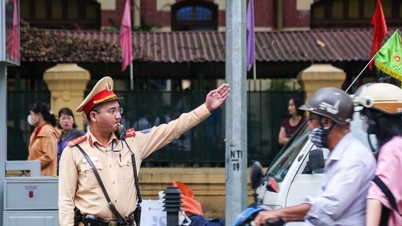
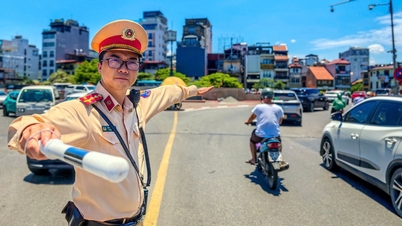
Promoting the application of professional technical equipment and AI helps traffic police improve the efficiency of handling violations, increase transparency in handling "on-the-spot fines," and contribute to building a safe and civilized traffic environment.
Accurate license plate recognition with 93% or higher accuracy.
In the context of accelerated national digital transformation, the application of AI and modern technology in the transportation sector contributes to improving the efficiency of state management. At the same time, it is also a solution to promote the development of a safe and civilized traffic culture, aiming to reduce accidents and ensure sustainable traffic safety and order.
The Ministry of Public Security is currently drafting and soliciting public opinion on a draft Circular amending and supplementing several articles of Circular No. 62/2024/TT-BCA of the Ministry of Public Security on the National Technical Standard for road traffic security, order, and safety monitoring systems; vehicle tracking devices and driver image recording devices; and traffic command centers.
This revision and supplementation of technical regulations is considered an important step towards modernizing traffic management, enhancing the application of artificial intelligence (AI), big data, and digital technology in detecting and handling violations; and contributing to building a safer, more civilized, and transparent traffic environment.
According to the draft, the National Technical Standard on "Road Traffic Security, Order, and Safety Monitoring System" has several noteworthy new points. Among them, the most prominent is the shift to a distributed data processing model, the addition of "regional server clusters" and "intermediate devices (Edge AI)" to allow data to be analyzed and processed on-site before being transmitted to the central control center.
This solution helps reduce the load on the central system while accelerating the analysis and processing of information in real time. It is also considered an important foundation for the future development of intelligent transportation systems (ITS).
The draft also requires comprehensive AI integration for camera systems and surveillance equipment. Accordingly, the devices must be able to recognize license plates with 93% or higher accuracy during the day; automatically analyze traffic violations; and perform intelligent searches by license plate, vehicle color, vehicle type, etc.
In addition, the new regulations also require data standardization and expanded connectivity through APIs for sharing breached data, applying ONVIF standards and integrating AI metadata to ensure synchronization between systems.
Another notable point is the stricter data storage requirements. According to the draft, camera data must be stored for a minimum of 60 days; data on violations used for processing, investigation, and tracing must be stored for up to 3 years.
In the context of increasingly rapid digital transformation, the draft also adds many regulations related to information security and cybersecurity. IP camera systems and surveillance equipment must comply with national technical standards and data protection regulations of the Ministry of Public Security, limiting the risk of cyberattacks or leakage of personal information.
Notably, the draft also adds a mechanism for declaring conformity and controlling the quality of imported equipment. This helps overcome the situation of fragmented and uncoordinated investment, while creating a legal basis for managing the quality of the system nationwide.
According to the Ministry of Public Security's assessment, the revised regulations will lay the foundation for a transition from a manual to an automated, intelligent monitoring model. The new system will not only support the automatic detection and processing of violations but also contribute to predicting traffic congestion and accidents, and managing traffic in real time. Reducing reliance on human intervention is also expected to enhance transparency, accuracy, and deterrent effectiveness in handling traffic violations.
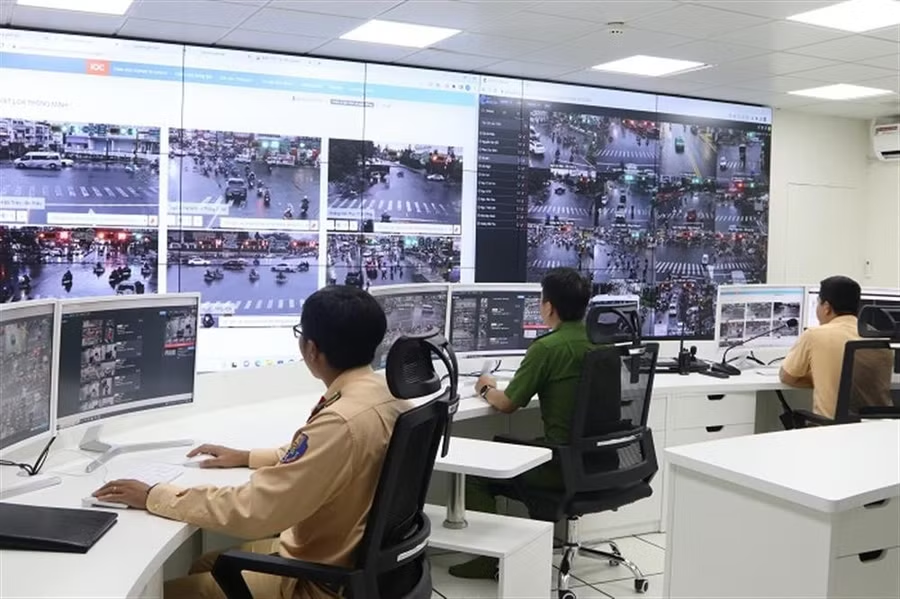
What's inside the Traffic Command Center?
Beyond focusing on the monitoring system, the draft also amends the National Technical Standard on "Traffic Command Centers." The new standard shifts from a system-listing approach to a modern, functional block model, seamlessly integrating with the data center architecture for managing, monitoring, and operating traffic according to government and Ministry of Public Security projects. Upgrading the Traffic Command Center is expected to help localities be more proactive in investing, allocating resources, and building technical infrastructure.
According to the draft, the command centers will be equipped with advanced technologies such as AI, big data, and VMS/AI systems to serve real-time traffic command and control. The regulations also clearly define the center's functions in detecting and handling violations, resolving accidents, and combating traffic congestion. This will contribute to improving the capacity of the traffic police force as well as the public's awareness of law compliance.
Notably, for the first time, the regulations specify requirements for public service areas, processing, and receiving citizens. This makes it easier for people to carry out administrative procedures such as vehicle registration, driver's license renewal, handling violations, or bidding for license plates.
Recent experience has shown that the application of professional technical equipment and AI technology has significantly improved the efficiency of handling traffic violations. For example, the Highway Traffic Police Teams under Department 6, Traffic Police Bureau, Ministry of Public Security, have simultaneously deployed professional technical equipment on highways to detect and record violations. On May 23 alone, the authorities recorded 635 violations, of which 555 are expected to receive violation notices.
Source: https://giaoducthoidai.vn/hien-dai-hoa-giam-sat-giao-thong-bang-ai-post779492.html


![[Photo] General Secretary and President To Lam and the President of the Philippines hold talks.](https://vphoto.vietnam.vn/thumb/1200x675/vietnam/resource/IMAGE/2026/06/01/1780286997787_anh-man-hinh-2026-06-01-luc-11-09-43.png)







































































Comment (0)