

.jpg)
Crop diversity
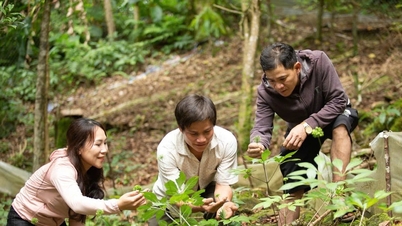
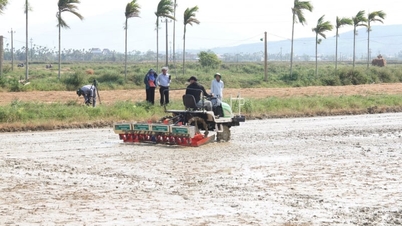
After the merger, the city's agricultural production area has quite diverse ecological conditions, ranging from coastal plains to midland and mountainous regions, creating favorable conditions for the introduction and cultivation of many new crops. Currently, these new crops are being successfully developed by people in many localities.
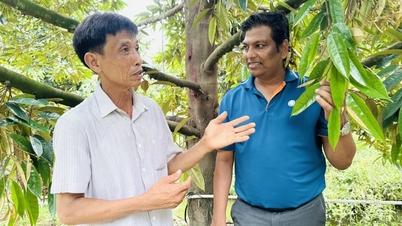
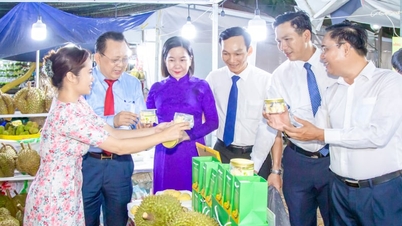
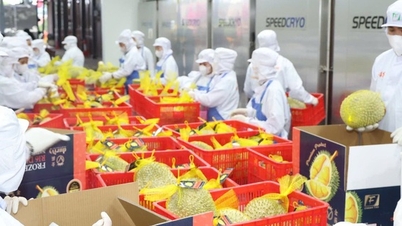
Durian is a relatively new crop introduced and grown by local people in the communes of Tien Phuoc, Thanh Binh, Tra My, Hiep Duc, and Nam Tra My – areas with suitable red soil, hilly terrain, and humidity.
Ms. Nguyen Thi Hau (My Thuong Tay village, Tien Phuoc commune) said that on her 5,000m2 hillside garden, her family cultivates 60 Monthong durian trees. This is a high-yielding, fragrant, and delicious durian variety that is popular in the market. In 2025, Ms. Hau harvested her first durian crop, yielding over 2 tons and selling it for nearly 200 million VND.
According to Mr. Le Nguyen Hung, Head of the Economic Department of Tien Phuoc commune, durian, as a new crop, brings quite high profits to farmers.
In the coming period, the agricultural sector of Tien Phuoc commune will continue to support people in accessing the city's mechanisms and policies on supporting the development of garden and farm economies, connecting durian development through a linked chain, especially guiding farmers to cultivate durian according to VietGAP and organic standards, aiming to obtain planting area codes to improve the quality of commercial durian, and expand domestic and export markets.
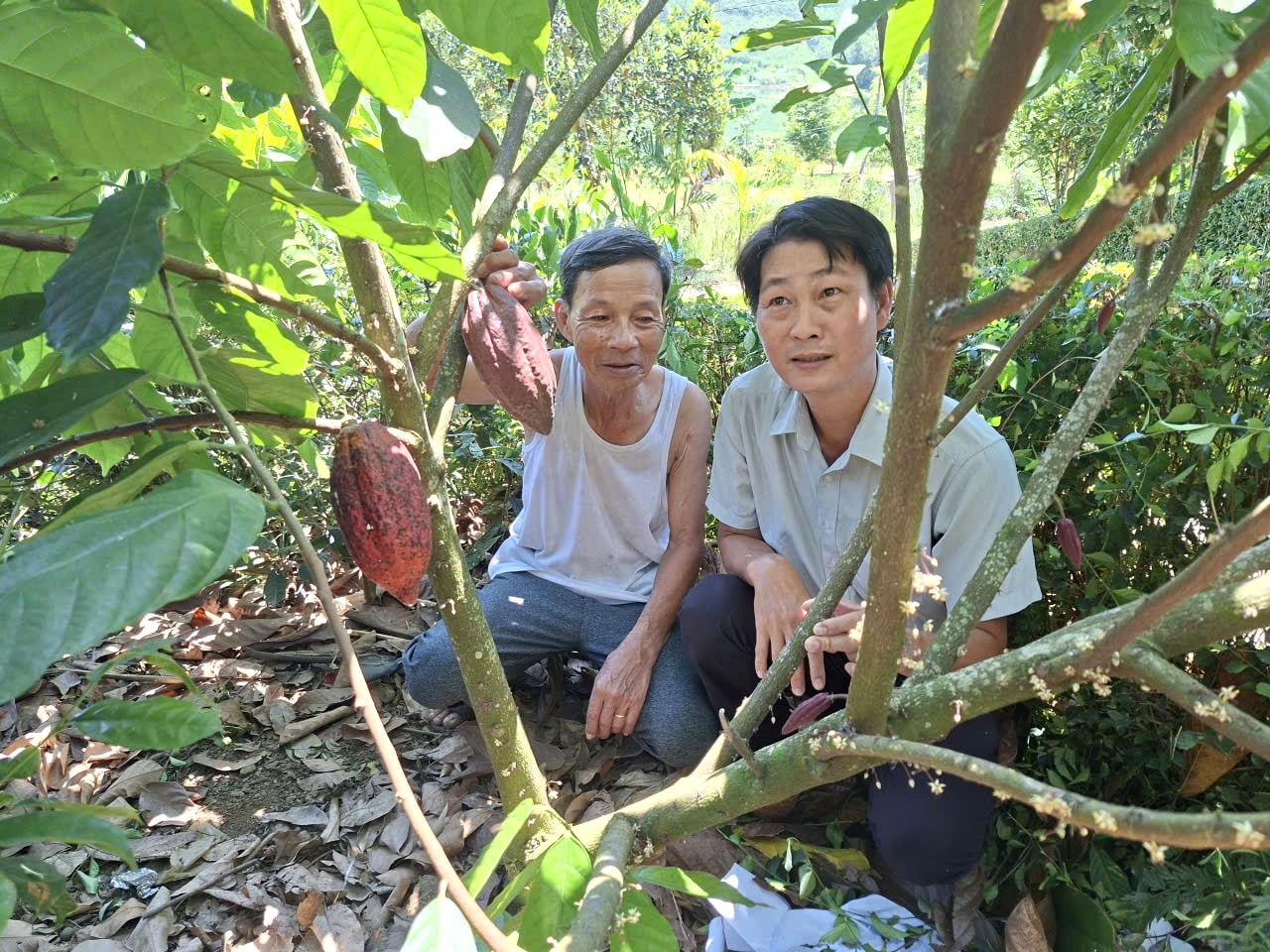
In Duc Phu commune, Mr. Hoang Minh Quoc, Vice Chairman of the People's Committee of the commune, said that in recent times, farmers in the area have introduced and developed new crops, most notably cocoa trees.
Local authorities have facilitated the collaboration between Duc Phu Tam Son Tea Cooperative and Trong Duc Cocoa Company Limited ( Lam Dong province) to organize farmers to cultivate 10,000 cocoa trees on an area of 10 hectares. To date, the cocoa trees have developed well and produced high-quality fruit.
“Cocoa is a high-value industrial crop. We expect this innovative farming model to open up a path for sustainable agricultural development in Duc Phu. We can be confident about the market thanks to product purchase contracts with businesses. Once the raw material area is widely developed, the locality is ready to create conditions for businesses to invest in cocoa processing plants, thereby increasing the value of agricultural products,” Mr. Quoc said.
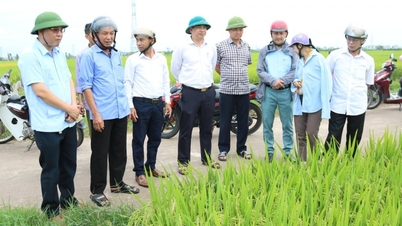
According to Mr. Pham Nam Son, Director of the Department of Agriculture and Environment, Da Nang has seen the emergence of many innovative agricultural farming models that yield higher efficiency than traditional agricultural production, such as growing cantaloupe in greenhouses, grapes, Siamese coconuts, and South American bananas.
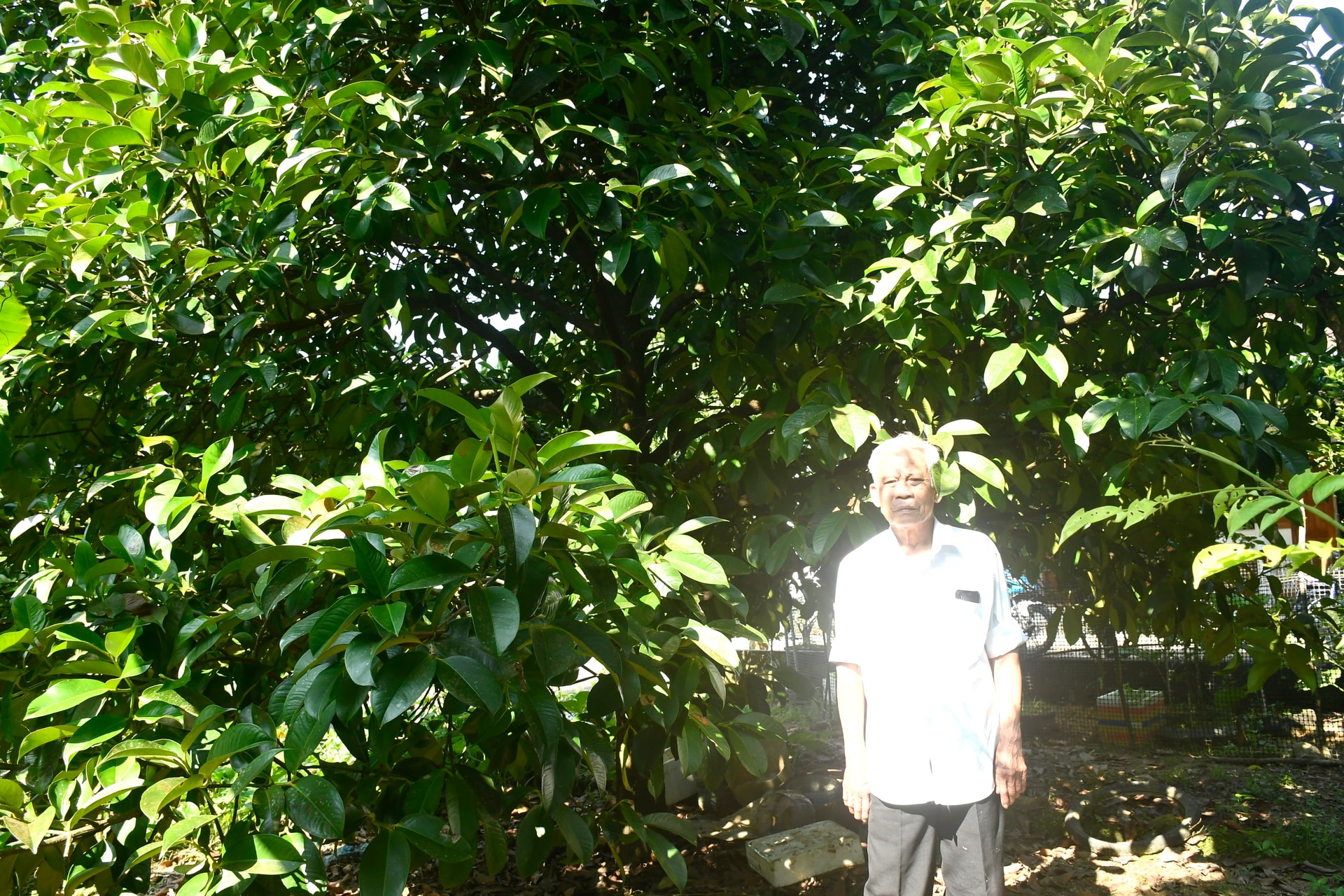
Mangosteen trees thrive in the communes of Tien Phuoc, Dai Loc, and Thang Binh. Avocado trees grow in some hilly areas of Tien Phuoc, Tra My, and Nam Tra My communes. Green-skinned pomelo, seedless lemon, and Thai jackfruit are also thriving, providing a good income for people in the communes of Dai Loc, Duy Xuyen, and Thang Binh...
Regional adaptation
According to Mr. Le Tu Tuan, Head of the Crop Production and Plant Protection Sub-Department (Department of Agriculture and Environment), looking back over the past period, the introduction of new crops has contributed to diversifying agricultural products, effectively utilizing land, increasing people's income, and gradually forming ecological and experiential agricultural models associated with tourism.
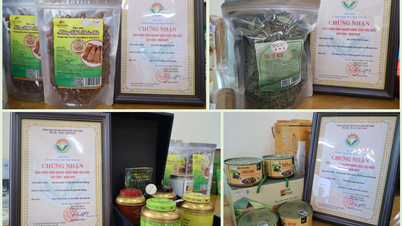
Developing new crops also contributes to transforming low-efficiency agricultural land; creating more OCOP products and local specialties; and increasing production value per unit of cultivated area.
However, introducing new crops to Da Nang still faces many challenges, especially since development models are still spontaneous and small-scale; there is a lack of stable product consumption linkages; and there are not many concentrated specialized cultivation areas.
Locals plant durian, avocado, or other imported fruit trees without assessing the actual adaptation conditions, leading to poor tree growth and low yields in some areas.
Furthermore, the uneven availability of plant varieties, high investment costs, and the long development time for new crops lead to a capital shortage for this investment model.
The reason is that the selection of new crops in some areas is still driven by trends; the suitability for each ecological sub-region has not been fully assessed...
According to the Department of Agriculture and Environment, in the coming period, the relevant authorities will orient the development of new crops towards sustainability, adaptation to climate change, and suitability to the ecological conditions of each region.
The midland and mountainous regions prioritize the development of specialty fruit trees, medicinal plants, and crops with high economic value. The plains and suburban areas focus on developing high-tech agriculture, high-quality fruit trees, and ecological agriculture linked to experiential tourism.
The agricultural sector is reviewing planning and establishing concentrated production areas for new, key fruit crops on a large scale, suitable to ecological conditions and market demand.
Accordingly, relevant authorities will support the development of planting area codes, traceability, and product certification according to standards (VietGAP, organic). Farmers need to apply ecological farming techniques, save water, use organic microbial fertilizers; develop new high-quality fruit tree varieties with pest and disease resistance; connect with businesses, and receive support in product promotion...
Source: https://baodanang.vn/hieu-qua-kinh-te-tu-phat-trien-cay-trong-moi-3339257.html
![[Image] Shipbuilders exposed to steel and record-breaking heat.](https://vphoto.vietnam.vn/thumb/1200x675/vietnam/resource/IMAGE/2026/06/04/1780545781745_ndo_br_img-5402-4683-jpg.webp)


![[Photo] Secretary of the National Assembly Party Committee, Chairman of the National Assembly presides over the meeting of the Standing Committee and Executive Committee of the National Assembly Party Committee.](https://vphoto.vietnam.vn/thumb/1200x675/vietnam/resource/IMAGE/2026/06/03/1780480353201_ndo_br_bnd-2585-jpg.webp)
![[Photo] General Secretary and President To Lam presides over a meeting with the Central Organizing Committee.](https://vphoto.vietnam.vn/thumb/1200x675/vietnam/resource/IMAGE/2026/06/03/1780482764658_a1-bnd-4741-3342-jpg.webp)




























![[Video] Sunset at Lap An Lagoon – Where the sun sets over the fishing nets](https://vphoto.vietnam.vn/thumb/1200x675/vietnam/resource/IMAGE/2026/05/31/1780192137701_beach-landscape-sea-water-nature-grass-745871-pxhere-com.jpeg)






![[Photo] General Secretary and President To Lam attends the 14th Congress of the Vietnam Trade Union](https://vphoto.vietnam.vn/thumb/402x226/vietnam/resource/IMAGE/2026/06/04/1780543339765_anh-man-hinh-2026-06-04-luc-10-22-07.png)
















Comment (0)