

Over 68% of households are worried about the risk of being fined.
In its recently published report on Vietnam's private economy , the Vietnam Chamber of Commerce and Industry (VCCI) dedicates considerable space to the household business sector. According to VCCI, household businesses are not a marginal sector, but an important component of the private economy and of the economy as a whole.
According to preliminary estimates, by the end of 2025, Vietnam will have approximately 6.1 million business households, creating jobs for about 10 million workers. Revenue from business households in 2025 is expected to reach 32.8 trillion VND, out of a total of 484.7 trillion VND in budget revenue from the non-state sector.

Mr. Dau Anh Tuan, Deputy Secretary General of VCCI, said that this is the first time VCCI has conducted a survey specifically for household businesses. The survey results show a challenging picture, with 81.5% of households reporting a decrease in revenue. Meanwhile, 73.7% reported only a small profit; 12.9% broke even; 9.3% incurred small losses; and 2.2% suffered significant losses.
Notably, only 1.9% of business households reported achieving "expected profits" in 2025. 60.8% expect to maintain their current scale over the next two years, 33% are trending towards downsizing, 4.4% are considering dissolution, and only 1.8% want to expand.
According to VCCI, this structure shows that the majority of business households are still able to maintain operations, but profit margins are very thin, and the room for accumulation for reinvestment or to withstand new shocks is limited.
"This is not just a matter of livelihood for household businesses, but it also affects retail, consumption, and the entire supply chain of enterprises," Mr. Tuan said.
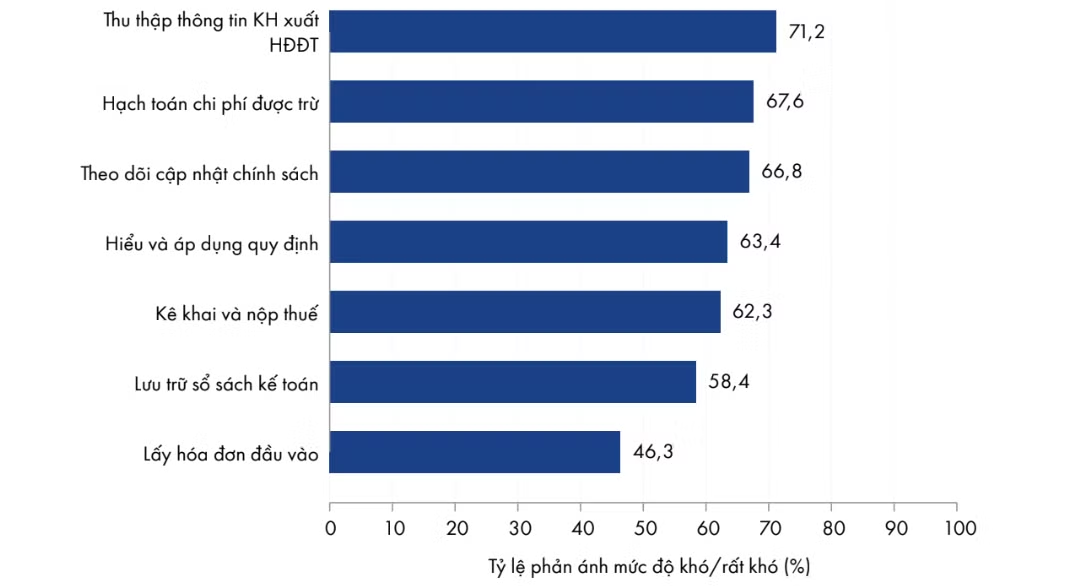
A survey by VCCI (Vietnam Chamber of Commerce and Industry) revealed numerous concerns regarding tax policy compliance. Specifically, relatively high percentages expressed concerns about complex procedures (71.2%); risk of penalties (68.3%); lack of timely updates (63.5%); high compliance costs (63.5%); lack of technological skills (59.4%); and lack of specific guidance (54.9%).
When asked about current tax rates compared to their business capacity, 49.1% of households considered them "relatively high," 22% rated them as "too high," while only 10.8% considered them appropriate.
According to VCCI, a cautious mindset is leading many households to prioritize maintaining stable operations rather than expanding their businesses. As expansion brings additional pressure in accounting, taxation, and management, the motivation to invest also slows down.
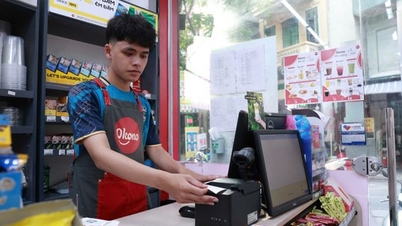
Electronic invoicing is one of the most challenging aspects for many households. Up to 54.8% of households reported not knowing how to correct errors in invoices; 35.3% encountered difficulties with technical issues, and 31.1% lacked the necessary equipment or internet access to implement the process.
Notably, the burden of compliance does not decrease as household businesses grow larger, but tends to increase with revenue size. According to VCCI, this indicates the need for appropriate support mechanisms so that household businesses can transition smoothly, instead of feeling that costs are increasing faster than their ability to adapt.
We need a simple policy.
The VCCI survey also showed that about 68% of business households said they would maintain their current scale instead of expanding. The percentage of households planning to expand further is quite low. According to Mr. Dau Anh Tuan, this indicates that local authorities need to pay more attention to the business household sector, not just focusing on large enterprises or the FDI sector.
"A good business environment is not just about large corporations or modern FDI enterprises, but also requires a thriving small business sector and especially household businesses to create a mutually supportive ecosystem," he emphasized.
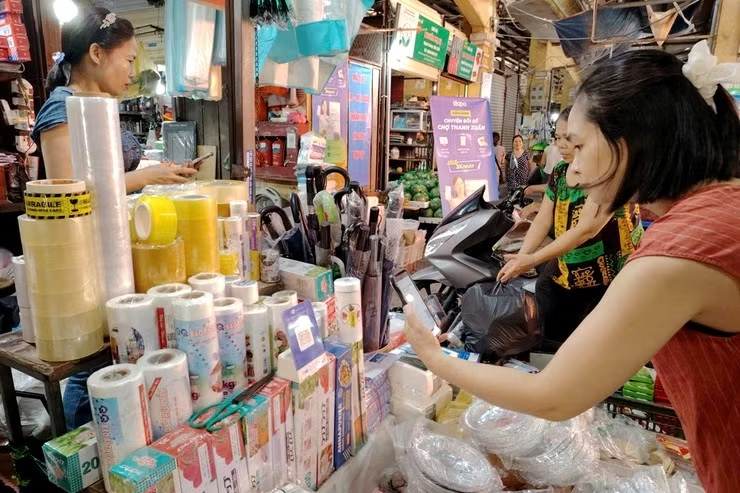
With the goal of having 2 million businesses by 2030, a representative from the Vietnam Chamber of Commerce and Industry (VCCI) stated that this means millions more household businesses must convert into enterprises. However, according to Mr. Tuan, many households are currently reluctant to convert not because of a lack of business motivation, but mainly due to concerns about administrative procedures, legal regulations, and the burden of compliance.
Mr. To Hoai Nam, Permanent Vice Chairman and General Secretary of the Vietnam Association of Small and Medium Enterprises, believes that the important thing for household businesses is not to exempt them from tax obligations, but to find ways for them to fulfill their obligations simply, easily, and in accordance with their actual capabilities.
When formulating policies for household businesses, it is necessary to start from the realities of life and the very different characteristics of this group, instead of mechanically applying the same management mindset as businesses.
According to Mr. Nam, the management agency has also recognized the shortcomings in the implementation of policies for household businesses and has made certain adjustments over time. However, the more important thing is to design a suitable, simple, and easy-to-implement form of management and tax collection for this group.
"There are people who have very little education and have only worked in one profession their whole lives. If we now tell them they can't do bookkeeping and therefore can't sell anymore, it's like cutting off their livelihood," Mr. Nam said.
Source: https://tienphong.vn/ho-kinh-doanh-lai-mong-thuong-truc-noi-lo-thue-post1844612.tpo


![[Image] Hanoi's urban life under the challenge of a "scorching hot" environment](https://vphoto.vietnam.vn/thumb/1200x675/vietnam/resource/IMAGE/2026/05/25/1779706979265_nang-nong-t5-2026-minh-duy-7-4636-jpg.webp)
![[Image] Close-up view of the interchange connecting the two expressways and Long Thanh Airport.](https://vphoto.vietnam.vn/thumb/1200x675/vietnam/resource/IMAGE/2026/05/25/1779703378210_ndo_br_z7863716673926-224453a31600126cce10622af6290afd-4549-jpg.webp)


























































































Comment (0)