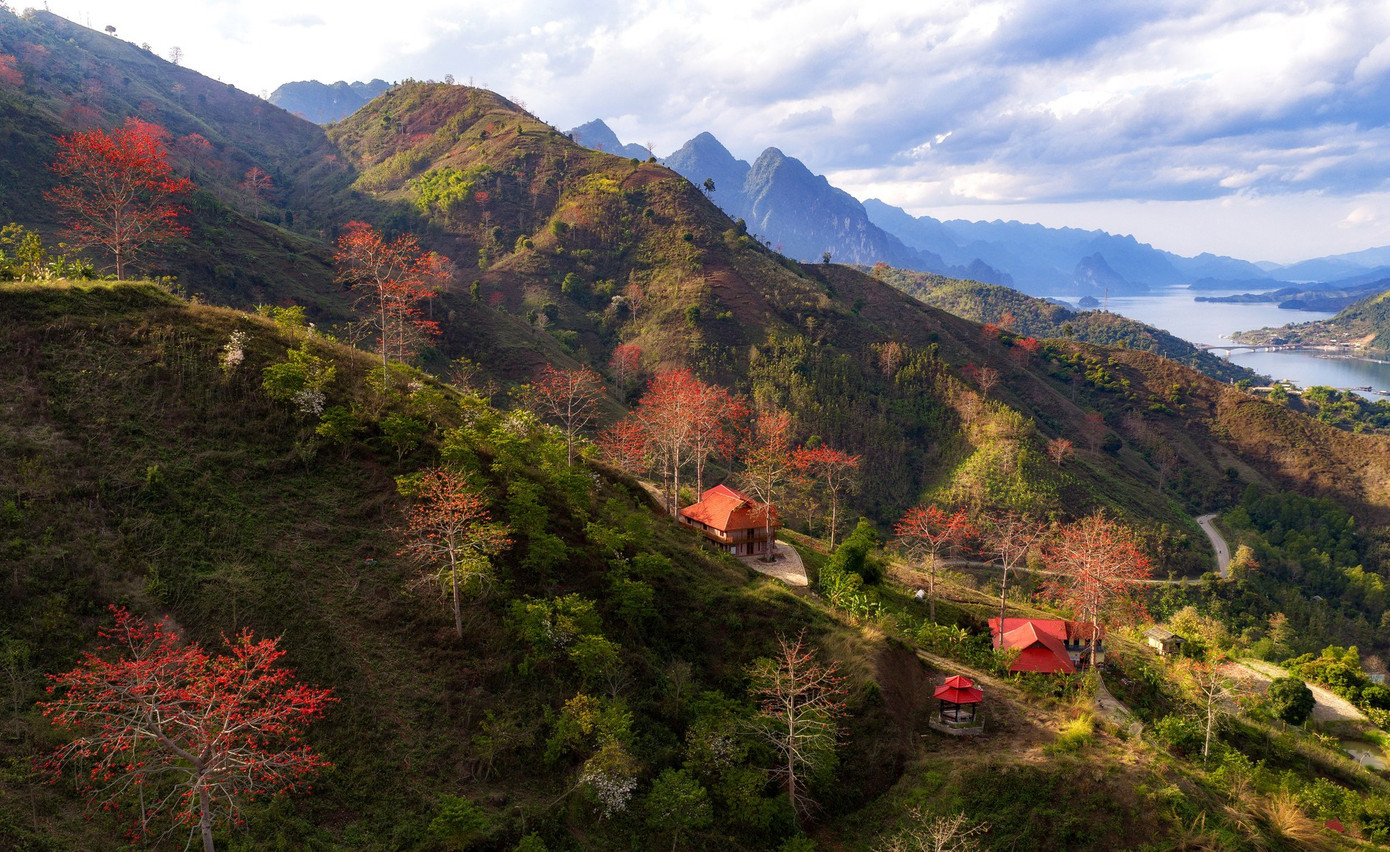
As March begins, the kapok flowers arrive in Son La as if by appointment. Just one night of dry mountain wind, and by morning, clusters of bright red flowers burst forth against the deep blue sky.
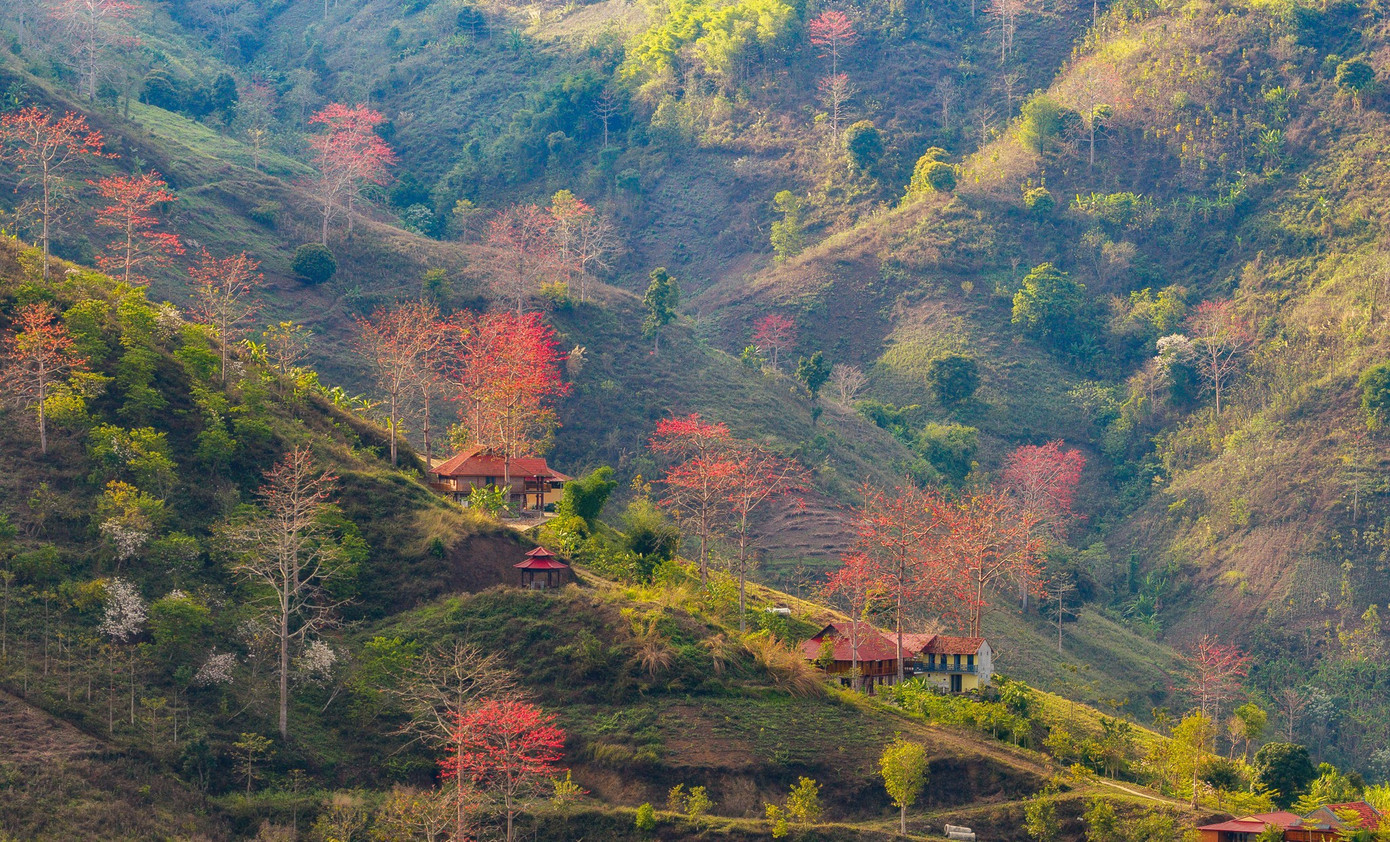
From the stream banks and riverbanks to the edge of the village, the rice plant's branches reach high. Its trunk is gnarled, its branches thin and spindly, yet it is as resilient as the character of the people of the highlands .
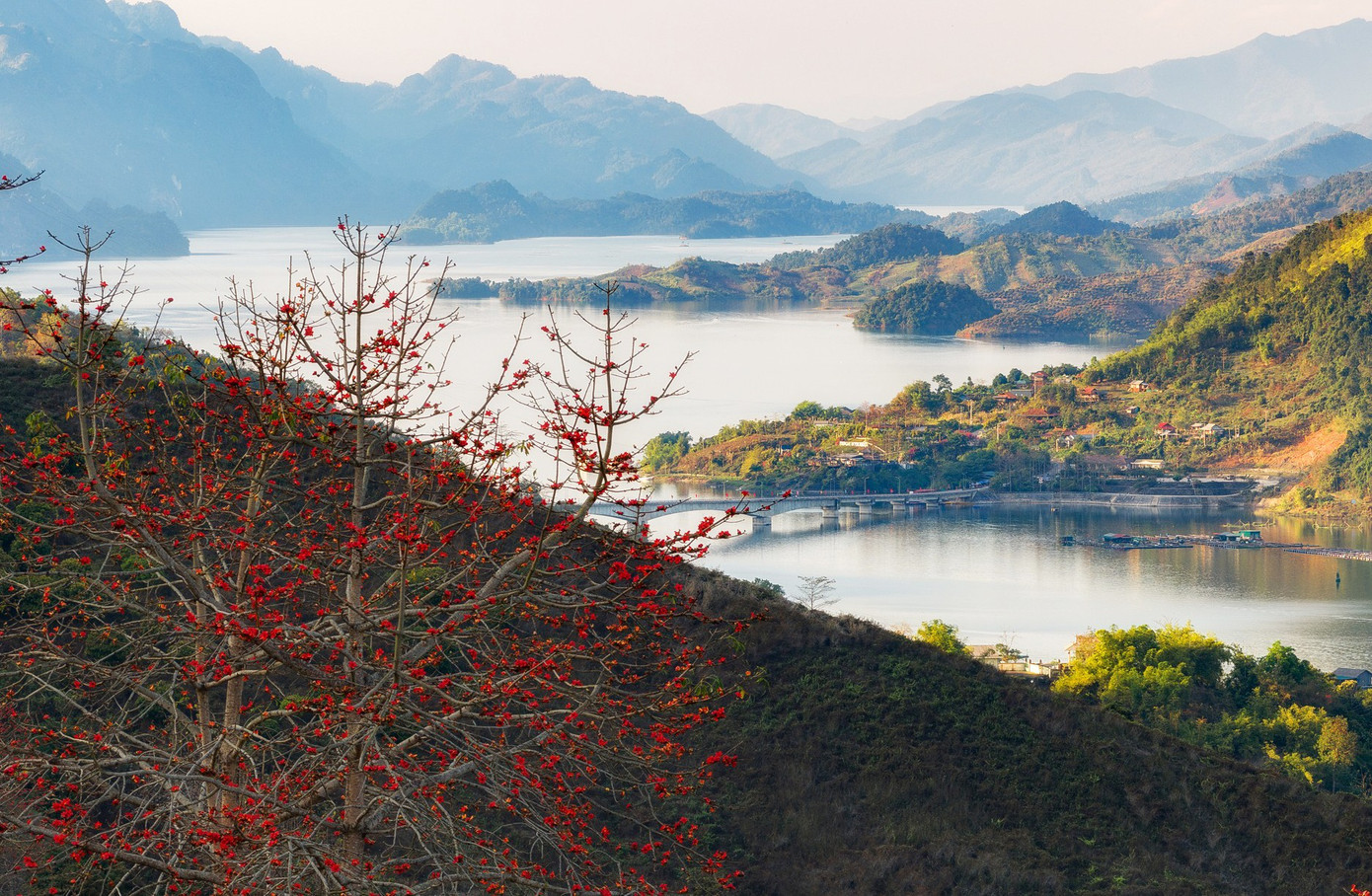
The kapok tree is found throughout the mountains and forests of Son La, but its most captivating beauty can be found along the Da River in Quynh Nhai. Each flowering season , its vibrant red blossoms blaze like flames against the vast expanse of water, enchanting visitors.
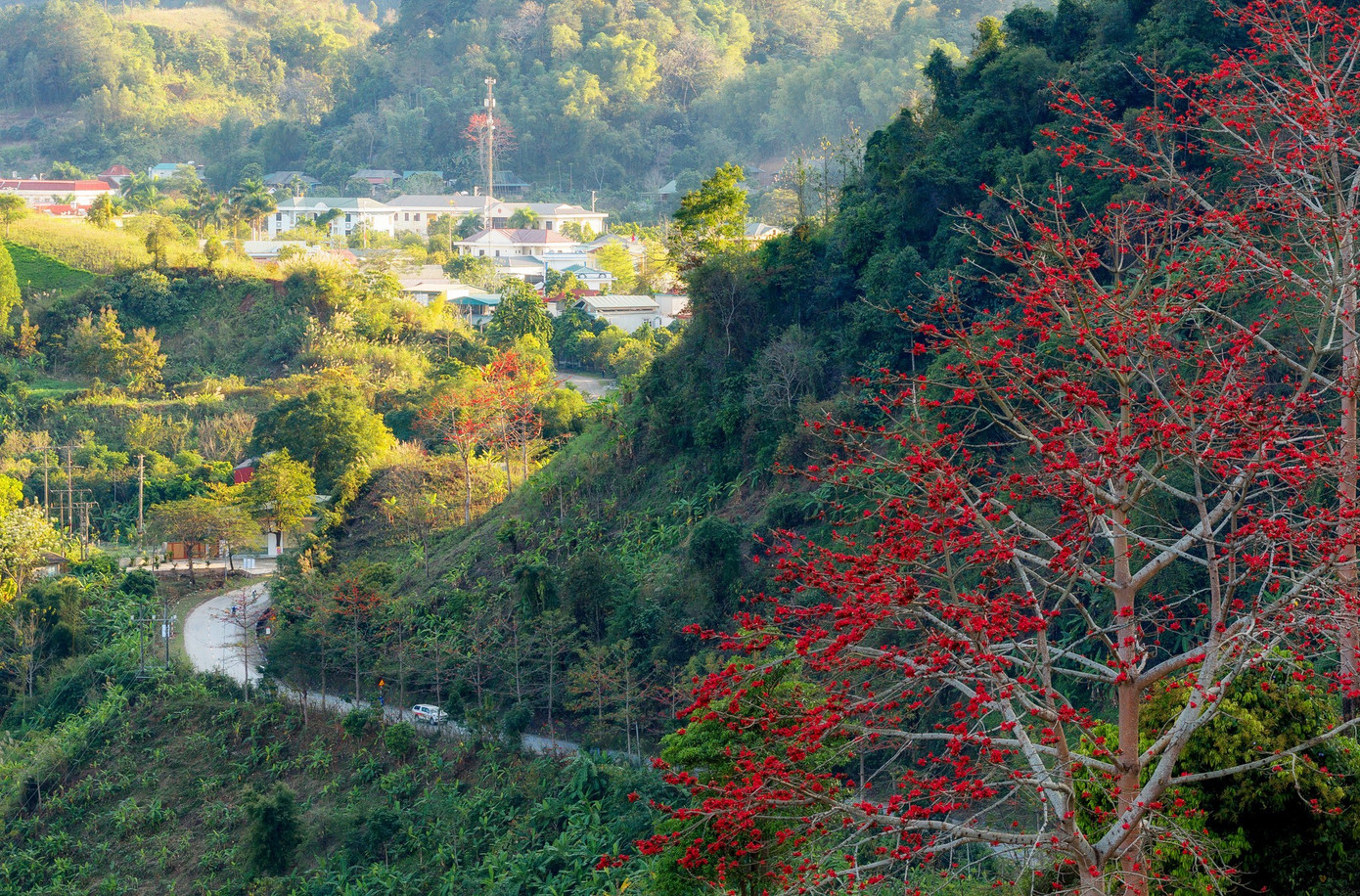
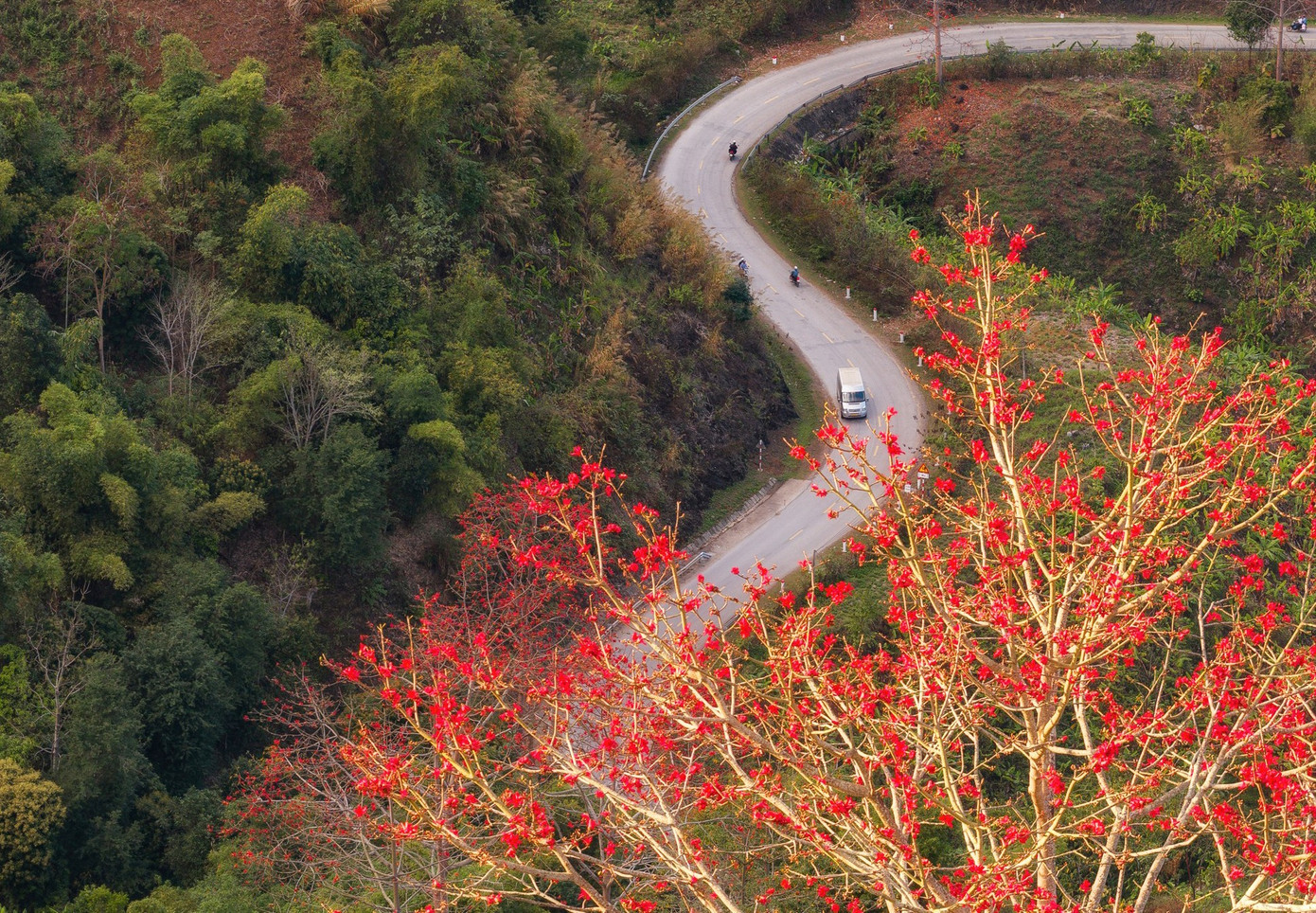
Some trees stand alone in the cornfield. Some are hundreds of years old, silently witnessing the many seasons that have changed in the village .
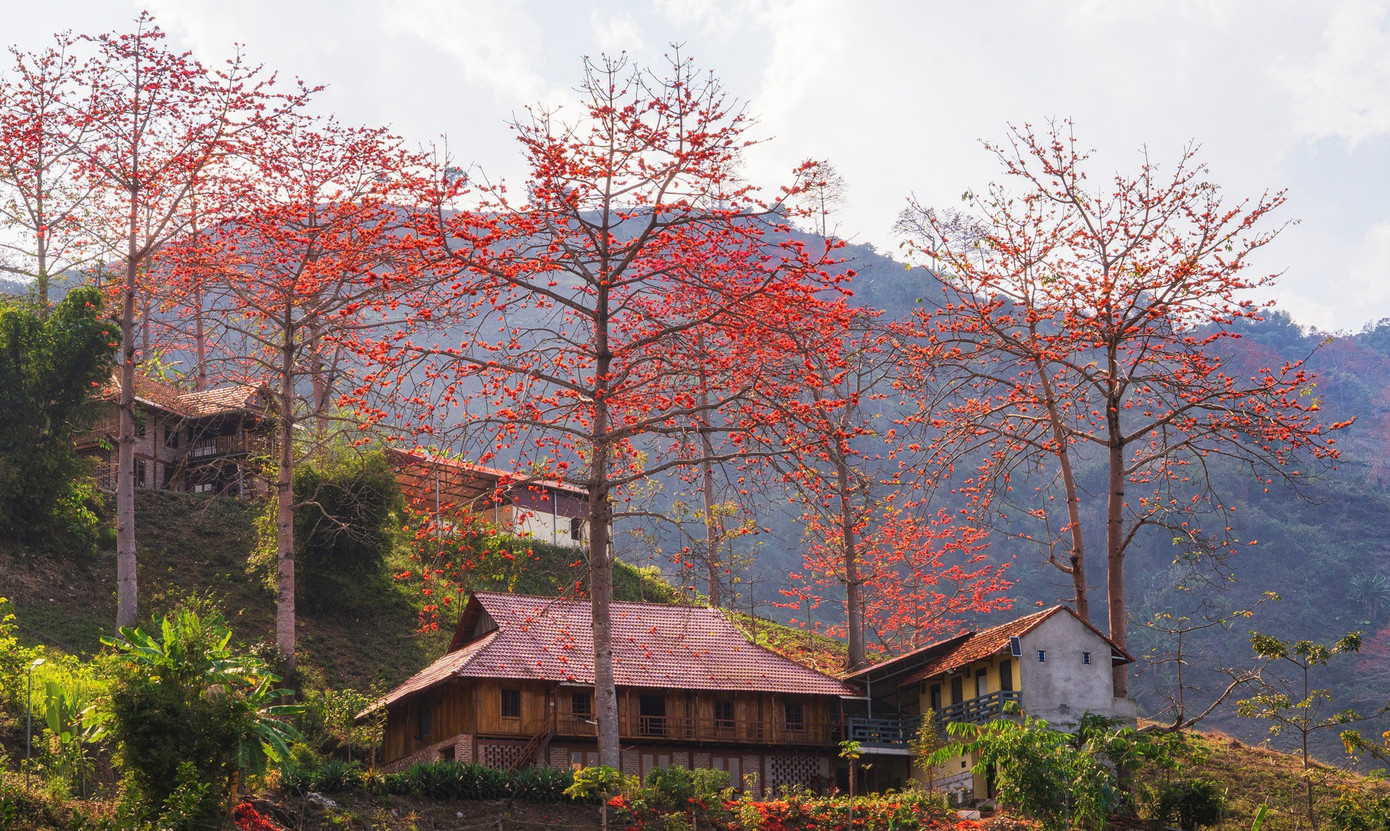
For the ethnic people of Son La, the kapok flower is not just a flower, but a signal of a new harvest season, a harbinger of vibrant festivals at the beginning of the year.
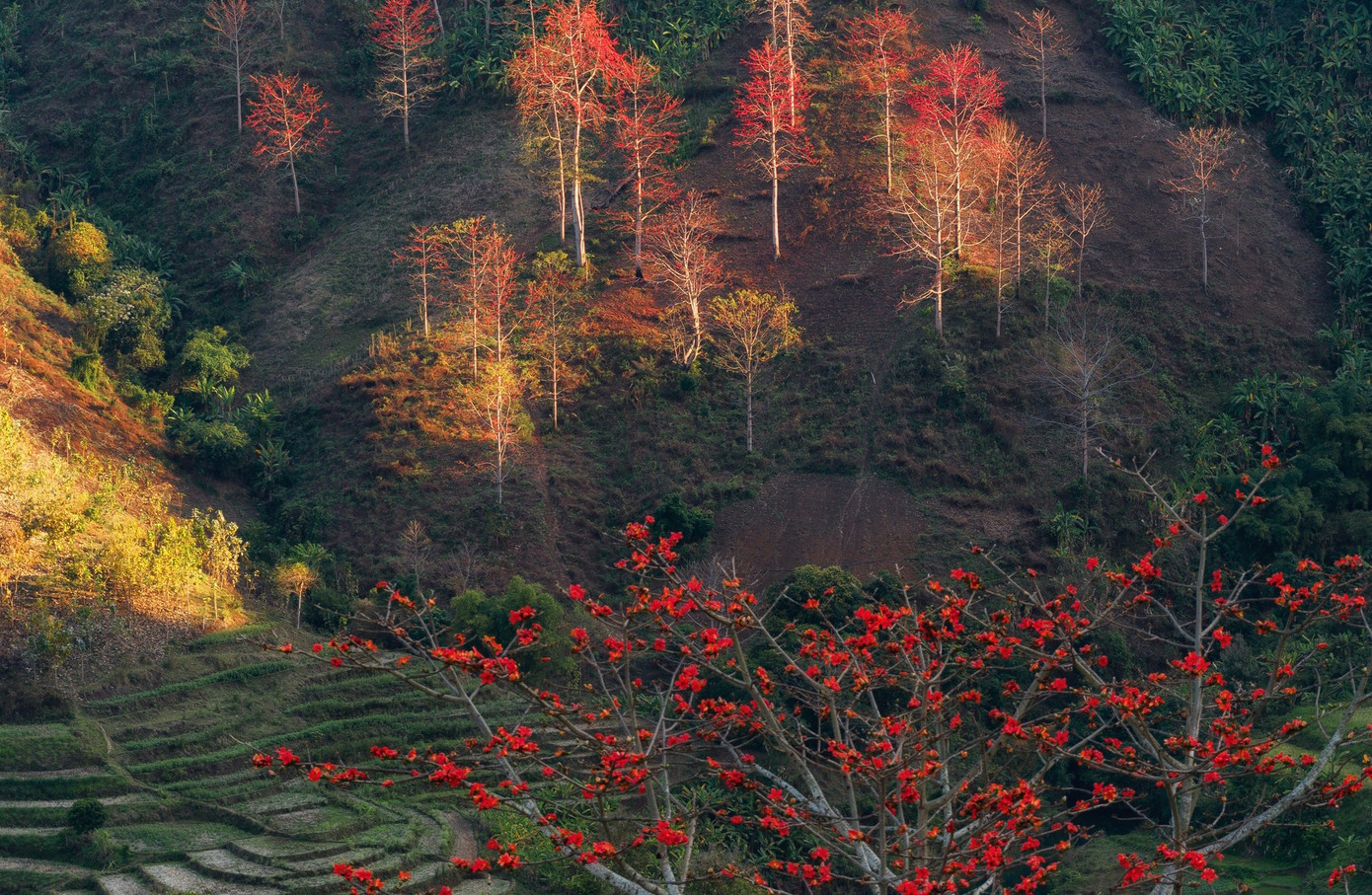
The kapok tree blossoms after all the leaves have fallen. On the bare branches, only the five-petaled, deep red flowers with prominent yellow stamens remain. This contrast creates a powerful, decisive beauty – a beauty that needs no embellishment. When the flowers fall, the red petals cover the ground, like a velvet carpet in the vast forest.
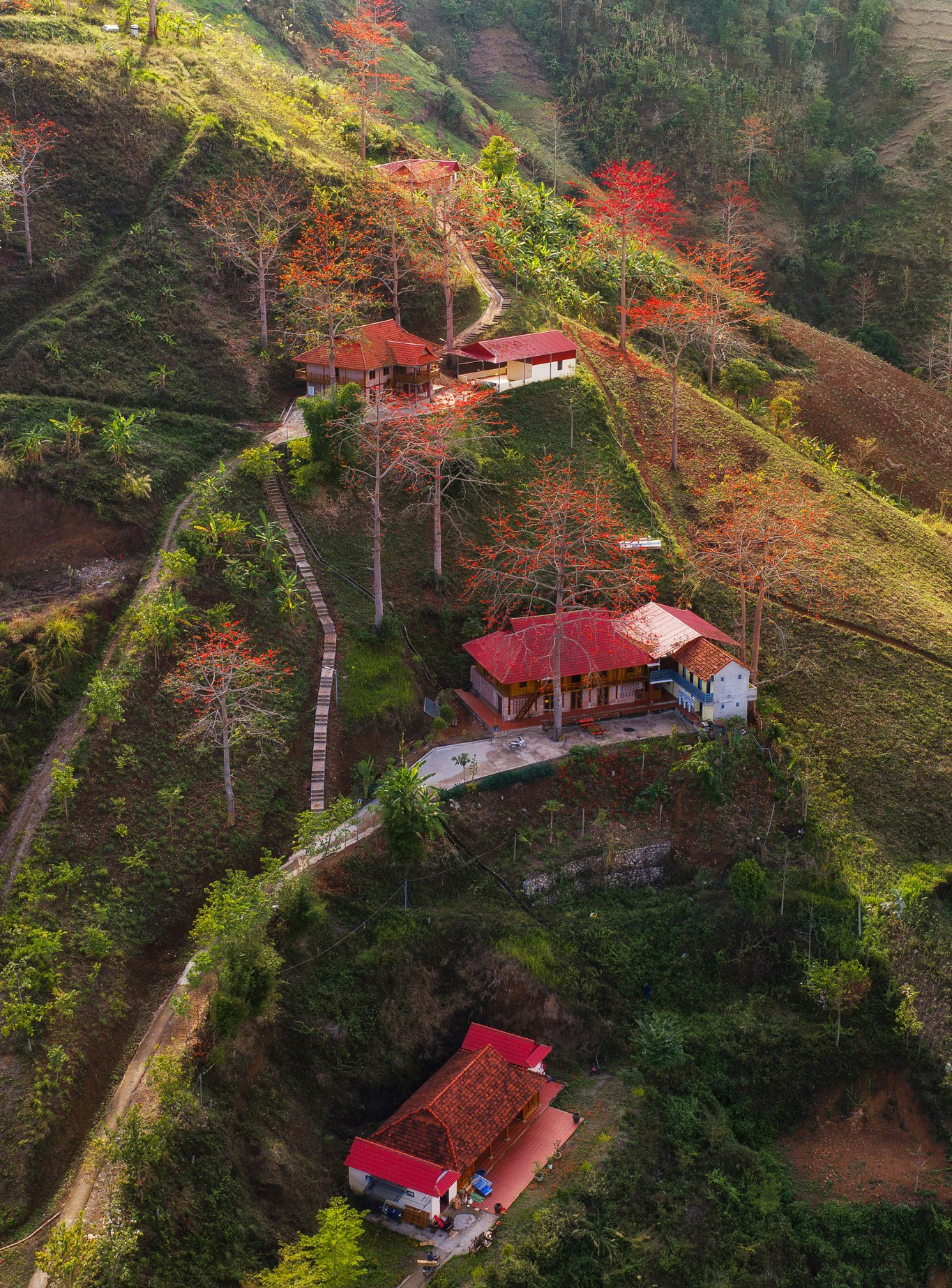
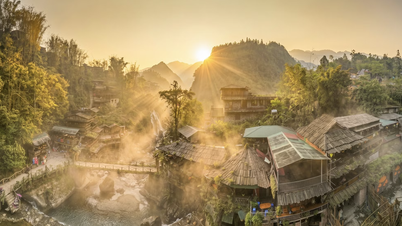
In recent years, along with the seasons of plum blossoms , peach blossoms, camellias, etc., the season of kapok blossoms has gradually become a distinctive highlight on the Son La tourism map.
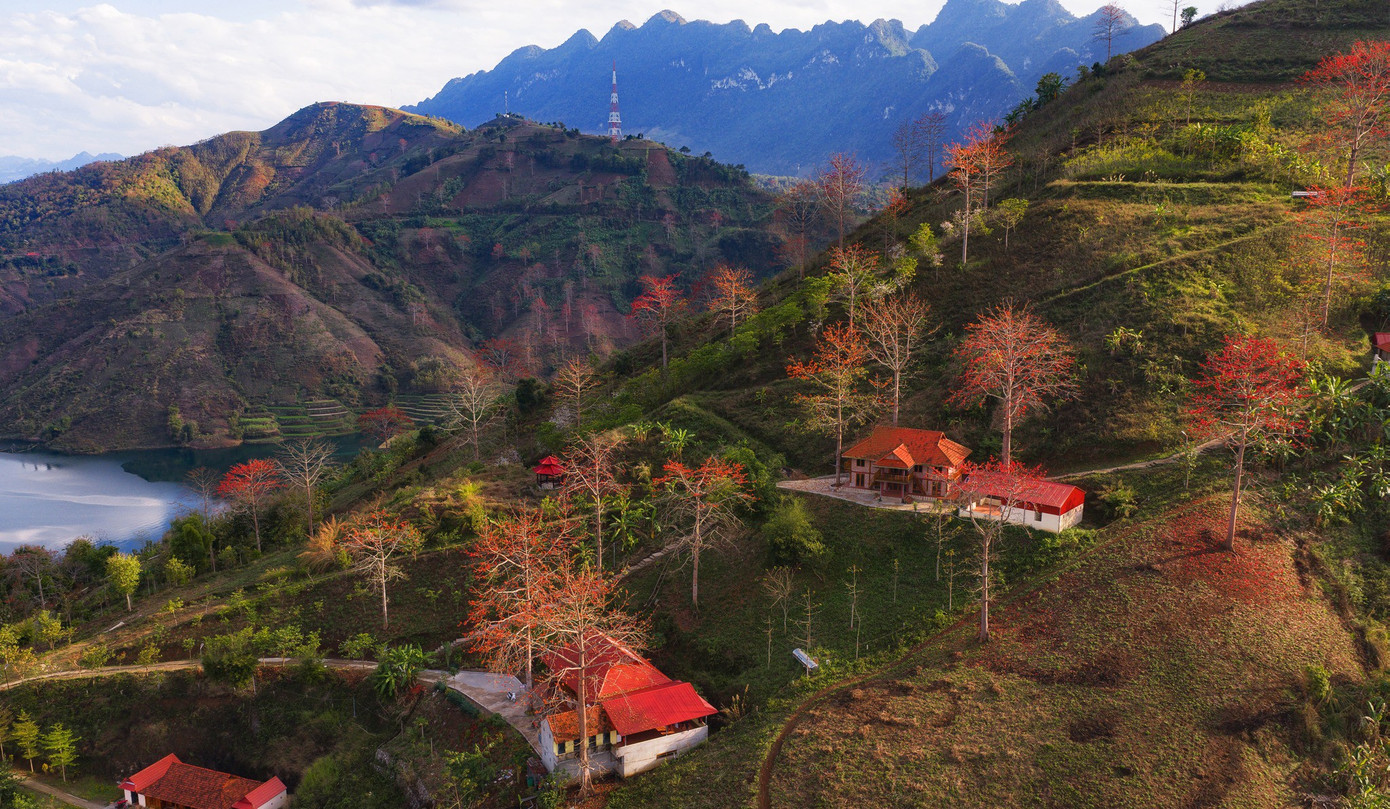
Many young people come here to take photos, check in, and share images of the vibrant kapok flowers on social media, contributing to spreading the natural beauty of this region.
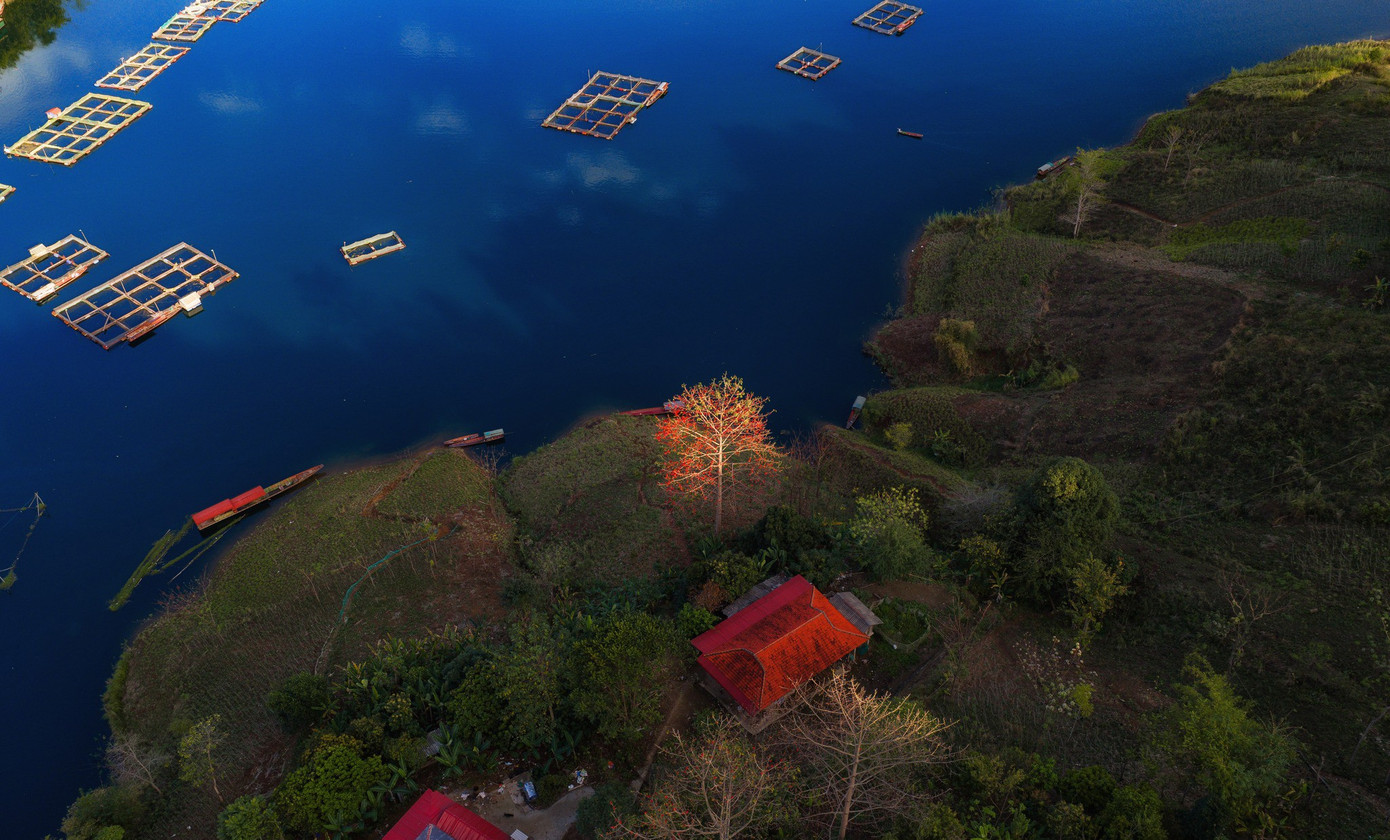
Local authorities and residents are also beginning to see new value in these seemingly ordinary kapok trees. Many homestays are taking advantage of their proximity to these ancient trees to create experiential spaces , combining storytelling about local culture and highland cuisine .
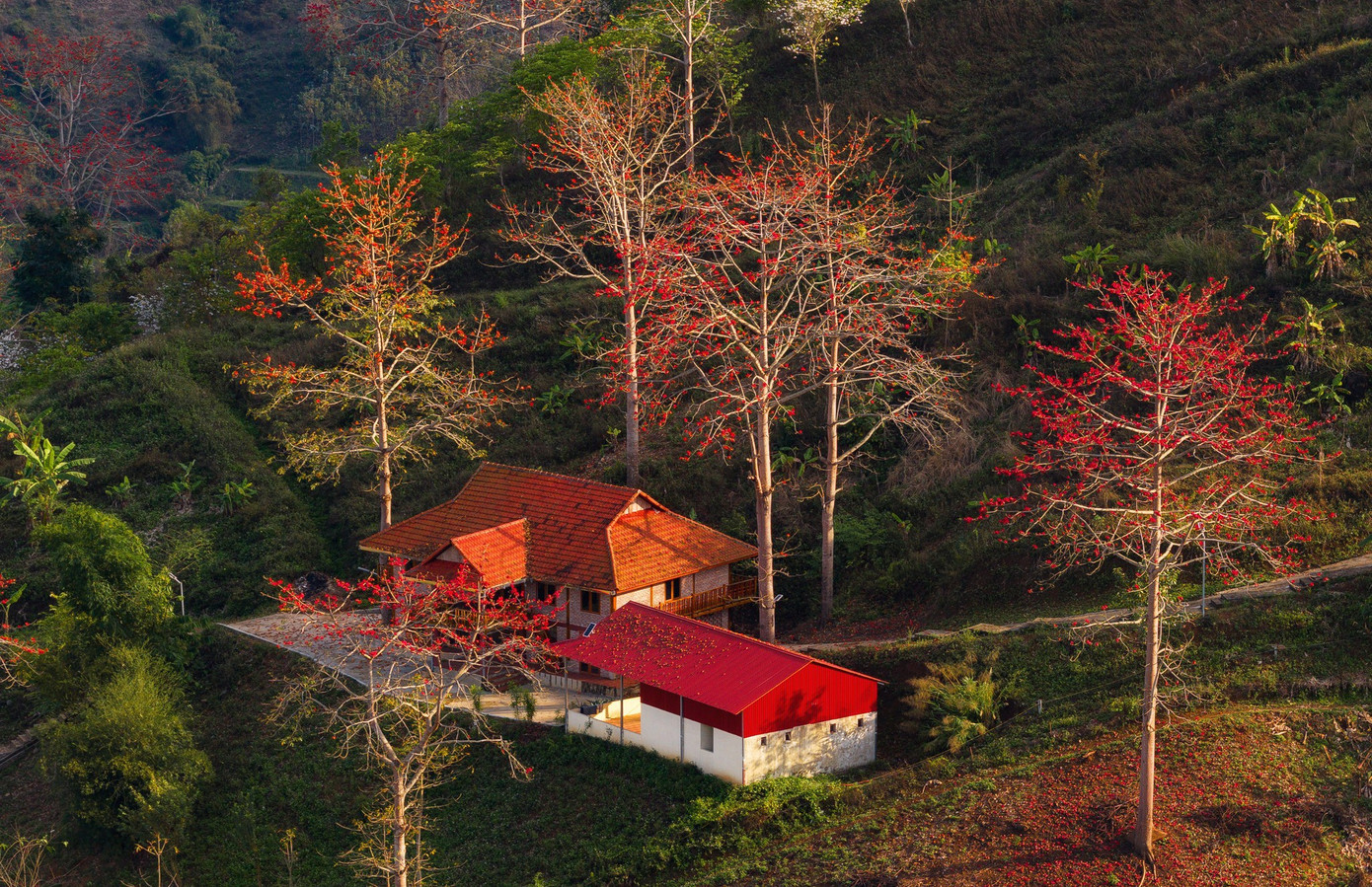
Preserving the kapok flower is also about preserving the memories of the villages, preserving an irreplaceable color in the cultural landscape of Son La. As the locality is determined to develop green tourism, ecological agriculture, and the local economy, natural values like the kapok flower need to be recognized as an asset, not just an ornament of the mountains and forests.
Source: https://tienphong.vn/hoa-gao-thap-lua-khap-nui-rung-tay-bac-post1824971.tpo



![[Photo] National Assembly Chairman Tran Thanh Man working with the Standing Committee of the Law and Justice Committee](https://vphoto.vietnam.vn/thumb/1200x675/vietnam/resource/IMAGE/2026/05/21/1779378929214_ndo_br_1-4610-jpg.webp)
![[Photo] General Secretary and President To Lam presides over a working session with the Central Policy and Strategy Committee on the development of the materials industry.](https://vphoto.vietnam.vn/thumb/1200x675/vietnam/resource/IMAGE/2026/05/21/1779359935432_a3-bnd-3129-1412-jpg.webp)
































































Comment (0)