



At an altitude of over 1,400m amidst the majestic Truong Son mountain range in southwestern Quang Tri province, Sa Mu Pass is shrouded in cold mist year-round, boasting a cool climate like a "miniature Da Lat" in the sunny and windy central region. Amidst the clouds on the summit of Sa Mu, people quietly persevere, diligently cultivating many precious flower species, bringing the colors and fragrances of the high mountains to the city, opening up a new direction for agriculture in Quang Tri.
Planting flowers amidst the clouds
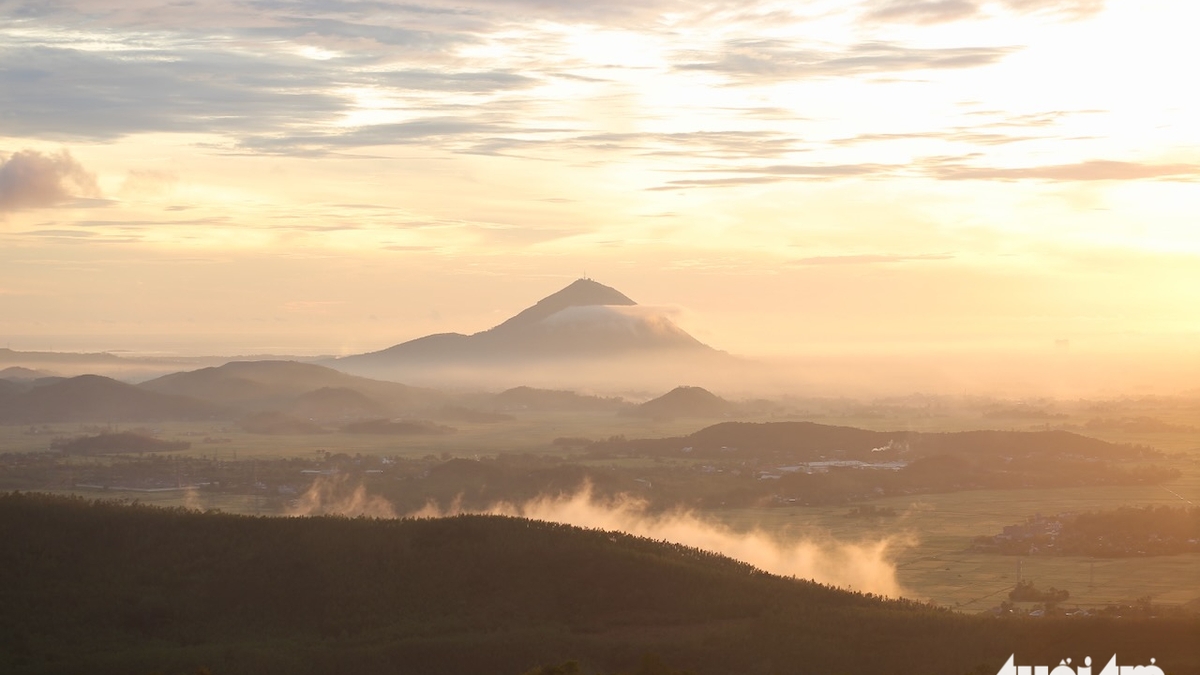
Sa Mu is the land of clouds. Standing on the mountain pass, one feels as if just a few more steps would allow them to touch the white clouds drifting lazily around the Truong Son mountain range. The climate here is cool year-round, maintaining a temperature of 18 to 20°C.
In 2016, after research, the Department of Science and Technology of Quang Tri province decided to select the Sa Mu Pass area, with its natural conditions, climate, and soil suitable for temperate plant species, as the location for building a high-tech agricultural production model.
In 2018, the Bac Huong Hoa Science and Technology Research and Application Station officially commenced operations, carrying with it the expectation of opening up a new direction for agricultural development in a region previously only familiar with dense forests and cold mist.
Deputy Station Chief Pham Truong Hoc recalled the early days of setting foot in Sa Mu with the same concerns still present: “At that time, everything was practically starting from scratch. Infrastructure was lacking, roads were difficult to travel on, and the electricity and water systems were not stable. Meanwhile, the model of growing lilies and phalaenopsis orchids, famously ‘fussy’ flowers, required strict procedures and techniques, and the cultivation environment had to be tightly controlled for every parameter. Phalaenopsis orchids needed 20 to 22 months of continuous care before they could bloom; even a small deviation in temperature, humidity, or light was enough to ruin a whole year's work.”
In 2020-2021, prolonged heavy rains caused serious landslides in the mountainous areas of Quang Tri province. At times, the road to the station was cut off, leaving the staff almost isolated in the mountains. “There were nights when the rain poured down, the wind howled, and the greenhouses here became fragile amidst the surrounding mountains, as if they were about to crack and split open. The staff at the station had to take turns on night duty, checking every piece of equipment and re-measuring every indicator to ensure the plants weren't affected,” Mr. Hoc recounted.
Besides facing technical challenges, the young officers at the station also had to adapt to the quiet and harsh pace of life at the mountain pass. Ms. Tran Thi Huong, wife of Mr. Hoc and also an officer at the station, recalled with emotion: “Some officers at the station only came down the mountain once a month to visit their families, so we often jokingly called it ‘reintegration into the community.’ The solitude of the high mountains, combined with the pressure of the job, became a significant challenge for anyone.”
Despite the difficulties, when asked if he had ever thought about returning to the lowlands, Mr. Hoc just smiled kindly and said, "Having decided to stay in Sa Mu, my wife and I told ourselves we had to see it through. What we aspire to is to change perceptions and open up new production models that bring high economic efficiency to the people in this highland region."
After nearly two years of perseverance, the first batch of Phalaenopsis orchids bloomed, bringing overwhelming joy to the entire team. Thanks to the stable climate of Sa Mu, the orchids grew well, producing large, vibrant, and long-lasting flowers.
From a few thousand initial plants, production has gradually expanded to a 3-hectare greenhouse area. For the Lunar New Year of the Year of the Horse (2016), the research station has planted over 30,000 Phalaenopsis orchids in various colors such as white, phoenix red, purple-red, yellow, pink, etc., to meet market demand.
Sa Mu has become a professional flower growing region.
Thanks to research and the attention and investment from the Department of Science and Technology, the research station has gradually mastered the technology of producing, tissue-cultured, and caring for temperate flower varieties and high-grade medicinal plants. The station's production workshop now includes a greenhouse system with complete modern equipment. The use of readily available natural materials such as a gravity-fed water system from the mountains and solar-powered batteries contributes to environmental protection and lowers product costs.
Mr. Hoc said: “We have applied Industry 4.0 technology, meaning all stages such as regulating light, temperature, and humidity are completely automated, based on phones and computers. With the application of science and technology, the station has controlled the flowering time precisely. For Phalaenopsis orchids, the timing of the flowers blooming during the Lunar New Year largely determines the product's value, bringing high economic efficiency.”
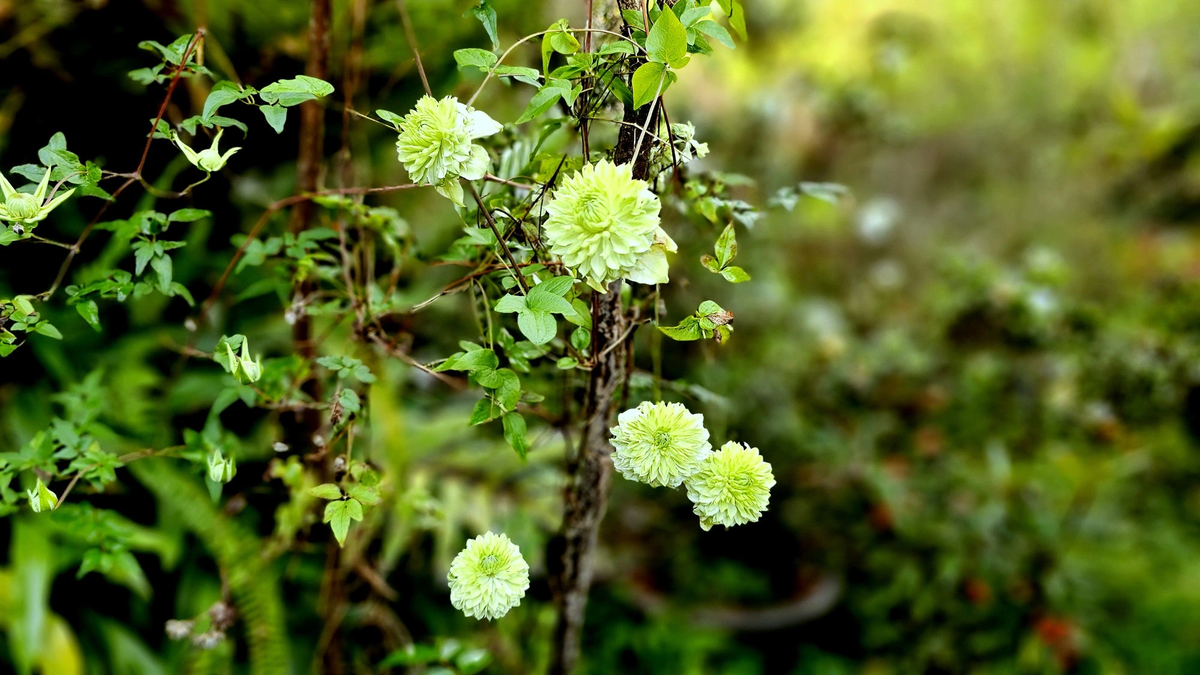
Not stopping at Phalaenopsis orchids, the station has also successfully experimented with and cultivated many other temperate flowers such as lilies, tulips, chrysanthemums, anthuriums, and marigolds; while also developing models for strawberries and sweet tomatoes. Some valuable medicinal plants such as Dendrobium nobile and Phalaenopsis amabilis are also preserved and propagated, opening up more diverse economic development opportunities for the highlands.
Following the success of the flower garden on the mountain pass, the station has built a new facility in Xa Ry village, Huong Phung commune, with a greenhouse area of approximately 3,000 m² . Mr. Nguyen Huu Ngoc, an officer at the research station's second facility, said: “Besides production using modern technology, the Quang Tri Provincial Department of Science and Technology always focuses on promoting and linking with businesses, supermarkets, and retail chains inside and outside the province to find outlets for the products; actively communicating through mass media as well as establishing websites and fanpages on social media to promote them.”
Deputy Director of the Quang Tri Department of Science and Technology, Dao Ngoc Hoang, affirmed: “This is a great source of encouragement for us, scientists, and also shows an effective and practical direction because it has ‘awakened’ the potential and advantages of this long-dormant land. We hope to continue to receive support from the province, the Ministry of Science and Technology, and businesses so that Quang Tri's agricultural products can go further and reach markets in other provinces and the whole country.”
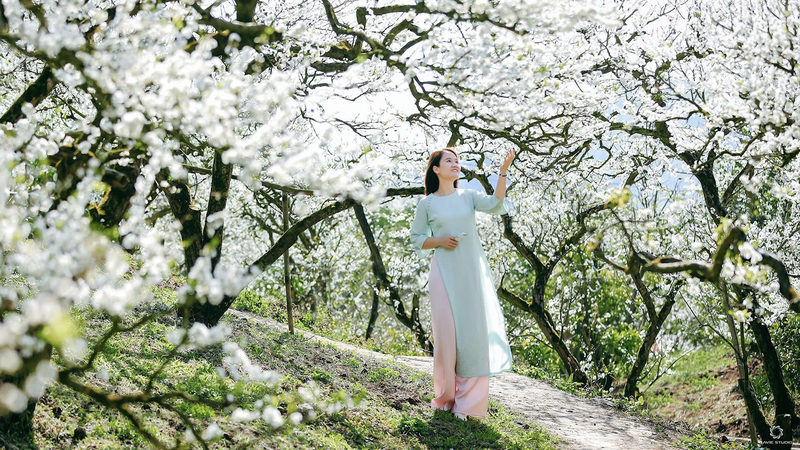
From the cold, misty mountains, the flowers climb the slopes, following the winding paths to the plains, carrying not only their fragrance and beauty but also the very breath of the mountains and forests. In the warm spring, the colors of orchids, lilies, and tulips seem even more vibrant and radiant, cultivated by the hands of people who have dedicated their faith and love to their work. It is they who have contributed to transforming Sa Mu from a land shrouded in cold mist into a shining example of high-tech agriculture, writing a story that is both simple and worthy of respect amidst the vast Truong Son mountain range.
Source: https://nhandan.vn/hoa-no-tren-dinh-sa-mu-post943371.html
























































Comment (0)