

A heart-stirring season of jacaranda blossoms
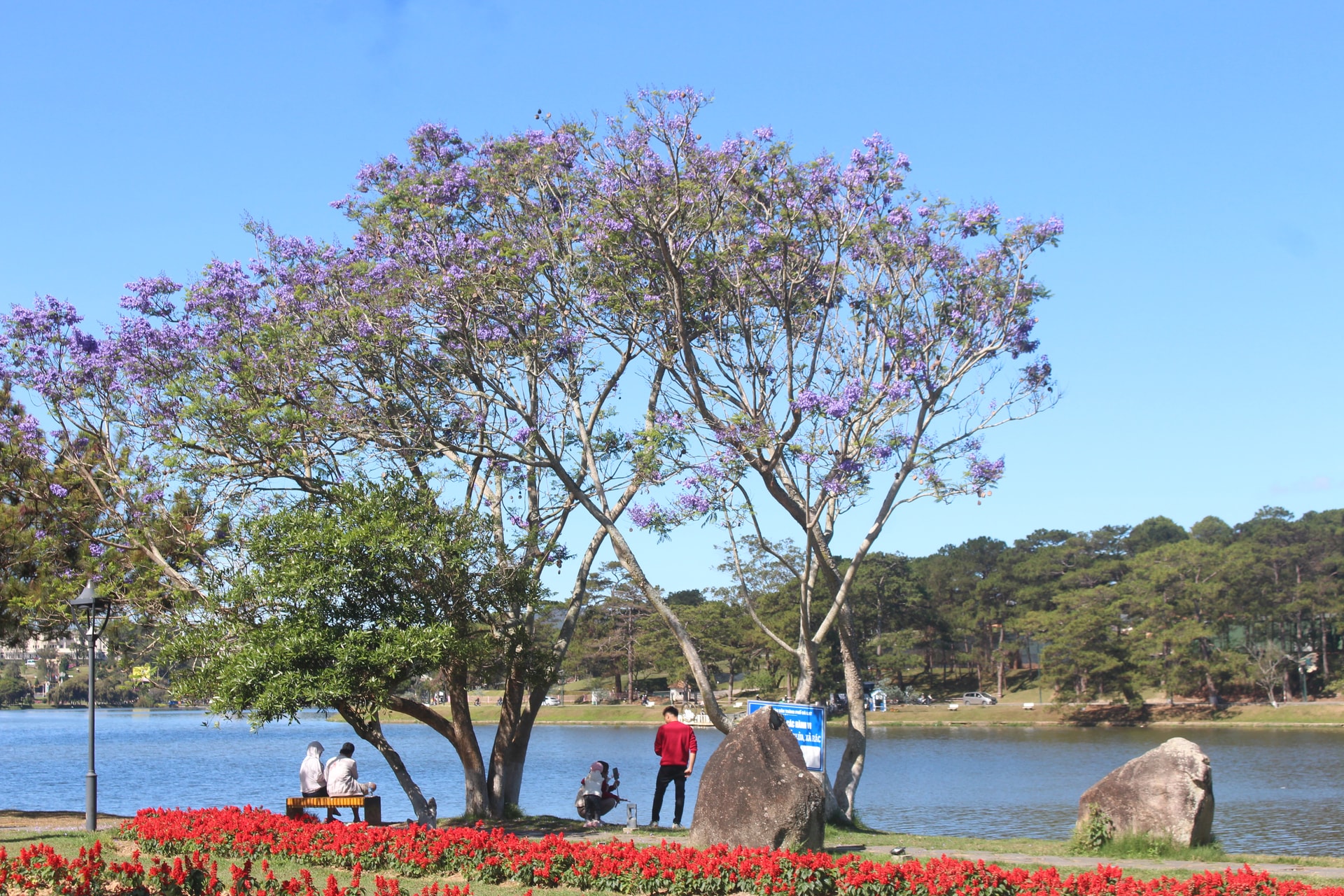
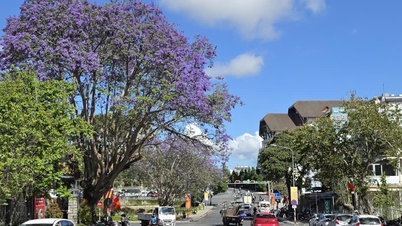
With the cherry blossom season just over, in Da Lat in March, as the dry season reaches its peak, jacaranda trees begin to display their delicate purple blossoms in the bright golden sunlight. Unlike the cherry blossoms, which bloom all at once, the flowers gradually reveal their purple hues in clusters, branches, and trees. This unevenness creates a prolonged flowering season, allowing visitors to encounter the purple blossoms throughout the spring.
The purple of the jacaranda tree is unlike the lilac, the crape myrtle, or the myrtle; it's not the typical Huế purple, but rather a blend of all those shades of purple, breathtakingly beautiful. The drier the sun, the more intensely the flowers bloom. Against the deep blue sky, the bell-shaped blossoms hang high in clusters, vying to dye the entire sky purple. With just a gentle breeze, some of the earlier-blooming flowers detach from the branches, making way for those that bloom later. Flowers cling to hair, gently float by, giving the feeling that you could reach out and catch them.
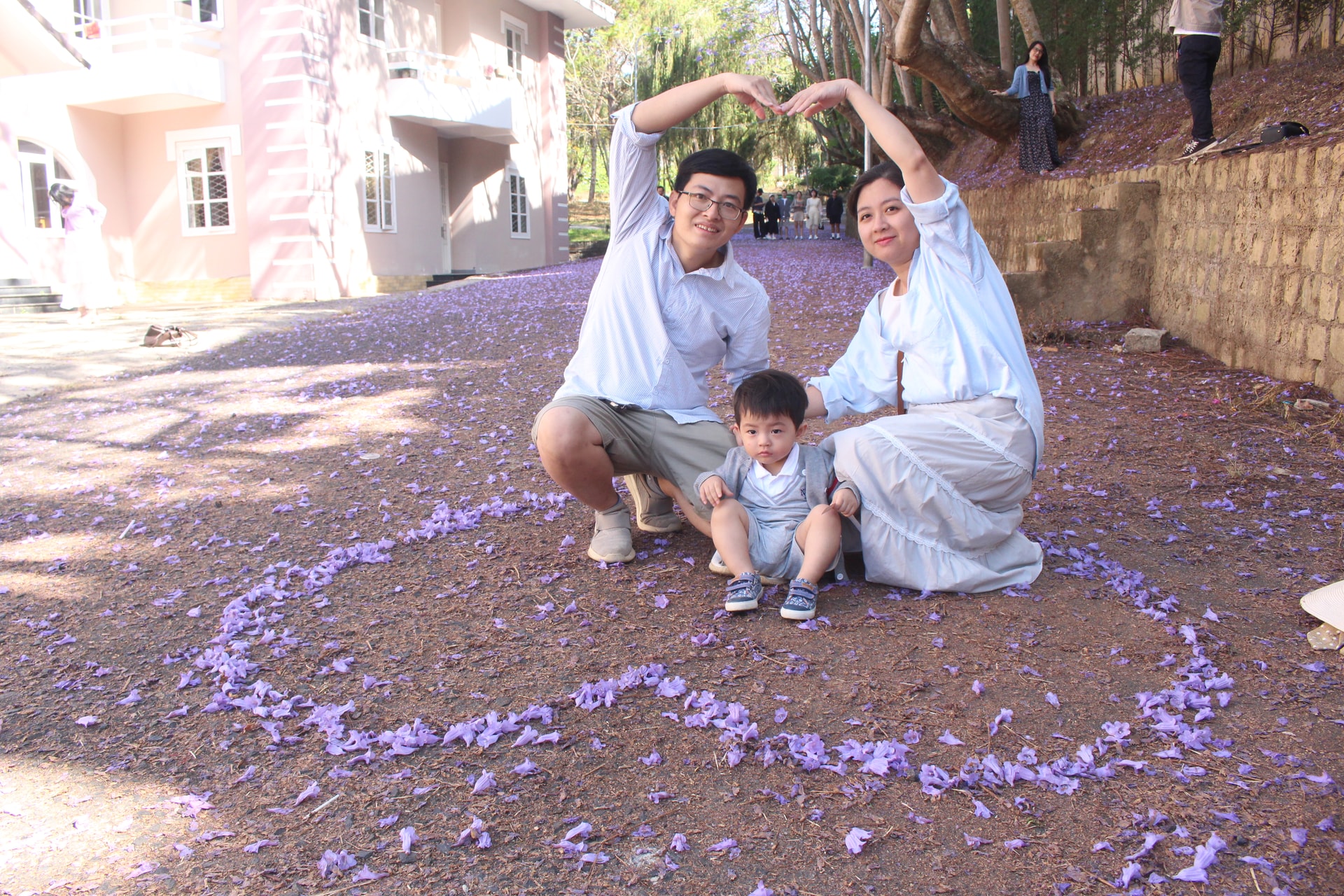
Jacaranda flowers are not only beautiful when still on the branches, but also captivating even when they fall. The flowers don't disintegrate into individual petals but retain their shape, spreading a purple carpet under the trees, on eaves, on the grass, and along pathways, making passersby tiptoe gently with each step.
Ms. Hoang Lan (a tourist from Can Tho ) expressed: “I’ve heard about this flower for a long time, but now I’m surprised by its beauty. I just want to stand still and admire it for a long time. Suddenly, the dry season sun seems to soften under the purple hue. Luckily, I arrived just in time when the flowers on the trees were in full bloom, and many of the flowers on the ground had fallen. Seeing the ground dyed purple like this is truly beautiful.”
The allure of the flower season
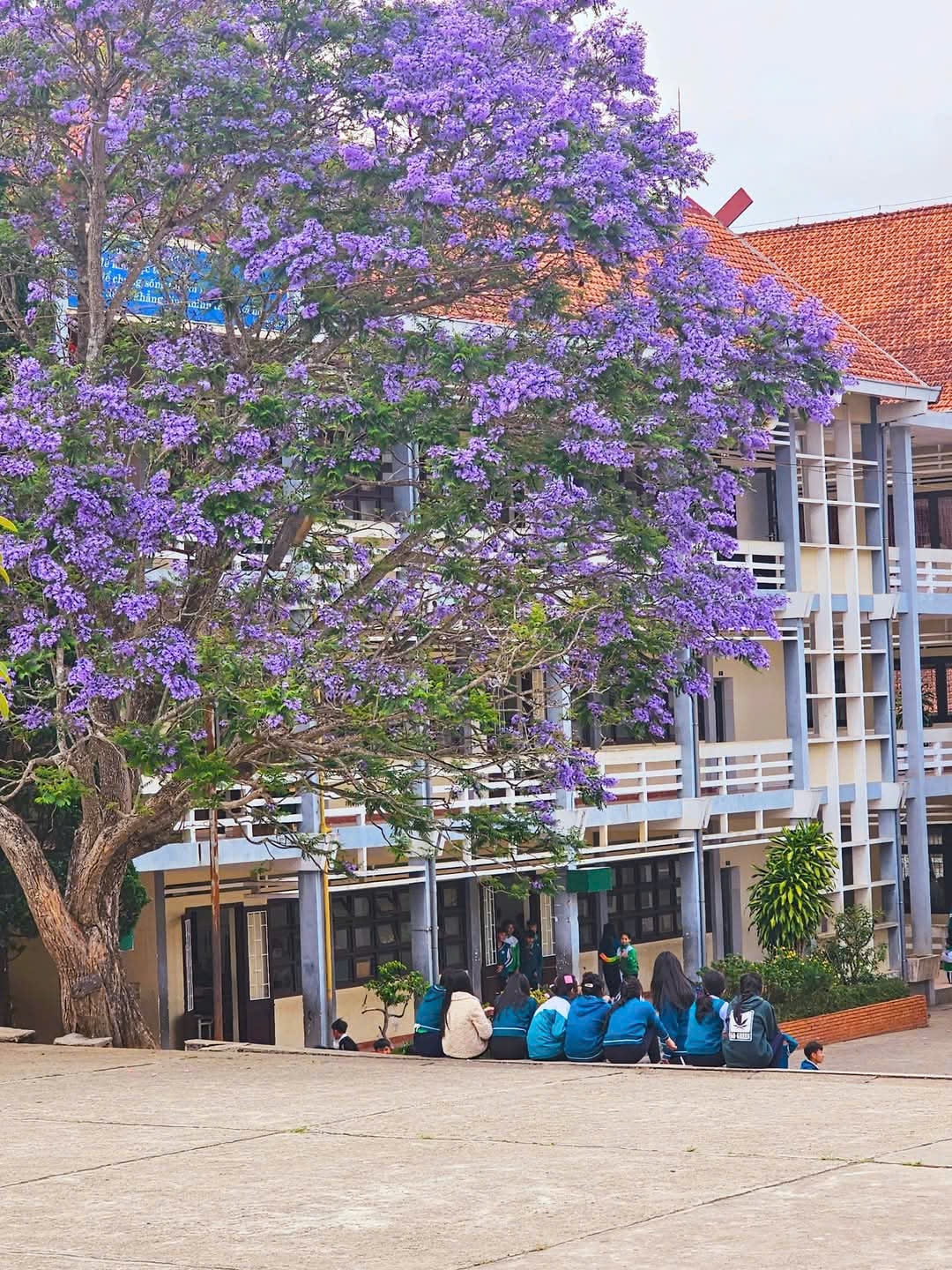
These days, purple flowers blanket the Trade Union Hotel by Xuan Huong Lake, extending to Nguyen Van Cu Street (the section passing through Anh Sang Hamlet), Nguyen Thi Minh Khai Street leading to Da Lat Market, the Herman Gmeiner Schoolyard, the SOS Children's Village, Ho Tung Mau slope, Nguyen Du Park, Tran Hung Dao Park, Quang Trung Street, Hung Vuong Street, Tran Phu Street, the crescent-shaped lake… Along the slopes, beside old villas, or on small street corners, the purple hue is like a subtle charm.
Each jacaranda tree has a unique appearance. Some are towering, requiring you to look up to fully appreciate their beauty; others are short, with wide canopies and flowers hanging down within easy reach. Some are completely covered in purple, without a single leaf; others are interspersed with vibrant green shoots, creating a gentle contrast. Some stand alone on street corners, quietly yet striking; while others stretch in rows, forming a path of purple that compels anyone passing by to stop.
Ms. Hoa (Lam Vien Ward - Da Lat), sitting selling flowers near a jacaranda tree overlooking a road covered in blossoms, shared: "Every year at this time, I never get tired of looking at the flowers. Maybe it's because jacaranda trees are like the people of Da Lat. Not noisy or ostentatious, but they have a captivating charm; once you fall in love with them, you love them for a very long time."
The jacaranda blossom season lasts about three months, from March to May, and is also the most beautiful season in Da Lat. Before the rains arrive, the sky is clear, the sun shines brightly, all serving as a backdrop to make the purple blossoms even more prominent. When the last petals fall, people know that spring has truly passed.
Extending the seasons of purple flowers
The purple jacaranda of Da Lat, scientifically known as Jacaranda mimosifolia (belonging to the Bignoniaceae family), originates from South America. This species was introduced to Vietnam in the 1960s by engineer Luong Van Sau, who brought it to Da Lat for experimental cultivation. Thanks to the cool, crisp climate and suitable soil of the highlands, the purple jacaranda quickly adapted and thrived, providing Da Lat with nearly 60 flowering seasons.
Currently, most newly planted jacaranda trees have straight trunks, requiring the main trunk to be cut to lower the branches, while the shoots that grow back remain upright, making it difficult to shape the tree beautifully. Most older trees have wide canopies and abundant flowers, but they are all very tall; admiring the flowers requires looking up, and taking pictures with them is also difficult. It is very rare to find jacaranda trees that are short, with spreading canopies and dense blooms.
To ensure Da Lat has beautiful jacaranda blossom seasons that are accessible to visitors, attention should be paid to selecting and breeding trees with wide canopies and moderate heights, suitable for urban spaces. Rows of low jacaranda trees with spreading canopies will create flower arches at eye level, making it convenient for tourists to admire and photograph the full beauty of the flowers.
In addition, jacaranda trees can be planted in clusters, along roads, or in designated flower spaces, creating jacaranda-lined roads and parks with a reasonable density. Combined with landscape design elements such as benches, walkways, and rest stops, this will allow visitors to fully enjoy the beauty of the flowering season. This is also a way for the purple hue to create a unique attraction for Da Lat's flower tourism in the hearts of visitors.
Source: https://baolamdong.vn/hoa-tim-no-doc-mua-xuan-431330.html
![[Photo] National Assembly Chairman Tran Thanh Man working with the Standing Committee of the National Assembly's Delegation Affairs Committee.](https://vphoto.vietnam.vn/thumb/1200x675/vietnam/resource/IMAGE/2026/05/20/1779294340023_ndo_br_1-1691-jpg.webp)
![[Image] "Journey of Hope" promotes the organ and tissue donation movement in Vietnam.](https://vphoto.vietnam.vn/thumb/1200x675/vietnam/resource/IMAGE/2026/05/20/1779294400833_1-8910-jpg.webp)
![[Photo] General Secretary and President To Lam works with the Party Committee of the Ministry of Health on the work of Vietnamese traditional medicine.](https://vphoto.vietnam.vn/thumb/1200x675/vietnam/resource/IMAGE/2026/05/20/1779294323718_a1-bnd-2978-3319-jpg.webp)

















































Comment (0)