

Becoming a mother at 23, Nguyen Hien (born in 2001, Hanoi ) faced many challenges. Recently, her baby has been having trouble sleeping, sleeping restlessly, startling awake, and crying, adding to the young mother's stress.
Once, while watching a video on social media, she saw a woman in a white coat who introduced herself as a doctor at a major hospital in Hanoi, specializing in advising on nutrition and sleep issues for young children. This person claimed that the "culprit" causing children's sleep problems was parents using vitamin D3K2 (a type of vitamin combining two main components: vitamin D3 and vitamin K2).
After hearing this, Ms. Hien was quite confused because she was also giving her child vitamin D3K2. She searched the information she had just seen on Google and found a "maze" of articles advising on the benefits of vitamin D3K2, as well as the potential negative consequences of improper vitamin supplementation.
Without knowing which source of information she was following, she even registered on a health app on her phone to purchase online check-up packages at prices ranging from 50,000 VND/5 minutes, 100,000 VND/10 minutes, 200,000 VND/20 minutes, to 500,000 VND/check-up.
Ms. Hien was introduced to a nutritionist working in Hanoi who explained that supplementing with appropriate amounts of vitamin D3K2 is very important, especially for children. This vitamin plays a crucial role in supporting the development and maintenance of children's bone health. D3K2 has been shown to help children sleep better, reduce crying, especially nighttime crying.
However, the dosage of supplements for infants needs to be adjusted according to the baby's age and health condition. Incorrect use of D3K2 or choosing an unsuitable D3K2 product can cause babies to squirm and have difficulty sleeping.
Ms. Hien was advised to give her child vitamin D3K2 supplements during or after breakfast. Both are fat-soluble, and if taken before a meal, the child's stomach, lacking oil and fat, will have more difficulty absorbing them. The young mother was also given the phone number and address of the department by the nutritionist so she could bring her child in for a consultation.
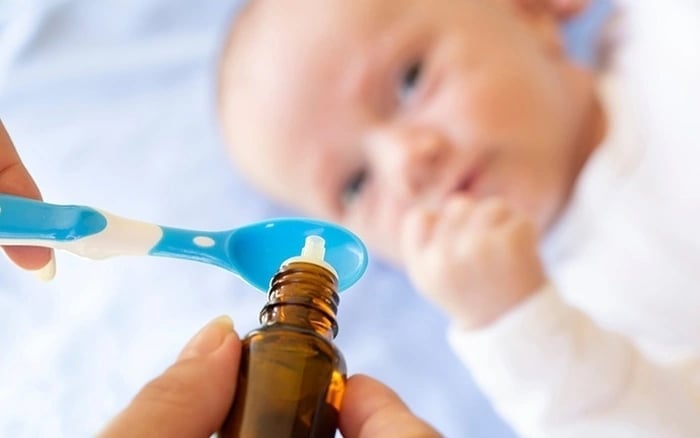
People should seek official information from qualified doctors. (Illustrative image)
Mr. Nguyen Hai Dang and Ms. Le Thi Thom (both 35 years old, residing in Long Bien, Hanoi) also recently experienced a week of confusion and anxiety. Their 10-month-old son showed symptoms of coughing and fever. While browsing social media at two different times, Ms. Thom saw two doctors—one from a private hospital and the other from a public hospital—giving different advice on how to care for a sick child.
Specifically, according to the social media account owner VVH with over 10,000 followers, children with coughs and fevers, but no runny nose or digestive problems, have a viral fever. Family members can give the child Efferalgan 80mg x 10 sachets, 6 times a day, one sachet each time.
Feeling uneasy, Ms. Thom continued to seek advice from another doctor whose social media account name was BK and who had 12,000 followers. This person suggested that the child's fever and cough were due to tonsillitis, and that simply monitoring the child was sufficient. If the high fever persisted, the child could be given Klamoks antibiotics.
Ms. Thom took her child to the nearest children's hospital for examination. The results showed the child had an upper respiratory infection, and the doctor prescribed hospitalization for monitoring and care according to the Ministry of Health 's protocol.
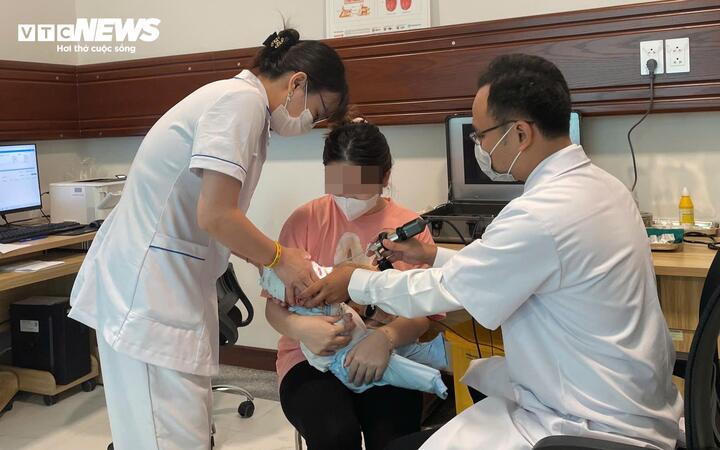
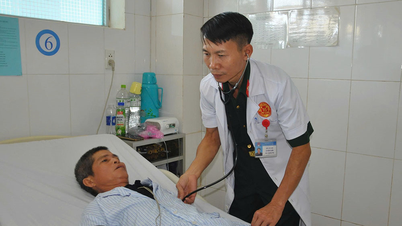
Experts advise that when children show any health abnormalities, they should be taken to a specialist for examination. (Illustrative image: Nhu Loan)
The patient should remain alert.
According to Dr. Truong Hong Son, Director of the Vietnam Institute of Applied Medicine, approximately 90% of mothers who bring their children for examination have nutritional or medical problems, due to misconceptions stemming from unofficial sources of information.
"For example, applying the Japanese method of raising children or the baby-led weaning method is only suitable for specific groups of children. If a child is acutely malnourished and is given baby-led weaning, their health condition will clearly worsen," said Dr. Son.
According to experts, the role of information technology in disseminating medical knowledge and communicating health information to the public is undeniable. However, users of social media platforms today must learn to filter information.
As a doctor who regularly shares practical medical knowledge on several social media platforms, Dr. Nguyen Huy Hoang, from the Vietnam-Russia Hyperbaric Oxygen Center (Ministry of Defense), believes that online medical consultations and treatment are an inevitable trend. However, for this form of healthcare to operate effectively, clear and strict regulations are necessary. Providing health advice to the public is not difficult, but remote medical consultations and treatment are not simple. Depending on the specific illness, doctors may offer temporary advice or recommend that people visit a medical facility for further testing.
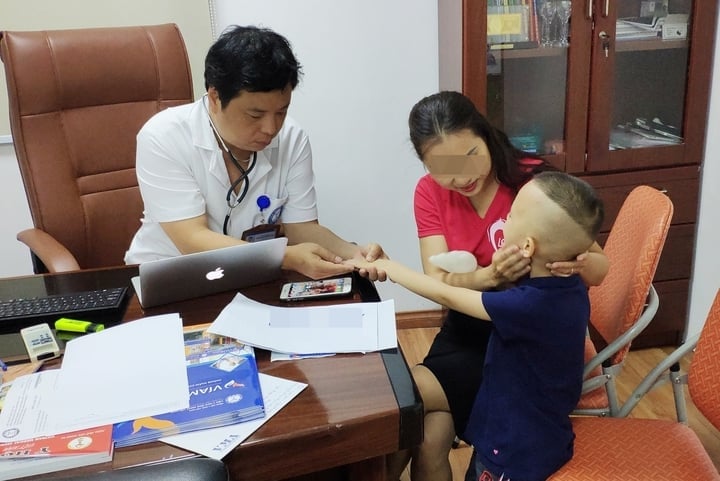
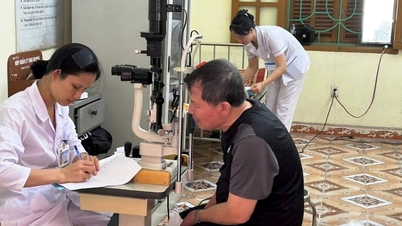
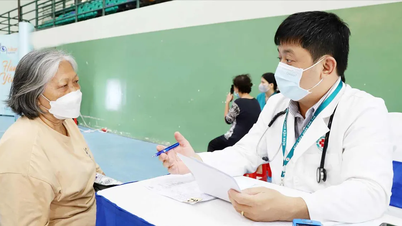
Doctor Son checks the health of children who come for examination. (Illustrative image: VIAM)
For example, if a patient has a sore throat, the doctor should only share information about possible illnesses; they cannot provide a precise diagnosis. For more specific results, the patient needs to visit a medical facility for relevant tests. Furthermore, when consulting remotely, prescribing medication requires extreme caution because the patient may have allergic reactions to the drugs.
According to experts, self-searching for information online can be helpful in some cases, but it should always be confirmed and advised by a specialist doctor. Searching for inaccurate information can lead to anxiety and panic, even significantly impacting mental health. Consultation with medical professionals is crucial for accurate diagnosis and avoiding unnecessary worry.
Doctors advise patients to be cautious when choosing medical consultation and examination services on social media. Many people are gullible and do not verify information when seeking advice and examination services from unreliable sources. This leads to patients receiving incorrect advice, diagnoses, or prescriptions that are inappropriate for their condition, potentially endangering their health, Dr. Hoang emphasized.
Moreover, some "online doctors" introduce themselves with names and expertise but may not have received proper training. When patients trust and follow their unverified instructions, it can easily lead to dangerous and unforeseen consequences.
Source: https://vtcnews.vn/hoang-mang-vi-ma-tran-loi-khuyen-suc-khoe-ar913125.html

![[Photo] General Secretary and President To Lam and the President of the Philippines hold talks.](https://vphoto.vietnam.vn/thumb/1200x675/vietnam/resource/IMAGE/2026/06/01/1780286997787_anh-man-hinh-2026-06-01-luc-11-09-43.png)

























































































Comment (0)