

Domestic difficulties and international challenges surrounding the leaders of member countries make this year's G7 summit in Italy even more noteworthy.
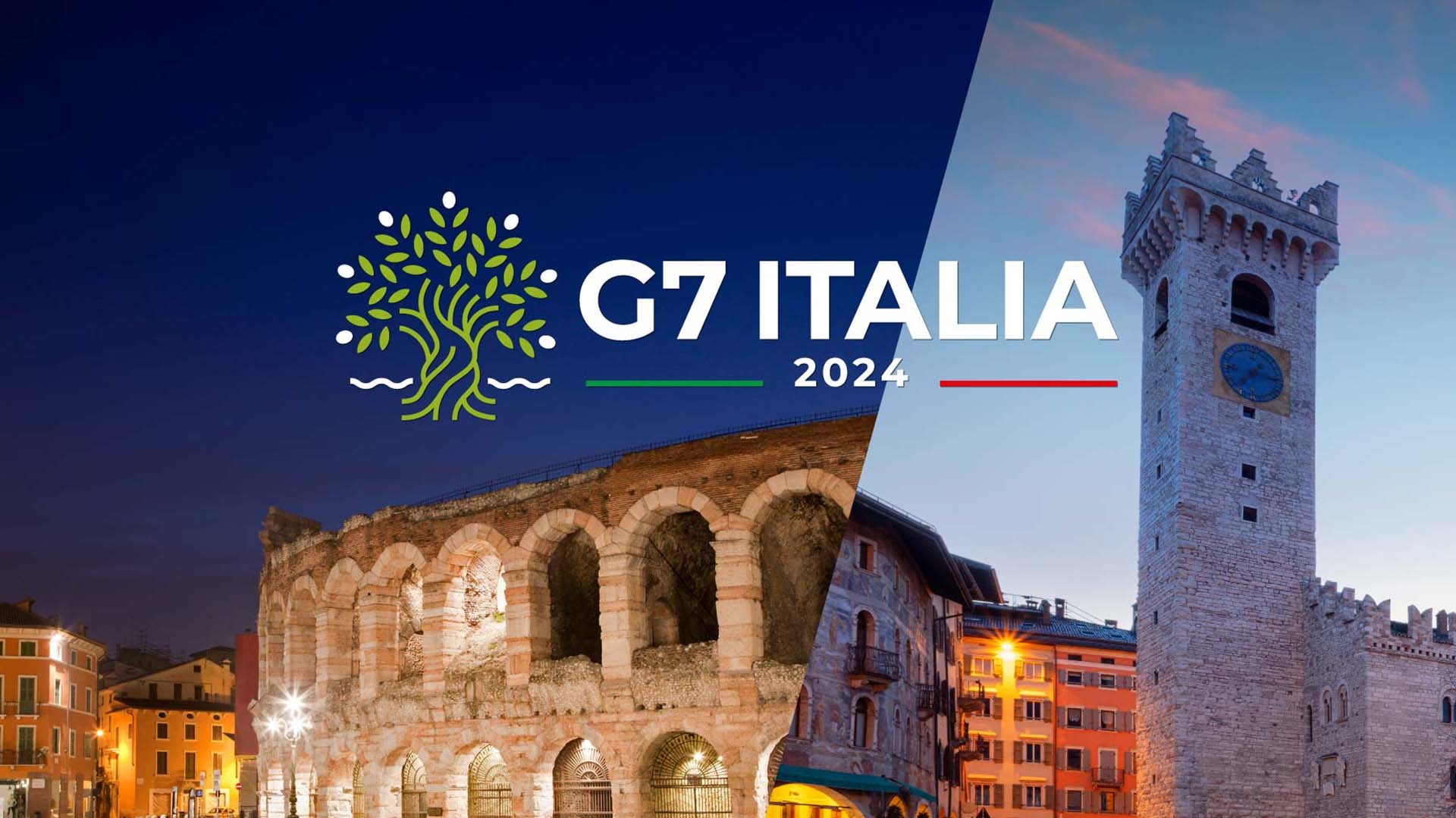 |
| The G7 summit took place at the Borgo Egnazia Hotel in Puglia, Italy, from June 13-15. (Source: DPA) |
From June 13-15, the Borgo Egnazia hotel in Puglia, western Italy, became the focus of media attention as it hosted leaders of the Group of Seven (G7) leading industrialized nations to discuss pressing global issues.
The first ones
This year's summit welcomes more delegates and guests than ever before. Besides the leaders of member countries (the United States, Japan, Canada, Germany, France, the United Kingdom, and Italy), leaders from India, Brazil, Argentina, Turkey, Ukraine, the United Arab Emirates (UAE), Kenya, Algeria, Tunisia, Mauritania, and others will attend. Representatives from regional and international organizations such as the United Nations, the European Union (EU), the World Bank (WB), the International Monetary Fund (IMF), the African Development Bank, and the Organization for Economic Cooperation and Development (OECD) will also participate. Notably, Pope Francis will become the first Pope in history to attend the G7 Summit.
An Italian official affirmed: “The G7 will bring like-minded nations closer together on fundamental principles. However, this is not a closed event and is always open to everyone.” More importantly, the 2024 G7 summit is taking place at a time when the leaders of member countries are facing many challenges.
US President Joe Biden faces considerable difficulties ahead of the November election, while British Prime Minister Rishi Sunak faces the prospect of losing his seat following a similar event in July. Meanwhile, French and German leaders are striving to find solutions after their defeats in the European Parliament (EP) elections.
Public support for Canadian Prime Minister Justin Trudeau and his Japanese counterpart Kishida Fumio continues to decline. Currently, only Italian Prime Minister Giorgia Meloni remains firmly in her position after a resounding victory in the European Parliament elections. However, according to Francesco Galietti, founder of the Rome-based political risk research firm Policy Sonar, the host country's position alone is not enough to give this year's G7 summit significant political weight.
Many problems, little consensus.
The challenges awaiting G7 leaders in Puglia, Italy, are just as complex and difficult as those they face domestically. On the first day, June 13th, discussions will focus on Africa, climate change, and development, before shifting to the Middle East and concluding with two sessions on Ukraine. On the second day, the summit will address migration, the Indo-Pacific and economic security, the Mediterranean, energy, and Africa. Pope Francis will lead the final G7 discussion on artificial intelligence (AI).
A key focus of this conference is the handling of Russian assets frozen in the West, estimated at around $300 billion, to provide aid to Ukraine. Currently, the Washington administration wants to use the profits from Moscow's frozen assets to provide a $50 billion loan to Ukraine, while some European countries want to use the interest from frozen assets to purchase weapons and rebuild Ukraine.
However, Berlin and Tokyo did not support this proposal. Germany argued that Russian assets should be preserved as leverage in peace negotiations. According to analysts, the country also wanted to help its companies in Russia avoid retaliatory actions from Moscow.
Additionally, the US indicated that the G7 could “send a strong warning” to some Chinese banks that help Russia evade Western sanctions. Washington could announce stronger measures targeting financial and non-bank institutions involved in the “technology and goods supply chain” supporting Russia. However, there is no indication that the rest of the group will support the US's tough proposal.
Meanwhile, following the UN Security Council resolution on an Israeli-Hamas ceasefire proposed by the US, G7 member states are expected to once again support peace negotiations, as well as post-conflict reconstruction efforts in the Gaza Strip.
China is a key topic of discussion at the G7. G7 leaders may issue a joint statement warning of industrial overproduction and consider imposing further measures against Beijing's "patronage policies" for certain companies. However, similar to these two issues, it remains unclear whether Europe, Japan, and Canada are willing to follow the US's tougher stance on China. EU members view Beijing as a major export market, while Berlin and Paris are reluctant to initiate a trade war with this leading partner.
The final highlight of this summit is the special session on AI, a top priority for Meloni during her G7 presidency. Here, Pope Francis will deliver a speech on the ethical and international legal aspects of AI. Rome will once again emphasize the call for AI ethics, with six fundamental principles: transparency, inclusion, accountability, fairness, trustworthiness, security, and privacy. The G7 countries hope to find common ground on this issue.
Furthermore, given that efforts to promote a global minimum tariff are unlikely to reach an agreement this month, the G7 host country may push harder on two other priority topics: migration and strategic partnerships with Africa. In addition, commitments to combating climate change, ensuring food security, and strengthening global supply chains will also be discussed in the aforementioned sessions.
In the last five years, G7 summits, even during the most challenging times in Biarritz (France) or Carbis Bay (Germany), have concluded with a joint statement. This time, it will probably be no exception. However, whether the message from that joint statement will be powerful enough to drive solutions to the many pressing issues facing us remains to be seen.
Source: https://baoquocte.vn/hoi-nghi-thuong-dinh-g7-vuot-kho-co-thanh-274831.html
![[Photo] General Secretary and President To Lam presides over a meeting with the Central Organizing Committee.](https://vphoto.vietnam.vn/thumb/1200x675/vietnam/resource/IMAGE/2026/06/03/1780482764658_a1-bnd-4741-3342-jpg.webp)
![[Photo] First session of the 14th Congress of the Vietnam Trade Union](https://vphoto.vietnam.vn/thumb/1200x675/vietnam/resource/IMAGE/2026/06/03/1780465947883_ndo_br_img-3852-jpg.webp)


![[Photo] Secretary of the National Assembly Party Committee, Chairman of the National Assembly presides over the meeting of the Standing Committee and Executive Committee of the National Assembly Party Committee.](https://vphoto.vietnam.vn/thumb/1200x675/vietnam/resource/IMAGE/2026/06/03/1780480353201_ndo_br_bnd-2585-jpg.webp)






































![[Video] Sunset at Lap An Lagoon – Where the sun sets over the fishing nets](https://vphoto.vietnam.vn/thumb/1200x675/vietnam/resource/IMAGE/2026/05/31/1780192137701_beach-landscape-sea-water-nature-grass-745871-pxhere-com.jpeg)


























Comment (0)