

 |
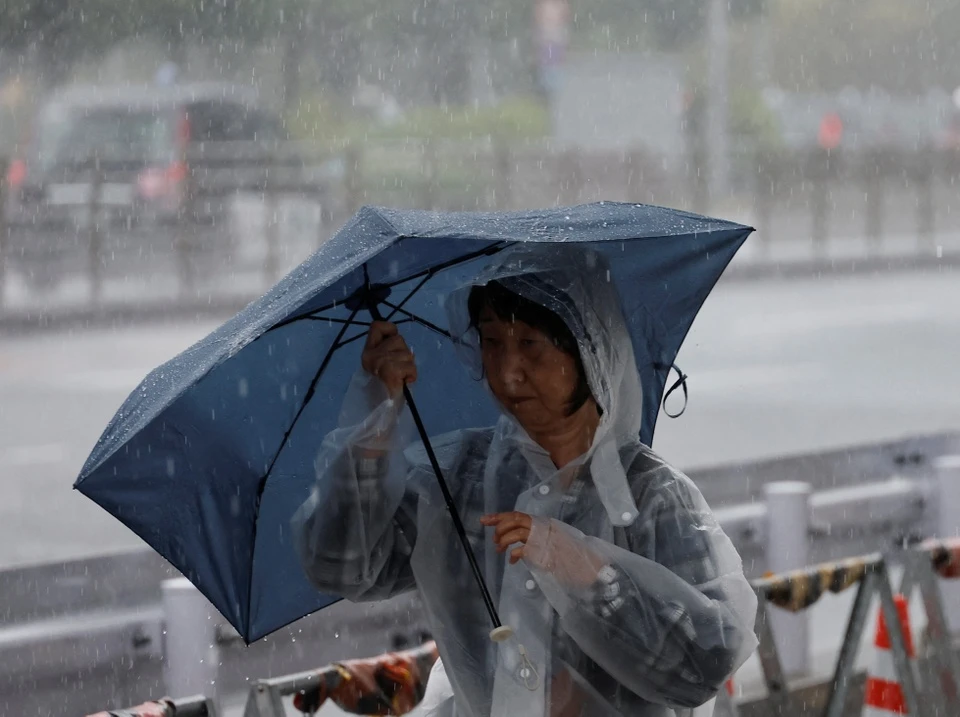
A pedestrian crosses through heavy rain caused by Typhoon Jangmi in Tokyo, Japan, on June 3. Photo: Reuters . |
According to the Japan Meteorological Agency (JMA), in the early afternoon of June 3, the center of Tropical Storm Jangmi was located about 150 km south of Tokyo, moving northeast with maximum sustained winds of up to 25 m/s. The JMA warned that the storm would pass very close to the Pacific coast of eastern Japan and urged residents to remain vigilant against extreme weather, according to Reuters.
Officials said at least 15 people suffered minor injuries as a result of the storm. Jangmi also left nearly 60,000 households without power. Authorities continuously received reports of flooding, fallen trees, objects blown away by the wind, and widespread landslides.
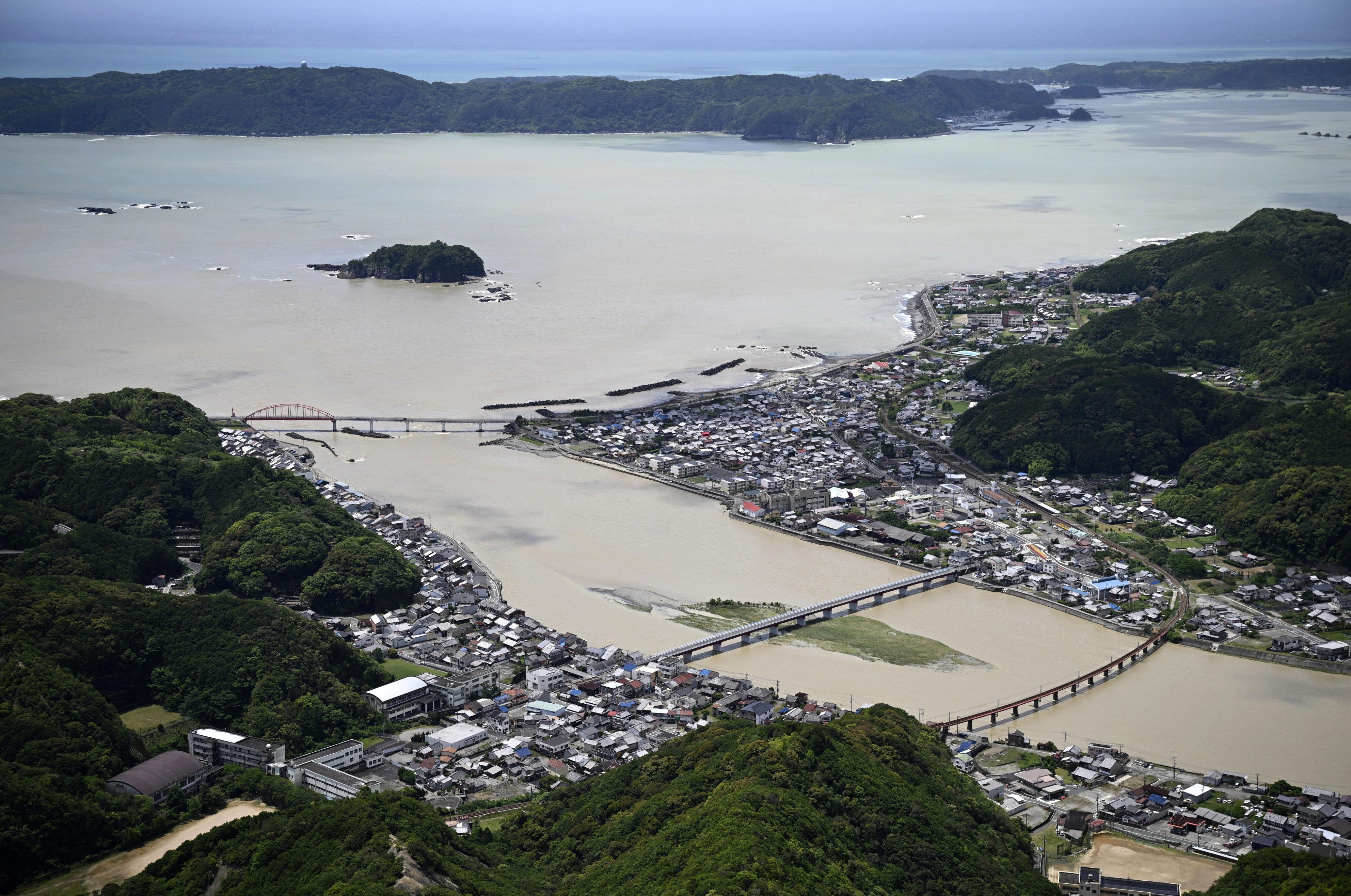 |
The Koza River overflowed after heavy rains caused by Typhoon Jangmi in Kushimoto, Wakayama Prefecture, Japan, on June 3. Photo: Kyodo. |
During a regular press briefing, Japanese Chief Cabinet Secretary Minoru Kihara urged citizens to take proactive measures: "If you feel any signs of danger, act quickly to protect your own life and the lives of your family."
Evacuation advisories have been issued for hundreds of thousands of people in eight prefectures across southwestern, central, and eastern Japan.
On social media, numerous images showed streets and subway stations severely flooded. Phrases like "evacuation order" and "soaked" quickly became trending topics on the platform.
The aviation sector was severely affected as major airlines such as Japan Airlines (JAL) and All Nippon Airways (ANA) canceled nearly 900 domestic and international flights on June 3rd, impacting nearly 90,000 passengers.
Singapore Airlines (SIA) also adjusted the schedules of 14 flights on June 2nd and 3rd due to the impact of the storm.
According to the airline's announcement, flights between Singapore and Osaka, Nagoya, and Tokyo, as well as flights from Singapore to Los Angeles with a layover in Tokyo, have had their departure and arrival times changed.
SIA said it is contacting all passengers on affected flights to provide the latest schedule updates.
"The storm's trajectory remains complex, therefore many other SIA flights may also be affected," the airline warned.
The airline also stated that affected passengers can request a change to another flight or a full refund for the unused portion of their ticket.
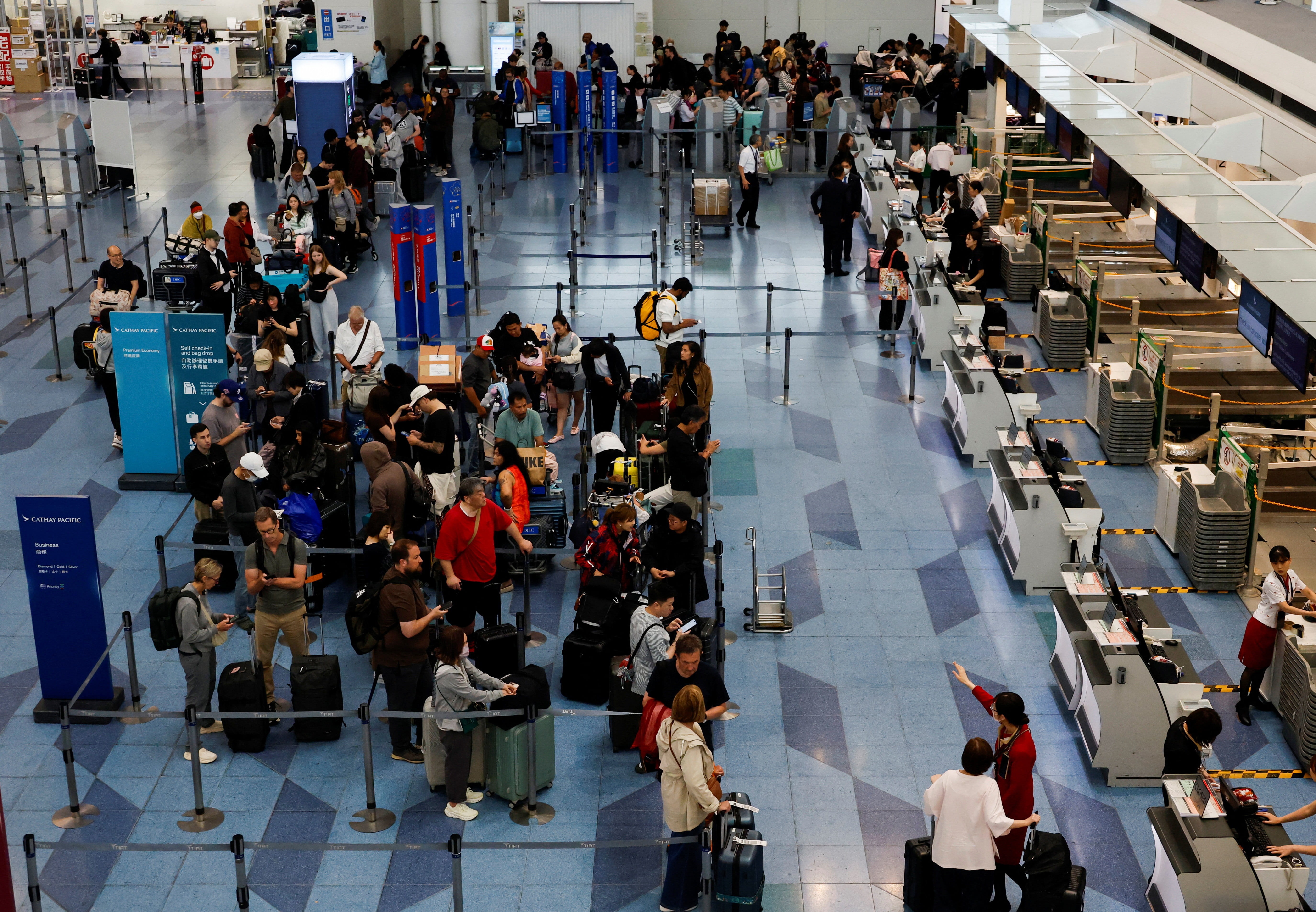 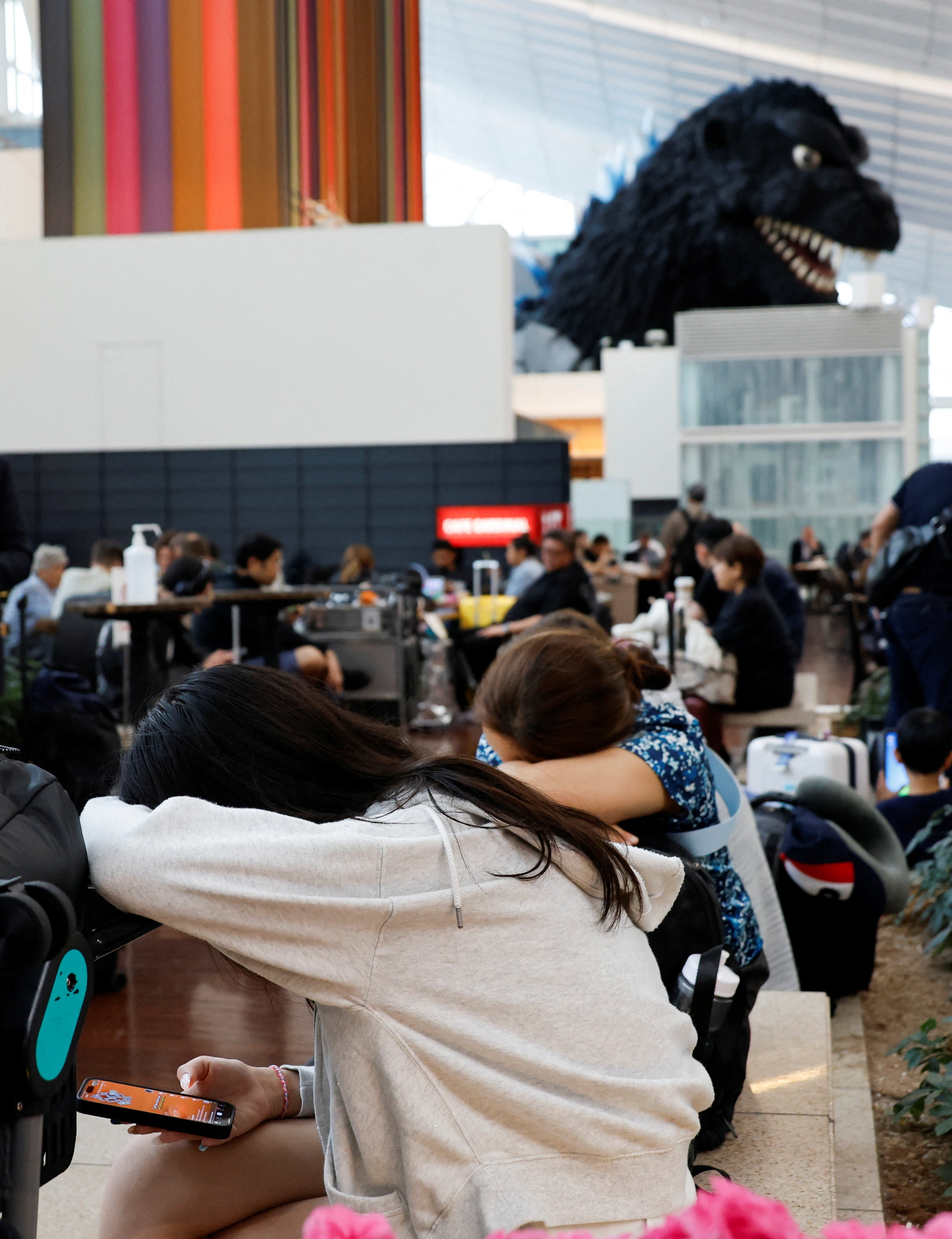 |
Passengers wait for flights delayed due to Tropical Storm Jangmi making landfall in Japan on June 3. Photo: Reuters. |
Rail transport was also disrupted. Several Shinkansen bullet train services on Kyushu Island and in western Japan experienced delays. East Japan Railway Company (JR East) announced that some rail services around Tokyo had been temporarily suspended, and warned of the risk of widespread disruptions throughout the day.
In the manufacturing sector, Toyota Motor temporarily suspended operations at 13 domestic plants on the morning of June 3rd before announcing that production would resume that evening. Meanwhile, Suzuki Motor also planned to resume operations after temporarily suspending production at all five of its plants in Shizuoka Prefecture, west of Tokyo, that morning.
The Singapore Embassy in Tokyo has advised Singaporean citizens currently in Japan to closely monitor announcements from local authorities and weather conditions.
“Flights, Shinkansen trains, ferries, and many other public transport services may be cancelled or severely delayed. People should proactively adjust their travel plans and limit going out unless absolutely necessary,” the Singapore Embassy stated in a Facebook post on June 2.
The agency also recommends that citizens keep valuable documents and belongings, especially passports, in waterproof bags to avoid damage from flooding or heavy rain.
Source: https://znews.vn/bao-jangmi-ap-sat-tokyo-nhat-ban-hon-loan-post1656542.html

![[Photo] First session of the 14th Congress of the Vietnam Trade Union](https://vphoto.vietnam.vn/thumb/1200x675/vietnam/resource/IMAGE/2026/06/03/1780465947883_ndo_br_img-3852-jpg.webp)

![[Photo] General Secretary and President To Lam presides over a meeting with the Central Organizing Committee.](https://vphoto.vietnam.vn/thumb/1200x675/vietnam/resource/IMAGE/2026/06/03/1780482764658_a1-bnd-4741-3342-jpg.webp)
![[Photo] Secretary of the National Assembly Party Committee, Chairman of the National Assembly presides over the meeting of the Standing Committee and Executive Committee of the National Assembly Party Committee.](https://vphoto.vietnam.vn/thumb/1200x675/vietnam/resource/IMAGE/2026/06/03/1780480353201_ndo_br_bnd-2585-jpg.webp)








































![[Video] Sunset at Lap An Lagoon – Where the sun sets over the fishing nets](https://vphoto.vietnam.vn/thumb/1200x675/vietnam/resource/IMAGE/2026/05/31/1780192137701_beach-landscape-sea-water-nature-grass-745871-pxhere-com.jpeg)



























Comment (0)