

Since the beginning of November, Tam Anh General Hospital System in Ho Chi Minh City has recorded hundreds of cases, mostly women, seeking treatment for itching, redness, darkening of the skin, dilated blood vessels, or severe acne breakouts after using skin whitening or anti-pigmentation products. In the last two weeks of November alone, the number of cases nearly doubled, averaging about 20 people per day.
 |
| According to doctors, corticosteroids are like a double-edged sword. When not controlled by a doctor, the skin can easily become dependent on the medication, the damage worsens, and recovery becomes very difficult. |
A common factor among many patients is the use of beauty products of unknown origin or from establishments recently warned by authorities for containing ingredients exceeding permissible levels, including corticosteroids. In addition, the increased demand for beauty products at the end of the year leads many to seek out "fast-acting" products, which carry significant risks.
Dr. Quách Thị Bích Vân, a specialist in Dermatology and Cosmetic Skin Care at Tâm Anh General Hospital in Ho Chi Minh City, said that most patients are unaware that the products they use contain corticosteroids until their skin shows noticeable damage.
Corticosteroids are a group of potent anti-inflammatory drugs prescribed to treat a wide range of conditions, including respiratory, neurological, digestive, musculoskeletal, and dermatological diseases.
In dermatology, corticosteroids help reduce inflammation quickly, shrink pimples, reduce redness, and relieve itching, thus creating a feeling of "instant beauty." However, if used improperly and for prolonged periods, corticosteroids can cause skin addiction and many serious complications.
"Corticosteroids are like a double-edged sword. When not controlled by a doctor, the skin can easily become dependent on the medication, the damage worsens, and it becomes very difficult to recover," Dr. Van warned.
Ms. Linh (26 years old, Ho Chi Minh City) is a typical example. After purchasing a set of acne treatment and skin brightening products from a beauty salon, after only a few days of use, her skin stopped itching and her acne significantly reduced. By the second week, her skin was whiter and smoother.
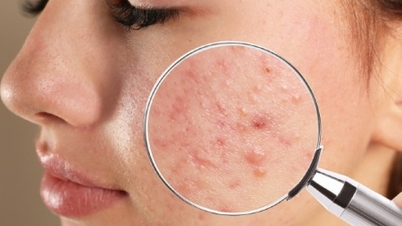
However, by the third week, her cheeks began to darken, acne broke out over a large area, accompanied by a burning sensation and redness. When she went to the hospital for examination, she was diagnosed with allergic contact dermatitis, suspected to be due to the overuse of corticosteroids.
Similarly, Ms. Ha (38 years old, from the former Binh Duong province) came for examination with thin, itchy skin and dilated blood vessels after using a skin whitening product advertised as "naturally extracted and safe" for 2-3 years. Because her skin brightened, she continued using it for a long time.
It wasn't until authorities warned that many skin whitening products contained corticosteroids or hydroquinone exceeding permissible levels that she became suspicious and sought medical attention. The doctor determined that she had thin skin, dilated blood vessels, and increased sensitivity due to prolonged overuse of strong active ingredients, requiring long-term treatment, rehabilitation, and monitoring.
According to Dr. Van, the "quick beauty" effect of corticosteroids is due to the drugs suppressing inflammation and immunity, causing acne to subside immediately. However, this effect is only short-term. Afterwards, the skin begins to thin, become red and irritated, develop tiny pimples, dilate blood vessels, increase pigmentation, and spread melasma. When the product is discontinued, users often experience a rebound reaction such as itching, stinging, and redness, causing many to fear and return to use it, leading to a vicious cycle of corticosteroid dependence.
Another serious complication is darkening of the entire face. Corticosteroids thin the skin and weaken its protective barrier, allowing UV rays to stimulate pigment cells to become overactive.
Increased melanin production combined with chronic inflammation causes widespread skin darkening, often turning the skin grayish-brown and making recovery very difficult. Notably, many people use corticosteroids for 1-3 years before experiencing irritation, making it even harder to identify the cause.
According to Doctor Van, when someone is poisoned by cosmetics, it usually takes 6-12 weeks for their skin barrier to recover; improvement in acne and pigmentation can take months, even years.
The treatment protocol prioritizes stabilizing the skin with restorative topical medications, anti-inflammatory drugs, or antibiotics if there is secondary infection. Once the skin is stable, the doctor may combine methods such as laser, IPL, or restorative electrophoresis to safely treat pigmentation, reduce redness, and inflammation.
After 2-3 weeks of treatment with oral anti-inflammatory medication, topical restorative creams, and a minimalist care regimen, Ms. Linh's acute flare-ups were controlled, and the inflammatory acne and pigmentation stopped spreading. For Ms. Ha, the doctor prescribed periodic laser treatment for dilated blood vessels due to the long-term nature of the lesions and the need for long-term monitoring.
To prevent skin damage, doctors advise people not to use unregulated, imported, or unbranded cosmetics, and not to believe advertisements promising "instant whitening in 7 days" or "rapid removal of dark spots."
Treating acne and melasma requires patience, adherence to a scientific treatment plan, and monitoring by a dermatologist or cosmetic skin specialist. When visiting the doctor, patients should bring all products they are currently using so that the doctor can assess the risks and develop a safe and effective treatment plan.
Health experts warn that low-quality cosmetics containing banned substances not only damage the skin's surface but also pose a serious risk to overall health. According to Dr. Pham Thi Uyen Nhi (Ho Chi Minh City Dermatology Hospital), these products often contain harmful chemicals such as corticosteroids, mercury, parabens, and formaldehyde.
These substances can cause dermatitis, endocrine disorders, liver and kidney damage, and even increase the risk of cancer with long-term use. Many patients come to the hospital with thin, red, peeling skin, dilated capillaries, or widespread blisters, the result of using mixed creams and "whitening" creams of unknown origin that are widely advertised on social media.
According to Dr. Vu Thai Ha, Head of the Department of Stem Cell Technology Research & Application (Central Dermatology Hospital), blind faith in advertisements promising "instant skin whitening in just a few days" has led many people to pay a heavy price.
"There is no product that is both cheap, fast-acting, and safe. Behind the immediate change lies a whole process of disrupting the skin's structure and causing pigmentation disorders, making subsequent treatment extremely difficult and expensive," he said.
Similarly, Dr. Vu Nguyet Minh, Director of the Clinical Trial Center (Central Dermatology Hospital), pointed out that many cosmetic products currently on the market may contain arsenic – a dangerous heavy metal. Arsenic does not cause immediate damage, but silently accumulates in the body. After about 10 years of continuous use, it can increase the risk of skin cancer and other malignant diseases.
This expert also shared the case of a pregnant woman who had to be hospitalized with widespread, oozing acne all over her face after using an acne treatment product purchased online. The consequence was severe skin damage, affecting both her mental health and her pregnancy.
The above evidence shows that the consequences of using counterfeit cosmetics are not only scars on the skin, but also insidious aftereffects in the body that can last a lifetime. Therefore, consumers need to be more vigilant and knowledgeable before deciding to apply any product to their skin – the most delicate and sensitive part of the body.
“Consumers should be cautious when choosing cosmetics, prioritizing products with clear origins, quality certifications, and distribution through official channels. Be wary of advertisements promising “miracle results,” “brightening in a few days,” or “completely eliminating melasma,” as these may be tactics used by unscrupulous businesses. Furthermore, avoid buying cosmetics from unreliable online sources, groups without specific addresses, or unverified websites,” warned Dr. Vu Thai Ha.
Source: https://baodautu.vn/hong-da-vi-my-pham-chua-corticoid-d468754.html



![[Photo] General Secretary and President To Lam presides over the meeting to approve the draft report on the results of the second inspection by the Politburo of the Standing Committee of the Hanoi City Party Committee.](https://vphoto.vietnam.vn/thumb/1200x675/vietnam/resource/IMAGE/2026/05/26/1779789811432_a2-bnd-4430-9620-jpg.webp)




































































































Comment (0)