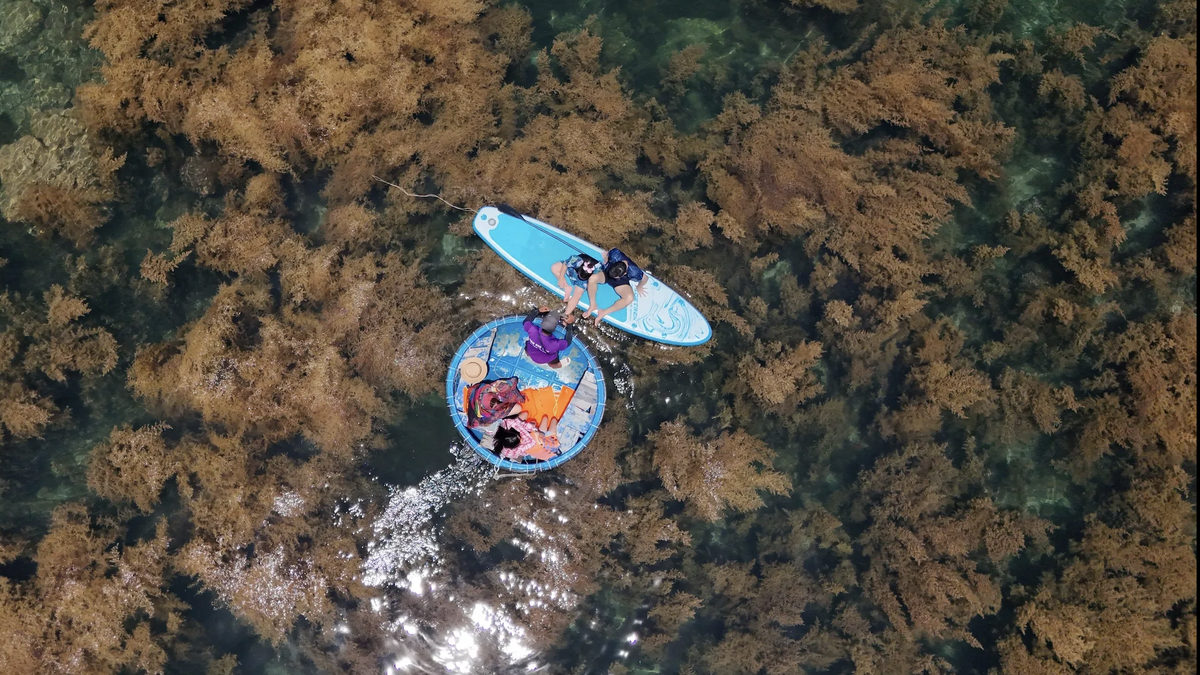
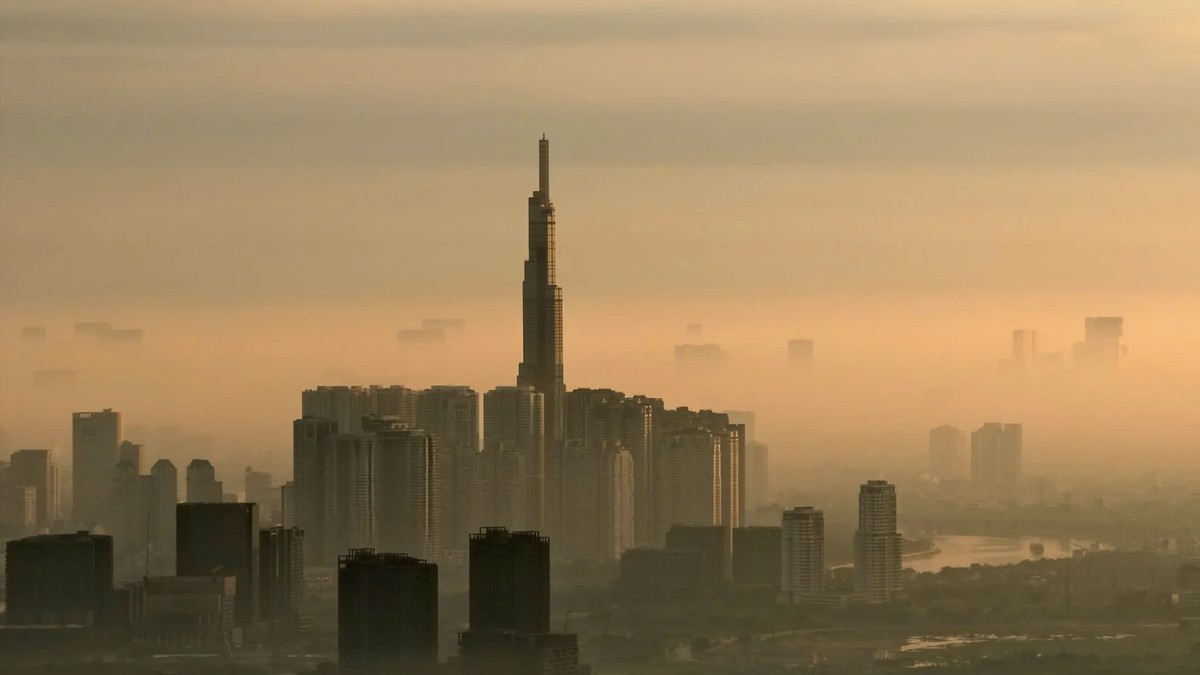
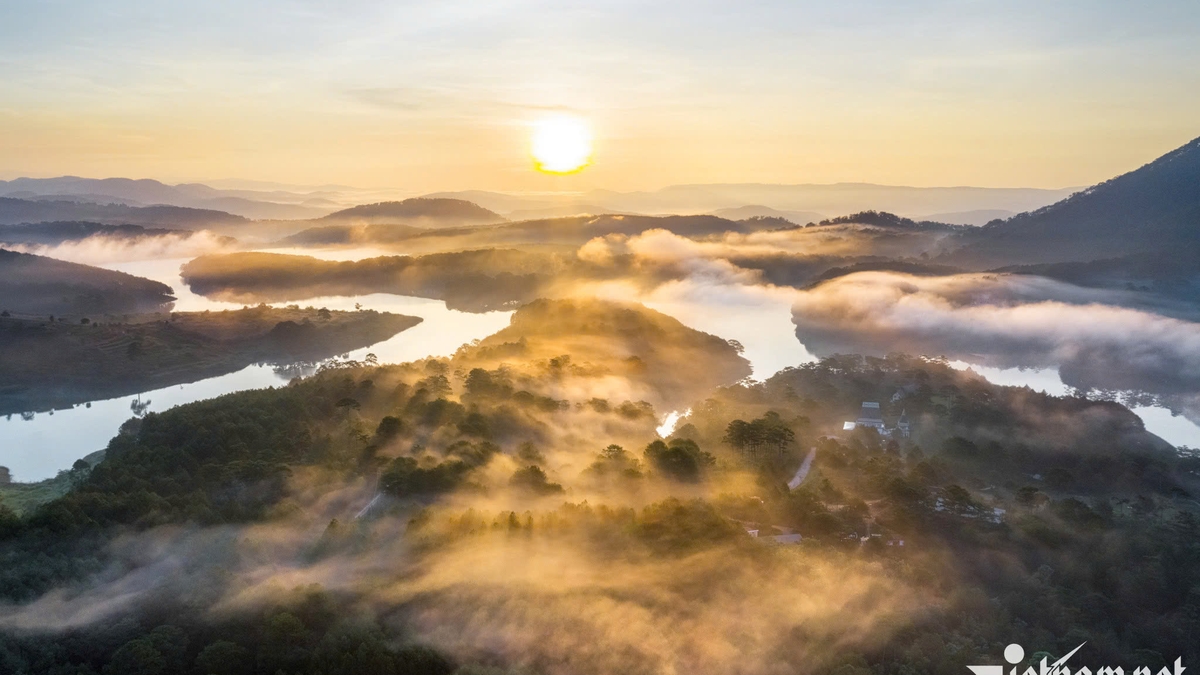
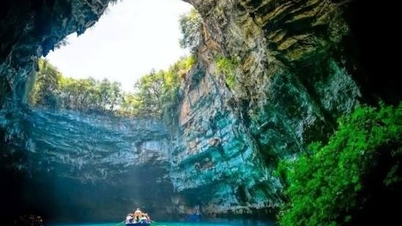
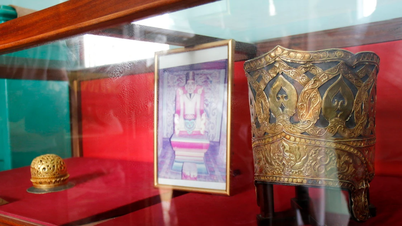
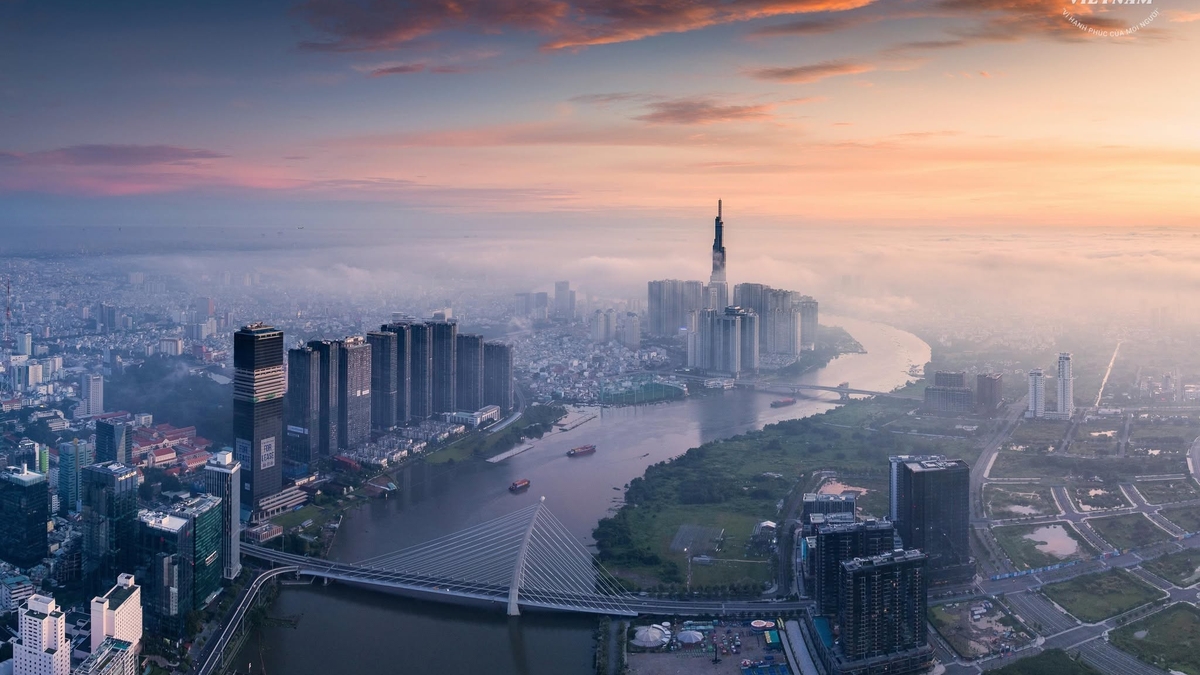
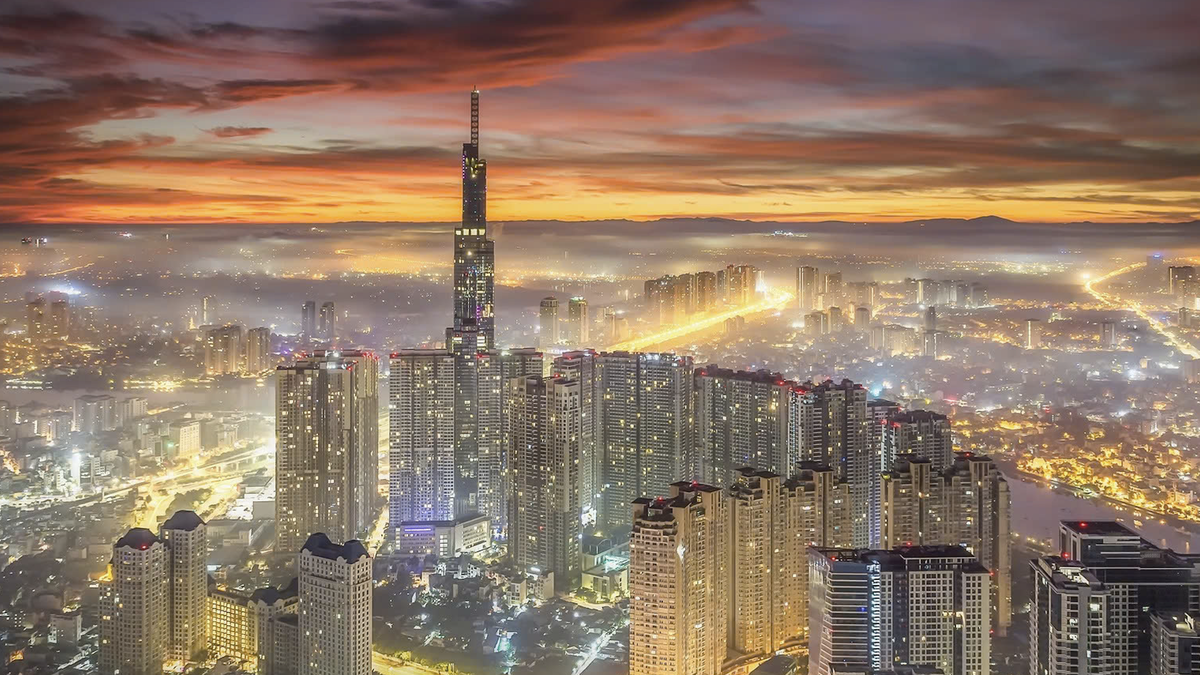
The majestic Thất Sơn region is enveloped in mist year-round. Photo: THÀNH CHINH
Folk beliefs
The worship of deities, goddesses, and the Jade Emperor is very common in the Bay Nui region, passed down for hundreds of years on the mountain peaks. Many places have developed into spiritual tourism destinations, attracting a large number of visitors who come to worship and admire the scenery. On many visits to the sacred mountains of Bay Nui, we saw locals setting up altars on rocky outcrops and in caves, creating a sacred atmosphere. During Tet (Vietnamese New Year), when climbing Mount Cam, Mount Co To, Mount Dai, Mount Ket, Mount Nuoc, Mount Nam Gieng, etc., you will see many tourists visiting the outcrops, temples, shrines, and small huts to light incense and sincerely pray.
In the subconscious of the people of the Mekong Delta, besides celebrating the Lunar New Year, people also climb mountains to admire the scenery and offer prayers for peace and well-being for their families. The Seven Mountains, situated amidst the vast plains, always leave a lasting impression on every visitor. Although the Seven Mountains region is not as large or sprawling as the mountainous areas of Central or Northwest Vietnam, each mountain and cluster of hills is connected to the footsteps of our ancestors during the pioneering era. Many mysterious legends and myths still circulate today.
In ancient times, the Thất Sơn region was a land of deep, dark mountains, surrounded by dense forests, teeming with wild animals. At the beginning of the 19th century, very few people came to this mountainous area. It was a high-altitude region, protected from floods, but very arid and difficult to cultivate; sometimes people were attacked by mountain miasma or wild animals. Later, some people came to clear the land and establish orchards, growing mangoes, jackfruit, custard apples, cassava, cashews, etc., earning a stable income. Seeing this, many people from other places came to the Seven Mountains to settle and live permanently in the mountains.
In ancient times, the Thất Sơn forest was home to ancient trees and precious timbers such as sandalwood, ironwood, teak, black starwood, stone starwood, honeywood, yellow sandalwood, rosewood, ebony, ebony, ebony, ebony, ebony, oil palm, Indian almond, crape myrtle, and ebony. In addition, there were about 400 types of herbs and delicious, clean wild vegetables with high medicinal properties. At one time, the Seven Mountains were also a base for revolutionary resistance against foreign invaders. The Seven Mountains were also an ideal place for ascetics to live in seclusion high above. The rugged mountains further enhanced the sacredness and mystery, attracting many visitors to worship.
At Thien Tue Peak on Cam Mountain, there were once traces left by the first Taoist monks who came here to practice asceticism and established a mysterious meditation retreat. Later, to commemorate these ancestors, the people of Cam Mountain built the Great Buddha Temple next to Thuy Liem Lake. Whenever visitors ascend to the summit of Cam Mountain, in addition to enjoying the scenery and breathing in the fresh air, they can light incense to worship Buddha, listen to the temple bells echoing on the mountaintop, and find peace and tranquility amidst the sacred scenery of this heavenly place.
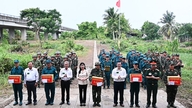



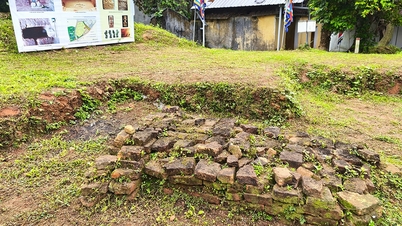
Memorial plaque on Ma Thien Lanh hill in Ngoa Long Son. Photo: THANH CHINH
Becoming an attractive tourist destination
Today, the Thuy Liem Lake area boasts a well-developed and expansive lake. Surrounding the lake are the Van Linh Pagoda complex, the Big Buddha Pagoda, and an 81-meter-tall statue of the Maitreya Buddha with a compassionate smile, creating a picturesque landscape unique to the mountainous region of the Mekong Delta. Upon arriving, visitors can immerse themselves in the refreshing natural environment. After exploring the area, visitors can stop at mountain-top eateries to enjoy banh xeo (Vietnamese savory pancake) served with dozens of delicious wild vegetables from the Bay Nui region. After visiting this area, tourists can continue climbing to the remaining peaks and temples on the mountain.
On Mount Cam, Bo Hong peak is considered the highest point, reaching 716 meters above sea level. For a long time, Bo Hong peak has been known to tourists as a sacred place with many mysterious stories. On Bo Hong peak, people worship the Holy Mother, the Jade Emperor, the mountain god, the earth god, etc. During Tet (Vietnamese New Year), Bo Hong peak is packed with people. It is evident that the spiritual stories of our ancestors on Mount Cam have been passed down through generations to this day.
Visitors to Mount Cam come not only for sightseeing but also to feel as if they have wandered into a celestial realm, walking amidst swirling clouds. Mount Cam has become an attractive spiritual tourism destination, drawing a large number of visitors, which in turn has led to a range of services, creating jobs and providing stable income for the mountain's residents. Just the motorbike taxi business alone, during Tet (Lunar New Year), allows middle-aged and young men to earn millions of dong per day. Currently, the motorbike taxi service has become a common occupation among the people of Mount Cam.
Leaving Mount Cam, we toured the Seven Mountains and saw tourists flocking here to visit and experience the area. Some visitors stopped at Ngoa Long Son to check in at O Ta Soc Lake, then climbed the mountain to visit the vineyards, the peaks, and the temples on the mountain. Today, this mountain is considered a famous tourist destination attracting young people to enjoy its many beautiful landscapes. From the mountaintop looking down at the plains, visitors will see rows of palm trees interspersed among the vast rice fields, creating a picturesque mountain scene.
On Ngoa Long Son mountain, there are two famous wartime landmarks: the O Ta Soc base and the Ma Thien Lan cave. O Ta Soc is a Khmer word, meaning "O" in Vietnamese, and "Ta" in Vietnamese, so it means "Ong Soc stream." The area has rugged terrain, winding caves, and dense forests of vines, which is why the An Giang Provincial Party Committee chose it as a resistance base from 1962 to 1967. Following the mountain trail, walking in the shade of cool trees, beside a babbling stream, and with birds singing overhead, visitors will feel a sense of peace. Once a place that endured bombing, it is now lush with trees and abundant fruit, always welcoming travelers.
About 1km from O Ta Soc is Ma Thien Lanh hill, approximately 80m high. This area has many deep caves. In 1969, enemy planes bombed the area, causing a large rock to block the cave entrance. Five soldiers from Company 8, Battalion 5, Regiment 61 (main force) were trapped inside and could not escape. Their comrades outside had to feed them by feeding them porridge and milk through bamboo tubes with holes drilled in them. After a period of exhaustion, they perished. 38 years later, the Provincial Military Command ordered the cave entrance to be broken open to retrieve their remains for burial and erect a memorial.

Climbing Ma Thien Lanh Hill with a few groups of visitors from afar, we were deeply moved when we stood before the memorial to the fallen soldiers. Surrounded by treacherous rocky mountains, we tried to look down into the cave entrance, but it seemed to disappear. From afar, a gentle breeze rustled through the forest canopy, making the atmosphere even more serene and sacred. I suddenly remembered the lyrics of the song "The Color of Red Flowers": "Your names are engraved on the mountain rocks / The clouds become the shade of trees / The borderland evening is white with mountain mist / The old mother's eyes weary from watching…". Lighting an incense stick with all my heart and profound gratitude, I prayed for the souls of the fallen soldiers to rest in eternal peace. Today, Ma Thien Lanh Hill is considered a heroic revolutionary site in the Bay Nui region, educating the younger generation about patriotic traditions and the value of peace.
Every spring, tourists enjoy the Seven Mountains region, discovering many interesting things, visiting the heroic revolutionary sites of our ancestors, and developing a deeper love for their homeland and country.
Source: https://baoangiang.com.vn/hung-vi-bay-nui-a474159.html