

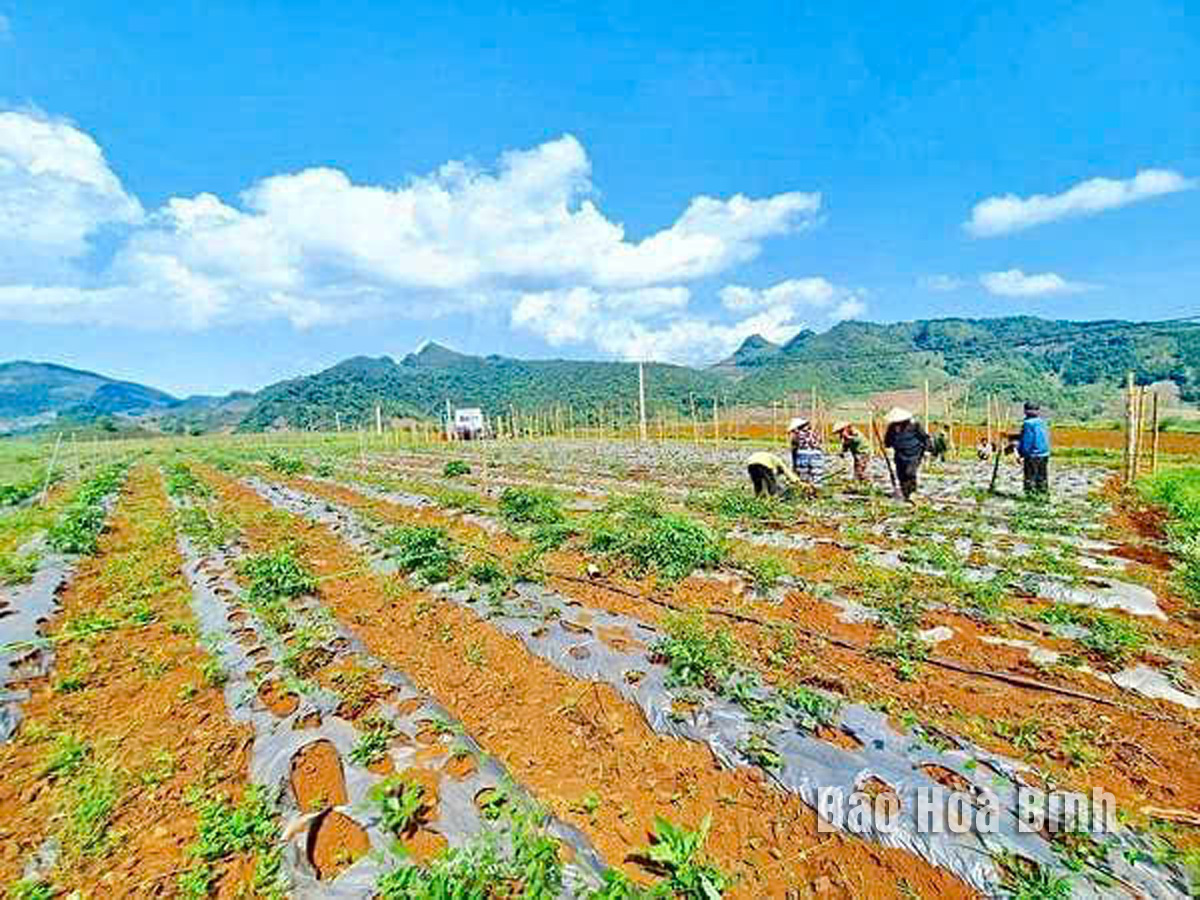
Converting inefficient crops and mixed gardens to medicinal plant cultivation is an effective approach adopted by many localities in Hoa Binh province.
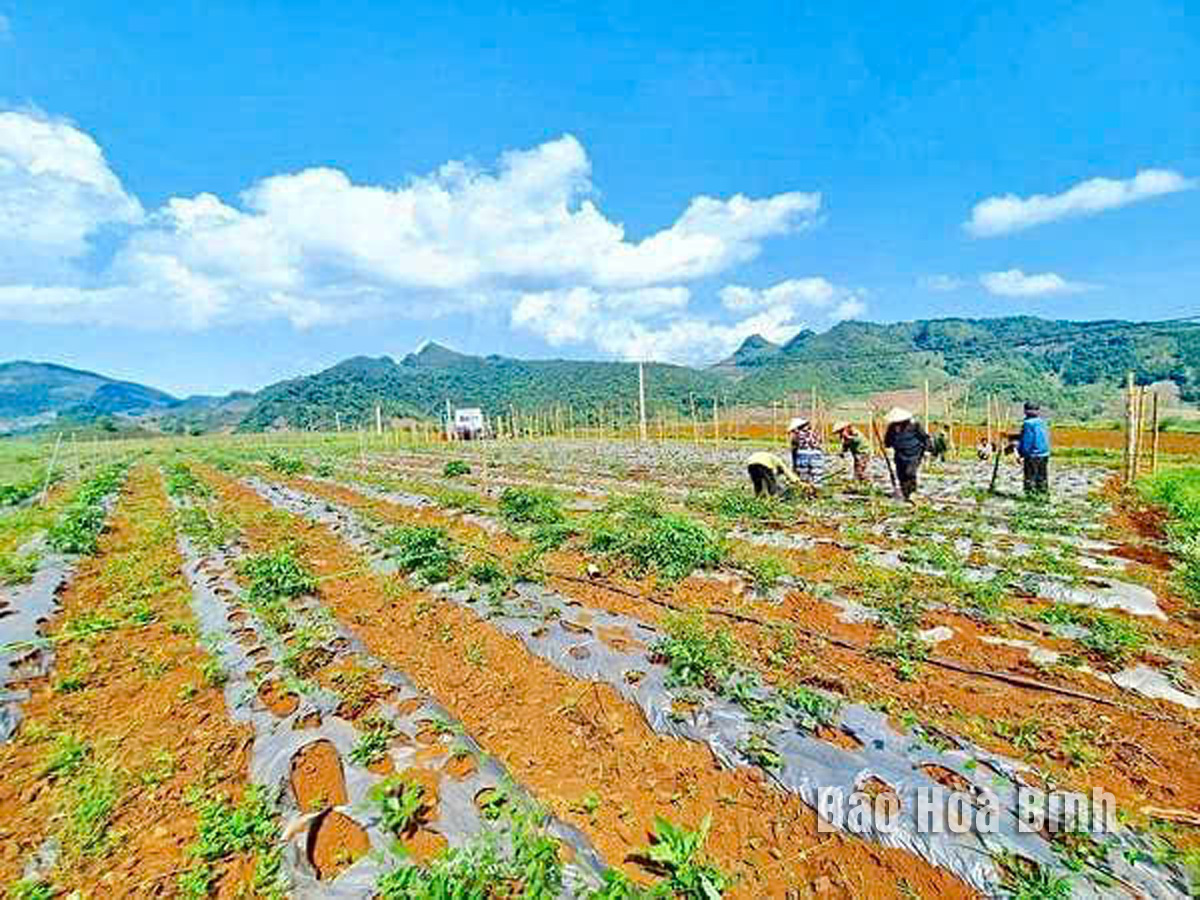
In 2018, Big Farm Medicinal Herb Cooperative conducted a survey, leased 10 hectares of unproductive garden land from farmers in Men hamlet, Yen Hoa commune (Da Bac district), and experimented with planting several medicinal plants.
Yen Tri commune (Yen Thuy district) is one of the "bright spots" in the development of medicinal plants. According to Mr. Bui Phi Diep, Chairman of the People's Committee of the commune, when embarking on the new rural development program, the first challenge for the commune's Party committee and government was how to increase people's income. The policy of converting inefficient crops and mixed gardens to medicinal plant cultivation stemmed from this.
To maximize efficiency, the local authorities proactively selected high - value medicinal plants, including rare native species, and encouraged people to cultivate them as replacements. Simultaneously, the commune proposed to the district to collaborate with medicinal plant centers and pharmaceutical companies to develop a production linkage model. Unlike seasonal crops, medicinal plants are characterized by their long growing seasons; once planted, they yield harvests for many years, requiring minimal care while providing approximately three times the economic value of rice cultivation. Thanks to this correct approach, the lives of many households in Yen Tri commune have become increasingly prosperous. The area dedicated to medicinal plant cultivation in the commune has expanded to approximately 35 hectares, attracting 45 households from the Yen Tri Agricultural Cooperative and 100 other participating households.
Along with Yen Tri commune, the cultivation and development of medicinal plants has been implemented in many localities. To date, the entire province has approximately 2,350 hectares of medicinal plants, of which 197.6 hectares are intercropped on forest land, and the rest are planted on land used for annual and perennial crops. Some major medicinal plants with large areas and yields include: lemongrass (1,600 hectares, yielding over 11,000 tons/year); Solanum torvum (167 hectares, yielding over 1,200 tons/year); and Rhus chinensis (218 hectares, yielding 1,620 tons/year). In addition, there are naturally harvested medicinal plants with diverse species and varieties such as: Gynostemma pentaphyllum, Passiflora incarnata, Spatholobus parviflorus, and Anoectochilus roxburghii.
Over the years, Hoa Binh province has issued many mechanisms and policies to encourage investment in the cultivation and processing of medicinal herbs. Projects and programs for socio-economic development in ethnic minority and mountainous areas, and the One Commune One Product program have helped to promote and encourage economic sectors to invest in the cultivation, preliminary processing, and processing of medicinal plants.
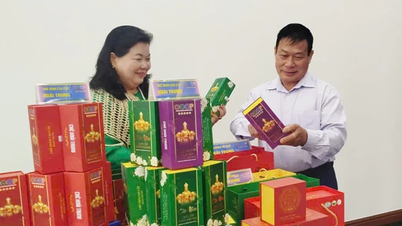
Currently, the province has 13 establishments and businesses involved in the purchase and preliminary processing of medicinal herbs; and 10 small-scale, family-run medicinal herb processing facilities, initially creating a stable market for medicinal plants in the province. Originating from traditional family recipes and the diverse local medicinal plant resources, several cooperatives have produced OCOP products that have achieved 3-4 star certification, such as: Yen Thuy Solanum torvum extract from Bao Hieu Agricultural and Forestry Cooperative; Rhus chinensis extract from Yen Tri Agricultural Cooperative (Yen Thuy); Rhus chinensis and Solanum torvum extracts from Tuyet Nhi Cooperative (Luong Son); Trieu Gia expectorant from Trieu Gia Traditional Medicine Cooperative (Kim Boi); and An Phuc Khop from H20 Vietnam Cooperative (Hoa Binh City)... Among these, Yen Thuy Solanum torvum and Hoa Binh Rhus chinensis products have been granted trademark protection certificates.
However, according to Mr. Vuong Dac Hung, Deputy Director of the Department of Agriculture and Rural Development, currently, only about 30% of the province's total medicinal herb production is processed. A portion (about 10%) is used in traditional herbal remedies; while the majority (about 60%) is still consumed outside the province as raw products. This reality necessitates fundamental solutions to develop medicinal herb cultivation areas commensurate with the province's potential and advantages, making them a sustainable livelihood for poverty alleviation, ultimately increasing income, and creating distinctive medicinal herb products in the area.
According to the leaders of the Department of Agriculture and Rural Development, in the coming time, based on natural conditions, market demand, economic value, and export potential, the province will develop a list of priority medicinal plants for development. At the same time, it will develop mechanisms, policies, and plans to support the cultivation, development, and harvesting of medicinal plants in special-use forests, protection forests, production forests, and for leasing the environment for medicinal plant development, ensuring compliance with forest management regulations and the provisions of the 2024 Land Law.
In addition to training to improve management and organizational capacity in the production and consumption of medicinal products; supporting deep processing and creating high-value-added medicinal product brands linked to tourism development and rural development... the agricultural sector will focus on supporting the establishment of management records, granting planting area codes and traceability for concentrated medicinal plant cultivation areas; continuing to effectively carry out propaganda, promotion, trade promotion, and investment attraction... thereby developing sustainable medicinal plant cultivation in the province.
Minh Vu
Source: http://www.baohoabinh.com.vn/12/193845/Huong-di-hieu-qua-tu-trong-cay-duoc-lieu.htm


![[Photo] Prime Minister Pham Minh Chinh presides over a meeting on private sector economic development.](/_next/image?url=https%3A%2F%2Fvphoto.vietnam.vn%2Fthumb%2F1200x675%2Fvietnam%2Fresource%2FIMAGE%2F2025%2F12%2F20%2F1766237501876_thiet-ke-chua-co-ten-40-png.webp&w=3840&q=75)

































































Comment (0)