

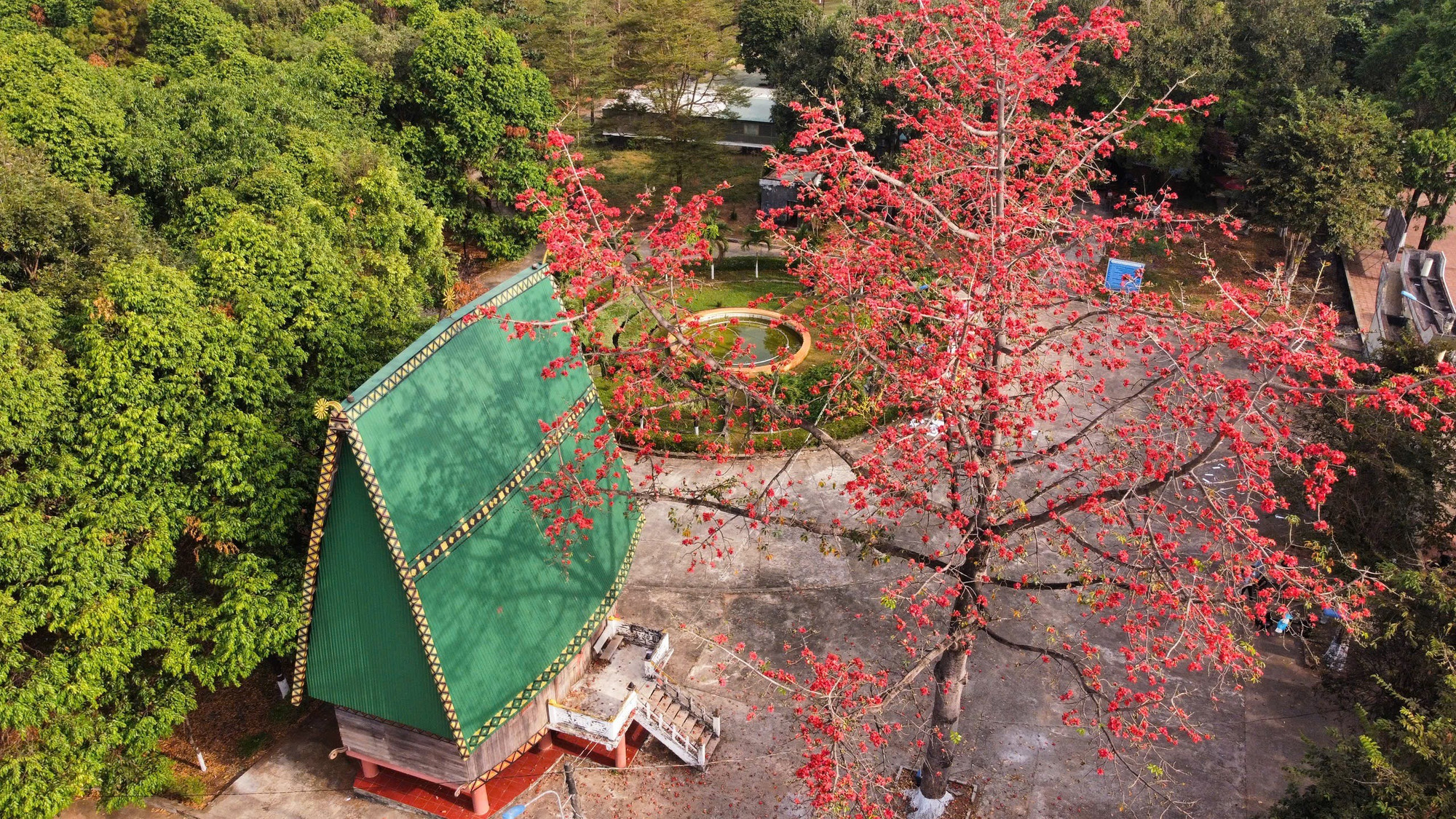
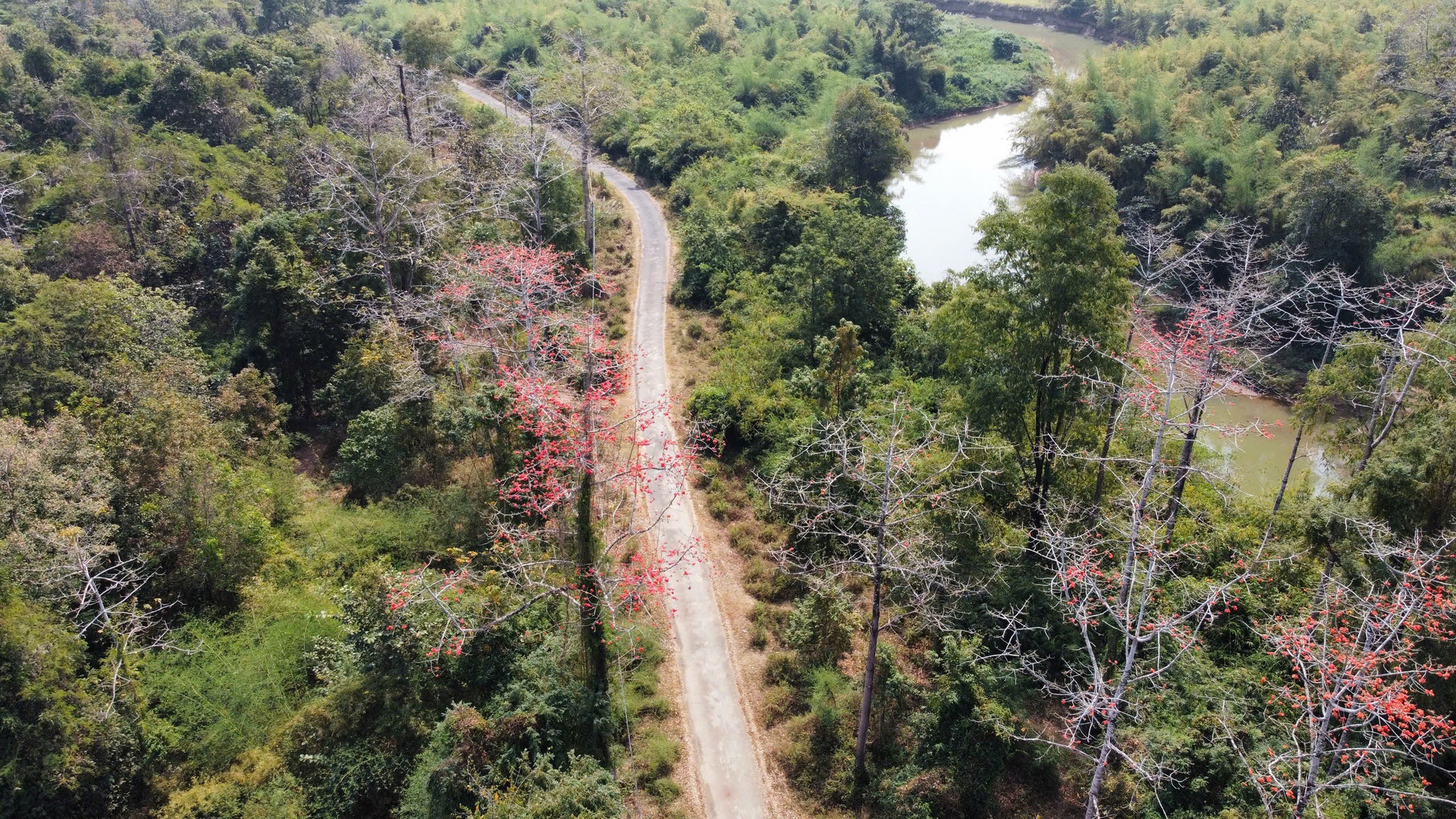
It's unclear when exactly, but among the countless wildflowers of the Central Highlands, the cypress tree has taken such a deep root in the hearts of the highland people. These days, from Duc Co Park (Duc Co commune) along National Highway 19B towards Le Thanh International Border Gate, the entire border region seems to be bathed in the vibrant colors of cypress blossoms, a flower that heralds spring in the mountains and forests.
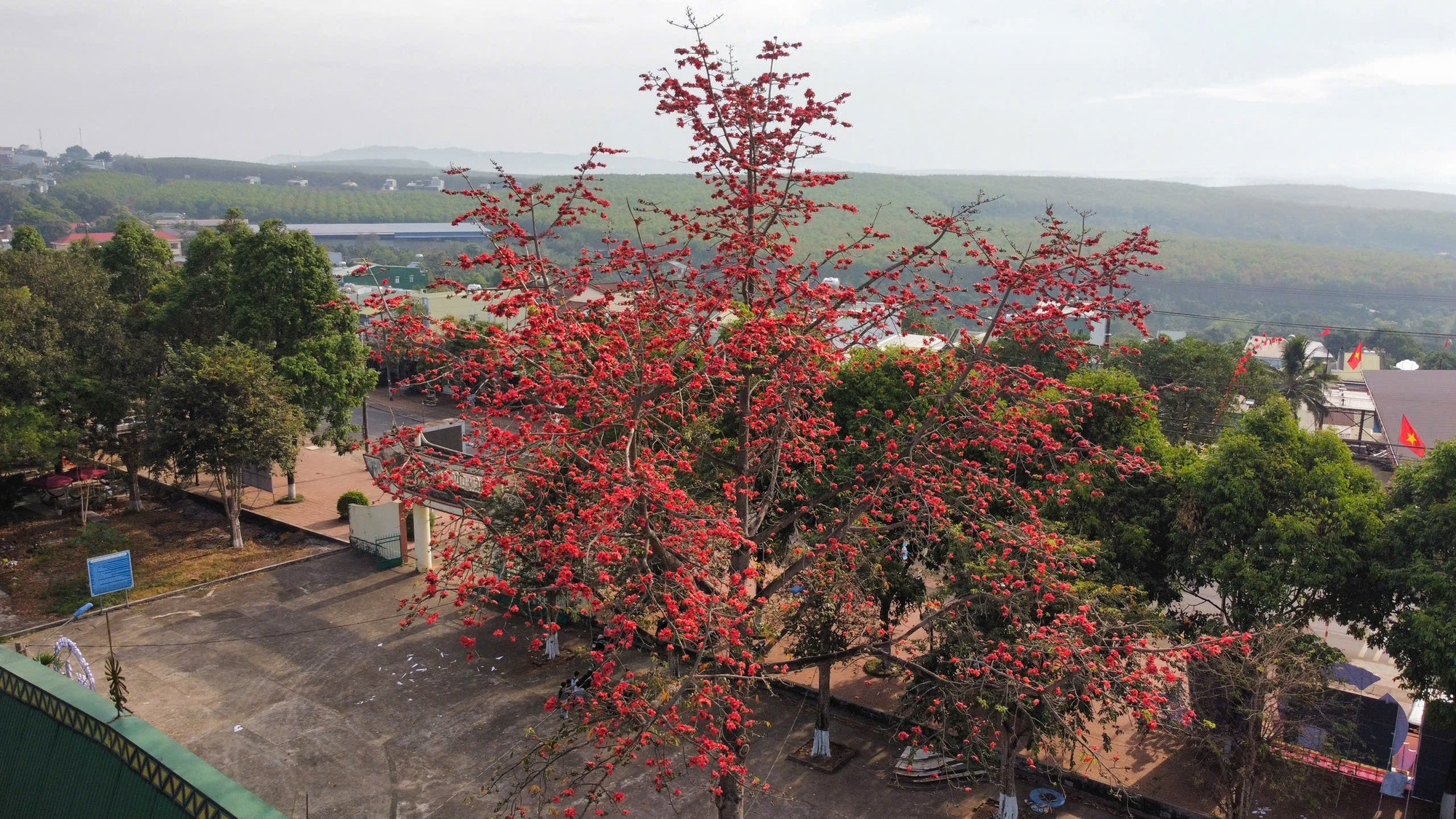
In Duc Co Park, the ancient Pơ Lang trees are in full bloom, displaying their most vibrant beauty in the spring sunshine of the highlands. The flowers are orange-red, with thick petals, and they burst open simultaneously on branches that have just shed their leaves.
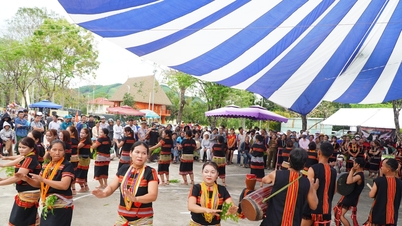
At the base of the tree, fallen petals covered the ground, still vibrant as if they had never left the branch. Beneath the tree, a group of children played a traditional bamboo dance, their laughter echoing across the spacious courtyard. Spring in the Central Highlands is often heralded by the red hues of such a wild flower.
In the Central Highlands, the color red always evokes more than one layer of meaning. It's the color of hearth fires, of patterns on brocade fabrics, of rituals invoking spirits, of gongs and drums in village festivals, and of the rhythmic gathering of community life. And the pơ lang, when it blooms brilliantly in the dry season, seems to gather all those layers of meaning into its blazing flower.
For the Jrai people, the pơ lang tree is not simply a forest tree. In front of the communal house – the cultural and religious center of the village – the tree is often planted as a sacred symbol. Following National Highway 19B through Bi village (Ia Dom commune), you will encounter this familiar sight.
In front of the communal house, a tall, deeply rooted pơ lang tree stands, having survived countless village festivals. Gon, the deputy village head of Bi village, recounts that the tree was planted 30 years ago. “When establishing a new village, the Jrai people would go into the forest to find young pơ lang trees and plant them in front of the communal house. During the Yàng worship ceremony, sacrificial offerings were tied to the base of the tree. When the tree took root, the villagers believed that the spirits had accepted their presence on this land. From then on, the tree was preserved as a part of the community's soul; no one was allowed to cut it down or break its branches,” Gon explained.
Each season when the pơ lang tree blooms is not only a sign of spring and the festival season, but also a collective memory of the community. It burns brightly with the festivals, with the sound of gongs, and with the seasons when people gather under the communal house.
In nature, the Pơ Lang tree usually grows singly, rarely forming clusters. Therefore, encountering an entire "forest of Pơ Lang trees" blooming bright red right next to National Highway 19B through Bi village has delighted many passersby, who stop their vehicles to admire it.
These are old cypress trees interspersed in the cashew orchard of Mr. Tran Quang Lam's family. Amidst the dense cashew canopy, the cypress trees with their straight, gnarled trunks and prominent sharp thorns are easily recognizable, and the ground is covered with fallen, vibrant flowers.
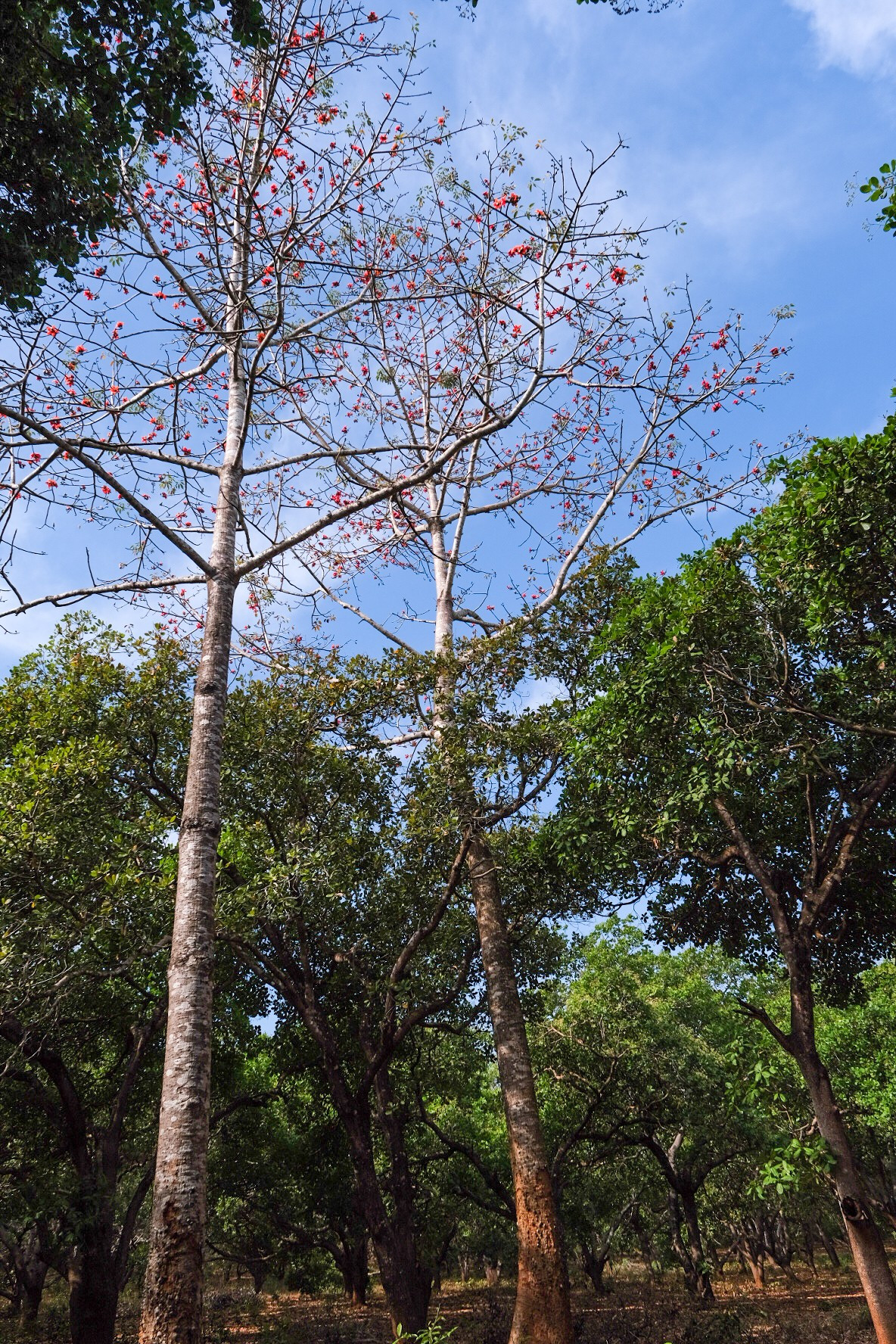
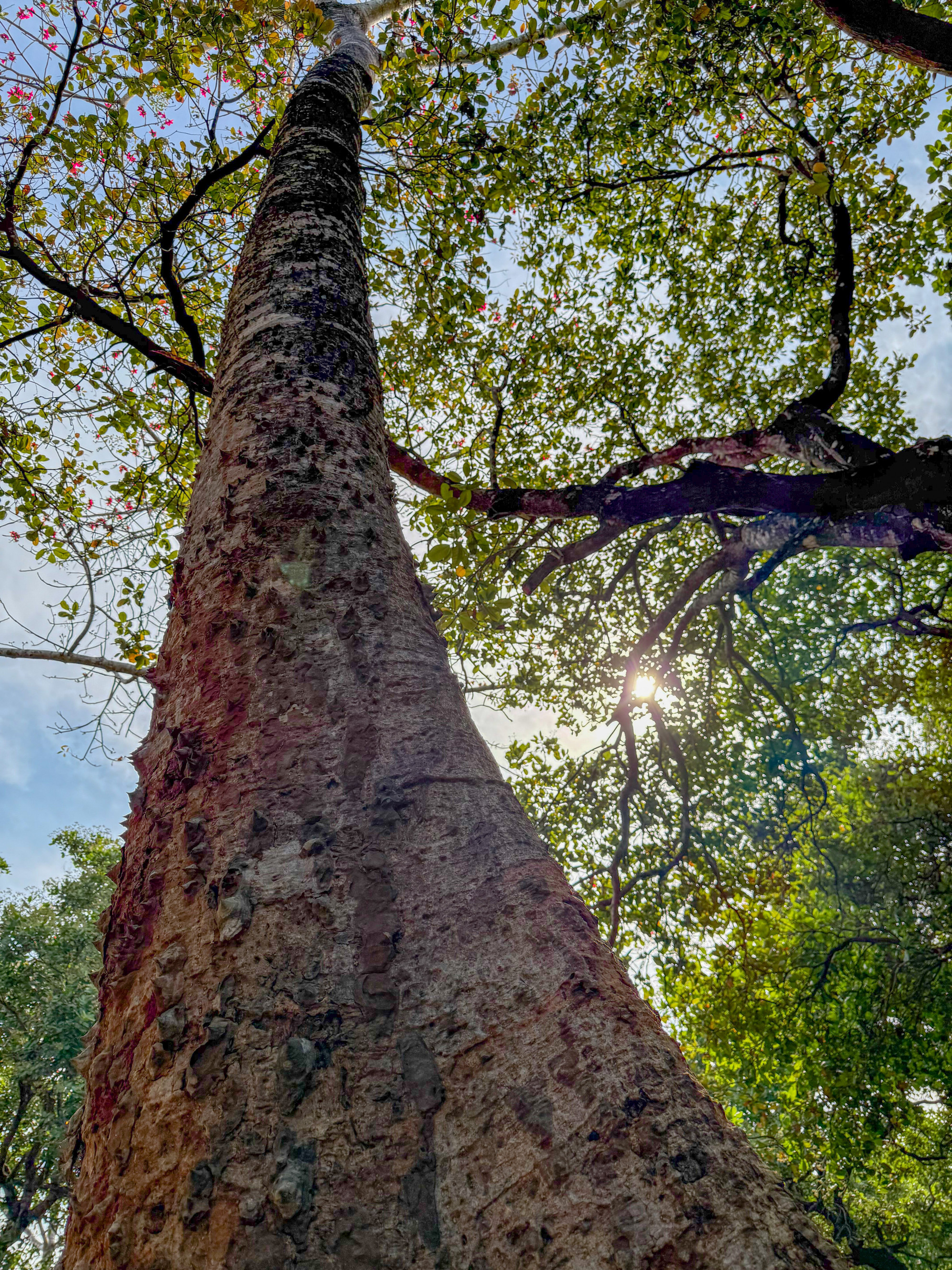
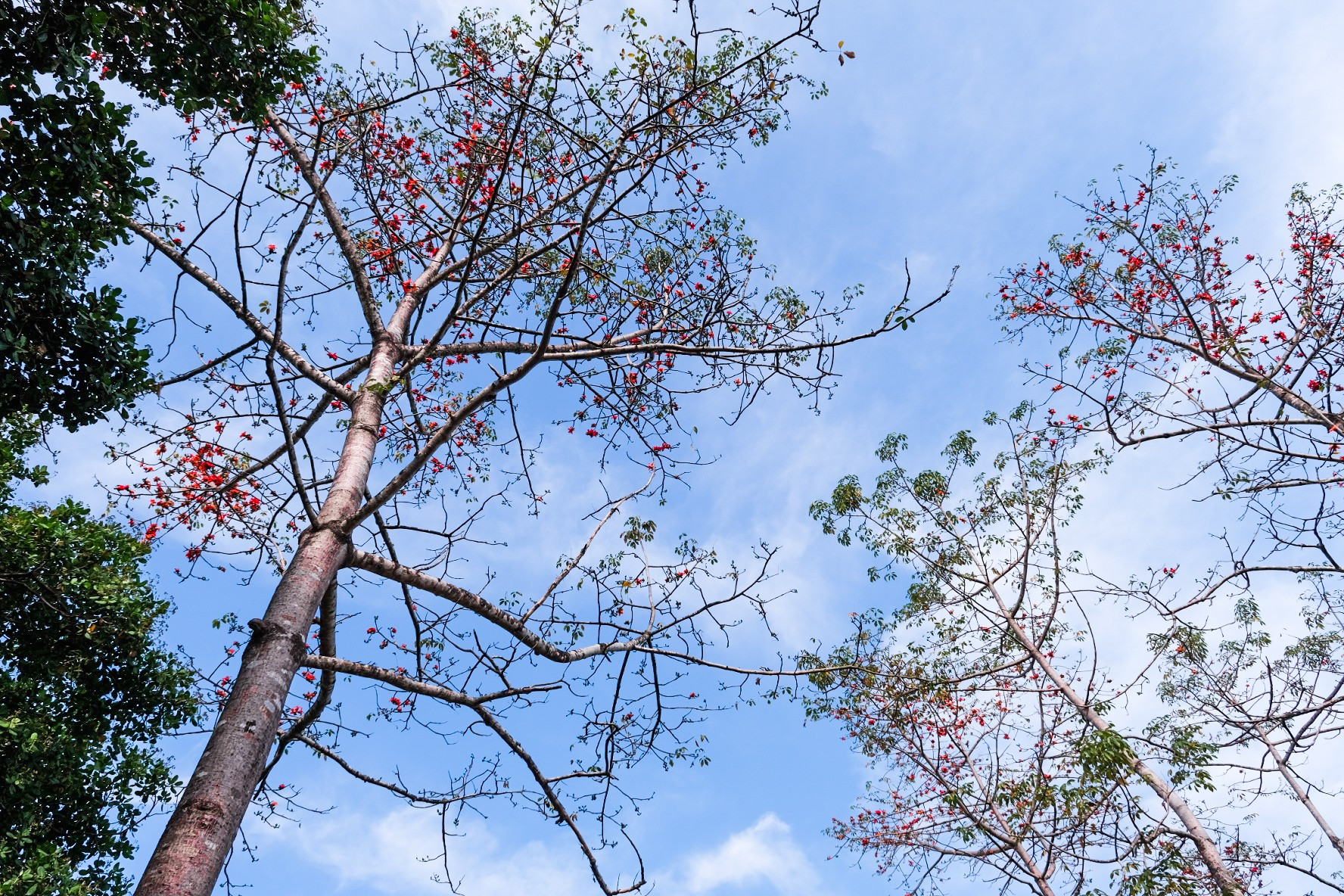
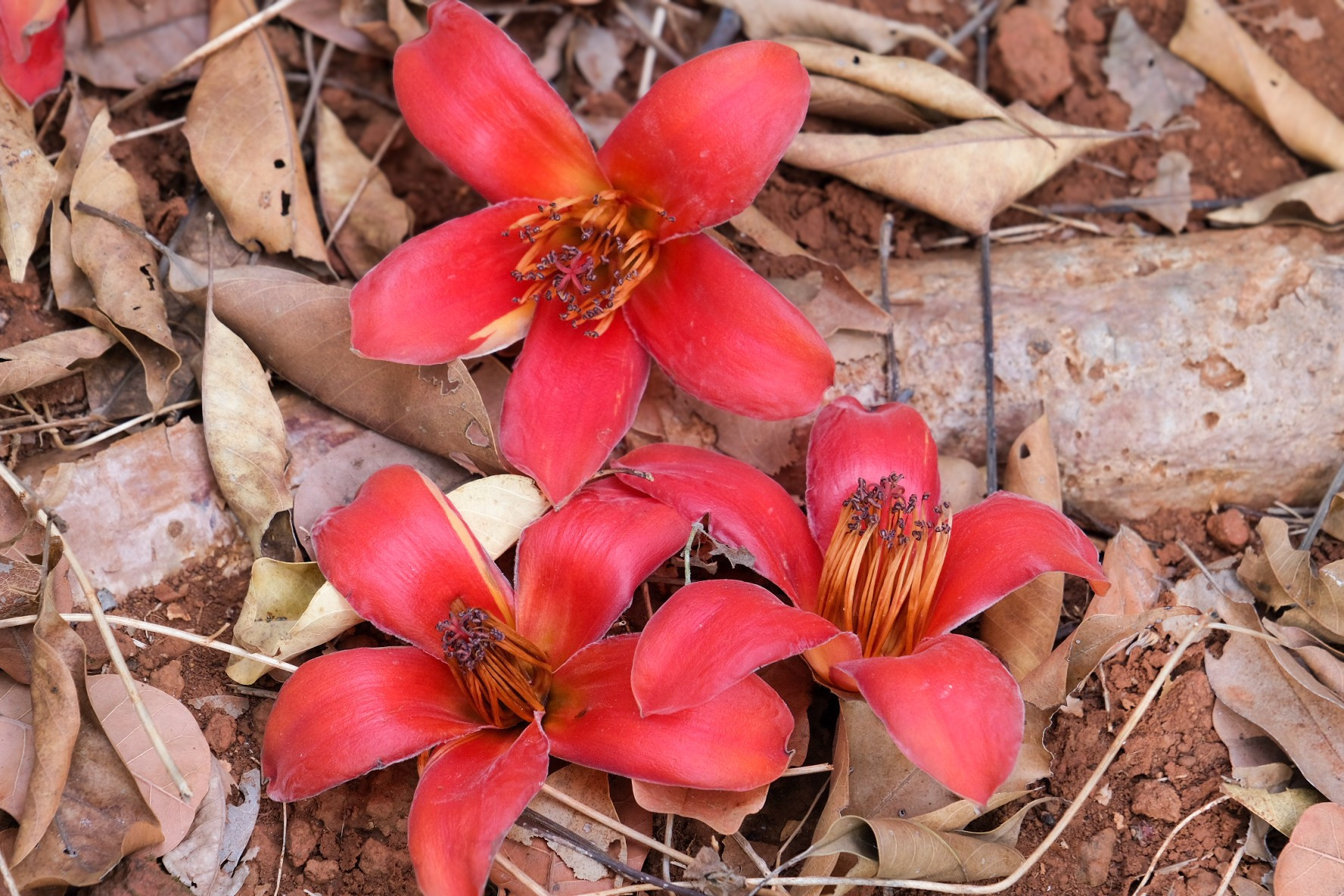
Mr. Lam recounted that over twenty years ago, he planted hundreds of trees to act as a windbreak for his 15-hectare cashew orchard. Now, about 300 trees remain, forming a rare "forest" of Pơ Lang trees. When mature, these trees reach heights of several tens of meters, both protecting the cashew trees and providing timber for construction.
“Every year, the flowers bloom in vibrant red, covering a whole corner of the sky. Many passersby stop to admire them, some even going down into the garden to see the flowers. In this border region, seeing the red blossoms of the Pơ Lang tree means spring has arrived,” said Mr. Lam.
The Pơ lang flower is not endemic to the Central Highlands, but few places have its blossoms so deeply ingrained in the region's consciousness. From poetry to music , the image of its vibrant red petals is linked to the memories of villages, to nostalgia and love for the highlands.
Some poets even bestowed upon it the title of "the most beautiful flower in the Central Highlands": "Oh Central Highlands, how many kinds of flowers are there in the forest? Which flower is the most beautiful in the Central Highlands? Oh, do you remember the village, remember the girl? Remember the most beautiful pơ lang flower in the Central Highlands?" ("You Are the Pơ Lang Flower" - musician Đức Minh)
In the days leading up to Tet (Lunar New Year), the vibrant red of the pơ lang tree blossoms, like a blazing fire, heralds the arrival of spring in the Central Highlands, warming the sun-drenched and windswept border region.
Source: https://baogialai.com.vn/po-lang-tham-do-doc-mien-bien-gioi-post579844.html
![[Photo] National Assembly Chairman Tran Thanh Man attends the policy seminar to promote Vietnam-Türkiye cooperation.](https://vphoto.vietnam.vn/thumb/1200x675/vietnam/resource/IMAGE/2026/04/16/1776351415367_vna-potal-chu-tich-quoc-hoi-tran-thanh-man-du-toa-dam-chinh-sach-thuc-day-hop-tac-viet-nam-tho-nhi-ky-8705791-jpg.webp)




























































Comment (0)