
|
At the age of 40, James Milner reached the milestone of 653 Premier League appearances. |
When James Milner came on as a substitute for Brighton against Aston Villa in the 26th round of the Premier League on the morning of February 12th, he officially equaled Gareth Barry's record of 653 Premier League appearances. That number in itself is astonishing. But if you only look at Milner through statistics, you'll miss the most important thing: his existence isn't due to his brilliance, but to his consistency.
Milner made his Premier League debut in 2002 for Leeds United, at the age of 16. Eight,491 days later, he's still there. The league has changed. The pace has increased. Physical fitness has been pushed to new limits. Tactics have been constantly redefined. But Milner remains present, quietly and effectively.
This isn't the story of genius. This is the story of a standard.
From a Leeds boy to a player every manager wants.
Milner grew up in Leeds, once wearing a shirt with Tony Yeboah's name on it in the Elland Road stands. When promoted to the first team, he earned £70 a week as an apprentice. Six weeks after his debut against West Ham, Milner scored against Sunderland, becoming the youngest player to score in the Premier League at the time.
But even when scoring for the first team, he still had to clean the dressing room and polish the shoes of his senior teammates. Milner once said that he continued doing those tasks even after making his debut for the first team. That's not a romantic detail. It explains why Milner has lasted so long.
Sent out on loan to Swindon Town at just 17, he didn't complain. Six appearances, two goals, and he returned to Leeds with the attitude of someone eager to learn, not someone who had been spoiled.
|
Milner didn't demand the role. He played the role. |
Milner's career hasn't been a straight line. He was once criticized by manager Graeme Souness, who said, "You won't win a league title with a team full of James Milners." That statement later proved paradoxical, as Milner won three Premier League titles.
At Newcastle, Aston Villa, and then Manchester City, he was always the kind of player a manager could rely on. Alan Shearer called Milner "every manager's dream." Because with Milner, you know exactly what you're getting: intensity, discipline, and absolute focus.
At Manchester City, Milner won the Premier League, FA Cup, and League Cup. He played as a defender, central midfielder, winger, and even as a withdrawn striker. Not because Milner was the best at each position, but because he was good enough in every position required.
Milner didn't demand the role. He played the role.
Liverpool, Brighton, and a silent legend.
If Manchester City was where Milner first reached his peak, then Liverpool was where he perfected his image. At Anfield, Milner won the Champions League, Premier League, FA Cup, League Cup, UEFA Super Cup and FIFA Club World Cup.
Under Jurgen Klopp, Milner wasn't a media star. But he set the standard in the dressing room. Once, a heated argument with Klopp at halftime reached a point where the German coach slammed his hand on the table to tell him to be quiet. After the match, they still shook hands. That respect wasn't based on fame; it was based on honesty.
Milner was once disqualified from a game in 2019 by Jon Moss, his former elementary school teacher. The story sounds like a funny anecdote, but it reflects something else: Milner has never lived in a comfort zone. He always plays at the highest intensity, even when facing his former teacher.

|
In an era where players are defined by social media and highlight clips, Milner represents the opposite. |
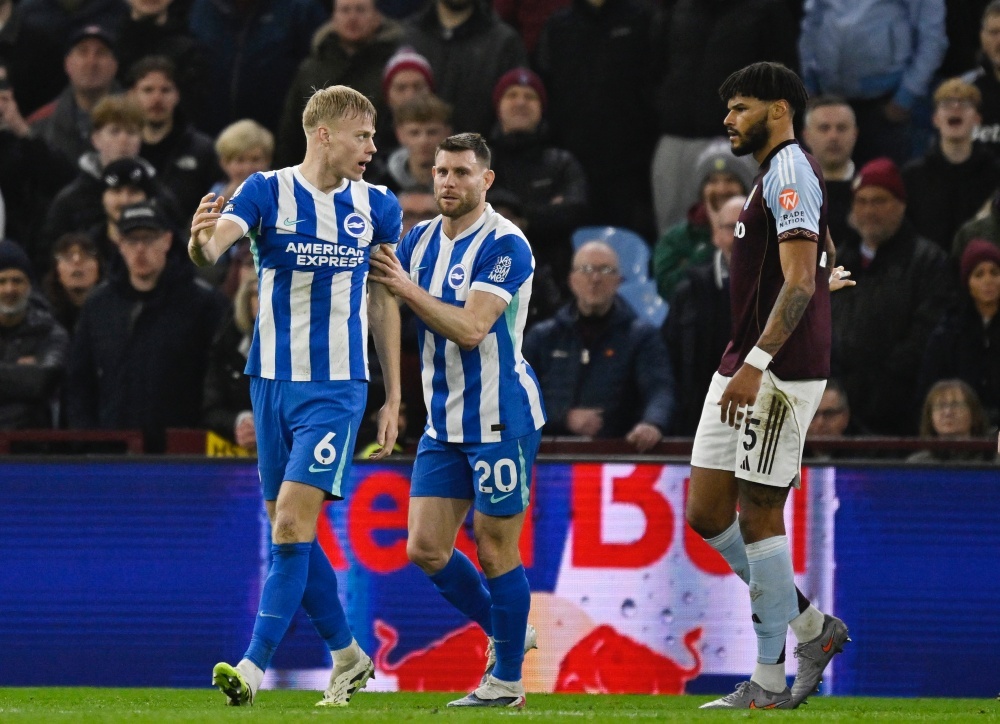
In 2023, Milner joined Brighton to continue his career in his 24th season in the Premier League. He is eight years older than manager Fabian Hurzeler. This doesn't make him a mere decorative figurehead. On the contrary, Hurzeler sees Milner as the team's driving force.
At 39, Milner scored from the penalty spot against Manchester City, becoming the second oldest player to score in the Premier League. He celebrated by mimicking the gesture of his former Liverpool teammate, Diogo Jota. The moment wasn't loud, but it showed that Milner never separated himself from the team.
Milner earned 61 caps for England. He played in the 2010 and 2014 World Cups. He wasn't a visual icon. He wasn't associated with any fancy titles. But for over two decades, he maintained something rare: consistency.
In an era where players are defined by social media and highlight clips, Milner represents the opposite. He is a player of process. Of preparation. Of getting enough sleep and a strict diet. Of serious training when no one is watching.
Milner might not be the first name mentioned when talking about the "greatest" in Premier League history. But when it comes to professionalism, experience, and the ability to adapt to different tactical systems, he deserves to be at the top.
At age 16, when his senior teammate Nigel Martyn reminded him that careers fly by, Milner just laughed. Twenty-four years later, he stands level with the league's record.
Not through exceptional natural talent, but through doing the right thing every day.
And that, perhaps, is the most difficult peak to reach.
Source: https://znews.vn/james-milner-vi-dai-theo-cach-rieng-post1627350.html



































































































Comment (0)