


The Cho Moi-Bac Kan expressway project, nearly 30 km long, is accelerating construction progress, but the investor and contractors are facing a major obstacle: a shortage of construction stone for the roadbed and other key components. According to representatives of the project management board, the entire expressway requires approximately 80,000-120,000 m³ of stone per month, peaking from September 2026 onwards at 150,000-300,000 m³ per month. Currently, the supply from four quarries in the area – Suoi Vien, Coc Ngan, Na Lay, and K15 – only meets about 20,000 m³ of stone per month, equivalent to approximately 20% of the actual demand.
Meanwhile, despite having the necessary equipment, manpower, and land, some quarries in the area supplying stone for the Cho Moi-Bac Kan expressway project are facing annual mining quotas, preventing them from increasing their production capacity. For example, the Coc Ngan quarry has an annual mining quota of 300,000 m³, but its mining and processing equipment and manpower could handle three times that amount. In 2026, the Suoi Vien quarry was permitted to mine 50,000 m³ of stone, and to date, it has mined and sold 30,000 m³. However, at the current rate of mining and consumption, the quota will soon be exhausted; if the mining quota is not increased, operations will temporarily cease at the end of the year.
In the coming period, the province will implement major, key transportation projects such as: expanding the Hanoi -Thai Nguyen expressway from 4 to 6 lanes, constructing new large-scale expressways such as Bac Kan-Cao Bang, Tuyen Quang-Thai Nguyen-Lang Son hundreds of kilometers long, the road along Nui Coc Lake approximately 40 km long, the Huu Cau embankment over 16 km long... This will lead to a very large demand for common construction materials such as construction stone, sand, and fill soil.
To meet demand and avoid shortages of common construction materials, the People's Committee of Thai Nguyen province recently issued directives and organized a conference requesting relevant departments and agencies to urgently implement solutions to ensure sufficient supply of common construction materials. This is to prevent delays and ensure the quality of construction projects, as well as to prevent price increases due to shortages and scarcity.
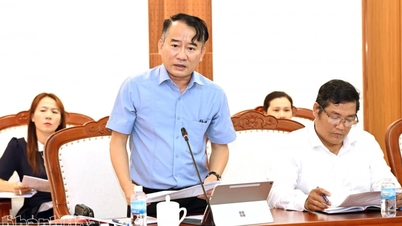
According to Deputy Director of the Department of Construction Nguyen Van Ha: “Following the direction of the Provincial People's Committee, we have urgently reviewed the current and projected demand for common construction materials up to 2030 to develop a plan for quarries and soil mines. We prioritize planning for quarries near planned roads and areas with high demand to reduce transportation costs, providing a basis for relevant agencies to carry out subsequent steps such as land use planning, mining project development, environmental impact assessment, and mining permit procedures...”.
To urgently implement solutions to address the current material shortage, the province has directed relevant departments, agencies, and localities to create favorable conditions and shorten the time for appraisal and licensing to enable units to increase the capacity of stone and soil quarries. According to Deputy Director of the Thai Nguyen Department of Agriculture and Environment, Duong Son Ha, the department is currently actively reviewing and guiding units with the necessary machinery, equipment, personnel, land, and geographical areas to carry out the relevant procedures and processes to increase the capacity of stone and soil quarries for leveling, in order to meet current and future needs.
Simultaneously with the above solutions, the province also implements a special mechanism for urgent, key, and priority projects. Specifically, when granting permits for construction material quarries to investors or contractors, the process will not be based on mineral resource planning, land use plans, or environmental impact assessments, nor will it require the preparation of investment projects... as stipulated by regulations, aiming to shorten the time for completing procedures and immediately meet the actual needs of construction and project implementation. A typical example is the Hanoi-Thai Nguyen expressway expansion project, which uses approximately 900,000 m³ of stone. Because it is a key project, the province granted the quarry to the investor using a special mechanism.
In reality, natural sand resources in Thai Nguyen province are limited. Some sand mines have undergone environmental impact assessments, land clearance, and been granted mining licenses, but have been stalled for many years due to concerns about riverbank erosion among local residents. To overcome the sand shortage, in addition to importing sand from neighboring localities, the province needs to encourage businesses to utilize rocks and pebbles during river sand mining, crushing them into sand due to their strength and adhesion; increase the mining capacity of the Cu Van sandstone mine; and expedite the procedures for granting mining licenses for the Quan Nua I and Quan Nua II sandstone mines, which have large reserves, to supplement the 부족한 (shortage) of construction and leveling materials.
Source: https://nhandan.vn/khac-phuc-tinh-trang-thieu-vat-lieu-xay-dung-thong-thuong-post965762.html



![[Photo] Admire the coral "masterpiece" amidst the million-year-old heritage of Dak Lak province.](https://vphoto.vietnam.vn/thumb/1200x675/vietnam/resource/IMAGE/2026/05/30/1780107638639_y25-jpg.webp)















































































Comment (0)