

In particular, the public sector plays a crucial role in shaping and leading the development of AI in Vietnam by promoting the domestic AI ecosystem, integrating AI into governance and operations, and providing public services to citizens. Several central and local agencies have begun to apply AI to administrative management and public service delivery to explore the potential of artificial intelligence for the public sector.

Representatives from the leadership and various units pressed the button to officially launch the AI chatbot on the Binh Phuoc Provincial Public Service Portal. Photo: Dau Tat Thanh/TTXVN
There is a significant shortage of human resources for AI.
Associate Professor, Dr. Nguyen Xuan Hoai - Director of the AI Institute, University of Technology, Vietnam National University, Hanoi, assessed that there is currently a significant shortage of skilled personnel in the field of AI. Each year, this workforce only meets 10% of the recruitment demand, while only about 30% of the 55,000 information technology students graduating annually are capable of working in AI-related fields. Besides the shortage of human resources, Vietnam also faces other challenges such as a lack of access to leading AI experts and consultants to evaluate and assess product suitability for market needs; and a lack of access to readily available infrastructure, platforms, and tools for businesses.
"Many people think that simply applying new technologies like AI to their work will guarantee success. However, AI, like many previous technological waves, requires more technological expertise as it permeates organizations and sectors of the economy ," Associate Professor, Dr. Nguyen Xuan Hoai shared, affirming that AI is a very special technology, different from all others. It is a technology of change and transformation.
Mr. Tran Anh Tu, Deputy Director of the Department of Science, Technology and Engineering, Ministry of Science and Technology, believes that AI is not only a useful tool but also a crucial factor affecting the competitiveness and survival of businesses. It is estimated that in Vietnam, the AI generation sector is expected to contribute up to VND 14 trillion to the digital economy by 2030. However, to fully exploit the potential of AI, many challenges must be addressed, especially regarding human resources and responsible AI development.
Develop AI and you must beat AI.
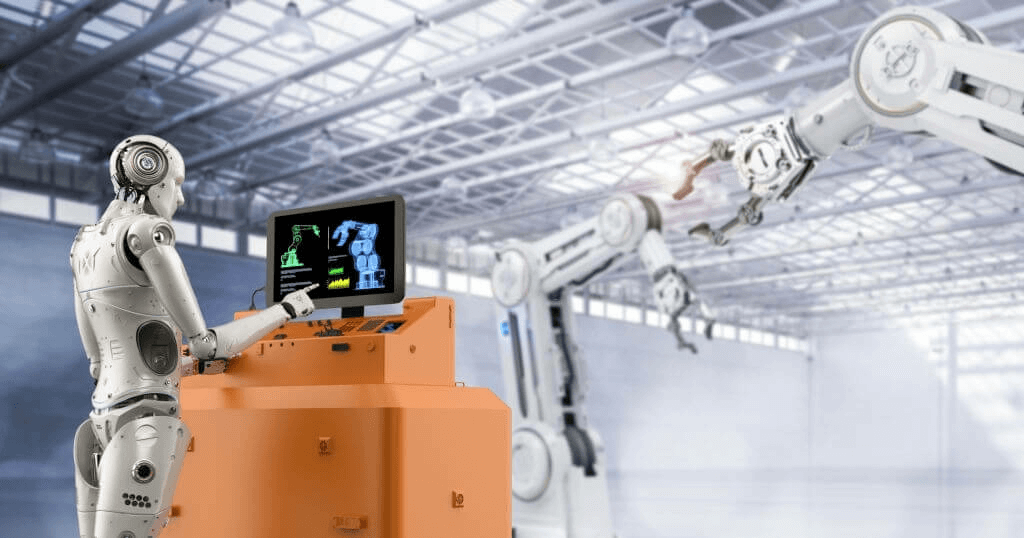
Vietnam has the potential and resources to further develop AI technology. (Photo: VNA)
Vietnam's AI development strategy has been clearly defined. A prime example is Resolution No. 57-NQ/TW, issued on December 22, 2024, by the Politburo on breakthroughs in national science, technology, innovation, and digital transformation; which clearly states the guiding principle: “Rapid and sustainable development, gradually achieving technological self-reliance, especially in strategic technologies; prioritizing national resources for investment in science, technology, innovation, and digital transformation. Maximizing Vietnam's potential and intelligence while rapidly absorbing, mastering, and applying advanced scientific and technological achievements from around the world; promoting applied research, focusing on basic research, and moving towards technological self-reliance and competitiveness in areas where Vietnam has needs, potential, and advantages.”
Recently, at the policy forum "Vietnam Proactively Developing the Semiconductor and Artificial Intelligence Industry in the New Era," Prime Minister Pham Minh Chinh proposed enhancing smart governance capabilities in businesses, production facilities, and factories; and ensuring that all citizens have virtual assistants to utilize the achievements of AI and protect their security and safety, while mitigating the negative aspects of AI. The spirit is "develop AI and must defeat AI"; in which the "Digital Literacy Movement" is considered the golden key to achieving this goal.
According to Tran Anh Tu, Deputy Director of the Department of Science, Technology and Engineering (Ministry of Science and Technology), the National Strategy on Research, Development and Application of AI until 2030, issued under Decision 127 dated January 26, 2021, by the Prime Minister, clearly states that AI is a crucial foundational technology that will create a breakthrough in production capacity, enhance national competitiveness, and promote sustainable economic development. The government is strongly directing efforts to accelerate the application of AI to reduce paperwork and improve operational efficiency.
To achieve this, several policies are currently being implemented. The first is the construction of a national data center in the Hoa Lac High-Tech Park (Hanoi), expected to be completed and operational by the end of 2025. Accordingly, data from ministries, agencies, and localities will be centrally stored at the national data center and partially opened to promote socio-economic development.
Regarding training, currently, there are more than 50 AI-related training programs available, including over 10 specialized AI majors at various training institutions, with a very large number of students participating. "The issue is that we need a training program to disseminate knowledge about AI, to raise general awareness throughout the community, and thereby help make AI applications more effective," said Mr. Tran Anh Tu.
Sharing the same view, Ms. Do Thanh Huyen, Public Policy expert at UNDP Vietnam, believes that determining how to effectively apply AI given the current infrastructure, data management capacity, human resources, and mechanisms and policies of the public sector is a problem that requires careful consideration. Ms. Do Thanh Huyen proposed four conditions, referred to as the four "M"s.
The first "M" refers to institutions, mechanisms, and policy frameworks for promoting development or application within the public sector, while ensuring the information security and safety of users in that environment.
The second "M" refers to the foundation of the equipment system (machinery). If we want to apply AI, we first need a data repository capable of storing Vietnamese language data, because the Vietnamese language is still very limited in the AI's common language system.
The third "M" stands for human resources (manpower); this refers to training for civil servants from the central to local levels, especially policymakers, to understand the importance of applying AI.
The final "M" represents the story of funding (Money). Currently, the budget for investing in the development of online public services is very limited, therefore mechanisms are needed to increase funding for the application of technological solutions, including AI.
To overcome the financial bottleneck, Associate Professor, Dr. Nguyen Xuan Hoai suggested that a change in perspective is needed regarding the implementation of AI projects, with a sandbox mechanism for testing to promote AI applications.
Thu Phuong (VNA)
Source: https://baotintuc.vn/khoa-hoc-doi-song/khai-pha-tiem-nang-cua-tri-tue-nhan-tao-doi-voi-khu-vuc-cong-20250327075506250.htm

![[Photo] Prime Minister Pham Minh Chinh presides over a meeting on private sector economic development.](/_next/image?url=https%3A%2F%2Fvphoto.vietnam.vn%2Fthumb%2F1200x675%2Fvietnam%2Fresource%2FIMAGE%2F2025%2F12%2F20%2F1766237501876_thiet-ke-chua-co-ten-40-png.webp&w=3840&q=75)












































































Comment (0)