

Mexico is a country with diverse topography. Its geography, encompassing mountains, forests, deserts, coastlines, and rainforests, not only shapes the landscape but also influences the lives and culture of its people, inevitably impacting the country's soundscape: in rhythm, instruments, and singing styles.
Today, we will embark on a journey through that land, accompanied by music , as if an atlas of sound is unfolding before us.
We will delve deeper by traveling to the southeast of the country, to the Isthmus of Tehuantepec, in the state of Oaxaca: one of the narrowest areas of Mexican territory, where the Gulf of Mexico and the Pacific Ocean are very close, almost directly opposite each other.
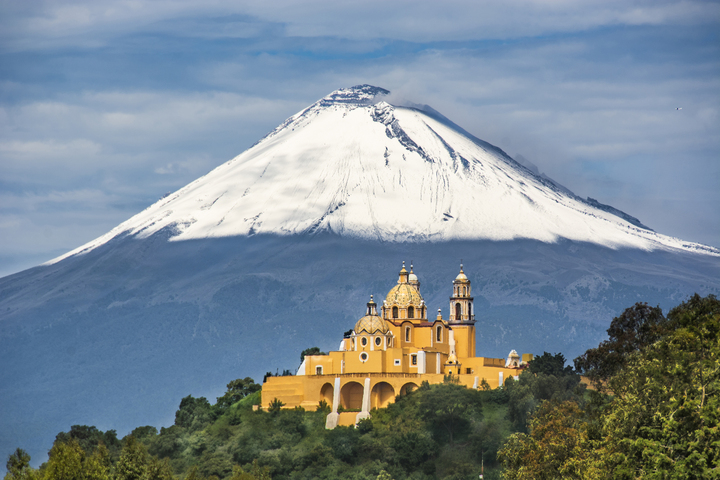
The unique shape of this landmass facilitates the circulation of air currents between the two coastlines, creating a landscape of beaches, lagoons, and mountains.
In this region, the "sones istmeños" genre flourishes, a type of music that accompanies colorful festivals, where dancing, food , and communal living unite.
The best way to understand them is to listen to them, and we would like to introduce you to the song "La Martiniana," a song that symbolizes immortality through memory.
Featuring performances by five female vocalists from Oaxaca: Alejandra Robles, María Reyna, Ana Díaz, Paulina Tenorio, and Jazz Matías.
Heading towards the center of the country, we arrive at the Huasteca region, encompassing towering mountain ranges, rivers, and lush rainforests, offering breathtaking scenery. This region includes six states: Hidalgo, Veracruz, San Luis Potosí, Tamaulipas, Querétaro, and Puebla.
This is where the "son huasteco," or "huapango," genre originated. Its most distinctive feature is its falsetto singing style, a high-pitched voice that stands out against the fast rhythm of string instruments.
This type of music is deeply intertwined with rural life and community traditions. And every festival or family gathering can be an occasion for huapango pieces like "Fandanguito" to be played; let's explore it, as performed by Los Vega.
If we travel north through Mexico, the landscape changes completely: there are vast deserts, majestic mountain ranges, and seemingly endless skies. This is a region with a harsh desert climate, where temperatures can be extremely extreme and contradictory.
Here, you'll find states like Durango and Chihuahua, the birthplace of northern music, encompassing many different subgenres.
Life in northern Mexico is closely intertwined with the border and the issue of migration to the United States, which is why these experiences are often reflected in song lyrics. Some bands even take their names from this context, such as "La Furia del Río Bravo" (The Fury of the Rio Grande), alluding to the river that divides the two countries. Let's explore this band through their song "Polka de Chihuahua" (Chihuahua Polka).
In the southeastern part of the country lies the Yucatán Peninsula, an area with abundant freshwater resources underground. The landscape here is notable for its natural sinkholes (cenotes), underground rivers, and tropical rainforests.
In fact, the dense rainforests have kept many communities relatively isolated from the rest of the country, which has been beneficial for preserving traditions such as Mayan culture—an important indigenous culture of the Americas.
However, these traditions also coexisted with external influences, such as those from the Caribbean and especially those from the colonial period. From this cultural exchange, music was integrated into community life and festivals, creating rhythms like "jarana yucateca".
A quintessential example of this rhythm is "Linda Vaquería." Let's listen to a version performed by the Yucateca de Pedro Barrón Orchestra.
Heading west, you'll find Jalisco. It's one of the most diverse states, a blend of valleys, mountains, volcanoes, rivers, and beaches. Surprisingly, you can move from one completely different environment to another in just a few hours.
This abundance of natural resources not only shapes the territory but also gives rise to some of the most iconic expressions of Mexican culture internationally.
For example, in the regions near the Tequila volcano, the land is ideal for growing agave. From this plant, one of the country's most iconic drinks is produced: tequila.
And in that context, one of the most famous musical genres also emerged: mariachi music. Born in the valleys, in open spaces and without the need for sound amplification, this genre developed with instruments capable of transmitting sound over long distances, such as trumpets and violins. Today, it is known worldwide and has been recognized by UNESCO as an Intangible Cultural Heritage of Humanity.
Let's enjoy the song "Cascabel" performed by the Mariachi Vargas de Tecalitlán group.
Now let's journey east across the country to Veracruz, a state that stretches along the Gulf of Mexico. Veracruz boasts one of the longest coastlines in the nation, featuring beaches, lagoons, and mangrove forests. Much of the state's territory comprises tropical ecosystems.
Amidst this lush vegetation, local timbers have provided ideal conditions for crafting instruments such as the jarana, requinto jarocho, and leona. Their sounds contribute to the cheerful and lively tone characteristic of the region's music, known as son jarocho.
One of its most famous songs is the theme song for the upcoming musical, "La Bamba," which has gained international acclaim.
Sinaloa, a state located in northwestern Mexico, encompasses a coastal strip, fertile valleys, and the Sierra Madre Occidental mountain range. This land, with its warm climate and open spaces, has fostered vibrant social life within its communities. Consequently, festivals, fairs, and gatherings are an integral part of daily life.
These conditions directly influenced their music, such as the "Sinaloa band," a vibrant and powerful style that used wind and percussion instruments—like trumpets, clarinets, and tambora drums—to resonate far and wide.
Currently, Sinaloa bands are one of the most popular musical styles in Mexico. One of their most famous bands is “La Banda El Recodo” de Cruz Lizárraga. Enjoy their song “El Herradero”.
In the west of the country lies Michoacán, known as the "Soul of Mexico." Its territory is characterized by mountain ranges, volcanic areas, forests, and lakes, creating a rugged landscape and fertile land.
This diversity is also reflected in the lifestyles of the communities… and in their music. In Michoacán, many of these sounds come from the Purépecha culture, an indigenous people of the region. Their traditional music is a part of daily life and is present in festivals and celebrations.
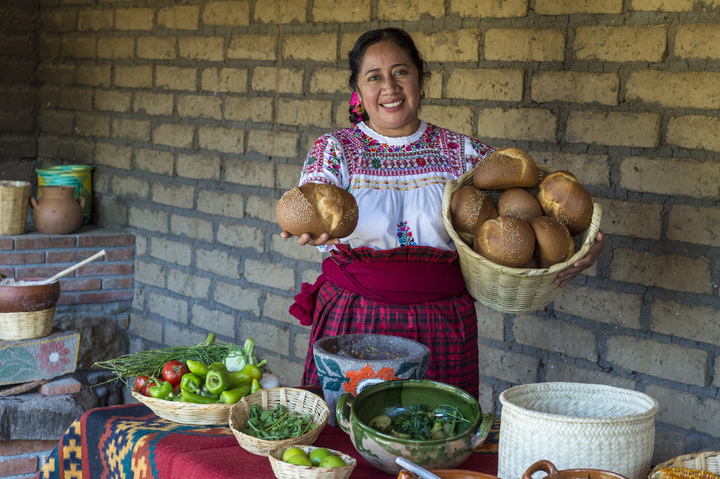
One example is the Dance of the Elders, a form of showing respect for the elderly and acknowledging the importance of passing on wisdom to future generations. We invite you to allow yourself to be swept away by the rhythm of this dance.
Another state that is sure to overwhelm you with its stunning scenery is Chiapas, located in the far southeast of Mexico.
Much of the state's area is covered by the Lacandon Forest, one of the country's most important tropical regions, characterized by dense vegetation and a warm, humid climate.
In addition, this forest is home to many types of wood with high durability and good resonance, allowing for the creation of the "marimba," a musical instrument originating from this region.
The marimba is often played by multiple musicians simultaneously, creating complex and joyful melodies. For decades, it has accompanied folk dances, festivals, and family gatherings, becoming a cultural icon of southeastern Mexico.
Enjoy its sound with “La Sandunga”, performed by: La Marimba Nandayapa.
Here, we enjoy exploring this land with all our senses: observing the landscapes, listening to the sounds, smelling, and feeling the diversity present in every corner. From mountains and forests to deserts and coastlines, Mexico is a land of contrasts, life, and history.
Geography shapes us: we are the diversity, the intermingling, and the communities formed by the land we live on. We hope you enjoyed this Mexican landscape tour as much as we did. We'll be back with another episode. See you soon!
Source: https://vtcnews.vn/kham-pha-mexico-qua-am-nhac-tung-vung-mien-ar1021399.html

![[Photo] General Secretary and President To Lam presides over a meeting on preparations for the review of one year of operation of the three-tiered government system.](https://vphoto.vietnam.vn/thumb/1200x675/vietnam/resource/IMAGE/2026/06/02/1780391821195_a1-bnd-4595-9717-jpg.webp)
















































































Comment (0)