

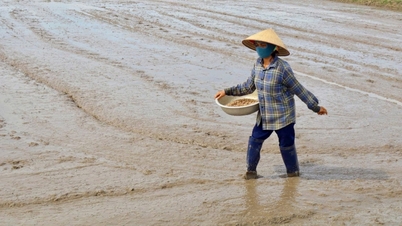
With 5 sao (approximately 0.5 hectares) of rice fields, this year's summer-autumn crop is facing hardship due to a lack of labor. Hiring someone to transplant the seedlings would cost 3 million dong, so Ms. Le Thi Xuyen from Hamlet 9, Chau Nhan commune (Hung Nguyen district), a remote area outside the dike, had no choice but to buy seeds and sow them directly.
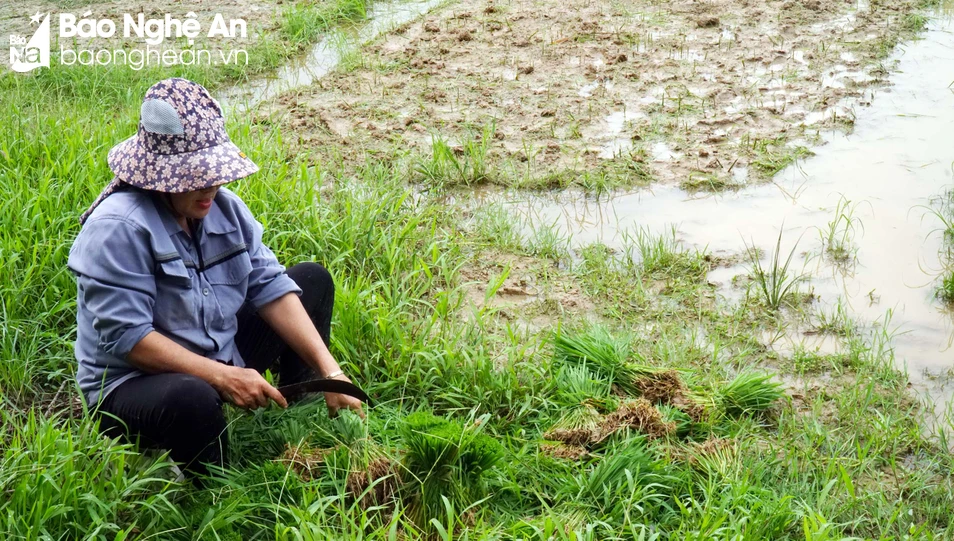
"The rice was sown nearly half a month ago, but the land was originally used for transplanting, so the soil isn't completely level. There are many deep puddles where the rice can't sprout, so we have to replant it," Ms. Xuyen said.
Since it was her first time sowing rice directly, she also prepared seedlings in parallel with the sowing so that if the crop failed, she would still have a ready supply of seedlings for transplanting. The rice developed well, so she pulled up those seedlings to replant in the field, which would take a few days.
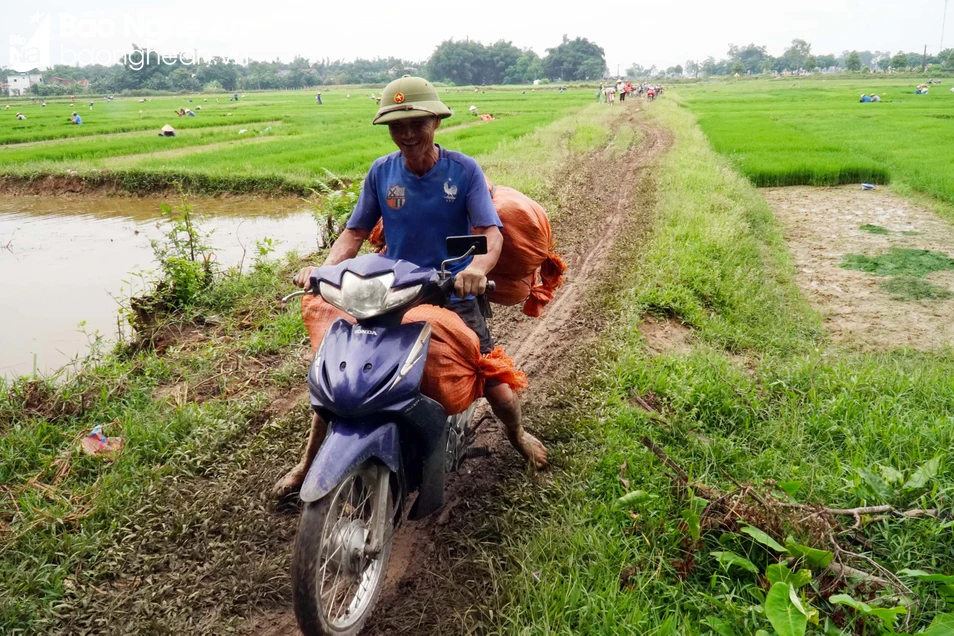
With 5 sao (approximately 0.5 hectares) of rice paddies, by May 24th, Ms. Pham Thi Binh had already planted 2 sao. While pulling up the seedlings, she said: "Almost every year this area experiences flooding, so we have to plant early to be able to harvest in August. The seedlings are 20 days old now, the weather is cool, and irrigation is favorable, so the seedlings are doing very well. We'll finish planting in a few more days, unlike previous years when there was no water, and it took us a long time to plant."
Despite lacking laborers, Mrs. Binh still tried to borrow people to transplant seedlings instead of sowing directly.
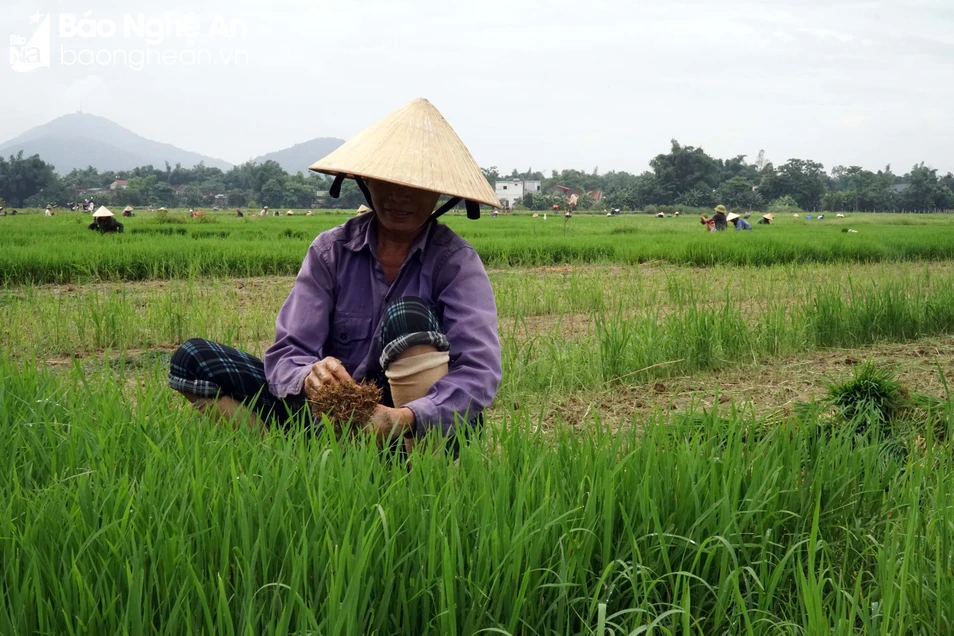
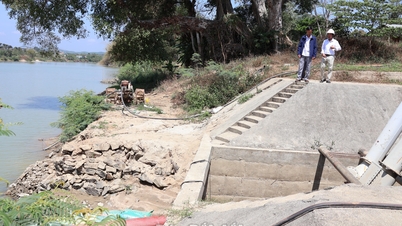
Chau Nhan commune has two distinct geographical areas: the area inside the dike (formerly Hung Chau commune) and the area outside the dike (formerly Hung Nhan commune). While the area inside the dike offers safer production, hamlets 7, 8, 9… in the area outside the dike frequently suffer from flooding at the end of the harvest season.
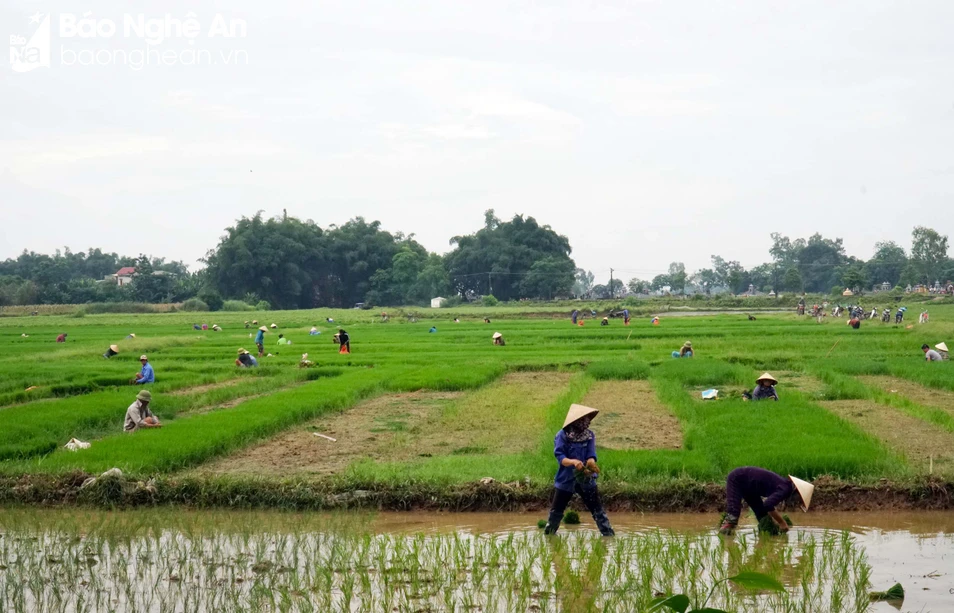
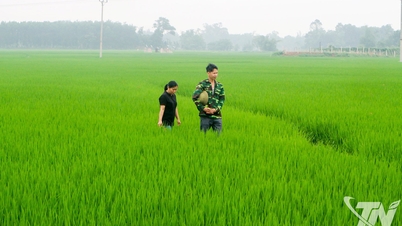
The entire commune has 350 hectares of rice-growing land. This year's summer-autumn crop, Chau Nhan commune aims to plant 260-270 hectares, with nearly 100 hectares remaining being high-lying, water-scarce land prone to drought; some of this land will be converted by farmers to growing corn and other crops. In terms of production structure, the main rice varieties planted are Bac Thinh and VNR20, and notably, about 50% is glutinous rice.
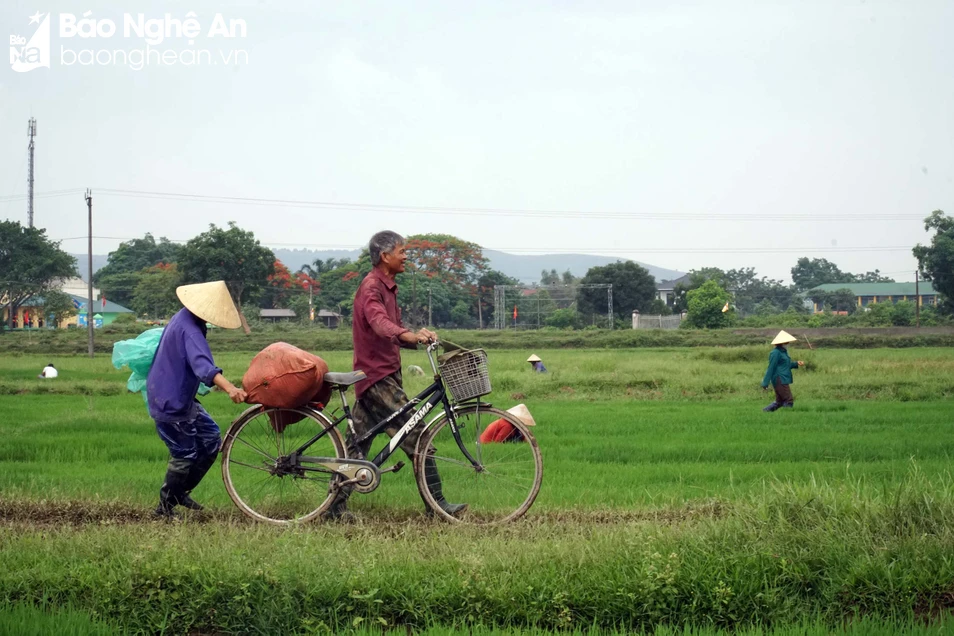
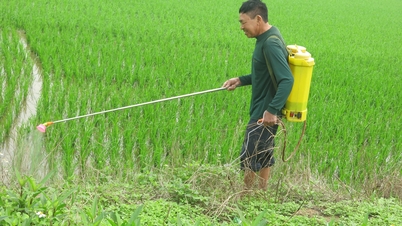
According to Mr. Tran Minh Khai, an agricultural official in Chau Nhan commune: For the past week, taking advantage of favorable weather conditions, with cool temperatures and rain, farmers have been focusing on urgently planting the summer-autumn crop. As of May 24th, the entire commune has planted over 50% of the area, with nearly 80% planted in the areas outside the dike. Planting will be completed in another 4-5 days.
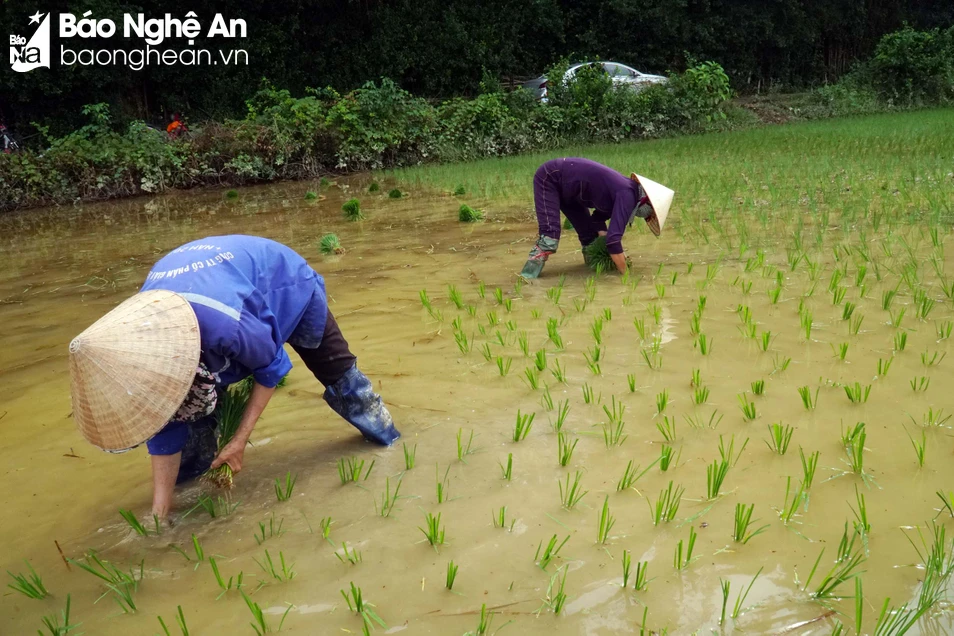
"Every year, over 150 hectares of land outside the dike are planted earlier to avoid late-season floods. Currently, production is generally favorable, the river water is stable, and there has been rain," said Mr. Tran Minh Khai.
Source


















































































Comment (0)