

Besides Russia and Kazakhstan, the Eurasian Economic Union also includes Belarus, Armenia, and Kyrgyzstan as members. The Union continues to exist and function.
However, relations between the members, with the exception of Belarus and Russia, are no longer as strong as before. Kazakhstan, Kyrgyzstan, and especially Armenia are increasingly showing a loosening of ties with Russia and strengthening relations with the Western bloc in order to build the most advantageous balance for themselves between Russia, the United States, the European Union (EU), and China. Russia is facing fierce competition for influence from partners outside the region. At the same time, Russia's strategic interests in Central Asia are now seriously challenged.
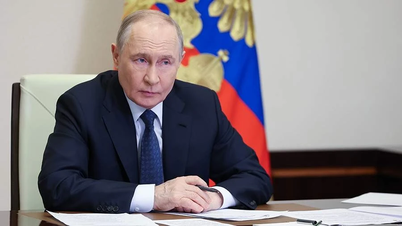
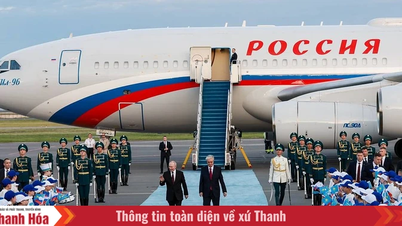
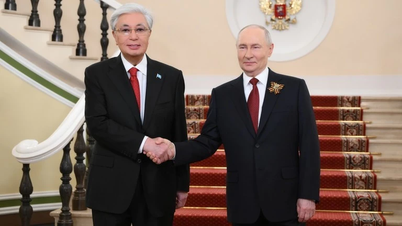
Against this backdrop, President Vladimir Putin's recent trip to Kazakhstan aimed at the highest and most urgent goal of affirming Russia's role and consolidating its influence in Central Asia. To achieve these goals, Putin focused on securing Kazakhstan's support and promoting the development of the Eurasian Economic Union in the context of the new geopolitical situation in the world in general and in Central Asia in particular.
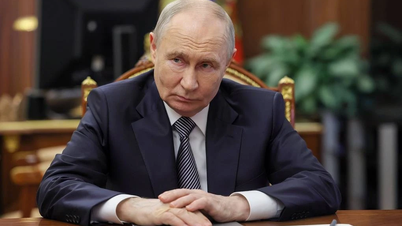
These foreign policy activities are particularly useful for Vladimir Putin in breaking the political isolation imposed by the West in the world . Cooperation and alliances to promote socio-economic development, ensure security and stability for the entire region, and to give Central Asia an increasingly important geopolitical position on the continent and in the world are what both Russia and other countries want to achieve. In this, Russia can play a decisive role because the other countries will not achieve their goals without cooperating with Russia.
Therefore, Central Asian countries may continue to loosen their relations with Russia, but they cannot completely lean towards the Western bloc and confront Russia. This is also why President Vladimir Putin still has the opportunity and conditions to keep these countries in cooperative relationships with Russia, and to affirm Russia's indispensable role in the future security, stability, and development of the Central Asian region.
President Vladimir Putin's trip also has a strong global political impact. What Russia does and achieves in Central Asia directly affects the immediate and long-term strategic interests of the US, the EU, and China, as well as the power dynamics in the region.
With the formation of the "Eurasian Axis," global energy flows and supply chains will be restructured. Russia is building a network of energy supply routes to other markets, especially China, to compensate for the European market that has "slipped from its grasp."
With this trip to Kazakhstan, President Vladimir Putin sent a message to the US and the EU that Russia will not allow other external partners to narrow its sphere of influence in Central Asia. This region, due to the strategic adjustments of the Central Asian countries themselves and the competition for influence among external partners, has become a hotbed of global and continental politics.
Source: https://hanoimoi.vn/khang-dinh-vai-role-cung-co-anh-huong-976052.html

![[Image] Nearly 125,000 Hanoi students completed the Literature exam for the 10th grade entrance exam.](https://vphoto.vietnam.vn/thumb/1200x675/vietnam/resource/IMAGE/2026/05/30/1780117233041_ndo_br_thiet-ke-chua-co-ten-2-png.webp)





































































Comment (0)