

Resolution 09-NQ/TW on building and developing Ho Chi Minh City in the new era, recently issued by the Politburo , clearly states one of its viewpoints and objectives: to promote Ho Chi Minh City as a special urban area to become a symbol of Vietnam's dynamic development in the 21st century; a place where the aspirations for development, global competitiveness, and the spirit of innovation converge; affirming its pioneering and exemplary role; leading in institution building and development quality, governance standards; and serving as a driving force for growth, an important innovation hub, and a key center for integration nationwide.
For many years, Ho Chi Minh City has consistently affirmed its position as the economic center of the country; a place where people from all over Vietnam and many countries come to live, work, and develop. Along with factors such as a friendly lifestyle, positive outlook on life, mild weather, convenient geographical location, diverse culture, and modern infrastructure, life here is considered very pleasant by many, and Ho Chi Minh City is often seen as a second home. In reality, the position, role, and influence of Ho Chi Minh City are irreplaceable; as Resolution 09 affirmed the motto: "Ho Chi Minh City for the whole country, the whole country for Ho Chi Minh City."
The issue is that in the current period, as the socio-economic development of localities nationwide, as well as economic centers of countries around the world and in the region, continues to progress, new solutions and models are needed for Ho Chi Minh City to further develop its potential.
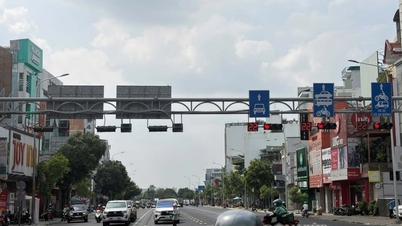
Regarding infrastructure, population, market, and workforce; after the merger of the former Binh Duong and Ba Ria - Vung Tau provinces into Ho Chi Minh City, the current Ho Chi Minh City is a "megacity" with an area of 6,772 km2 and 14 million inhabitants; its Gross Regional Domestic Product (GRDP) is estimated at 3.03 trillion VND (equivalent to 123 billion USD), accounting for 23.5% of the national GDP; it is an international financial and commercial center, attracting FDI flows.
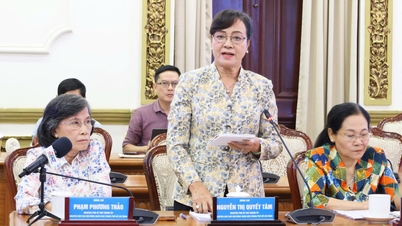
Regarding institutional matters, the authorities are drafting a Law on Special Investment specifically for Ho Chi Minh City; in accordance with Resolution 09, which clearly states the principle of "focusing on perfecting comprehensive, breakthrough, and superior institutions and policies, promoting thorough decentralization and delegation of power, creating conditions to promote special investment in Ho Chi Minh City," and "establishing a new development model; mobilizing combined strength, effectively exploiting the potential, advantages, and strategic location" of the city.
Resolution 09 sets the target for the period 2026-2045, aiming for a minimum GRDP growth of 10% per year for Ho Chi Minh City. By 2030, the average GRDP per capita is targeted at a minimum of US$14,000; the digital economy is expected to account for approximately 40% of the GRDP; and the city will achieve its goals.
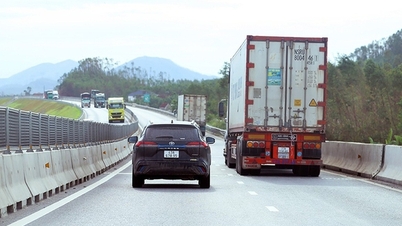
Approximately 200km of urban railway lines will be constructed; the problems of flooding, environmental pollution, traffic congestion, and drug use will be fundamentally resolved. By 2035, the average GRDP will be $25,000; and by 2045, it will be $75,000. A comprehensive city master plan with a long-term vision of 100 years will be developed to expand urban space and create new drivers of development.
With the experience, infrastructure, perspectives, and special mechanisms mentioned above, we believe that Ho Chi Minh City will certainly develop to new heights, achieving the goals set out in Resolution 09; always remaining a civilized and modern city, focusing on improving the quality of life for its people; and building a population that is patriotic, resilient, united, compassionate, dynamic, and creative.
Source: https://baophapluat.vn/khang-dinh-vi-the-bieu-tuong-phat-trien-cua-dat-nuoc.html

![[Photo] Standing Committee member of the Party Central Committee Tran Cam Tu working with the Central Inspection Committee](https://vphoto.vietnam.vn/thumb/1200x675/vietnam/resource/IMAGE/2026/05/28/1779969579668_ndo_br_bnd-2495-jpg.webp)







































































Comment (0)