

- Building new rural areas is a never-ending process.
- Thoi Binh meets the environmental criteria for the New Rural Area program.
- Tan Thanh "reaches" the advanced new rural standard.
Mr. Nguyen Minh Dang, Chairman of the People's Committee of Khanh Tien commune, said: "By the end of 2024, the commune had achieved 16 out of 19 criteria for New Rural Development and 12 out of 19 criteria for Advanced New Rural Development. Currently, the commune is striving to accelerate towards achieving the goal of becoming an Advanced New Rural Development commune by the end of 2025."
The commune has not yet met 7 advanced new rural development criteria: transportation, schools, information and communication, multidimensional poverty, rural production organization and economic development, health, and quality of living environment. Of these, the commune is focusing on implementing the multidimensional poverty criterion, as achieving this will be a crucial prerequisite for completing the other criteria. Currently, the commune has 47 poor households, accounting for 1.48%; 88 near-poor households, accounting for 2.78%; and multidimensional poverty at 3.5%, with the goal of reducing it to below 2.5% by 2025.
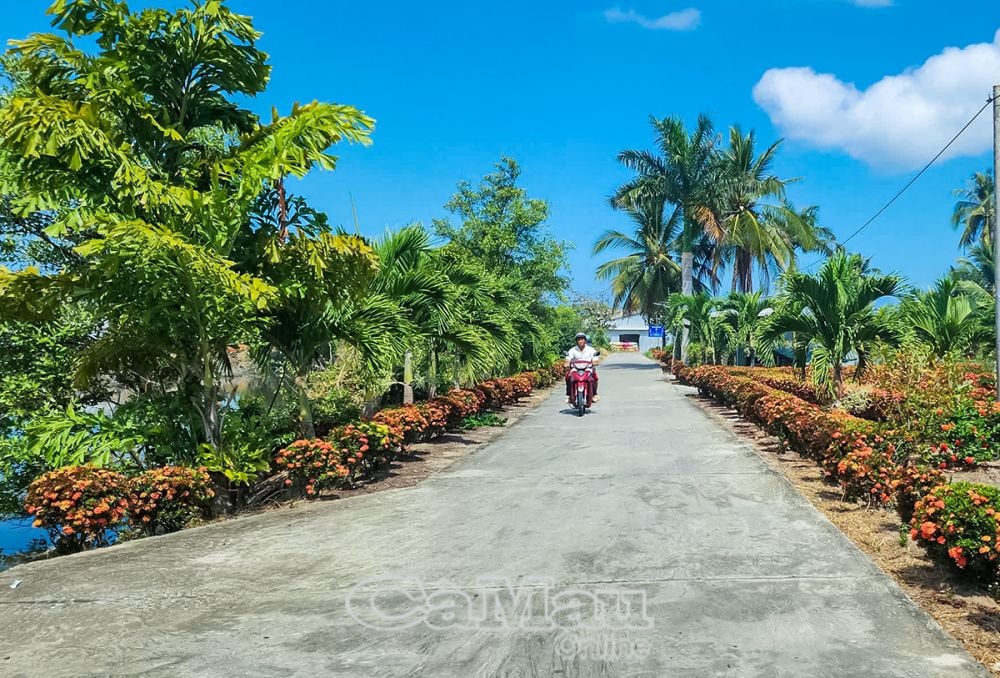
The rural landscape of Khanh Tien commune is becoming increasingly vibrant.
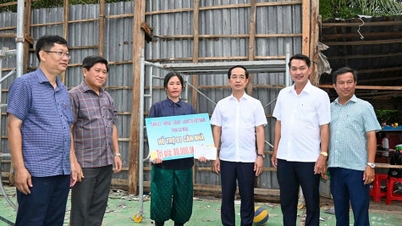
To achieve the set goals, the commune mobilized all resources to care for poor and disadvantaged households, especially in terms of housing. In 2024, the commune built and renovated 4 houses for policy beneficiary families and 68 houses for poor and disadvantaged households. In particular, implementing the Project to eliminate temporary and dilapidated houses and develop social housing, from the beginning of 2025 to the present, the commune has completed 52 out of 105 houses for poor and disadvantaged households, policy beneficiary families, and ethnic minority households.
Furthermore, the commune actively provides vocational training and job placement services for rural workers, effectively deploys capital from national target programs and projects, and facilitates access to preferential loans for people to invest in production and business models. The goal is to increase the average income of residents to over 68 million VND per year by 2025.
Ms. Tran Thi Ly, from Hamlet 7, shared: “My family faced many difficulties before. We had land for growing crops but lacked capital, resulting in ineffective farming for many years. In 2023, thanks to the support of the Women's Union, we were able to borrow capital from the Social Policy Bank, investing in building a greenhouse and growing crops more effectively. With about 3,000 square meters of crops grown in the greenhouse, my family earns 7-10 million VND per month, making our lives much more comfortable than before.”
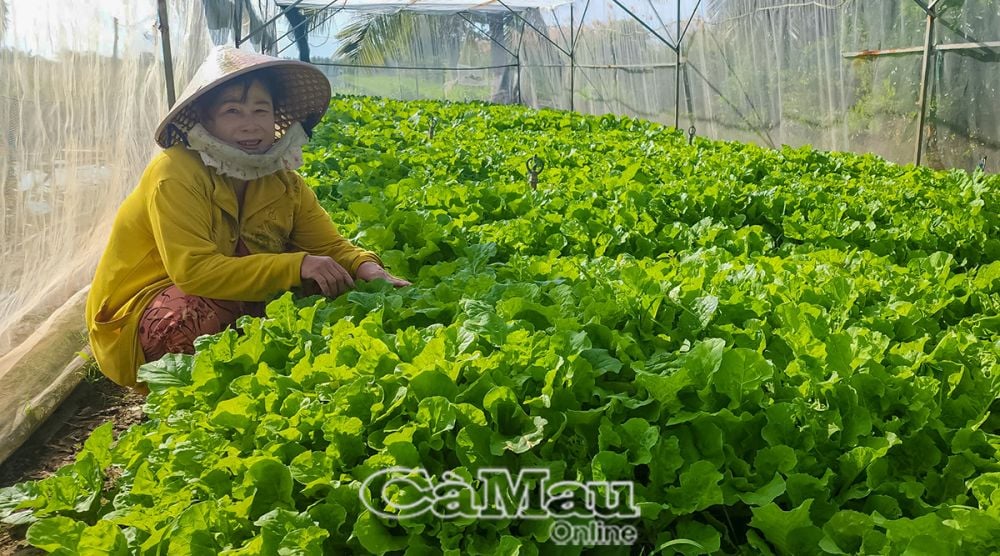
Thanks to preferential loan support, Ms. Tran Thi Ly was able to invest in growing vegetables in greenhouses, resulting in high economic efficiency.
Besides multidimensional poverty reduction, the commune focuses on developing rural roads. To date, 7.5/7.5 km of inter-commune roads with a width of 3.5 m or more have been asphalted or concreted; 31.5/31.5 km of hamlet and inter-hamlet roads have been hardened to ensure convenient year-round access for vehicles, reaching 100%; and 122.8/130 km of alleyways and lanes with a 2 m wide surface have been cleaned, reaching 94.6%.
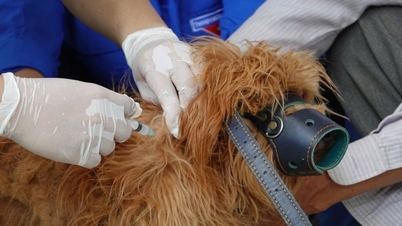
The commune focuses on disseminating information and mobilizing people to actively implement the health and living environment quality criteria, as these two criteria require the collective efforts of the people. Currently, 85.22% of the population participates in health insurance , and 99% of the population has their health managed. The commune strives to encourage 95% or more of the population to participate in health insurance and to guide and encourage the installation of the electronic health record app, with at least 70% of patients receiving medical examinations and treatment using electronic records.
Mr. Vo Van Van, Deputy Secretary of the Party Branch and Head of Hamlet 7, informed: “Through propaganda and mobilization, people have participated very actively: cleaning up their houses, planting green hedges, and understanding the benefits of health insurance policies, so they actively participate. The hamlet strives to mobilize people to participate in purchasing health insurance to reach 95% or more.”
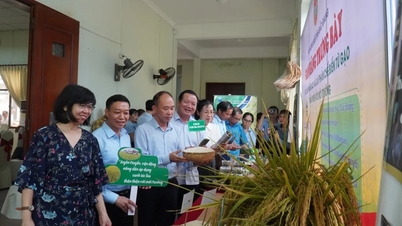
Mr. Nguyen Minh Dang added: “Currently, the commune is proactively coordinating with all levels, sectors, and socio- political organizations to develop specific programs and plans to effectively implement the set goals and tasks; taking advantage of mobilizing all resources and integrating various capital sources to invest in the construction of agricultural and rural infrastructure. On the other hand, we are promoting the dissemination and replication of advanced models, exemplary cases, initiatives, and good experiences in building advanced new rural areas, and completing the criteria for advanced new rural areas according to the planned schedule.”
Tran The
Source: https://baocamau.vn/khanh-tien-phan-dau-ve-dich-dung-lo-trinh-a37715.html
![[Image] Hanoi's urban life under the challenge of a "scorching hot" environment](https://vphoto.vietnam.vn/thumb/1200x675/vietnam/resource/IMAGE/2026/05/25/1779706979265_nang-nong-t5-2026-minh-duy-7-4636-jpg.webp)


![[Image] Close-up view of the interchange connecting the two expressways and Long Thanh Airport.](https://vphoto.vietnam.vn/thumb/1200x675/vietnam/resource/IMAGE/2026/05/25/1779703378210_ndo_br_z7863716673926-224453a31600126cce10622af6290afd-4549-jpg.webp)


































































Comment (0)