


This spring, Mr. Ly Gia Xe, a Ha Nhi ethnic minority member from Lao Chai village, Trinh Tuong commune, turned 64. He is the oldest Party member in the village and has served as the Party Secretary of Lao Chai for over 20 years. In recent years, due to his advanced age, Mr. Xe has retired, and younger Party members from the village have taken over.
Today, as he took us along the concrete road leading into Ha Nhi hamlet, the former Party branch secretary couldn't hide his joy that his decades-long dream had finally come true.
“This road, connecting from Provincial Road 156 to the village and Lao Chai Park, is only about 500 meters long, but in previous years it was very difficult to travel on because it was a dirt road with a steep slope, making it very slippery. Only on sunny days could motorbikes go down to the park. This year, the villagers are very happy because the government supported the construction of a concrete road, making travel much easier. With a beautiful road, people can now use motorbikes to transport harvested corn and rice back home. This coming June (lunar calendar), the village will hold the Khu Gia Gia harvest festival, and tourists can drive down to the park to visit and experience it,” Mr. Xe happily shared.
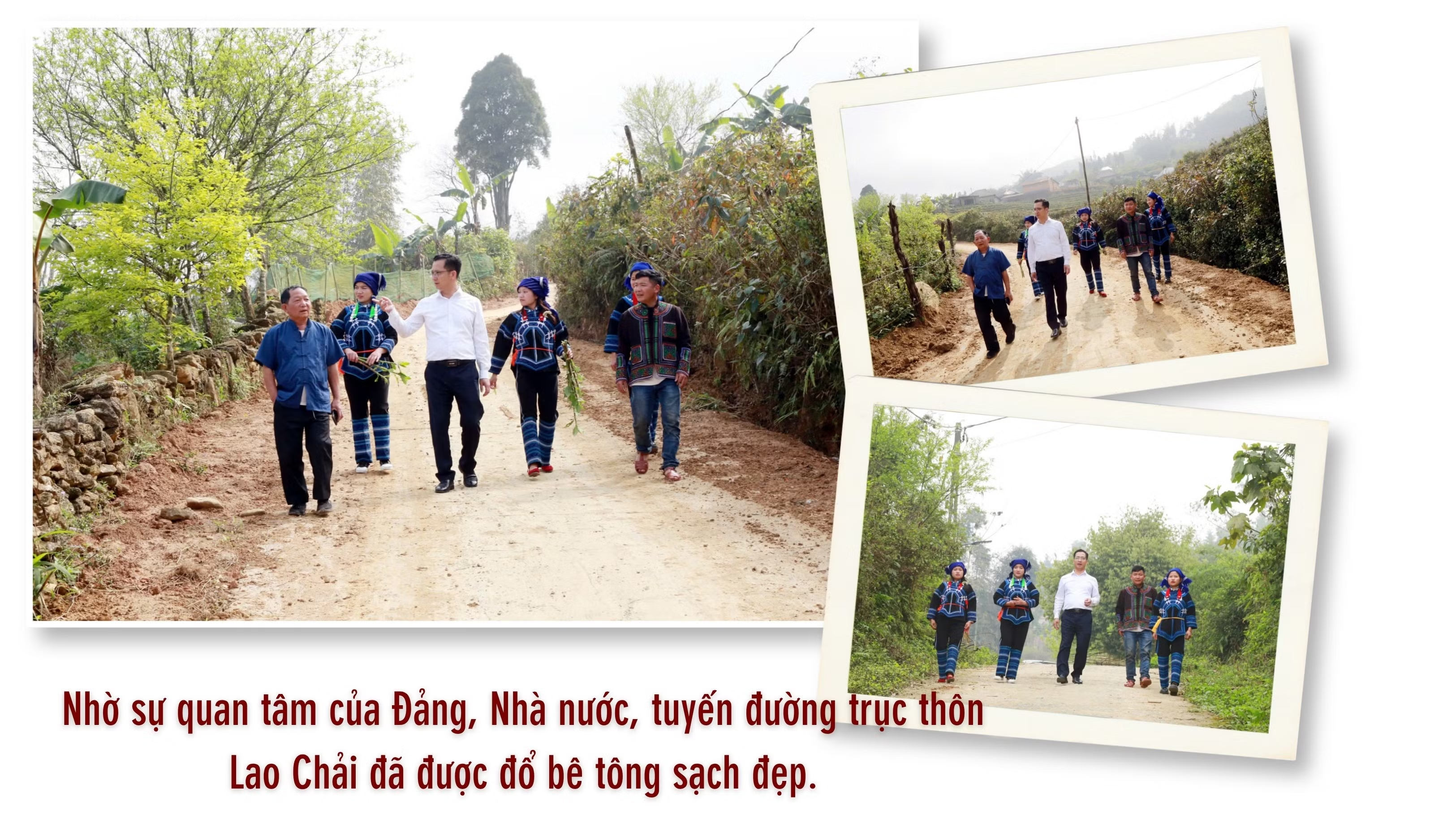
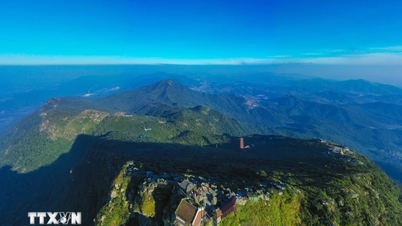
Mr. Xe's joy is also the shared joy of nearly 70 households of the Ha Nhi ethnic minority in Lao Chai village. Previously, mentioning Lao Chai would evoke apprehension from the people of Trinh Tuong commune. Just a decade ago, Lao Chai was still the village with the "three worst" (highest, most remote, and poorest) in the commune. The village seemed isolated beneath the cloud-covered To Pho Xa mountain, bordering Phin Ho village of Y Ty commune, and 20 km from the center of Trinh Tuong commune. Unless absolutely necessary, no one wanted to go to the village because the road was too long and difficult to travel.
Lao Chai also has the harshest climate in Trinh Tuong commune, with thick fog and bone-chilling cold in winter. Mr. Xe recalled a story from mid-December 2013, when snow fell to a depth of 2 meters, covering the mountains and forests in white. Twenty-seven people who were harvesting crops on To Pho Xa mountain were trapped. It took two days, thanks to the efforts of the villagers and rescue forces, to bring everyone down the mountain safely.
This time, when I visited Lao Chai, I met the village head, Sao Go Do. He told me that Lao Chai is still the highest and most difficult village in the commune, but it's no longer the poorest; the lives of the villagers have become more prosperous. Thanks to the attention of the Party and the State, by 2025, two residential areas in the village will have new concrete roads with a total length of 800 meters. In addition, the village has also received support from organizations and individuals to install 15 solar-powered streetlights, illuminating about 2 km of the main road and inter-village roads, making it easier for people to travel at night. Especially, the villagers are very happy because, thanks to the State's support, many households have built new houses and no longer have to live in dilapidated temporary shelters.
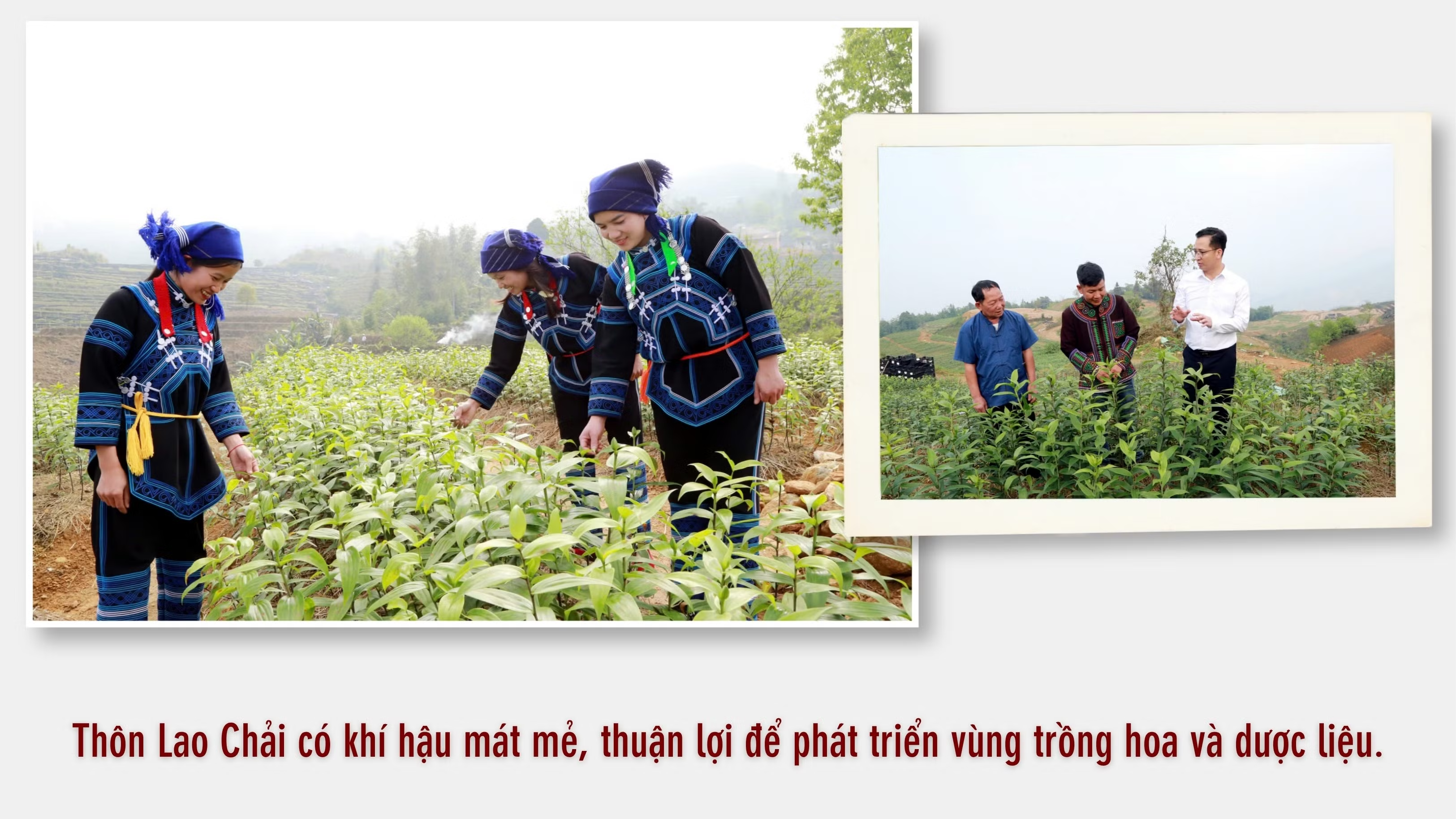
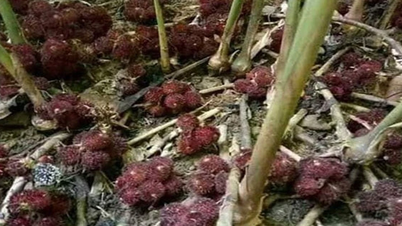
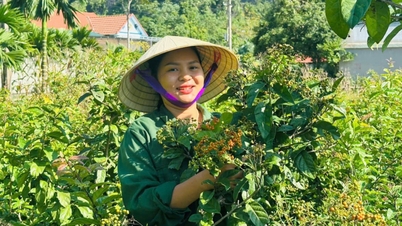
Living on high mountain slopes, the Ha Nhi people previously relied solely on corn and rice cultivation, resulting in a high poverty rate. In recent years, the lives of the people in Lao Chai village have improved significantly thanks to the cultivation of ground ginseng (Hoang Sin Co) and Ligusticum chuanxiong. Some households earn between 50 and 100 million VND annually from selling ground ginseng. By 2025, the villagers are expected to harvest approximately 80 tons of ground ginseng and 10 tons of Ligusticum chuanxiong. Although the prices of ground ginseng and Ligusticum chuanxiong have decreased, the economic efficiency remains higher compared to growing corn and rice. By the end of 2025, six households in the village are expected to have escaped poverty.

Every time we visit Lao Chai village, along with learning about the lives of the people, what always fascinates us is the beautiful natural scenery and the unique cultural identity of the Ha Nhi people here. Perhaps that's why many people have likened this land to a "fairytale land" remaining beneath the majestic To Pho Xa mountain.
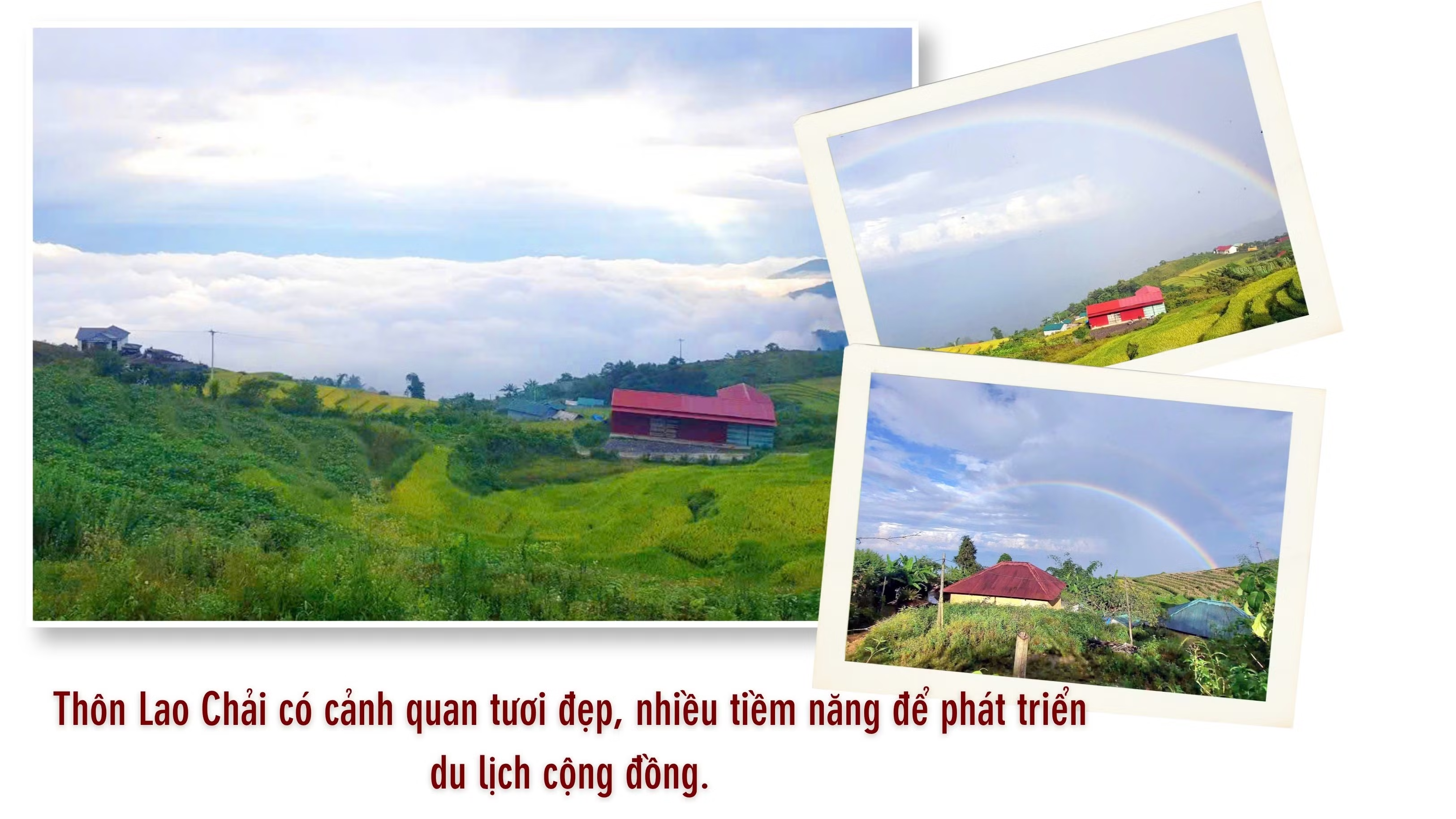
Located high in the mountains 20 km from the center of Trinh Tuong commune, bordering Phin Ho village of Y Ty commune, Lao Chai is like a dreamy world of its own with a cool climate and fresh air. If you wake up in Lao Chai early, you will be amazed by the sight of a sea of fluffy white clouds, with the S-shaped curve of the Red River flowing through the center of Trinh Tuong commune in the distance. When the sun rises, the entire sea of clouds is bathed in a beautiful pink hue. The sunset and moonrise over the mountaintop here are also enchanting, captivating visitors.
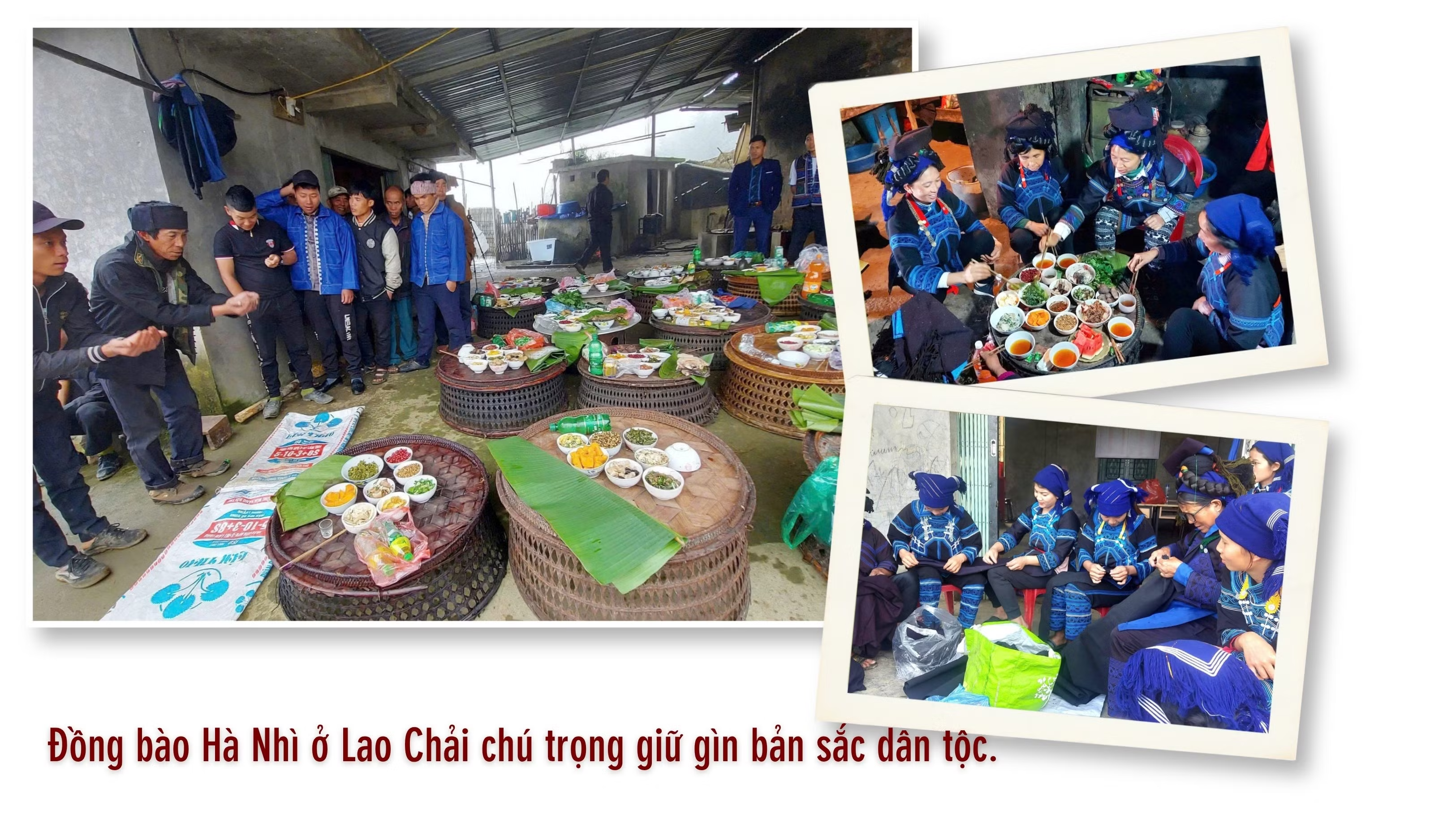
Along with its natural beauty, Lao Chai is also attractive because of the unique cultural identity of the Ha Nhi ethnic group. Elder Ly Gia Xe explains that Lao Chai means "ancient village," or "original village," because many generations ago, the first Ha Nhi families moved here from Lao Chai village, Y Ty commune, to settle. Although the Ha Nhi community here is not as large as in Y Ty commune, 80% of the households still retain traditional earthen-walled houses, creating a unique character. Remarkably, there are still ancient houses with thatched roofs, covered in lush green moss, bearing the marks of time, as beautiful as a painting.
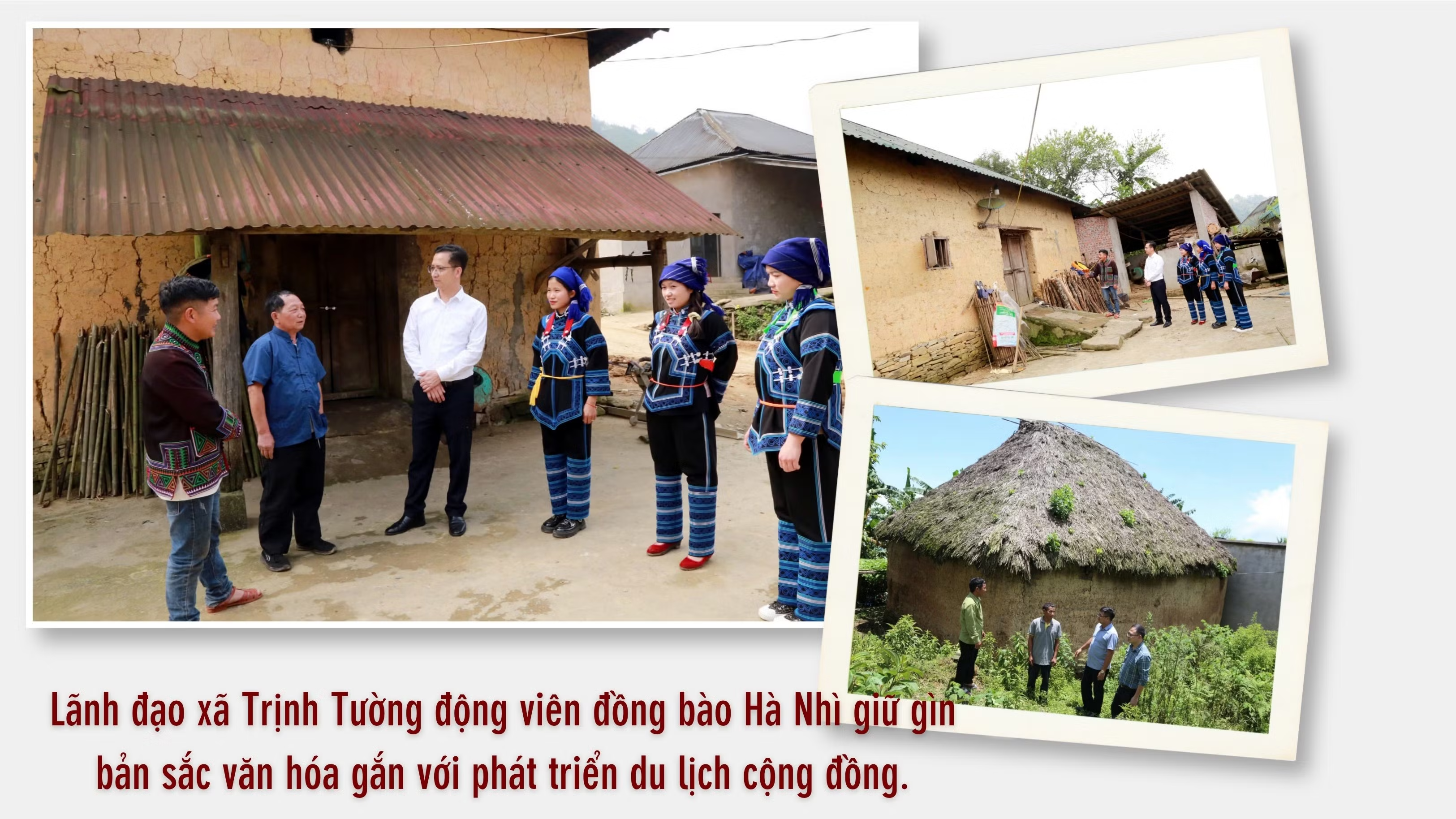
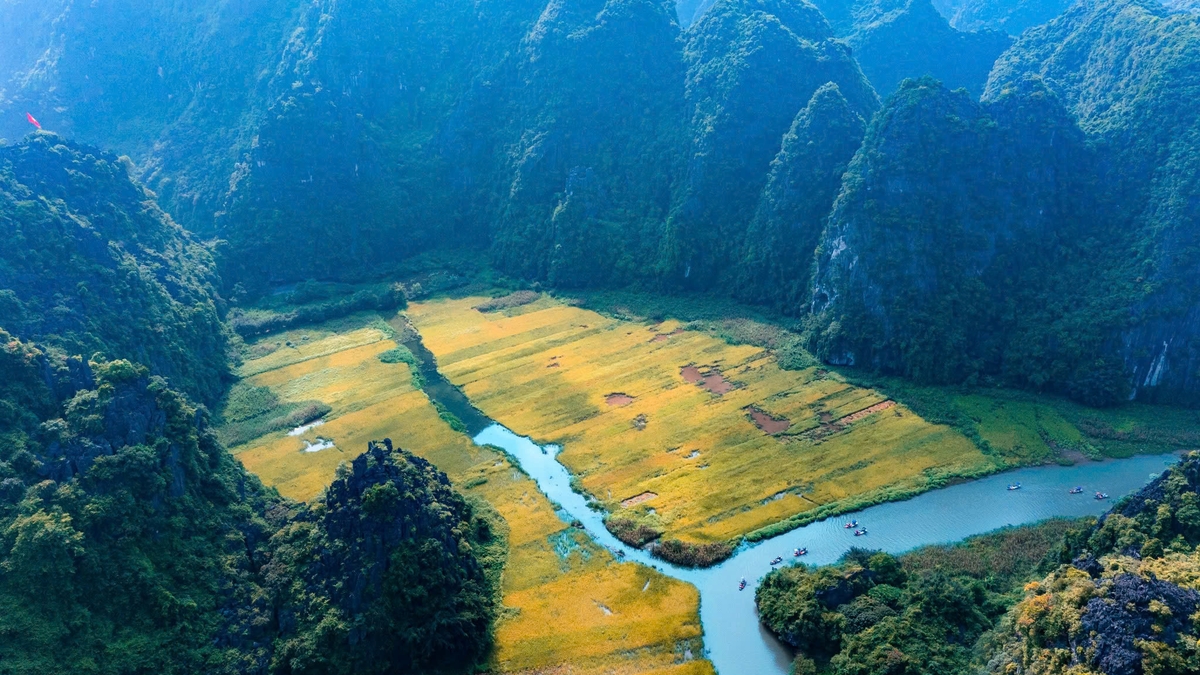
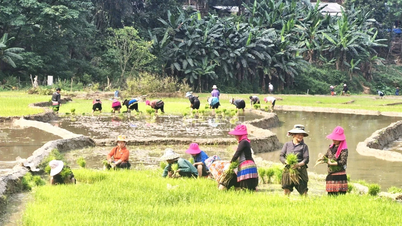
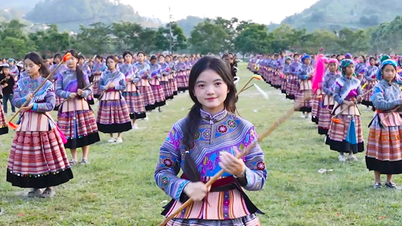
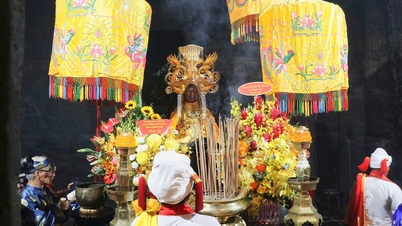
For generations, the Ha Nhi community in Lao Chai village has preserved its cultural identity with traditional festivals such as the Ga Ma Do forest worship ceremony, the Du Do Do Children's Festival at the beginning of the new year; the Khu Gia Gia festival in the 6th lunar month; and the Ga Tho Tho Tet festival to thank the gods at the end of the year. Since moving to the land at the foot of To Pho Xa mountain, the Ha Nhi and Mong people here have carved terraced fields, creating hundreds of hectares of rice paddies layered one after another like a giant painting on the mountainside. This has also been the largest rice granary in Trinh Tuong commune for hundreds of years. Since 2025, seeing the cool climate and fertile land, some gardeners from the lowlands have introduced lily cultivation to the village, opening up a new and promising direction for development.

In previous years, when we went to Lao Chai, we always traveled by motorbike because the 20-kilometer stretch from the commune center to the village wasn't too difficult to navigate as it was paved and any damaged sections had been repaired. However, since mid-2025, the road has seriously deteriorated due to the effects of heavy rain and flooding, and many large trucks carrying construction materials have caused subsidence and cracks in the roadbed.
This time, upon returning to the village, knowing the road was difficult, the Chairman of the People's Committee of Trinh Tuong Commune, Nguyen Ba Canh, used his pickup truck to take us all the way to the village. Although we were traveling in a high-clearance vehicle, many sections were incredibly bumpy. In particular, the section through the Na Lac valley was severely affected by floods, with vast stretches of white rocky fields stretching as far as the eye could see. The road through Sin Chai and Ta Co Thang villages had sections where the surface was broken, the asphalt layer gone, leaving only exposed rocks and gravel.
Standing atop the Lao Chai slope, looking down at the misty center of Trinh Tuong commune, Mr. Nguyen Ba Canh said that Lao Chai is a beautiful area located on the shortest route to Y Ty commune – which is planned to become a key tourist area of the province – so it has great potential for tourism development. The biggest "bottleneck" currently is Provincial Road 156 from the center of Trinh Tuong commune to Y Ty, which has seriously deteriorated, affecting the lives of hundreds of households and the travel of tourists. It is expected that this road will be upgraded and widened in the third quarter of this year – the "bottleneck" will be removed, allowing Lao Chai village to embark on a new path and helping the 32 poor and near-poor households there to have a better life.
The passion, concerns, and expectations of the Chairman of the People's Committee of Trinh Tuong commune regarding the awakening of tourism potential beneath the To Pho Xa mountain are also conveyed through the images he created using artificial intelligence to transform the rocky field in the "flood-prone" Na Lac into a flower field, and the Lao Chai village into a prosperous and happy community tourism village. In his recently written long poem about Lao Chai village, there are verses full of faith and aspiration: "Lao Chai, the sound of the land, the aspiration of the forest / Still retaining its original character but wearing a new coat / The golden road connecting dreams / Soaring high, soaring far, this song will forever resound!"
Presented by: Thanh Ba
Source: https://baolaocai.vn/khat-vong-duoi-nui-to-pho-xa-post897373.html

































































Comment (0)