


Photos and graphics: KHIẾU MINH
On the second floor of a small café in the Linh Đàm urban area, early-arriving customers were pulling up chairs and sitting in groups. Most were retired. Some walked slowly. Others addressed each other by their titles from two decades ago as soon as they met.
They were formerly members of Vietnam's WTO negotiating team.
The ticket to integration
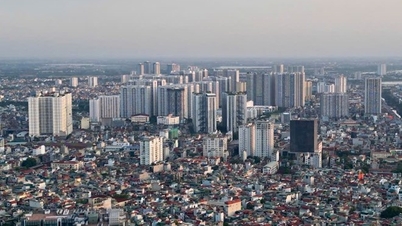
Twenty years ago, Hanoi was very different from today. The two Vincom towers on Ba Trieu Street, completed in 2004 with 21 above-ground floors, were considered one of the most modern buildings in the capital. Many Hanoians at that time dreamed of one day stepping into the shopping mall inside the building.
On the streets, motorcycles occupy most of the traffic space. There aren't many cars, and they are mostly Japanese brands. The appearance of Mercedes or Audi cars is enough to make many passersby turn their heads.
This is Vietnam in the early 21st century. The country has changed significantly. But it is still an economy in the early stages of modernization.
If the normalization of relations with the US and joining ASEAN marked a turning point in foreign policy, freeing Vietnam from the blockade and embargo to integrate with the region and the world , then joining the WTO in 2006 is considered a turning point in international economic integration.
The global context then was also very different from today. Although the US remained the sole superpower with overwhelming economic and military advantages, globalization was in a period of rapid development. China, currently the second-largest economy, had recently surpassed the UK to become the world's fourth-largest economy, after the US, Japan, and Germany.
For many, over 10 years of negotiations to join the WTO seems like an excessively long time. But looking back at this process, it becomes clear that Vietnam did not only work with the WTO.
To become a member of this organization, Vietnam had to conduct bilateral negotiations with 28 countries and territories, and multilateral negotiations with 149 WTO members. Each partner had its own requirements regarding market access for goods and services and other commitments.
Negotiations with the US alone have dragged on for years. They are also among the most difficult negotiations due to the size and influence of the world's number one economy.
It took China 15 years, from 1986 to 2001, to complete its WTO accession process. Russia took even longer, 19 years, from 1993 to 2012.
Among the negotiating partners, the United States held a special position. This was not only because it was the world's largest economy, but also because trade relations between the two countries had undergone significant changes following the Vietnam-US Bilateral Trade Agreement (BTA) signed in 2000. Textiles, footwear, seafood, and wood products experienced continuous growth in the following years. However, these very sectors that benefited the most became one of the biggest sticking points in the final rounds of negotiations.
In the early 2000s, despite the rapid increase in textile exports to the US, Vietnamese businesses still had to operate under a quota system. Many businesses had orders and production capacity but could not expand exports because they were limited by the allocated quotas. This mechanism also created considerable pressure and negative consequences (2004) in the management process.
The US side claimed that Vietnam had provided approximately $4 billion in subsidies to the textile and garment industry and proposed applying a long-term quota mechanism after Vietnam joined the WTO. The Vietnamese negotiating team firmly opposed this. After many tense negotiations, the US side finally withdrew this proposal.
The intensity of the final rounds of negotiations wasn't limited to the negotiating table. Mr. Nguyen Van Can recalled that during his time in Switzerland, a member of the delegation suffered such a severe gout attack that he had to receive treatment in a leg-suspended chair in his hotel room. Despite this, the negotiating team proceeded with the scheduled meetings.
After all, the rewards came in the most unexpected ways. That year, Vietnam not only officially joined the WTO, but the head of the negotiating team also became an impromptu journalist, winning a national journalism award for his article about the negotiation process. Veteran journalist Tran Kham, former Editor-in-Chief and Head of the Economic and Industrial Department of Nhan Dan Newspaper, recounted: During the negotiations, Mr. Tu (the head of the negotiating team) sent a progress report to the Politburo. Mr. Dinh The Huynh, who was then the Editor-in-Chief of Nhan Dan Newspaper, somehow obtained that report and forwarded it to me. After editing it, I asked Mr. Huynh for his opinion on crediting the author. Finally, the name Luong Van Tu was prominently displayed on page 1 of Nhan Dan Newspaper. At the end of that year, the article was honored with third prize in the first National Journalism Award.
On May 31, 2006, Vietnam completed bilateral negotiations with the United States in Ho Chi Minh City. The biggest obstacle on the path to WTO accession had been removed. According to Mr. Luong Van Tu, in essence, after this milestone, Vietnam's accession to the WTO was considered complete. However, the negotiating team chose November 7, 2006, to hold the official signing ceremony. This was also the anniversary of the Russian October Revolution, a historical milestone familiar to many generations of Vietnamese officials.
After more than a decade of negotiations, the doors to the WTO finally opened. But few realize that the ticket to integration that Vietnam received that day was only the beginning of a much longer journey ahead.
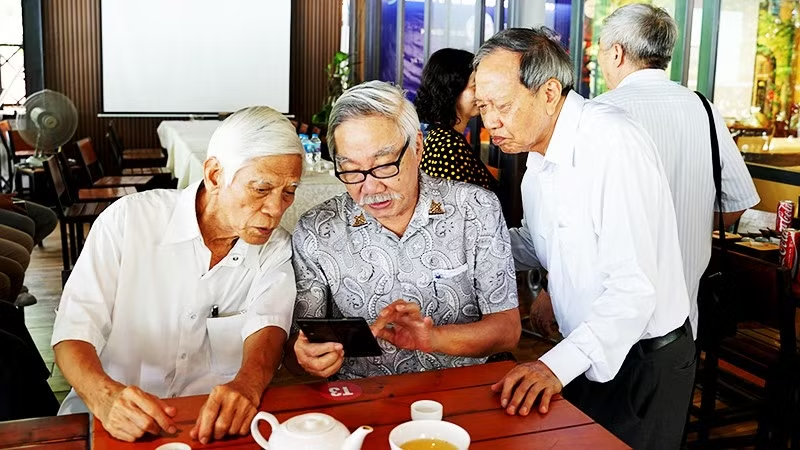
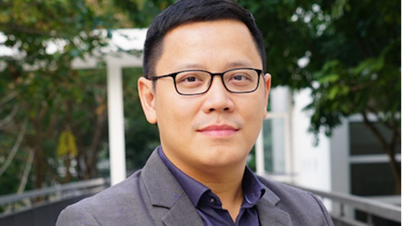
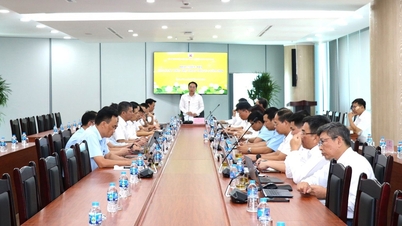
Chief negotiator Luong Van Tu (standing on the right) reflects on the events of 20 years ago. Photo: HAI NAM
There are no upgrade tickets.
Twenty years after joining the WTO, the world has changed in ways that perhaps even those sitting at the negotiating table in 2006 could hardly have imagined.
The US remains the world's largest economy, but the rise of China has altered the global economic balance. This economy, with over a billion people, has risen to second place globally and has become a direct competitor to the US in many areas.
Global supply chains are undergoing profound restructuring. Artificial intelligence is beginning to transform both manufacturing and services at a pace unimaginable two decades ago. Green transformation, once a long-term goal, has become an increasingly concrete requirement for businesses and the economy. Global minimum taxes are also altering many of the competitive tools countries once used to attract investment.
In other words, Vietnam joined the WTO during a period of accelerated globalization, but is seeking to upgrade its economy in a much more complex and competitive world.
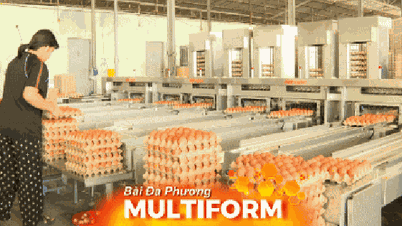
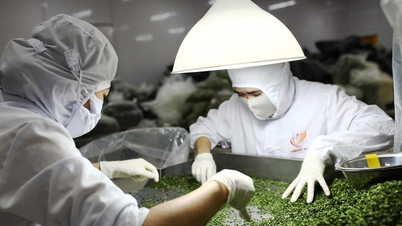
In 2006, Vietnam's exports only reached $45 billion, with textiles and wood products accounting for a large proportion. By 2025, we aim to export nearly $500 billion. Labor-intensive industries will no longer play a dominant role.
Most of the goals set when joining the WTO have been achieved. But there are still unfinished tasks. In the bilateral agreement with the US that year, we accepted a 12-year transitional period to begin considering recognition as a "market economy." Mr. Luong Van Tu shared: This is the only remaining issue that we have yet to resolve.
However, even if this issue is completely resolved in the future, it does not automatically mean that Vietnam will move up to a new level of development. The story of upgrading the economy lies elsewhere.
For a long time, Vietnam has benefited from an abundant workforce, competitive production costs, and the strong opening up of its global economy. These advantages have contributed to making the country a destination for many investment flows and gradually integrating it more deeply into global supply chains.
But the conditions that contributed to the success of the previous period are gradually changing.
Vietnam's labor productivity still lags significantly behind many economies in the region. The birth rate continues to decline, and even the most optimistic forecasts indicate that Vietnam will officially enter an aging population phase by 2036. Cheap labor is no longer the absolute advantage it once was.
An economy can hardly improve its ranking simply by exporting more if the majority of value added remains in stages controlled by others. Upgrading is no longer about signing another trade agreement or a new round of negotiations. Among the world's largest companies by market capitalization today, the majority are technology corporations. Labor productivity, technological capabilities, and innovation capacity are the bottlenecks that need to be addressed.
Of course, an article looking back at 20 years of WTO membership cannot provide solutions to major problems such as labor productivity, innovation, or Vietnam's position in the global value chain. These are issues that will continue to be debated for many years to come.
No agreement has been signed to propel Vietnam to higher levels of development. There is no single door that, simply by opening it, can solve the limitations in labor productivity, technological capabilities, or the quality of human resources.
Those issues are not on the negotiating table with any partner. They lie within the very fabric of the economy.
The meeting dragged on, stories of Geneva and the negotiations continued to be retold. In a small corner, the conversation shifted to past milestones. Someone just mentioned that Vietnam still doesn't have an official anniversary.
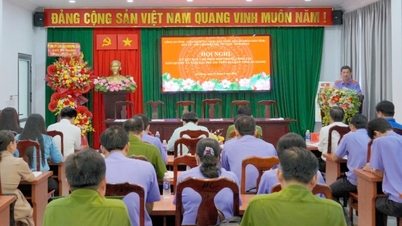
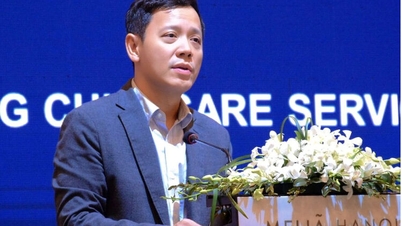
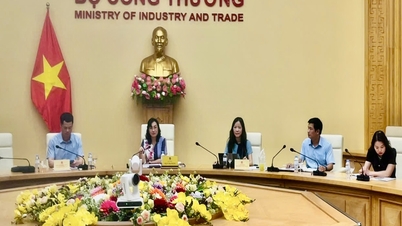
In his speech, Deputy Minister Nguyen Sinh Nhat Tan stated that the Ministry of Industry and Trade is studying the development of a program to commemorate Vietnam's accession to the WTO, to be submitted to the competent authorities for consideration. A few slight nods followed.
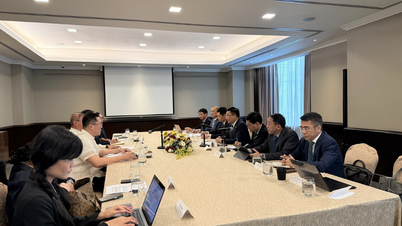
The meeting was organized by the Vietnam Association for Economic and Trade Information and Consulting, where Mr. Luong Van Tu currently serves as Chairman. Twenty years ago, they negotiated Vietnam's entry into the WTO. Twenty years later, they sat together in a small café in Linh Dam.
According to Nhandan.vn
Source: https://baoangiang.com.vn/khi-canh-cua-da-mo-a487567.html



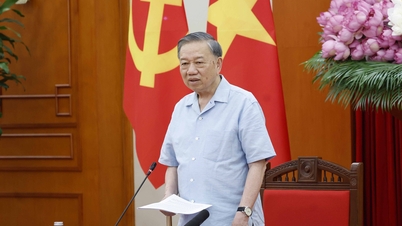
![[Photo] General Secretary and President To Lam presides over a meeting on preparations for the review of one year of operation of the three-tiered government system.](https://vphoto.vietnam.vn/thumb/1200x675/vietnam/resource/IMAGE/2026/06/02/1780391821195_a1-bnd-4595-9717-jpg.webp)














































Comment (0)