

 |
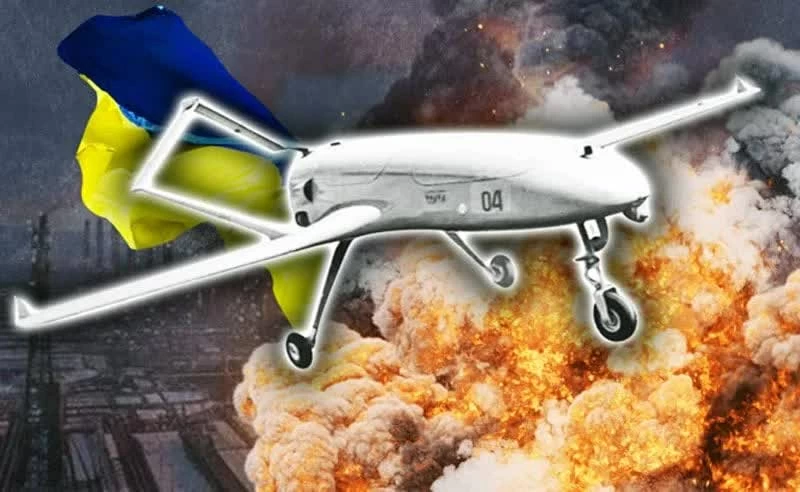
| The biggest impact of Ukraine's UAV revolution lies not in the quantity, but in the speed of innovation. (Source: Ukrainska Pravda) |
Over the past 18 months, the European defense sector has witnessed a remarkable shift. According to an article in Modern Diplomacy titled "How Ukraine Will Become Europe's Most Important Defense Partner by 2026," what's particularly noteworthy is that this change didn't stem from summits, the North Atlantic Treaty Organization (NATO), or EU policy documents, but from Ukraine itself, a country that has been in constant conflict since 2022.
While Ukraine was previously primarily seen as a recipient of military aid, by 2026 it is gradually becoming a defense technology and manufacturing hub with increasing influence over Europe.
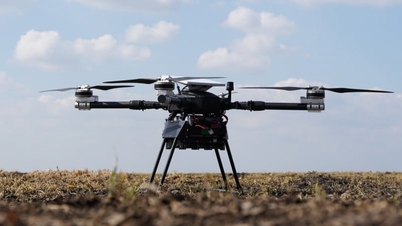
In 2024, Ukraine produced approximately 2.2 million unmanned aerial vehicles (UAVs). By 2025, this number is projected to increase to 4.5 million. Notably, the majority are no longer simple, improved commercial UAV models like those used in the early stages of the conflict, but rather AI-integrated attack systems capable of countering electronic warfare, operating at long range, and striking targets thousands of kilometers away.
A prime example is the Sichen UAV, launched in April, which is specifically designed to operate in environments with strong electronic jamming and to support attacks targeting energy infrastructure.
What makes these systems so noteworthy is not only their technology, but also the fact that they have been directly tested in the field, something that most peacetime defense programs in Europe struggle to achieve.
Ukraine and Europe's defense revolution
According to Modern Diplomacy , the biggest impact of Ukraine's UAV revolution lies not in the number, but in the speed of innovation.
In traditional European defense programs, the process from designing to deploying a weapons system typically takes years, even decades. Meanwhile, Ukraine's development cycle takes only a few weeks.
A vulnerability discovered in the field earlier this week could be fixed within days, before the upgraded version reappears on the front lines the following week.
This pace of modernization, sustained throughout years of conflict, has enabled Ukraine to accumulate a wealth of practical combat experience that many NATO armies would take decades of training to acquire.
The conflict in Iran has further highlighted the strategic significance of this trend among Western countries.
When Iran used large numbers of inexpensive UAVs to target US military and infrastructure targets in the Middle East, Washington and its allies were forced to use Patriot missiles, the Terminal High Altitude Area Defense (THAAD) system, and other expensive defense systems to intercept them.
This highlights the cost-benefit analysis: a UAV costing just a few thousand dollars can force an adversary to use missiles costing hundreds of thousands of dollars in response.
For European defense ministries , the message is quite clear: in future conflicts, the advantage may lie with the side possessing a large number of inexpensive, self-propelled systems that can be manufactured and replaced at a high rate.
Europe's response was significantly faster than usual.
In December 2025, the Quantum Frontline Industries joint venture was established between Ukraine's Frontline Robotics and Germany's Quantum Systems. This model combines Ukraine's combat experience with Germany's industrial manufacturing capabilities to develop reconnaissance and attack UAVs.
In April of this year, Berlin further signed an agreement with Kyiv to produce thousands of AI-integrated autonomous attack UAVs annually on German territory.
At the same time, France, Germany, Italy, Poland, and the United Kingdom announced the "Low-Cost Combat Equipment and Autonomous Systems" (LEAP) project, with the participation of Ukrainian experts.
In addition, many Ukrainian businesses have begun expanding their operations into Europe through joint ventures with Denmark, Lithuania, and several Baltic states.
President Volodymyr Zelenskyy even inaugurated 10 Ukrainian defense export centers in Europe.
These moves indicate that Ukraine is no longer simply a recipient of military aid, but is gradually becoming an important link in Europe's defense industry chain.
Europe on the brink of a new security order.
However, the author of the article in Modern Diplomacy argues that the rapid development of UAV technology does not mean Europe has solved its larger strategic vulnerabilities.
First of all, UAVs offer clear advantages at the tactical and operational levels, but they cannot completely replace the large-scale long-range strike capabilities that many European countries still lack.
A UAV can strike targets thousands of kilometers away, but destroying fortified command centers, air defense networks, or logistics hubs deep within enemy territory still requires far more sophisticated military systems.
According to estimates by EU defense officials, in a conflict scenario with Russia, protecting Lithuania alone could require around three million UAVs per year. This figure shows that Europe's current production capacity, although rapidly increasing, is still far from the needs of a large-scale conflict.
Several programs, such as Germany's Uranos KI network-targeted AI system and the UK's Assault & Reconnaissance Digital Warfare (ASGARD) system, are seen as significant steps toward next-generation combat capabilities.
However, the vast majority of these projects are still in development and depend on political commitment and long-term budgets – which have not always been stable in the history of European defense.
In addition , there is growing debate about the role of AI in modern conflict. Many new UAV systems are capable of automatically identifying targets, analyzing data, and supporting attack decision-making at very high speeds.
Currently, most systems still require human approval for the final attack. However, the increasing level of autonomy is raising legal and ethical questions that Europe has yet to answer clearly.
In January, the EU Parliament adopted a resolution concerning UAVs and new combat systems, acknowledging that the proliferation of autonomous weapons is changing the nature of modern warfare. However, to date, Europe has yet to establish a unified legal framework regarding accountability for attack decisions made by AI-assisted or autonomous systems.
While technology is developing at a very rapid pace, regulatory controls seem to be lagging behind. Perhaps the most significant change lies in the least-noticed aspect: Ukraine is gradually shifting from a position of "being protected" to one that helps Europe reshape its own self-defense capabilities.
Through industrial joint ventures, technology cooperation programs, and field experience, Ukraine is offering Europe something that years of NATO exercises could hardly produce: operational knowledge in a modern, high-intensity conflict.
For many analysts, this could be the most significant shift in European defense in years. A new defense industry structure is emerging, in which Europe is no longer entirely dependent on US stockpiles, technology, or military production capabilities as it once was. And within that new structure, Ukraine is emerging as an increasingly important defense partner for Europe.
Source: https://baoquocte.vn/khi-chau-au-bat-dau-hoc-tu-ukraine-401325.html
![[Photo] General Secretary and President To Lam presides over a meeting with the Central Organizing Committee.](https://vphoto.vietnam.vn/thumb/1200x675/vietnam/resource/IMAGE/2026/06/03/1780482764658_a1-bnd-4741-3342-jpg.webp)

![[Photo] Secretary of the National Assembly Party Committee, Chairman of the National Assembly presides over the meeting of the Standing Committee and Executive Committee of the National Assembly Party Committee.](https://vphoto.vietnam.vn/thumb/1200x675/vietnam/resource/IMAGE/2026/06/03/1780480353201_ndo_br_bnd-2585-jpg.webp)


![[Photo] First session of the 14th Congress of the Vietnam Trade Union](https://vphoto.vietnam.vn/thumb/1200x675/vietnam/resource/IMAGE/2026/06/03/1780465947883_ndo_br_img-3852-jpg.webp)
















































![[Video] Sunset at Lap An Lagoon – Where the sun sets over the fishing nets](https://vphoto.vietnam.vn/thumb/1200x675/vietnam/resource/IMAGE/2026/05/31/1780192137701_beach-landscape-sea-water-nature-grass-745871-pxhere-com.jpeg)








































Comment (0)