

 |
| The image of the eight-sided cage has become a globally recognized symbol of MMA. |
The octagonal cage was popularized by the Ultimate Fighting Championship – a tournament that helped transform MMA from a controversial sport into a global phenomenon. From the beginning, the choice of the octagonal shape over the traditional square ring was not random, but the result of careful consideration of safety, tactics, and audience experience.
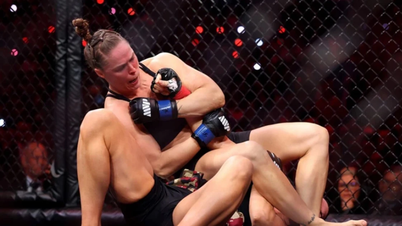
First and foremost, in terms of function, the octagonal cage provides maximum safety for the fighters. Unlike boxing rings with their ropes that can get tangled or cause fighters to fall out, the surrounding steel mesh cage keeps athletes within the fighting area, especially during grappling on the ground. This ensures the continuity of the match – a core element of MMA.
But that's not all; the cage also opens up a completely different tactical space. Fighters can utilize the netting as a leverage point for defense, counter-attacks, or grappling. This very element creates the diversity and unpredictability of MMA fighting styles, where every angle of the cage can become part of the strategy.
In terms of design, the octagonal shape eliminates the 90-degree right angles that often create "dead corners" in traditional boxing rings. Instead, the obtuse angles give fighters more room to maneuver, escape pressure, and maintain the pace of the fight. This is a revolutionary improvement that contributes to making MMA more flexible and exciting.
 |
| The octagon cage has become the "soul" of MMA. |
However, beyond all technical aspects, the octagonal cage holds profound symbolic significance. It is a place where all fighters are equal, where there is no room for avoidance, only confrontation and overcoming. Within this enclosed space, each match is not just a test of physical strength, but also a journey to challenge the will and limits of human capabilities.
At the same time, the Octagon is also a powerful media symbol. The image of the eight-sided cage has become a global identifier for MMA, helping audiences easily distinguish this sport from other forms of combat sports. From a camera perspective, this structure also facilitates flexible filming, providing viewers with a realistic and immersive experience.
From a purely technical design, the octagonal cage has transcended its original role to become the "soul" of MMA. It not only shapes how fighters compete, but also how audiences perceive the sport. And perhaps, it is within this seemingly enclosed space that the spirit of freedom, the fighting will, and the human desire to push boundaries are expressed more clearly than ever before.
Source: https://baothainguyen.vn/the-thao/202605/khi-khong-gian-thi-dau-tro-thanh-linh-hon-cua-mma-fe91f5d/



![[Photo] Secretary of the National Assembly Party Committee, Chairman of the National Assembly presides over the meeting of the Standing Committee and Executive Committee of the National Assembly Party Committee.](https://vphoto.vietnam.vn/thumb/1200x675/vietnam/resource/IMAGE/2026/06/03/1780480353201_ndo_br_bnd-2585-jpg.webp)
![[Photo] First session of the 14th Congress of the Vietnam Trade Union](https://vphoto.vietnam.vn/thumb/1200x675/vietnam/resource/IMAGE/2026/06/03/1780465947883_ndo_br_img-3852-jpg.webp)












































![[Video] Sunset at Lap An Lagoon – Where the sun sets over the fishing nets](https://vphoto.vietnam.vn/thumb/1200x675/vietnam/resource/IMAGE/2026/05/31/1780192137701_beach-landscape-sea-water-nature-grass-745871-pxhere-com.jpeg)






























Comment (0)