


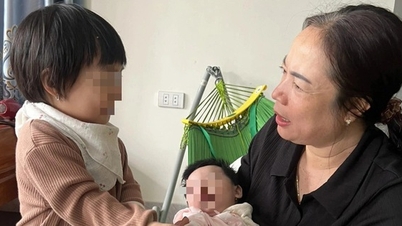
At 7 a.m. in an apartment complex in Hanoi , the kindergarten playground was almost full of elderly people waiting to drop off their grandchildren. Many of them not only "help out for a few hours," but take on almost all aspects of childcare: picking up and dropping off, cooking, putting the children to sleep, teaching, and even living with them year-round.
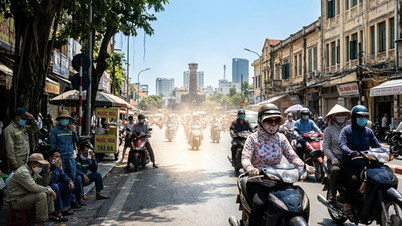
This situation is becoming increasingly common in large cities like Hanoi, Ho Chi Minh City, and Da Nang , where young parents face work pressure, long commutes, and rising costs of hiring childcare. In many families, grandparents become the most important "safety net."
Unlike the nuclear family model prevalent in the West, Vietnamese families still maintain multi-generational ties. However, a notable development today is that the role of grandparents is no longer limited to support, but is shifting towards becoming "actual parents" in the daily lives of young children.
Many young couples admit that without the support of grandparents, it would be difficult for them to maintain full-time jobs in the city. The cost of childcare, extra classes, living expenses, and economic pressure make the "grandparents raising grandchildren" model almost the default choice.
However, along with that convenience came a series of generational clashes.
One of the most common conflicts lies in differing parenting styles. Young parents are strongly influenced by modern educational trends such as scientific parenting, positive discipline, and limiting electronic devices. Meanwhile, grandparents often rely on traditional experiences: spoiling their grandchildren, feeding them according to old habits, or prioritizing absolute safety.
Many families experience tension surrounding issues like meals, daily routines, phone use, and child discipline. Many young parents feel a loss of parental authority when their children spend more time with grandparents, while grandparents are easily hurt by the feeling that their efforts in caring for their grandchildren are not being recognized.
Conversely, the pressure on the elderly is also increasing.
Caring for young children is physically demanding, and many grandparents today are over 60 or 70 years old. They have to adapt to the pace of urban life while also shouldering the responsibility of caring for their grandchildren, all while their children are busy almost all day long.
Many elderly people experience burnout but find it difficult to refuse because of the "sacrifice for their children and grandchildren" mentality. In some cases, grandparents move from the countryside to the city for many years just to care for their grandchildren, sacrificing social relationships, personal life, and even the peace and quiet of old age.
Sociologists believe this trend reflects a significant shift in the structure of Vietnamese families during urbanization. As the cost of living rises rapidly and work schedules lengthen, families are forced to redistribute caregiving roles.
In many Asian countries such as China, South Korea, and Singapore, "grandparent parenting" has also become a major social phenomenon. However, what makes Vietnam special is the strong presence of multi-generational family culture, where grandparents caring for their grandchildren is often seen as natural, even a responsibility.
However, with the changes in modern society, many experts believe that this role needs to be re-evaluated in a more balanced way. Grandparents can be a valuable support for young families, but they should not become "unpaid caregivers" throughout their old age.
The development of childcare systems, flexible labor policies, and support models for young families is therefore considered an increasingly urgent issue in Vietnamese cities.
Behind the heartwarming image of grandparents dropping off and picking up their grandchildren each morning lies a thought-provoking reality: many modern families are being sustained by the silent sacrifices of the grandparents' generation.
Source: https://baovanhoa.vn/gia-dinh/khi-ong-ba-thanh-phu-huynh-chinh-o-do-thi-228927.html















![[Photo] Reception to welcome General Secretary and President To Lam and his wife on their State visit to the Philippines](https://vphoto.vietnam.vn/thumb/1200x675/vietnam/resource/IMAGE/2026/06/01/1780295488620_vna-potal-chieu-dai-chao-mung-tong-bi-thu-chu-tich-nuoc-to-lam-va-phu-nhan-tham-cap-nha-nuoc-toi-philippines-8798060-7855-jpg.webp)










































Comment (0)