

The true value of VAR
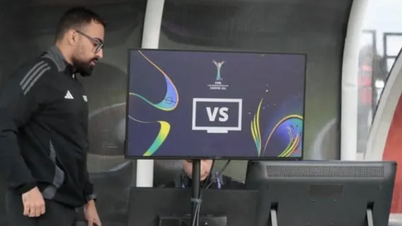
In the first half of the match, VAR intervened in an on-field incident – Paulo Pinto's studs-up tackle in the 10th minute, resulting in a yellow card being shown despite protests from the Viettel players. VAR immediately stepped in, and after reviewing footage from various angles, VAR referee Mai Xuan Hung agreed with referee Ngo Duy Lan's decision. The match was only temporarily halted for a few dozen seconds after a quick exchange between the parties involved.
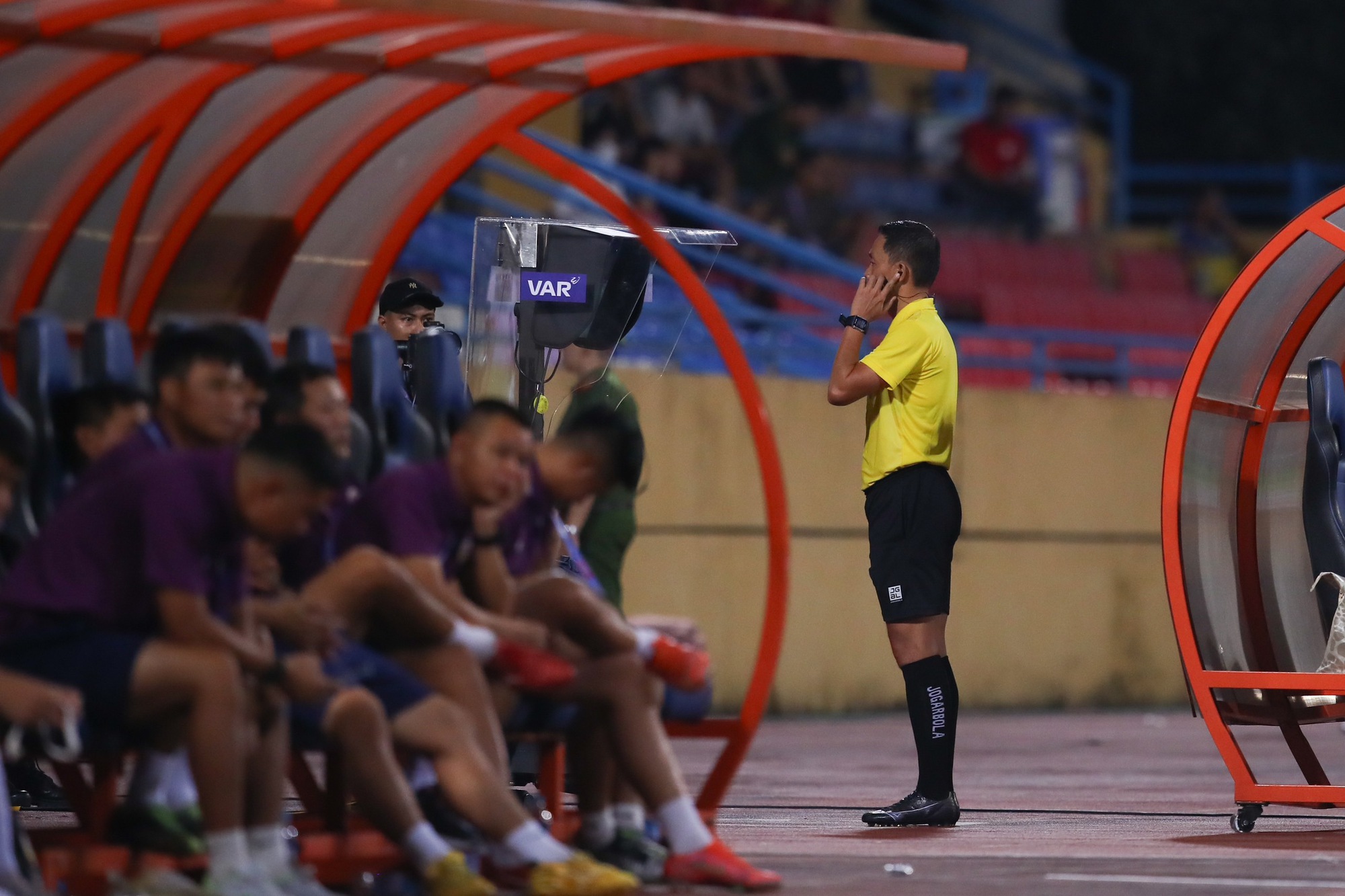
Referee Ngo Duy Lan
MINH TU
In the second half, the highlight was the situation leading to Hoang Duc's second goal after a perfect assist from Essam. Hoang Duc moved, received the ball, and scored in a sensitive position, bordering on offside. And before passing the ball to Hoang Duc, Essam had also been involved in a rather strong challenge with his opponent.
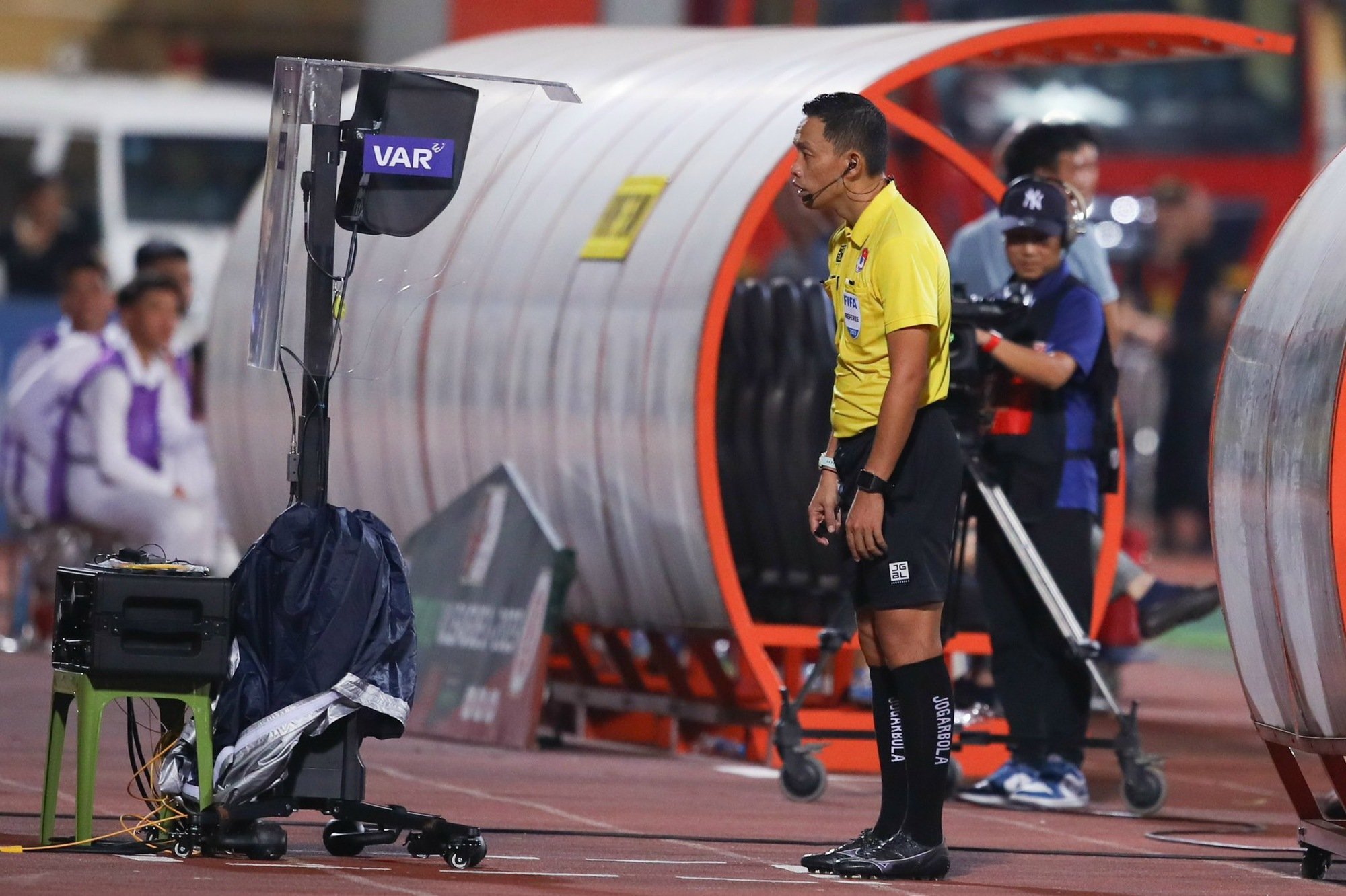
The refereeing team directly officiating the match recognized Viettel's goal, and VAR immediately intervened. The collision involving Essam and Hoang Duc's initial movement after the ball left Essam's foot were also reviewed. In this sensitive situation, referee Ngo Duy Lan and assistant referee number 1 Nguyen Trung Hau performed exceptionally well, making a quick and accurate decision: confirming Hoang Duc's valid goal. The VAR team also played a crucial role in assisting with a more thorough, detailed, and accurate review of the play. This was truly an important decision.
Without VAR and the refereeing team incorrectly calling Hoang Duc offside, the goal would have been disallowed, and the score would have remained 1-0. In that case, the match could very well have unfolded differently.
But…
Remarkably, in the situation leading to Hoang Duc's goal, the VAR team took over 5 minutes to review the footage before making a final decision. This is rare in top-level European and world matches. Similar cases are also uncommon in the Thai League. Importantly, simply observing the slow-motion replays on television cameras should have been sufficient to conclude that the goal was valid. The close-up camera at the end of the field showed that Essam did not commit a foul, and the offside camera in stand A, with its precise timing of the ball leaving the Egyptian striker's foot, easily led us to conclude that Hoang Duc was not in an offside position. However, for some reason, the VAR system took 5 minutes and 5 seconds to reach a final decision. The reason is that the field surveying technology did not match the actual images on television.
The somewhat cumbersome handling of VAR caused a prolonged interruption to the match, leaving players waiting anxiously. For example, Hoang Duc had to constantly stand up and sit down to stretch and relax his muscles, and by the time the goal was confirmed, his excitement had somewhat cooled. The remaining players also lost their high-intensity rhythm, and the spectators in the stadium or watching on television also lost some of their enthusiasm.
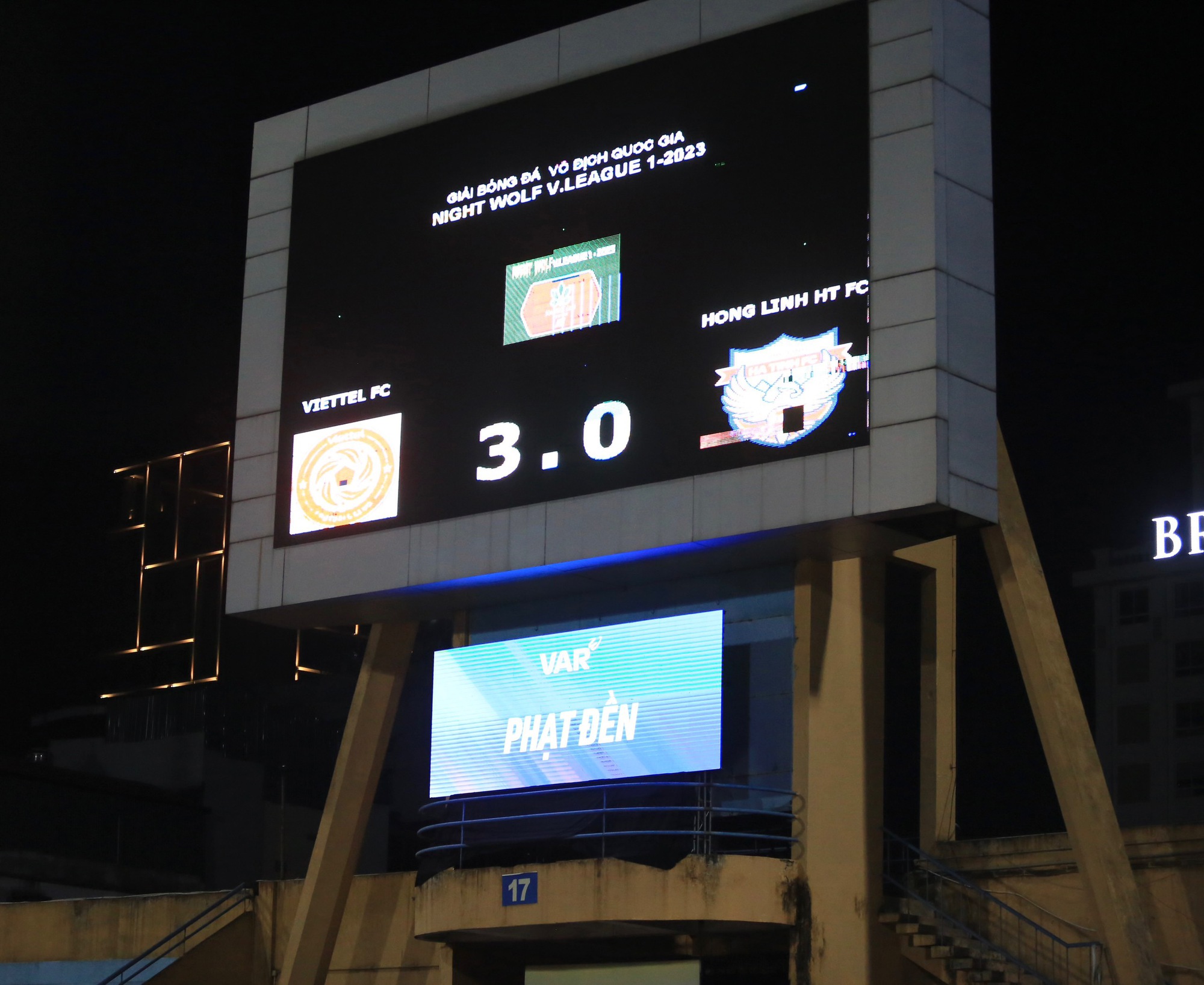
In the situation where Viettel was awarded a penalty in injury time, referee Ngo Duy Lan, from a clear viewing angle, initially did not consider it a foul. However, with the assistance and advice of the VAR team, the match official reviewed the footage and changed the decision. It was a penalty awarded to Viettel, and the final score was 4-0 in favor of the home team. While this situation didn't significantly affect the match's outcome, it raised concerns about the refereeing team's competence and their coordination with the VAR team. More importantly, based on the images and camera angles shown on television, many believe it wasn't a penalty. Slow-motion replays showed Janclesio of Ha Tinh team deflecting the ball with the tip of his boot before any physical contact with Viettel's striker Danh Trung. Was there a problem with the referee's ability to read and analyze the situation, or was the referee simply hesitant to "clash" with VAR on its debut?
When asked about concerns regarding the implementation of VAR in the V-League, the Head of the Refereeing Committee of the Vietnam Football Federation (VFF), Mr. Dang Thanh Ha, mentioned the human factor. "The machines and their operation follow FIFA's training procedures; the more you learn and practice, the more familiar you'll become. The most difficult thing is reading and analyzing images, and assessing situations – that remains the domain of individual referees."
Source link























































































Comment (0)