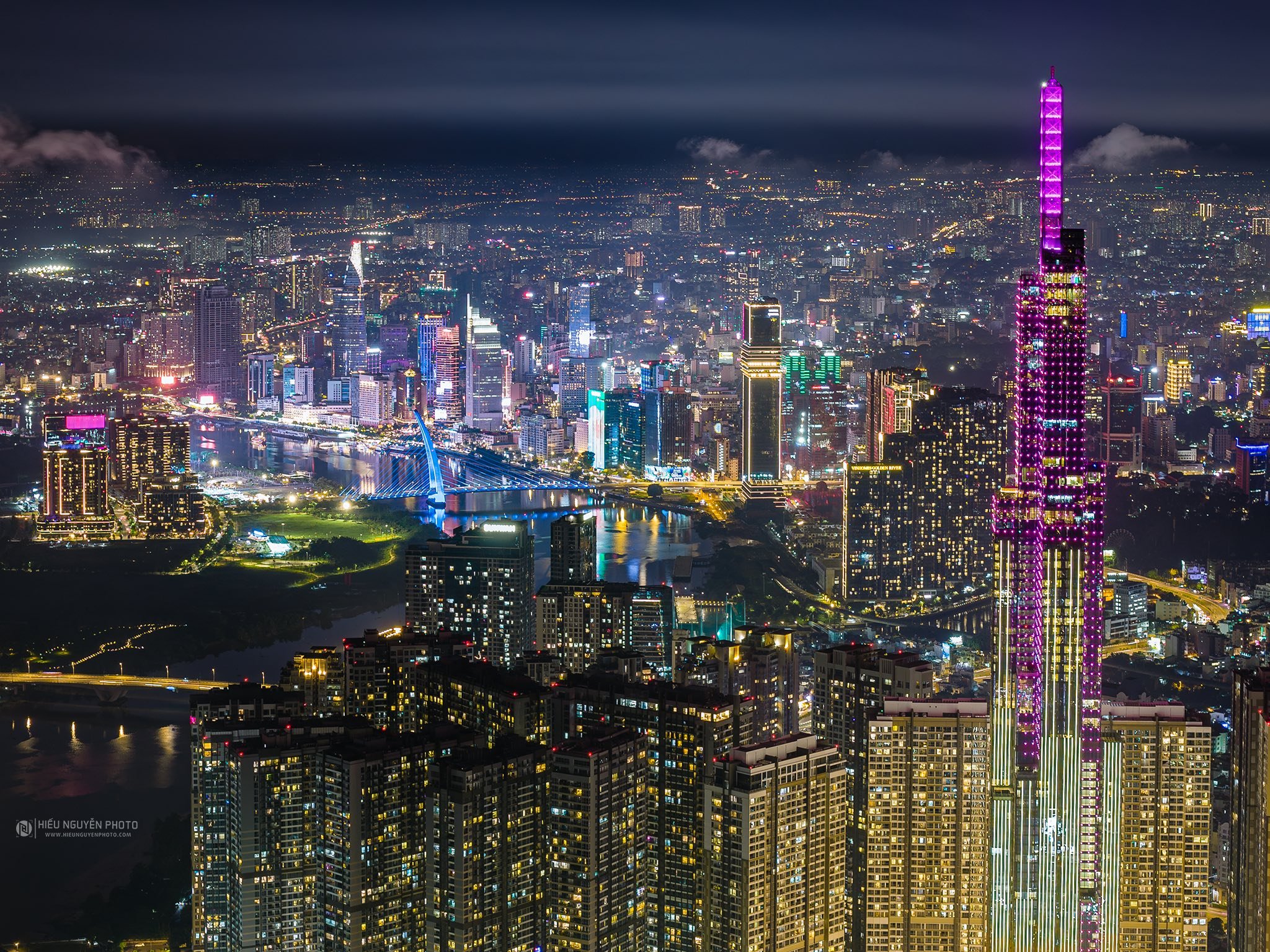
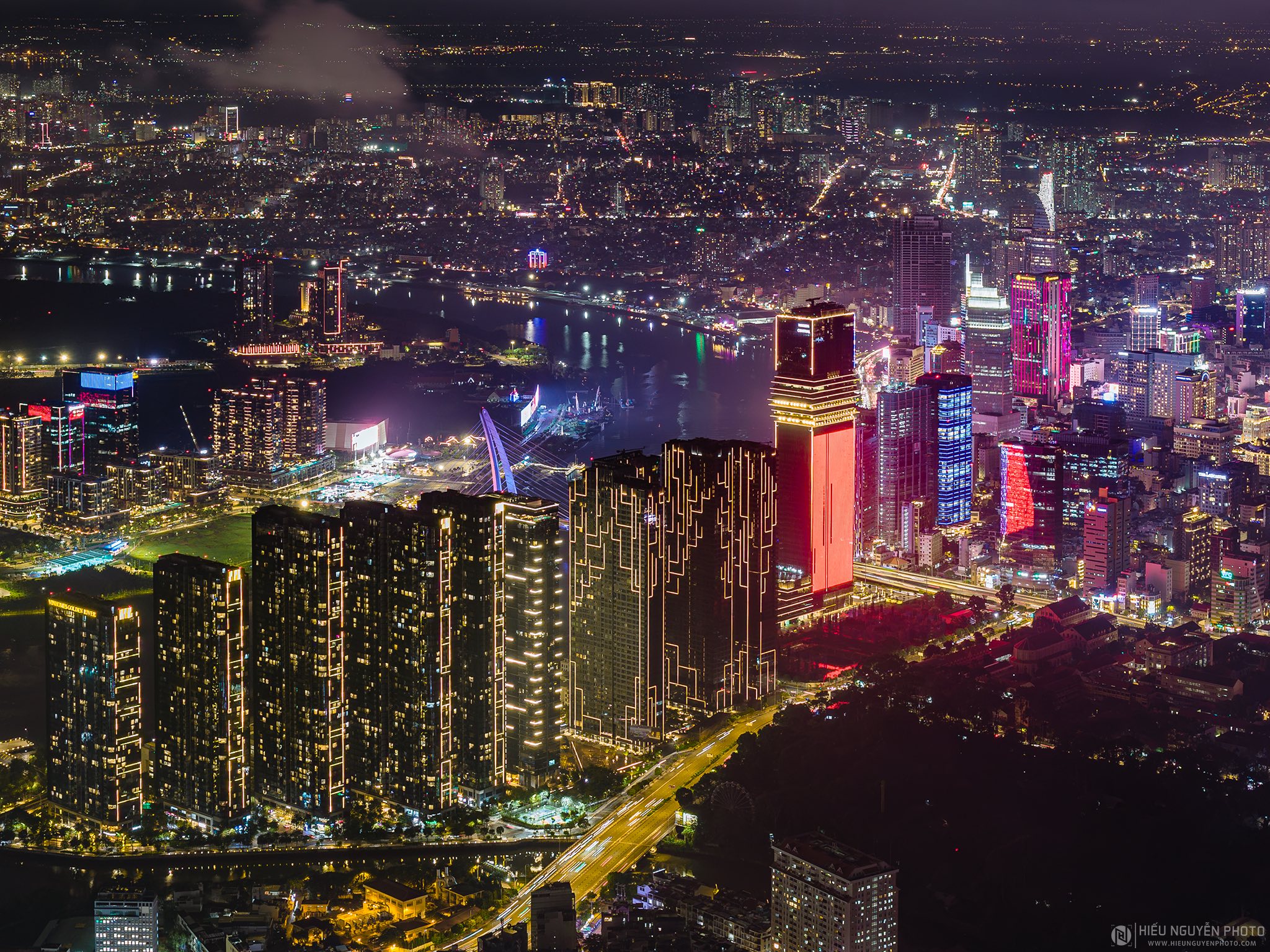
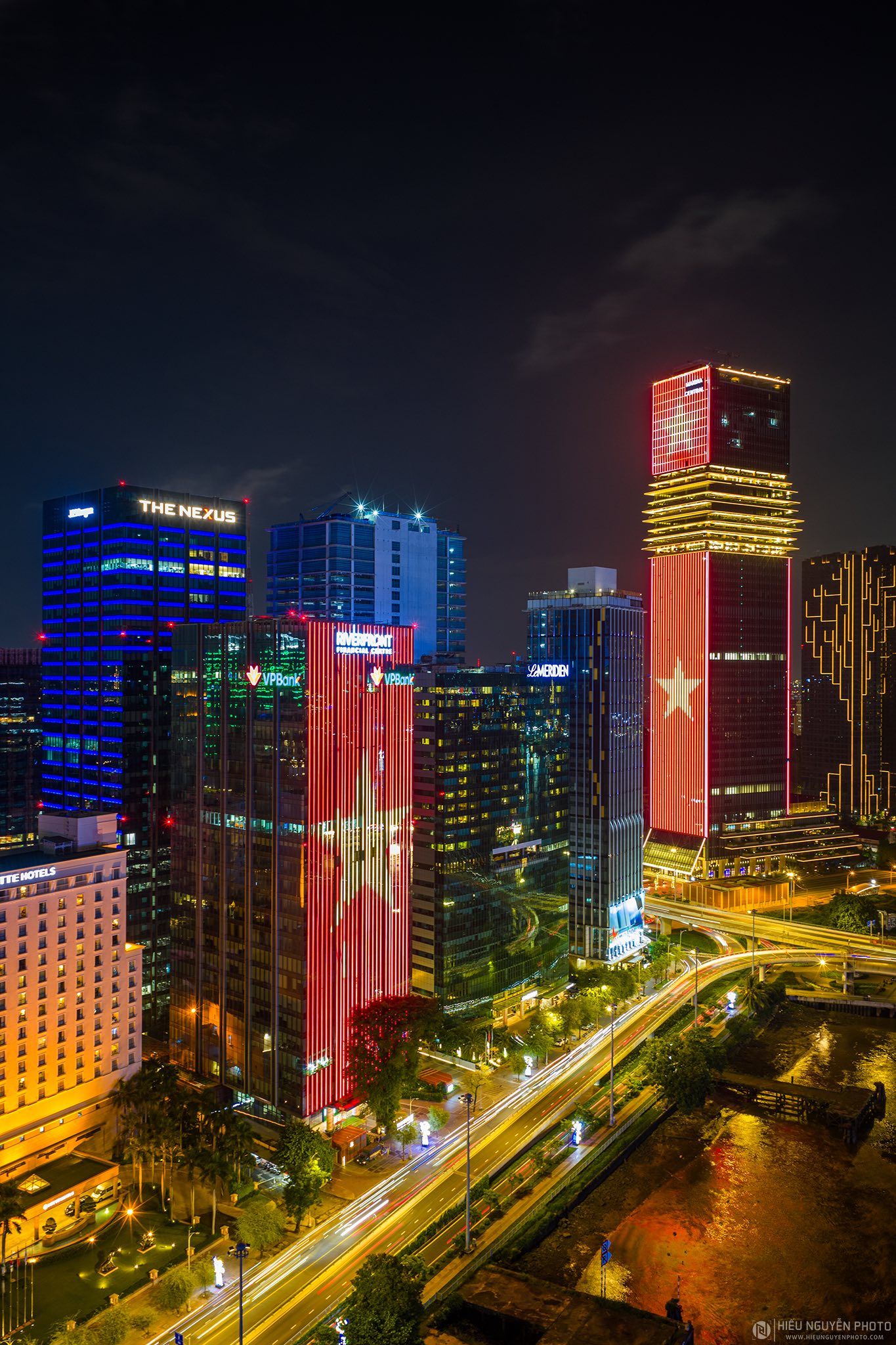
Viewed from above, Ho Chi Minh City's urban architecture appears both modern and harmonious, with many impressive structures located along the Saigon River such as: the 81-story Landmark 81 building (Binh Thanh District); the Thu Thiem tunnel (connecting District 1 and Thu Duc City), Ba Son bridge (District 1), Thu Thiem urban area (Thu Duc City), and Ben Bach Dang park (District 1), which are becoming new architectural symbols affirming the city's urban development.
Admire Ho Chi Minh City dazzling under the night lights.
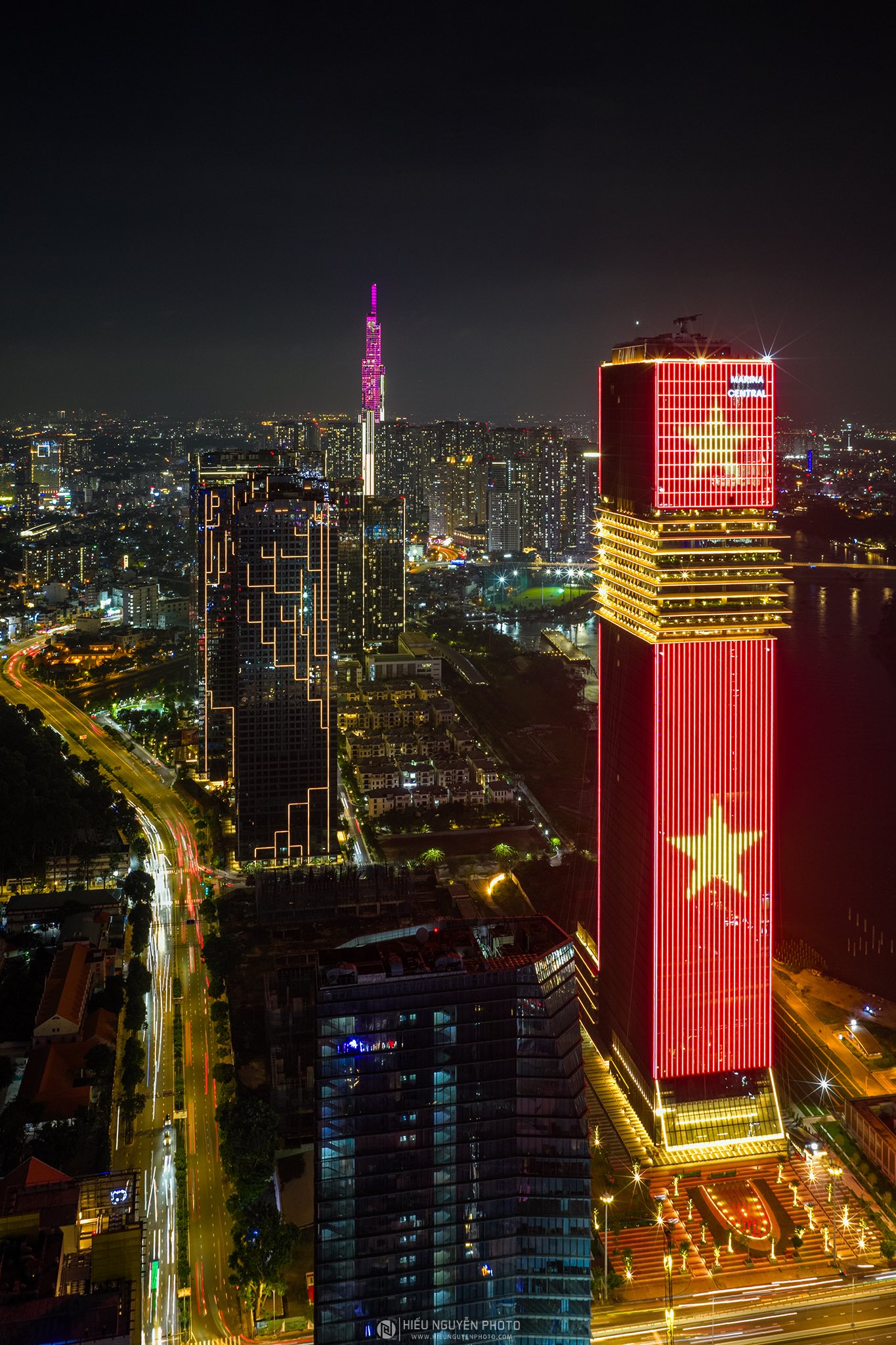
As night falls, Ho Chi Minh City dons a dazzling and captivating beauty. Towering skyscrapers and bustling shopping centers bear witness to the development of this modern city, a leading economic and cultural hub in Vietnam. Following the merger, Ho Chi Minh City boasts a new look and immense potential for breakthrough development. A vibrant and diverse tourism landscape is unfolding.
 Việt Nam Ơi!•02/10/2025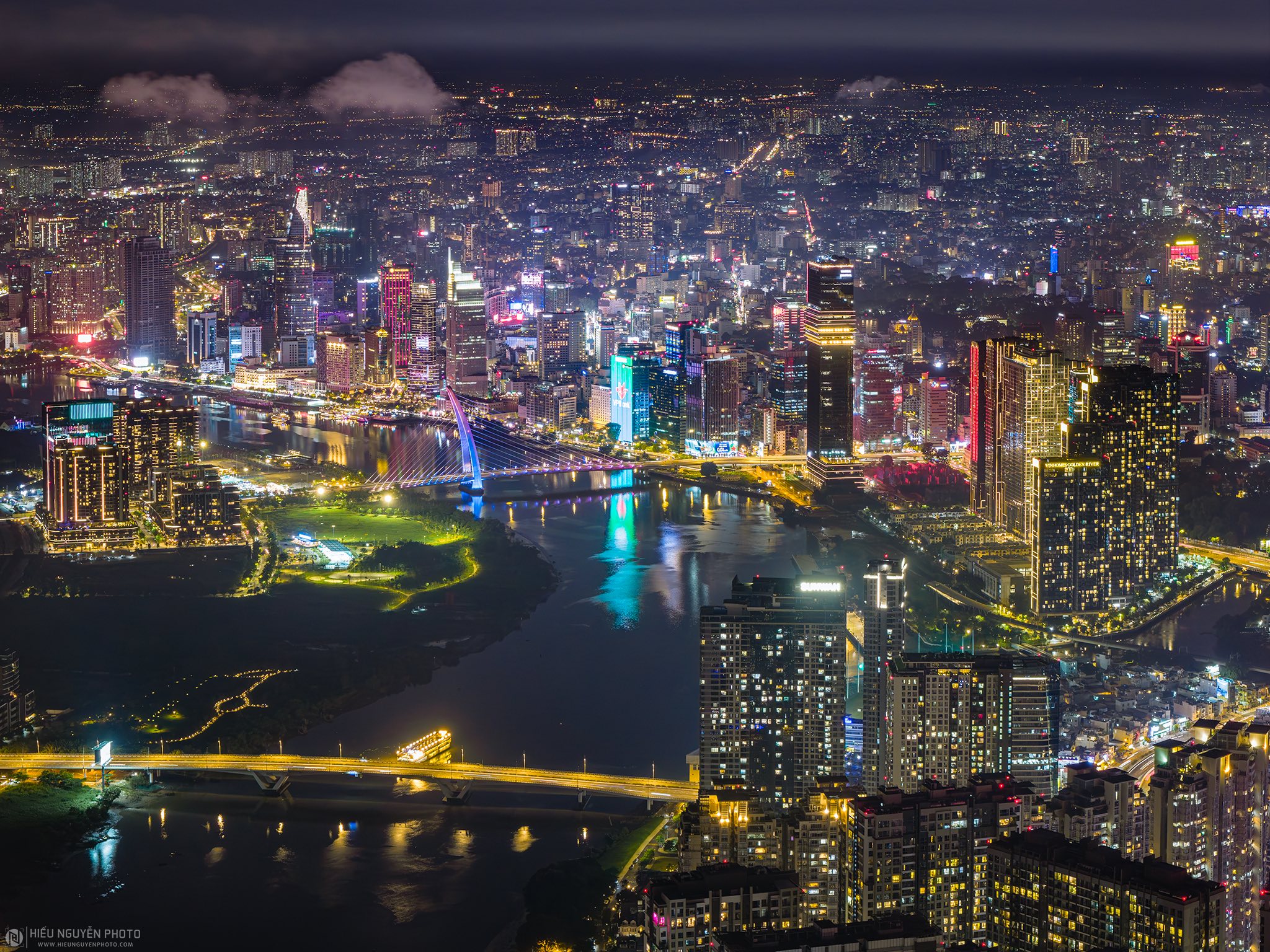
The cityscape at night becomes even more vibrant and colorful under the lights, bustling with diverse entertainment, cultural, and culinary activities, truly deserving the title of a "city that never sleeps." Nguyen Hue pedestrian street (District 1), the Lam Son Square area, and the area in front of the City Opera House (District 1) have become the main venues for many cultural, sports , and community art activities, offered free of charge to residents and tourists on weekends.
You may also like
We propose a coefficient K = 1 to reduce the financial burden.On June 22nd, Dr. Pham Viet Thuan, Director of the Institute of Resource and Environmental Economics in Ho Chi Minh City, signed a document addressed to the Secretary of the Ho Chi Minh City Party Committee and the Chairman of the Ho Chi Minh City People's Committee, proposing an adjustment to the land price coefficient (K coefficient) = 1.
VIDEO: What's so appealing about an art and food show costing nearly 2 million VND in the heart of Ho Chi Minh City?(NLĐO) – A multi-sensory show takes visitors on a journey to explore art, culture, and unique culinary experiences from all three regions of Vietnam right here in Ho Chi Minh City.
Unlocking the potential of night tourism in Ha Tien.Besides enriching the experience of exploring the destination, night tourism in Ha Tien ward is gradually becoming a driving force for the development of trade, services, and tourism, contributing to enhancing the attractiveness of the coastal city.
Ho Chi Minh City has identified strategic pillars for tourism development, including improving infrastructure and services, and prioritizing transportation connectivity. This year, the transportation infrastructure of Ho Chi Minh City and its surrounding areas has seen significant progress, greatly facilitating tourism development.
Simultaneously, the tourism industry is researching and developing new products such as helicopter tours offering panoramic city views and expanding the tourist port. Furthermore, it is strongly developing night-time tourism. Ho Chi Minh City aims to become the "night-time tourism capital of Southeast Asia".
In the first eight months of 2025, Ho Chi Minh City welcomed over 4.3 million international visitors and approximately 26 million domestic visitors. Total tourism revenue reached over 125,000 billion VND, an increase of more than 12% compared to the same period last year. This is a very positive sign, showing that tourism products are becoming increasingly attractive and have high added value.
Ho Chi Minh City's tourism industry aims to welcome 8.5-10 million international visitors and 40-50 million domestic visitors in 2025, generating total tourism revenue of 260,000-290,000 billion VND.
You may also like

3 destinations for coral reef hunting in Vietnam this summer.Summer, from April to August, is the golden time to explore over 1,100 km² of coral reefs along the S-shaped strip of land that is Vietnam. Below are three famous coral reef destinations in Central Vietnam that you can travel to and experience right away.
Ho Chi Minh City is pioneering the implementation of a new technology sandbox.In implementing Resolution No. 57-NQ/TW, Ho Chi Minh City has identified one of its key tasks as building a controlled testing mechanism (sandbox), creating a favorable environment for research, testing, commercialization of technology, and the development of innovative businesses.

Ho Chi Minh City expects nighttime tourism to become a new growth driver.Amidst the continued positive recovery of the tourism industry, Ho Chi Minh City is orienting its development towards large-scale night-time tourism products to enhance visitor experiences and create further impetus for the city's economic and service growth.
Following the merger, Ho Chi Minh City aims to become a leading tourism and service center in the region. Accordingly, in the next 10-15 years, it will be among the most attractive urban destinations in Asia, comparable to Bangkok (Thailand), Singapore, or Kuala Lumpur (Malaysia).
Photo: Hieu Nguyen
Oh Vietnam!




![[Photo] Prime Minister Le Minh Hung presides over the thematic session on promoting science and technology development and innovation.](https://vphoto.vietnam.vn/thumb/1200x675/vietnam/resource/IMAGE/2026/06/23/1782207872934_ndo_br_dsc-1724-jpg.webp)