

The U.S. military is expending large quantities of advanced weapons and ammunition in military operations in the Middle East. However, replenishing these reserves is facing serious technical and raw material hurdles, particularly a shortage of tungsten – a strategic metal that Washington is virtually unable to produce itself.
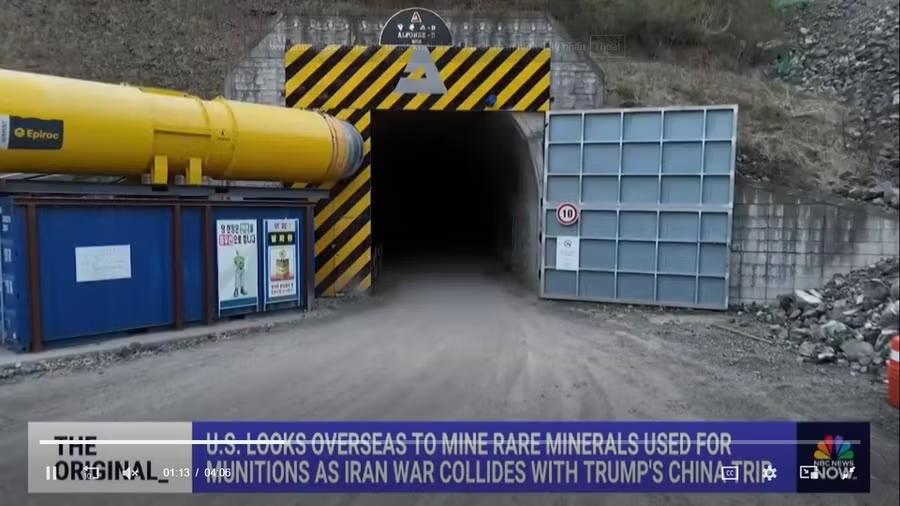
Raw material crisis in weapons production.
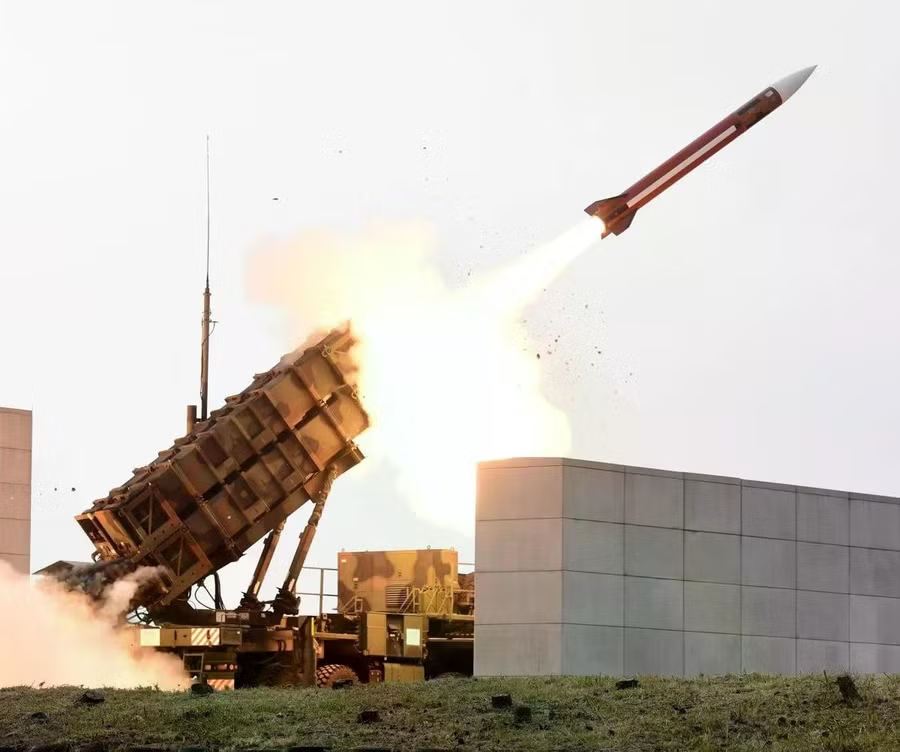
Modern weapons such as the Tomahawk missile, the Patriot system, and the Precision Strike missile all require large quantities of tungsten. This extremely hard metal plays a vital role in the manufacture of warheads, bombs, artillery shells, and critical components of fighter aircraft.
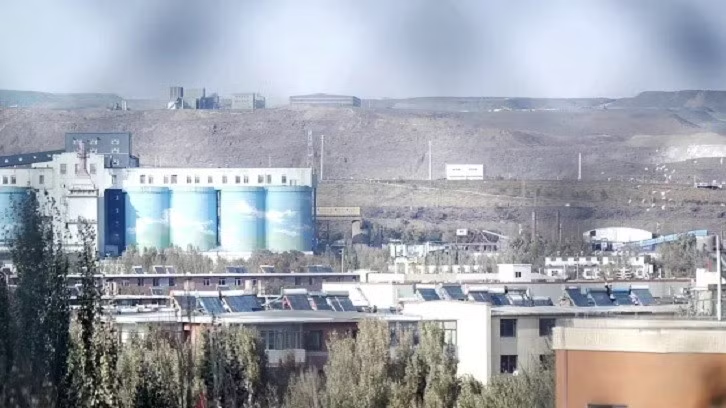
The biggest problem now is that the last tungsten mine in the US closed in 2015. Since then, the US defense industry has relied on imports from China – which currently holds a monopoly on approximately 80% of the world's tungsten production. This dependence creates a significant gap in Washington's military supply chain.
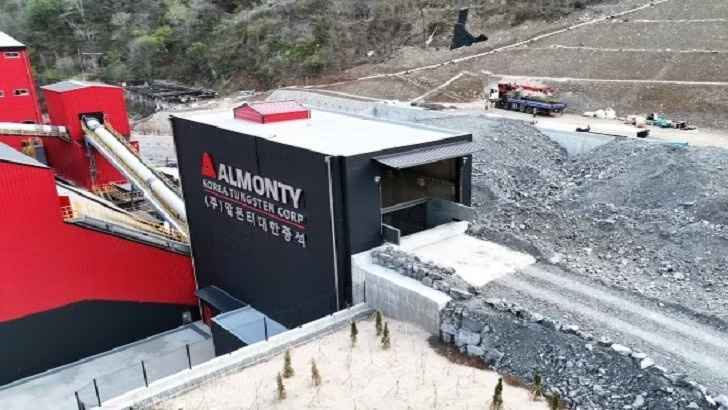
Efforts to find alternative sources of supply.
Against the backdrop of geopolitical tensions, the administration of US President Donald Trump has promoted measures to reduce dependence on China. Specifically, the US supported the reopening of the Sangdong tungsten mine in South Korea last March, after more than 30 years of inactivity. This is seen as a strategic move to diversify sources of military raw materials.
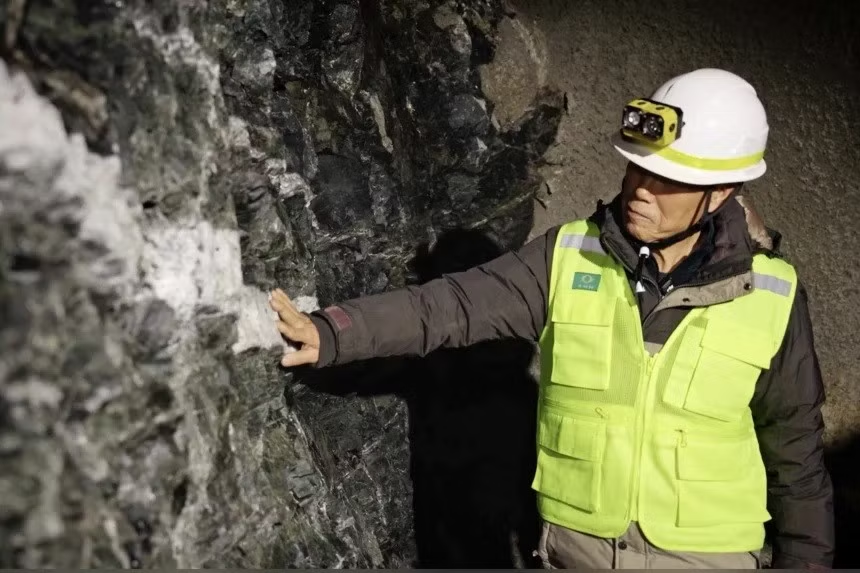
In addition, the US is also striving to revive its domestic mining industry. However, the biggest obstacle is not only infrastructure but also a knowledge gap. After decades of inactivity, the technology lines have malfunctioned, and the leading experts in the field are no longer available.
Challenges related to time and manpower.
According to Lewis Black, CEO of Almonty Industries, the knowledge gap is extremely serious. He argues that reference materials and expert advice in the field of tungsten metallurgy in the US have disappeared since the 1990s.
To remedy this situation, experts estimate:
- The U.S. needs at least 10 years to fully revive its domestic tungsten industry.
- Even with sufficient supplies of raw materials, the military would still need four to five years to replenish its depleted missile arsenal.
Overall, if a new large-scale conflict were to break out in the near future, the US would face an extremely difficult challenge regarding its combat capabilities, as its strategic reserves would not have had time to recover.
Source: https://baonghean.vn/kho-ten-lua-my-can-kiet-va-bai-toan-thieu-hut-vonfram-tram-trong-10338444.html



























![[Photo] Reception to welcome General Secretary and President To Lam and his wife on their State visit to the Philippines](https://vphoto.vietnam.vn/thumb/1200x675/vietnam/resource/IMAGE/2026/06/01/1780295488620_vna-potal-chieu-dai-chao-mung-tong-bi-thu-chu-tich-nuoc-to-lam-va-phu-nhan-tham-cap-nha-nuoc-toi-philippines-8798060-7855-jpg.webp)

































































Comment (0)