

The plan to transform the Dharavi slum is led by billionaire and infrastructure tycoon Gautam Adani, founder of the Adani Group and who surpassed Jeff Bezos to become the world's second richest person in 2022.
"A new chapter of pride is beginning. This is a historic opportunity for us to create a new Dharavi of dignity, safety and inclusion," Adani wrote in a message on the company's website after winning the contract to redevelop the area in 2022.
He vowed to "create a world-class modern city that reflects a resurgent, confident, and thriving India, finding its new place on the global stage because the 21st century belongs to India."
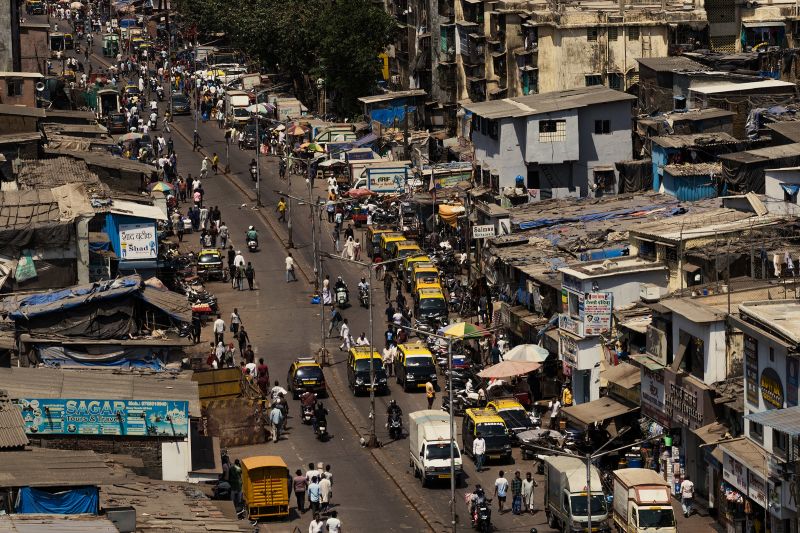
A view of the Dharavi slum in Mumbai, India, on April 14. Photo: CNN
However, his vision of a new Dharavi has met with mixed reactions, ranging from hopeful residents ready for change to skeptics. Some vehemently oppose the proposal, fearing that Adani's plan could endanger their homes and businesses.
According to Mumbai authorities, for over a century, Dharavi has welcomed migrants who flocked to settle there because it was a free land not under government control.
From the late 1800s, traditional potters from Gujarat, leatherworkers from Tamil Nadu, and embroiderers from Uttar Pradesh began arriving in Dharavi. Professor Lalitha Kamath, a professor of urban planning and policy at the Tata Institute of Social Sciences in Mumbai, says these migrants and impoverished populations built a livable place in Dharavi. They transformed it from a swampy area into the valuable place it is today.
But due to its informal nature, Dharavi remained undeveloped and chaotic for many years. For decades, the government has been trying to find developers and builders who could redevelop Dharavi from the top down. Many questions also remain: Which residents will be relocated and where? How will business owners be compensated? Who will be eligible?
Kamath said: "Redeveloping the entire slum area is quite challenging. Dharavi presents particular challenges due to its population size, economic importance, and land value, being surrounded by affluent commercial districts in the city center, and being close enough to the airport that arriving planes can see the sprawl of the slum from the air."
After years of stalled progress and unsuccessful bidding processes, Adani's company won the right to redevelop Dharavi with a bid of 50 billion rupees (US$612 million). Expected to take seven years to complete, it is the latest mega-project undertaken by Adani Enterprises, the company currently supplying electricity to Mumbai.
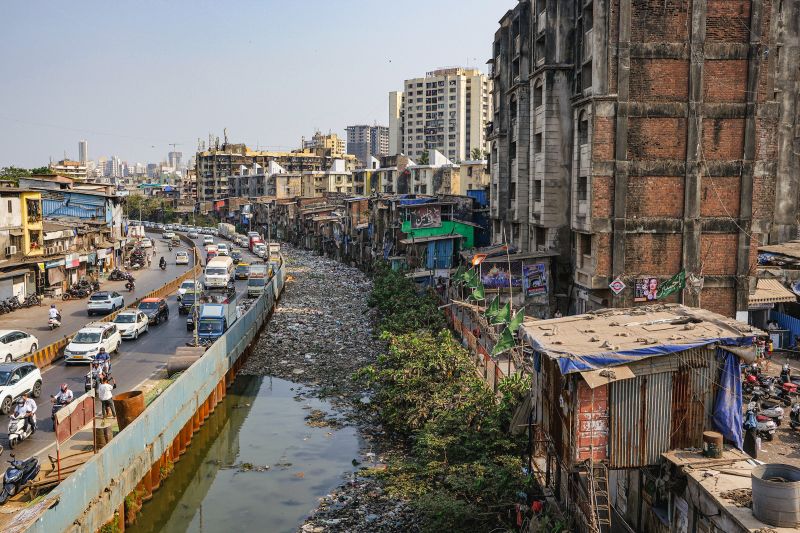
A sewage canal filled with trash in Dharavi, April 18. Photo: CNN
Adani announced on his website that approximately one million people would be "rehabilitated and resettled," with housing and businesses to be redeveloped. He pledged that residents would have access to better healthcare and recreational facilities, open spaces, hospitals, and schools, among other things.
According to a spokesperson for the Dharavi Redevelopment Project (DRPPL), ground-floor residents who lived in Dharavi before 2000 will be allocated a free apartment in the area with a minimum size of 32.5 square meters.
Residents on the higher floors, or those who lived there between 2000 and 2011, will receive a 27.9-square-meter house after a one-time payment of 250,000 rupees (approximately $3,000), located 10 km from Dharavi.
Those who moved to Dharavi after 2011 will also receive a 27.9-square-meter house within the same radius, but will have to pay rent to the state.
A spokesperson said all apartments, in or near Dharavi, will have separate bedrooms, toilets, and kitchens. The plan is a collaboration between the Adani and Maharashtra state governments. The land itself will remain state-owned.
Some people enthusiastically support Adani's plan. One resident, Jadhav, said, "I would be very happy if the development goes ahead. I want my children to have a better life and move from here to a place with all the amenities like good schools and parks for them to play in."
"If Adani keeps his promise, our lives will definitely improve," she added.
But some residents remain unconvinced. Dilip Gabekar, 60, born in Dharavi and working for a non-profit organization that supports women and children in the slum, said: "For the past 30 years, we've dreamed and heard about redevelopment, but nothing has happened."
Hoai Phuong (according to CNN)
Source: https://www.congluan.vn/khu-o-chuot-lon-nhat-an-do-sap-tro-thanh-sieu-thanh-pho-post301903.html






![[Photo] General Secretary and President To Lam departs New Delhi for a visit to Mumbai.](https://vphoto.vietnam.vn/thumb/402x226/vietnam/resource/IMAGE/2026/05/07/1778136099931_anh-man-hinh-2026-05-07-luc-13-41-29.png)

















































































Comment (0)