

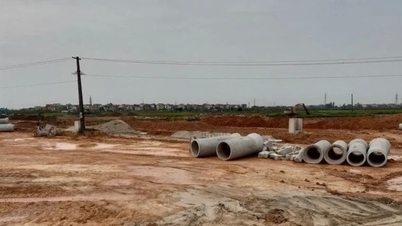
The difference in inflationary pressure this year is that it coincides with a cycle of accelerated large-scale public investment. A series of infrastructure, transportation, and energy projects are being accelerated, creating momentum for growth, but "faster implementation could lead to secondary risks such as inflation, sharply increased imports, and higher capital costs," according to a recent May strategic report by the Investment Analysis and Consulting Center (SSI Securities Company).
In this context, macroeconomic policy is being managed more cautiously. The State Bank of Vietnam is not drastically reducing interest rates across the board, but is focusing on stabilizing liquidity, flexibly managing the open market, exchange rates, and foreign exchange to anchor inflation expectations. This is a necessary choice. Regarding fiscal policy, the government continues to prioritize public investment while extending some fuel-related tax reduction policies to ease cost pressures on businesses and individuals.
However, the more important challenge lies in addressing the "cost bottlenecks" of the economy . Alongside monetary and fiscal management, the government is strongly promoting institutional reforms. The goal is to cut at least 30% of conditional business sectors, reduce compliance costs by 50%, and shift significantly from "pre-approval" to "post-approval"—solutions that will help reduce price pressure in the long term.
In particular, the implementation of Resolution 29/2026/QH16 (on specific mechanisms and policies to handle violations of land law by organizations and individuals occurring before the Land Law of 2024 came into effect and to resolve difficulties and obstacles for stalled and long-standing projects) will resolve nearly 4,500 stalled projects, with a total capital of trillions of VND. This is considered an important step to unblock the supply for the real estate, infrastructure, and production markets. If implemented effectively, this will be a factor in reducing pressure on price increases in the coming period.
The current inflationary pressure reflects the fact that the Vietnamese economy has entered a new phase of development with larger-scale investment and greater openness to the global economy. The economic management plan for 2026 shows a very clear priority: controlling inflation is no longer solely the responsibility of monetary and fiscal policies, but a comprehensive macroeconomic management issue – from controlling liquidity and exchange rates to boosting public investment, institutional reform, and resolving outstanding projects.
All measures are aimed at maintaining price stability while sustaining growth momentum. Keeping inflation under control will continue to be a crucial indicator of governance capacity, as macroeconomic stability remains fundamental to protecting people's purchasing power, business confidence, and the growth potential of the economy.
According to sggp.org.vn
Source: https://baodongthap.vn/kiem-soat-lam-phat-trong-vung-ap-luc-moi--a240812.html





































































































Comment (0)