

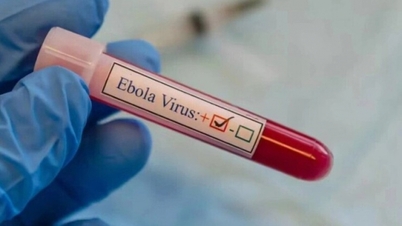
The Ministry of Health continues to send urgent official letters to the People's Committees of provinces and cities; and the Institutes of Epidemiology and Hygiene, and Pasteur Institute, requesting them to strengthen surveillance and prevention of diseases caused by the Ebola virus .
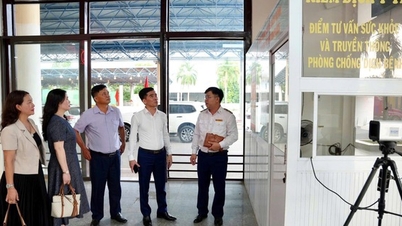
To proactively prevent and control the spread of Ebola into Vietnam, the Ministry of Health requests that the People's Committees of provinces and cities direct their health departments, relevant departments and agencies, and local authorities at all levels to urgently implement surveillance and detection of suspected cases at border gates, in the community, and at healthcare facilities, following the Ministry of Health's guidelines on surveillance and prevention. They should also coordinate with immigration authorities to screen passengers returning from affected areas, advise them to self-monitor their health for 21 days, and contact healthcare facilities if they experience any suspected symptoms.
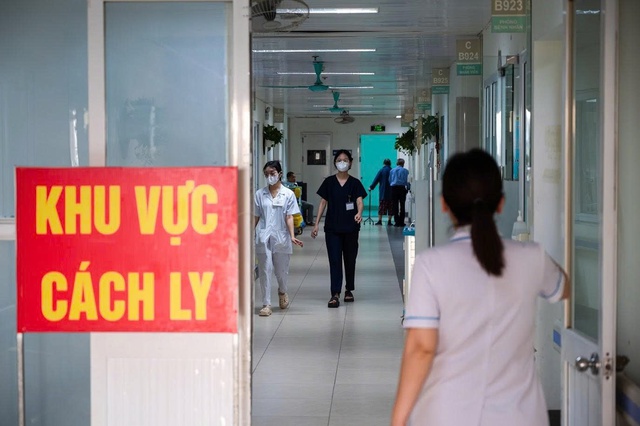
The Ministry of Health requires immediate isolation of people returning from areas affected by the Ebola virus disease.
PHOTO: THUY ANH
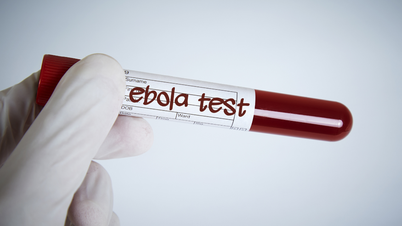
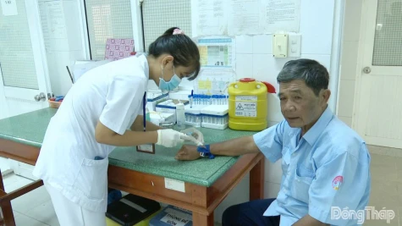
Upon detecting suspected cases of Ebola, immediate isolation and sample collection should be carried out and sent to the Central Institute of Hygiene and Epidemiology or the Pasteur Institute of Ho Chi Minh City for confirmatory testing.
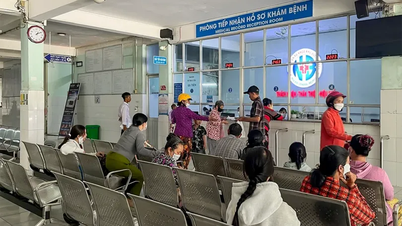
Strictly implement infection control and prevention measures at healthcare facilities (note: ensure adequate personal protective equipment for healthcare workers when in contact with suspected or confirmed cases); strictly adhere to the Ministry of Health's guidelines on hygiene in burial and cremation for those who die from or are suspected of having infectious diseases.
The Ministry of Health also requested that localities continue to organize training for healthcare workers at all levels on surveillance, prevention, diagnosis, treatment, and control of infections according to the Ministry of Health's guidelines; and the use of personal protective equipment.
Develop plans for disease prevention and control at border gates and in communities based on various disease scenarios; ensure the readiness of personnel, supplies, medicines, chemicals, equipment, and vehicles to respond promptly in the event of an outbreak.
Continue communicating with the public and passengers, especially those coming from areas experiencing outbreaks, about the disease situation and prevention measures to prevent panic and anxiety, and to ensure people proactively implement disease prevention measures as recommended by the Ministry of Health.
At the same time, strengthen epidemic control teams and mobile emergency response teams, ready to perform duties when necessary, and organize permanent epidemic control teams as prescribed.
The Ebola virus epidemic is developing in a complex manner.
According to information from the World Health Organization (WHO), the Ebola virus disease (Ebola) caused by the Bundibugyo strain in the Democratic Republic of Congo (Congdon) and Uganda is developing in a complex manner.
In Congo, on May 5, 2026, four healthcare workers were reported dead, and ten days later (May 15, 2026) these patients were confirmed to have Ebola.
Subsequently, the country continuously recorded more cases and deaths.
As of May 22, 2022, 750 suspected cases had been recorded, including 177 deaths. This was the 17th Ebola outbreak in Congo since 1976.
In Uganda, on May 15-16, 2026, two cases of the disease imported from Congo were recorded. The epidemiological link has not been determined, but both cases presented with symptoms caused by the Bundibugyo strain. One of these cases resulted in death.
On May 17, 2026, the WHO declared the Ebola outbreak caused by the Bundibugyo strain in Congo and Uganda a public health emergency of international concern.
On May 22, 2026, the WHO continued to maintain the disease alert level and updated the risk assessment results for Ebola outbreaks in Congo and Uganda to a very high level for countries reporting cases, a high level for countries in the African region, and a low risk level globally, including Vietnam.
In Vietnam, the Ministry of Health assesses that the disease is at risk of entering the country from passengers arriving from epidemic areas. It has requested the Institutes of Hygiene and Epidemiology and the Pasteur Institute to closely monitor the global epidemic situation, assess the risks, and promptly advise the Ministry of Health on appropriate and effective epidemic prevention and control measures.
Source: https://thanhnien.vn/kiem-soat-nguoi-ve-tu-vung-co-dich-benh-ebola-185260525151301521.htm
![[Image] Hanoi's urban life under the challenge of a "scorching hot" environment](https://vphoto.vietnam.vn/thumb/1200x675/vietnam/resource/IMAGE/2026/05/25/1779706979265_nang-nong-t5-2026-minh-duy-7-4636-jpg.webp)


![[Image] Close-up view of the interchange connecting the two expressways and Long Thanh Airport.](https://vphoto.vietnam.vn/thumb/1200x675/vietnam/resource/IMAGE/2026/05/25/1779703378210_ndo_br_z7863716673926-224453a31600126cce10622af6290afd-4549-jpg.webp)























































































Comment (0)