


According to a decision announced by Ms. Phan Thi Hong Ha, Director of the Personnel and Organization Department of the Ministry of Justice , Mr. Nguyen Thang Loi, Acting Director General of the General Department of Civil Judgment Enforcement, has been appointed to the position of Director of the Department of Civil Judgment Enforcement Management effective July 1st.
On the same day, the Ministry of Justice launched the Electronic Receipt System, marking a significant step forward in the application of digital technology and artificial intelligence (AI) to the field of civil judgment enforcement, demonstrating a proactive spirit of innovation and promoting comprehensive digital transformation in the justice sector.
Accordingly, the system allows for the digitization and automation of the entire receipt creation process, from scanning documents and automatically extracting information using AI-OCR technology to digital signature approval, automatic receipt numbering, and centralized storage. This enables enforcement officers to easily manage and search the electronic system instead of manually processing paper documents, which is inefficient and prone to errors, with the assistance of AI.

According to the Enforcement Department, in just the first week of the pilot operation in Ho Chi Minh City (from June 23rd to the present), the system has recorded nearly 3,000 electronic receipts issued, equivalent to nearly 2,000 billion VND in collected and paid taxes.
By minimizing manual operations, shortening processing times, reducing errors, and enhancing centralized management, the system not only improves operational efficiency and streamlines the organizational structure but also lays the foundation for a modern, professional judicial administration that serves citizens and businesses more quickly and transparently.
The Electronic Receipt System contributes to enhancing transparency, speed, security, and data seamlessness in the financial management of enforcement proceedings through the application of advanced AI technology. This allows for the digitization and automation of the entire receipt creation process – from scanning documents, automatically extracting information using AI-OCR technology, approving with digital signatures, to automatically assigning receipt numbers and centralized storage. As a result, enforcement officers can easily manage and retrieve information on the electronic system instead of manually processing paper documents.
Citizens and businesses can also look up receipt information anytime, anywhere through the electronic portal, ensuring greater transparency and convenience.
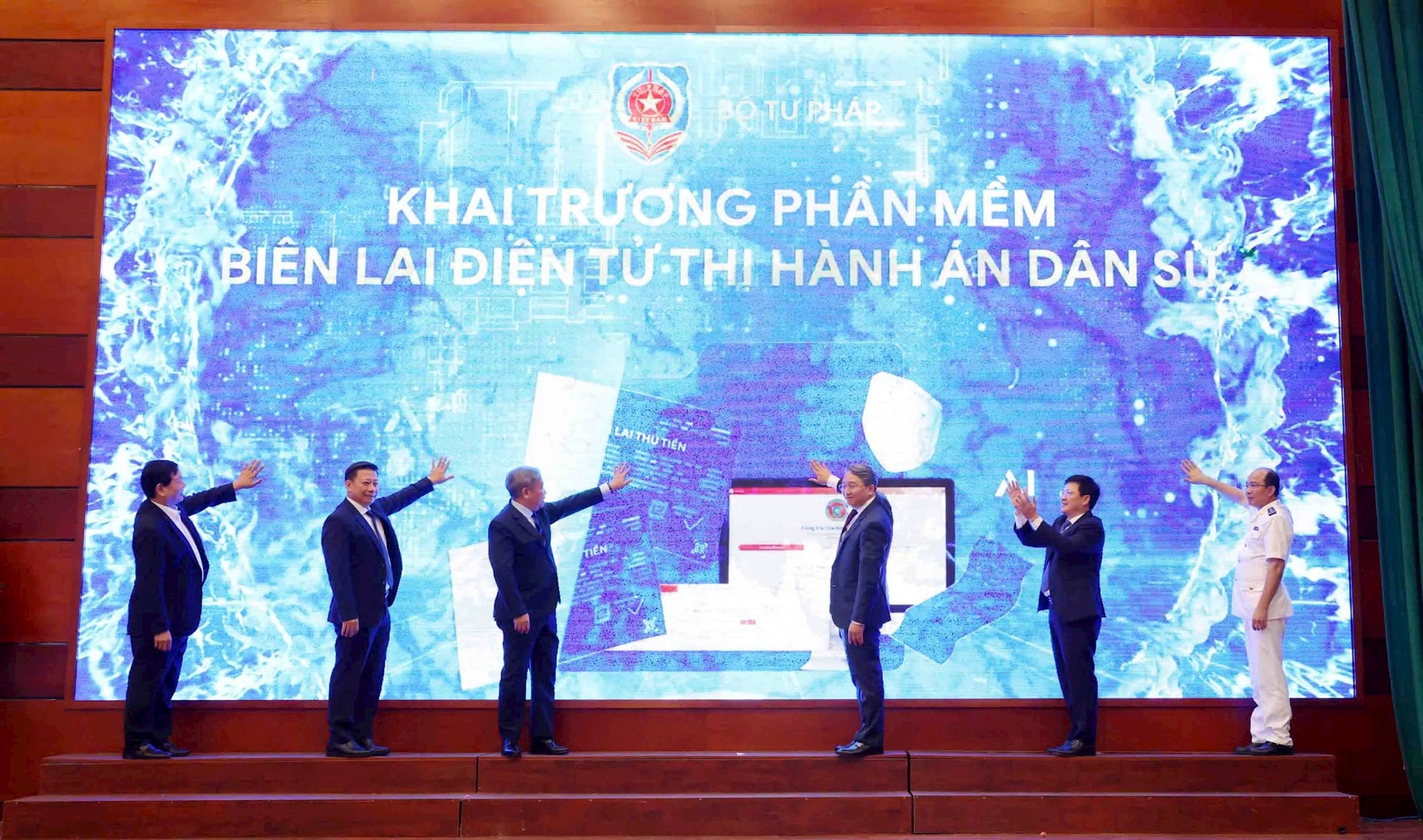
According to the Ministry of Justice, with the electronic receipt system officially put into use nationwide from July, all payment and collection transactions are strictly controlled and verified on the system, ensuring compliance with the law, preventing losses, and enhancing the reputation of the sector. The system is not just management software, but a platform that will change the way the entire civil enforcement sector operates, moving towards a modern, transparent, and citizen-centered governance model.
In 2024, the nationwide civil enforcement system had to execute more than 1 million enforcement decisions, totaling over 400,000 billion VND, and issued approximately 10 million paper receipts – figures that further demonstrate that digital transformation is an essential requirement for this field.
According to the new organizational model, at the central level, the Civil Judgment Enforcement Management Department comprises 7 specialized units, organized in a streamlined, specialized, and modern manner. At the local level, the civil judgment enforcement system is organized at one level, with 34 provincial and city-level civil judgment enforcement agencies, including 355 regional civil judgment enforcement offices (replacing the old model with district-level sub-departments). The restructuring of the organizational apparatus according to the new model has streamlined an intermediate level (district level), increased specialization, thereby improving the quality of civil servants and the effectiveness of judgment enforcement.
Source: https://hanoimoi.vn/kien-toan-can-bo-va-ra-mat-phan-mem-bien-lai-dien-tu-thi-hanh-an-dan-su-708008.html

![[Photo] Two flights successfully landed and took off at Long Thanh Airport.](/_next/image?url=https%3A%2F%2Fvphoto.vietnam.vn%2Fthumb%2F1200x675%2Fvietnam%2Fresource%2FIMAGE%2F2025%2F12%2F15%2F1765808718882_ndo_br_img-8897-resize-5807-jpg.webp&w=3840&q=75)




































































































Comment (0)