What benefits will the economy and tourism gain from high-speed rail?
Báo Điện tử Tiếng nói Việt Nam (VOV)•01/11/2024
VOV.VN - One of the biggest benefits of high-speed rail is that it brings opportunities for economic and tourism development to the areas along the route. So, what benefits do these areas gain from high-speed rail, according to the experience and perspective of China, the world's most populous nation?
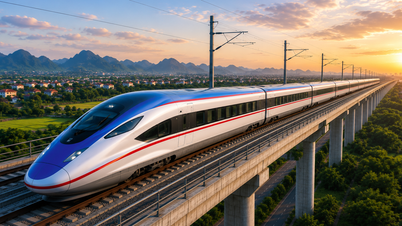
In early September, the high-speed railway connecting Hangzhou and Wenzhou in Zhejiang Province, eastern China, officially commenced operations. This new 276-kilometer line utilizes trains designed for speeds of 350 km/h and features nine stations. Its primary purpose is to provide a rapid transportation solution along a route traversing several economic centers such as Hangzhou, Yiwu, and Wuzhou – some of the most dynamic economic regions in China. Wang Lu, a senior engineer at the Hangzhou Railway Project Center, shared: “When the railway officially opens, it will connect and create a loop around three major cities: Hangzhou, Jinhua, and Wuzhou. The line is also designed to pass through several scenic areas such as the Zhejiang River and the Shenxianju scenic area, thereby boosting local economic development along the route.”
During China's National Day holiday in late September and early October, the national railway system served over 105 million train journeys, with passenger traffic relatively concentrated on certain routes such as Beijing to Shanghai, Chengdu to Xi'an, Guangzhou to Nanning, Dalian to Shenyang, etc.
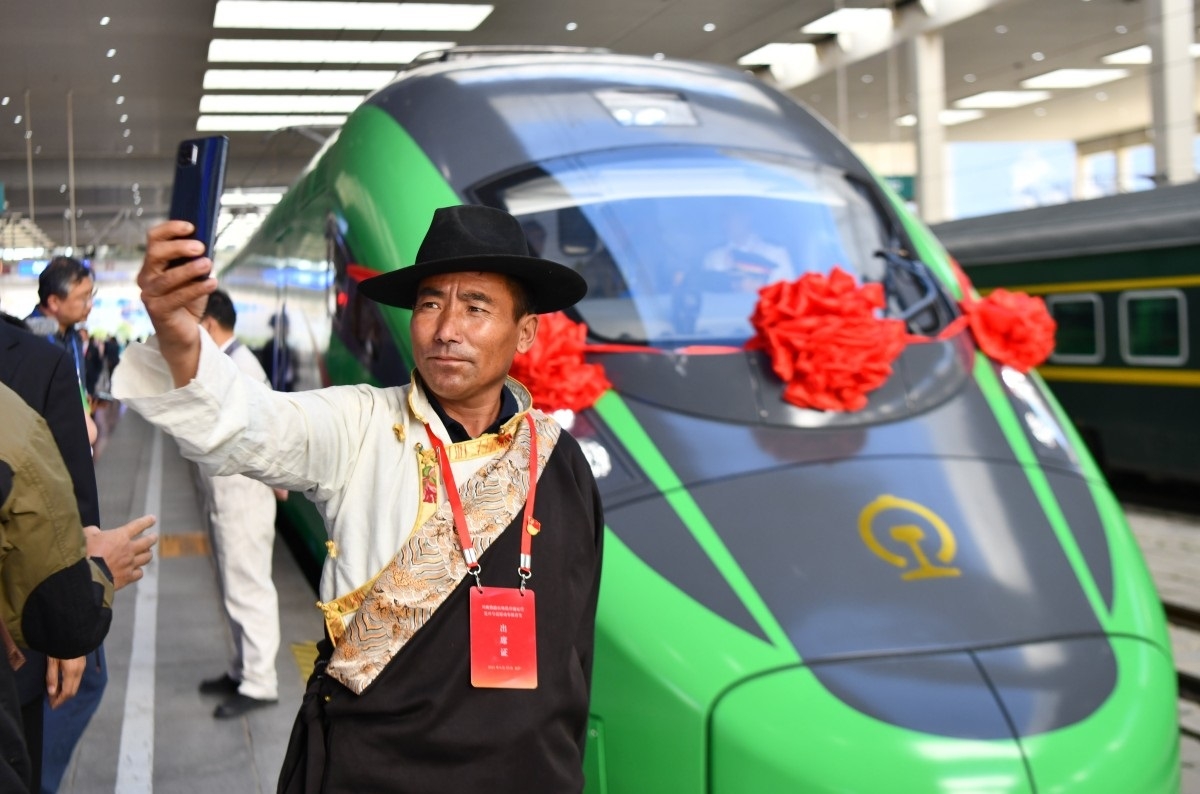
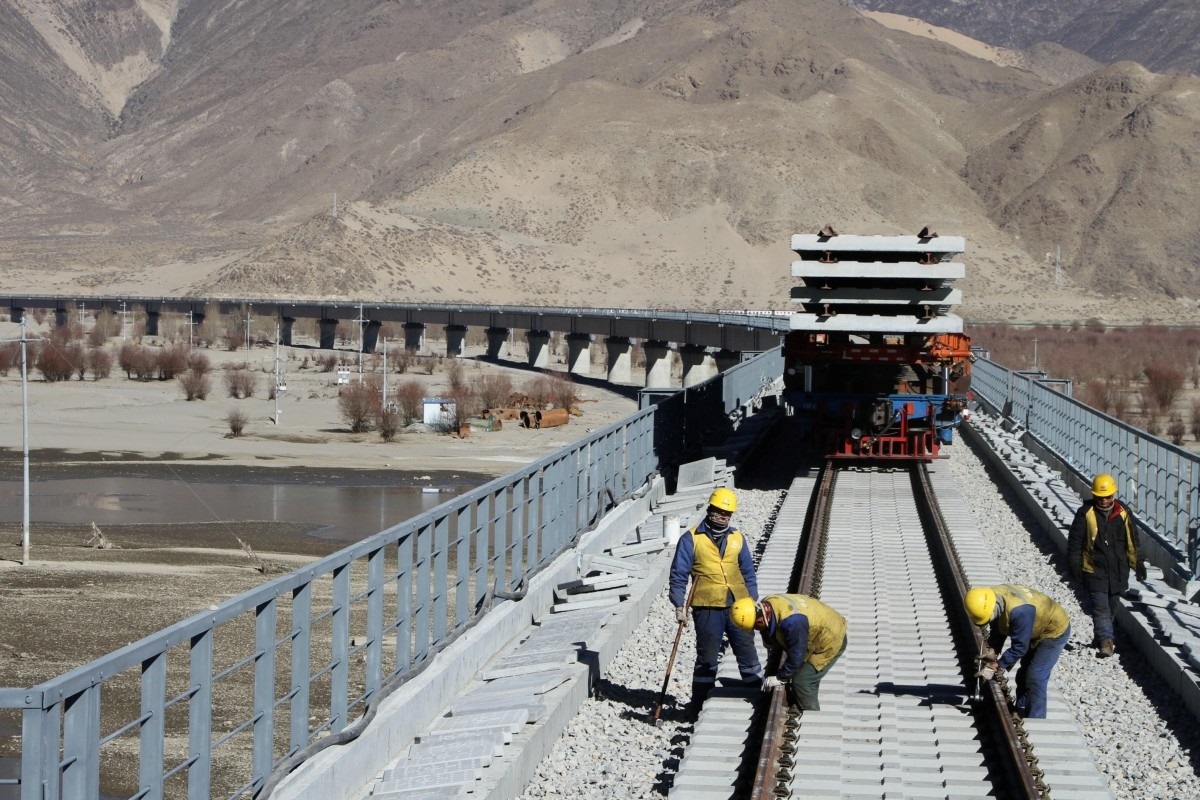
A passenger takes a selfie at the opening ceremony of the Chengguan-Linzhi Expressway in the Tibet Autonomous Region in 2021 - Photo: Xinhua The Baoji-Lanzhou line, connecting Shaanxi and Gansu provinces and spanning over 400 km, plays a crucial role in the East-West railway network, creating a "transport circle" linking Lanzhou with major cities such as Beijing, Shanghai, and Guangzhou. With a total travel time of approximately 9-11 hours, tourists can experience Shanghai's specialty soup dumplings (Xiaolongbao) in the morning, enjoy lamb soup with shredded bread in Xi'an at lunchtime, and end the day with Lanzhou's signature beef noodle soup for dinner. Besides the tourism benefits, there are also economic advantages. By integrating into diverse economic regions and improving transportation connectivity, high-speed rail supports government solutions to reduce economic disparities between regions and promote comprehensive economic development. The emergence of cities and key economic zones along the routes demonstrates that China's high-speed rail has successfully fulfilled its role as the "backbone" of transportation, an indispensable element in the urbanization strategy of the world's most populous nation. Dr. Danlin Yu, an urban geographer and data scientist at Montclair State University, USA, shared: "Regarding the impact of high-speed rail on the economy, most economists agree that there are two main effects. First, there is the direct impact, including reduced travel time and costs, a more flexible labor market, and the promotion of scientific and technological development, thereby boosting regional economic growth. Second, there is the broader economic impact, which includes attracting investment, saving costs for businesses, workers, and the government thanks to the effectiveness of clustering." Currently, China is focusing investment on the western region – a remote and rugged area – to develop its economy. Mr. Ma Wanlin, an engineer from China Railway Group, and his colleagues are in charge of constructing the Lanzhou-Xinjiang Autonomous Region high-speed railway. This line starts in Lanzhou, Gansu Province, passes through Xining, Qinghai Province, and ends in Xinjiang, spanning nearly 1,800 kilometers. The 50-year-old engineer said that over the past decade, he has witnessed the transformation of the railway system, boosting economic development in many rural areas. For example, the Lanzhou-Xinjiang line, operational since late 2014, has transported approximately 140 million passengers and significantly boosted the economies of many localities. For instance, Yuanhuiyuan County in Qinghai Province, famous for its snow-capped mountains and rapeseed flowers, has seen its economy and tourism boom thanks to the high-speed railway. Last year, the county's GDP reached 4.5 billion yuan, five times higher than in 2013.
China's high-speed rail plays a vital role as the "backbone" of its transportation system - Illustration: Reuters In Vietnam, with its advantages of high-volume, fast, reliable, and convenient transport, the high-speed railway on the North-South axis will "shorten" the distance between localities and regions, contributing to reducing the pressure of population concentration and infrastructure overload in large cities that are causing many negative consequences, especially in Hanoi and Ho Chi Minh City; restructuring and redistributing urban areas and populations, opening up space for economic development for localities along the corridor. However, according to Mr. Nguyen Ngoc Dong, former Deputy Minister of Transport , current laws still have many obstacles, such as urban development around train stations and business services at train stations. Therefore, special mechanisms and policies, even high-level resolutions of the National Assembly, are needed to resolve these legal issues: “In Vietnam, the transportation business is currently restricted from operating other services, especially at train stations. For example, the Cat Linh - Ha Dong line still cannot conduct business or sell goods there. This is because our law restricts other businesses. We must recognize Japan's situation, where 30-35% of revenue comes from service businesses, not just from railway transportation,” Mr. Dong said.


![[Photo] Secretary of the National Assembly Party Committee, Chairman of the National Assembly presides over the meeting of the Standing Committee and Executive Committee of the National Assembly Party Committee.](https://vphoto.vietnam.vn/thumb/1200x675/vietnam/resource/IMAGE/2026/06/03/1780480353201_ndo_br_bnd-2585-jpg.webp)


![[Photo] General Secretary and President To Lam presides over a meeting with the Central Organizing Committee.](https://vphoto.vietnam.vn/thumb/1200x675/vietnam/resource/IMAGE/2026/06/03/1780482764658_a1-bnd-4741-3342-jpg.webp)

























![[Photo] First session of the 14th Congress of the Vietnam Trade Union](https://vphoto.vietnam.vn/thumb/1200x675/vietnam/resource/IMAGE/2026/06/03/1780465947883_ndo_br_img-3852-jpg.webp)























![[Video] Sunset at Lap An Lagoon – Where the sun sets over the fishing nets](https://vphoto.vietnam.vn/thumb/1200x675/vietnam/resource/IMAGE/2026/05/31/1780192137701_beach-landscape-sea-water-nature-grass-745871-pxhere-com.jpeg)































Comment (0)