

 |
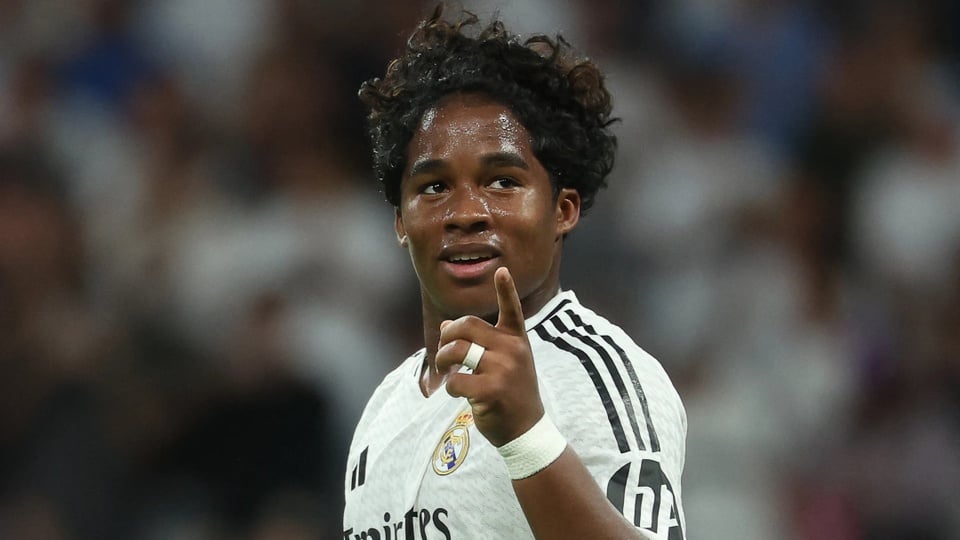
Endrick was unveiled at the Bernabeu before 45,000 spectators, a rare ritual reserved only for iconic signings. The 18-year-old from Brazil, valued at €60 million, was presented as a "rough diamond" of the future.
But top-level football doesn't operate on dreams. A year and a half after that moment, Endrick left Madrid quietly, carrying with him an unbelievable statistic: he had only played 11% of the total possible minutes, despite having one of the best goal-scoring records in the team.
The numbers speak for themselves. An average of one goal every 135 minutes, and a goal assist every 118 minutes. For any striker, that's an encouraging performance.
But Endrick lived in a paradox: the more goals he scored, the less he played. Not because of a decline in form, but because he never truly found his rhythm.
Under Carlo Ancelotti, Endrick was used as a third, or even fourth, option. 37 appearances sounds like a lot, but he only played for more than 20 minutes in 12 games. Most of that time was brief, enough to make the statistics look good but not enough to establish a significant role.
Endrick's energy, which had made him explode in Brazil, was seen as excessive: pressing too aggressively, tackling too early, moving too instinctively. There was explosive material, but no detonator.
The change on the coaching bench didn't improve the situation. Under Xabi Alonso, Endrick's playing time even decreased significantly.
This season, he's only played 99 minutes, equivalent to 4.5% of the total time. Injuries only explain the first few games. The rest is simply his complete absence from the plans.
In 15 qualifying matches, Endrick sat on the bench for the full 90 minutes. No experimentation. No opportunities given. No signals for the future.
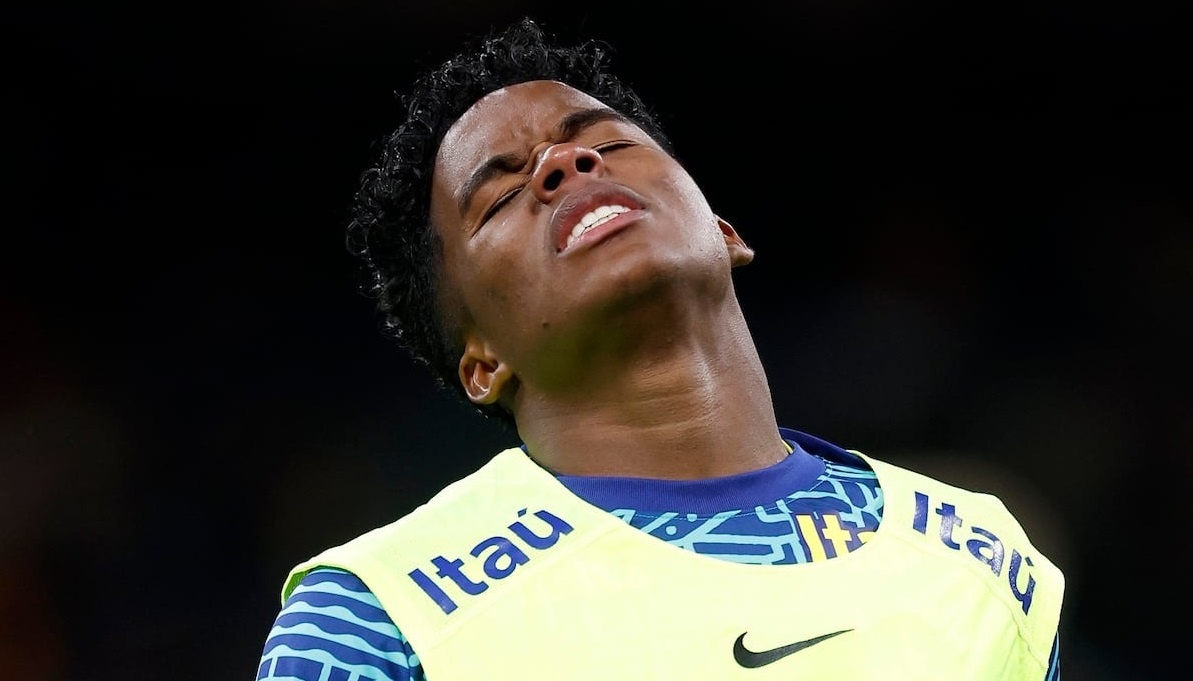 |
The issue wasn't about attitude or effort. Endrick chose to stay when he had the chance to leave, believing that a few minutes would be enough to convince them.
But top-level football doesn't operate on individual belief. When a young player is consistently overlooked, it's no longer a matter of form, but rather a structural mismatch.
The decision to move to Lyon was therefore not a step backward, but a necessary escape. There, Endrick would get to play, make mistakes, and learn from them. The loan agreement even included a mandatory playing obligation, showing that this was a necessary solution, not an experiment.
With the World Cup just around the corner, Endrick no longer had time to wait for hesitant nods of approval.
Real Madrid gave Endrick a big stage, but didn't give him a role. In a top-level environment, talent, if not placed in the right context, will naturally wither away.
Endrick's case is a clear reminder: football needs not only potential, but also the path for that potential to reach its full potential. And sometimes, leaving isn't about wanting to, but about having no other choice.
Source: https://znews.vn/ky-la-endrick-post1616137.html





























































































Comment (0)