

In recent years, parenting styles have been quietly changing. From models focused on controlling behavior and obedience, many families are beginning to shift to a deeper approach: understanding emotions to build connections with their children. This isn't a fleeting trend, but the result of accumulated research in psychology, education , and the experiences of generations of parents.
While strict discipline was once considered the foundation for raising well-behaved children, today, more and more parents are questioning: Does obedience truly reflect maturity, or is it merely an expression of fear and adaptation?
The reality is that the issue isn't whether or not to discipline, but how we understand and practice discipline. Overly rigid methods, based on punishment or coercion, may yield immediate results, but they leave lasting consequences.
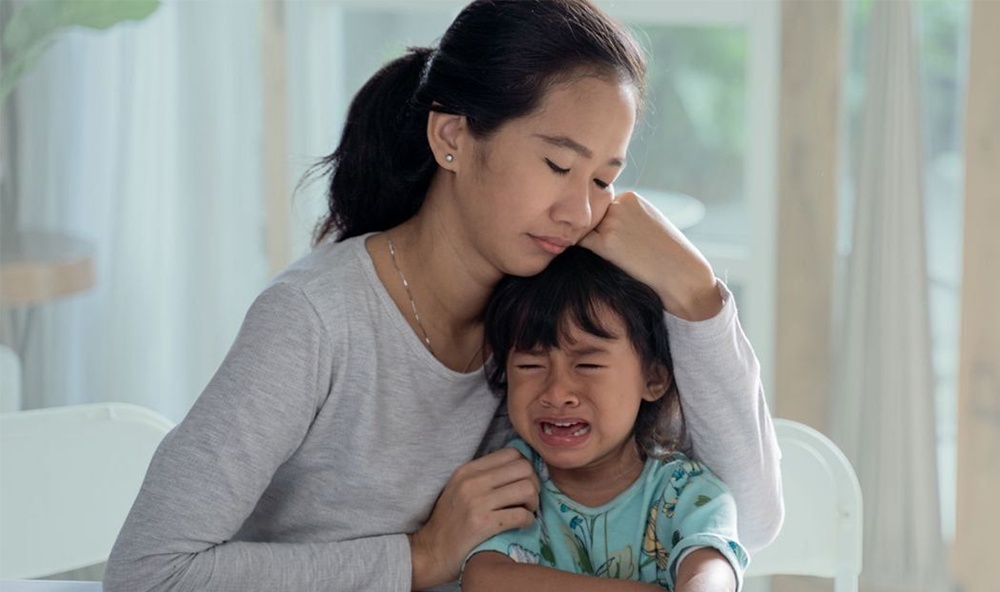 |
"Emotional connection" is not about pampering. On the contrary, it requires more patience and consistency. Photo: Pinterest. |
Several psychological studies have shown that when children are frequently stressed due to being yelled at or pressured, their brains activate a defense mechanism. This directly affects their ability to concentrate, remember, and think flexibly. In other words, a child who is "well-behaved" in the short term may later struggle to adapt and manage their emotions as they grow older.
However, it would be unfair to equate all forms of "strict discipline" with negativity. In many cases, clarity of rules and boundaries is still essential for children to understand responsibility and consequences. The core issue is that discipline should not be separated from connection.
That's also why "emotional connection" is increasingly seen as a crucial foundation in family education. Instead of just focusing on correcting behavior, this method delves into understanding what's going on inside the child. When a child is angry, defiant, or withdrawn, the question is no longer "how to get them to listen," but "what is causing them to react that way?".
"Emotional connection" is not about pampering. On the contrary, it requires more patience and consistency. Parents still set boundaries, but those boundaries are built on respect. Children have the right to feel emotions, but they are also guided on how to express those emotions appropriately.
"Emotional co-regulation" is an approach that many experts are talking about. Simply put, it's when parents don't stand aside and tell their children to "calm down," but instead are there for them when they are upset. For example, when a child is angry or crying loudly, instead of yelling "stop right now," parents can say, "I know you're very upset," and then breathe together, waiting for the child to calm down. In those moments, children are not only soothed but also learn to identify and control their emotions. Gradually, as they grow older, they will no longer need their parents to do that, because their self-regulation skills have been developed from these experiences of being there for them.
In a rapidly changing society where knowledge can become outdated in just a few years, adaptability, communication, and emotional management skills become more enduring competencies. Numerous educational studies show that children with well-developed emotional intelligence often have a distinct advantage in relationships and later in life.
This perspective is also emphasized in Becky Kennedy's book , *Our Children Are All Good* . According to her, children are not "problems to fix," but rather human beings learning to grow. When parents view their children's behavior as a signal rather than a mistake, their responses will also change.
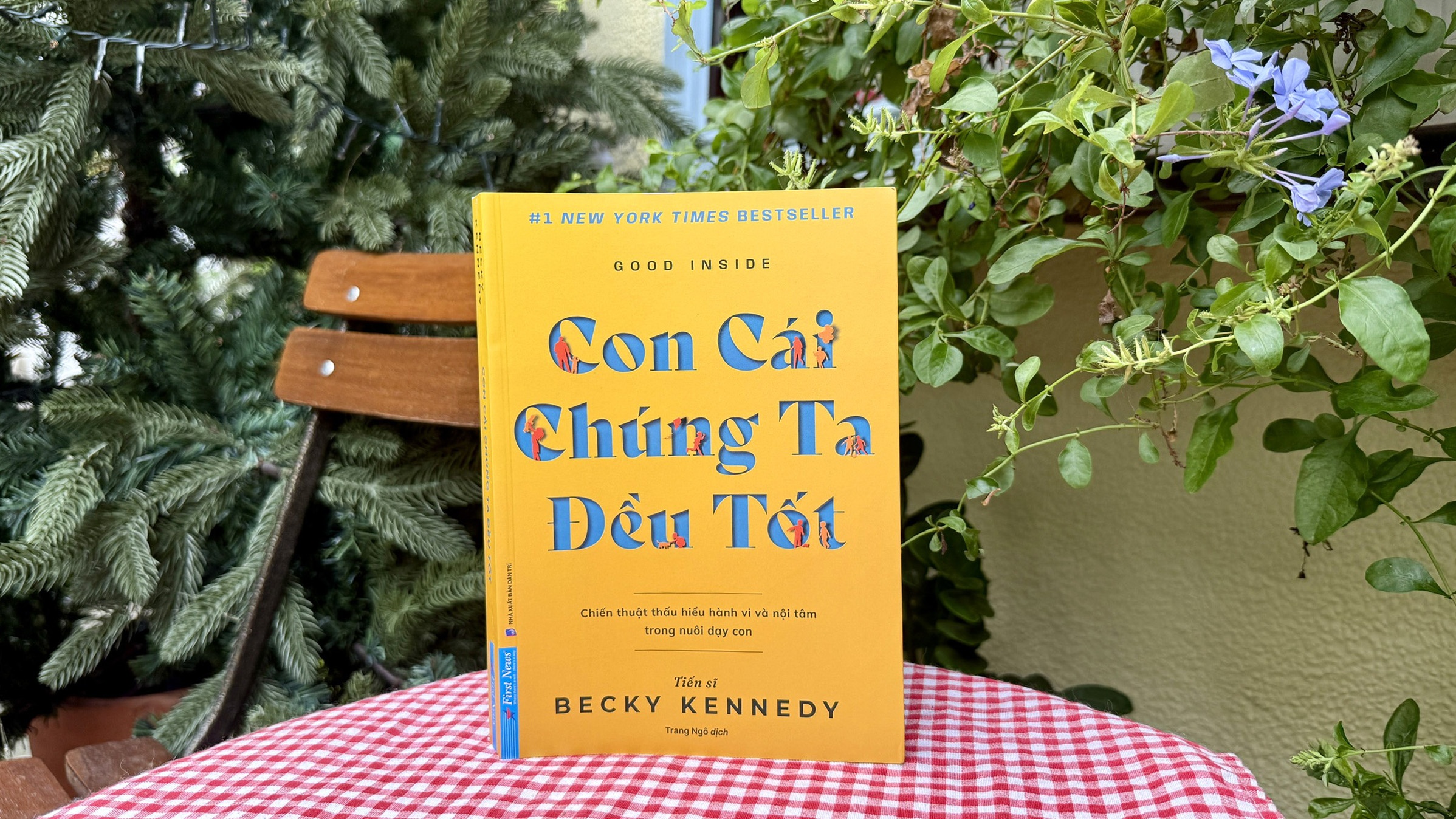 |
Becky Kennedy's book, *Our Children Are All Good* . Photo: H.Quỳnh |
The shift from "strict discipline" to "emotional connection" is therefore not a complete replacement, but rather a step forward in understanding. Today's parents not only want their children to be "well-behaved," but also want them to understand themselves and know how to stand firm in the face of life's changes.
And perhaps the most important thing isn't choosing between discipline or connection, but learning to combine both – so that every boundary is accompanied by understanding, and every lesson begins with respect.
Source: https://znews.vn/ky-luat-thep-co-con-dung-khi-day-con-thoi-nay-post1645691.html



![[Image] Close-up view of the interchange connecting the two expressways and Long Thanh Airport.](https://vphoto.vietnam.vn/thumb/1200x675/vietnam/resource/IMAGE/2026/05/25/1779703378210_ndo_br_z7863716673926-224453a31600126cce10622af6290afd-4549-jpg.webp)
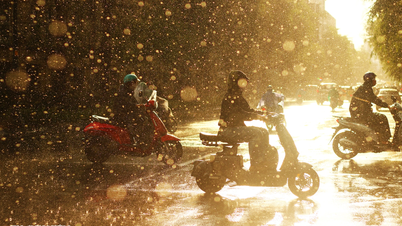
![[Image] Hanoi's urban life under the challenge of a "scorching hot" environment](https://vphoto.vietnam.vn/thumb/1200x675/vietnam/resource/IMAGE/2026/05/25/1779706979265_nang-nong-t5-2026-minh-duy-7-4636-jpg.webp)















































































Comment (0)