

Hoping for a booming market during the Lunar New Year holiday.
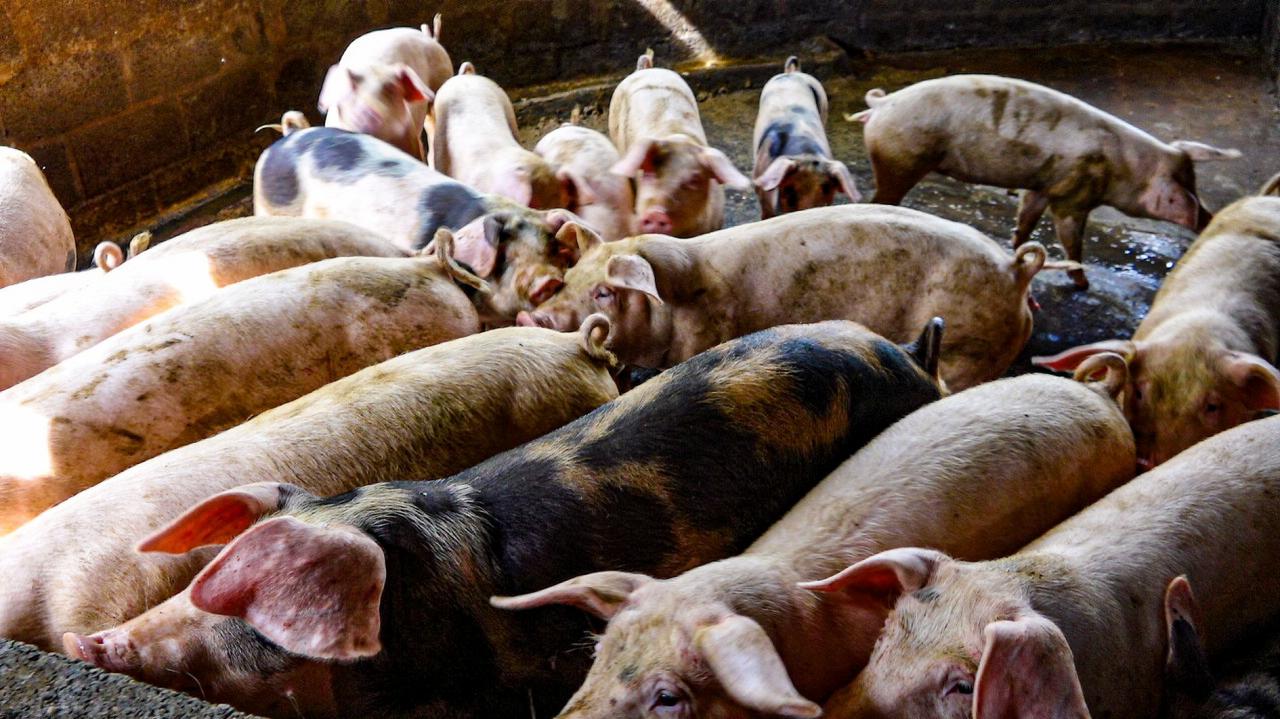
In early December 2023 (Year of the Rabbit), we visited Mr. Huynh Van Be's house in Thien Trung village, Thien Nghiep commune (Phan Thiet city) – one of the long-standing and large-scale pig farming households in the area. With a fairly spacious breeding area, his family invested in a 300 m2 barn to raise about 140 pigs, including 20 sows, 80 fattening pigs, and 40 piglets. In reality, in recent years, livestock farmers in general, and pig farmers in particular, have often faced difficulties due to unstable market prices and high costs of feed and inputs, leading to low profits or even no profit at all.
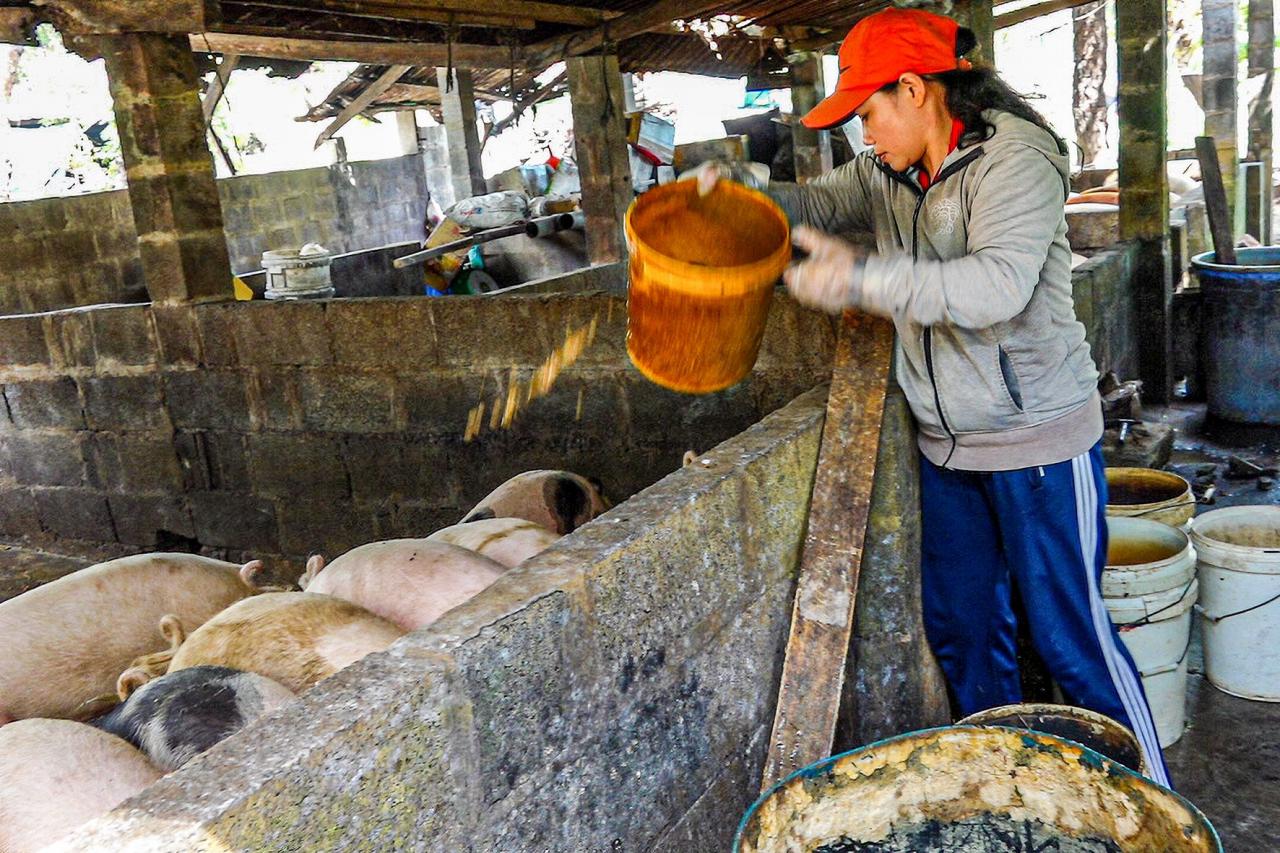
In Mr. Bé's case, due to high feed costs, they have to utilize leftover food, mix it with vegetables from their own farm, and reduce the amount of commercial feed to lower expenses and make a profit through hard work. Mr. Bé estimates that with the usual selling price of live pigs at around 52,000-53,000 VND/kg, the profit after deducting costs is not much. Therefore, this year the family is raising 20 pigs for meat. After more than 6 months of raising them, the average weight is now over 100 kg/pig, and they will be ready for sale during the Lunar New Year, hoping that prices will be higher than usual.
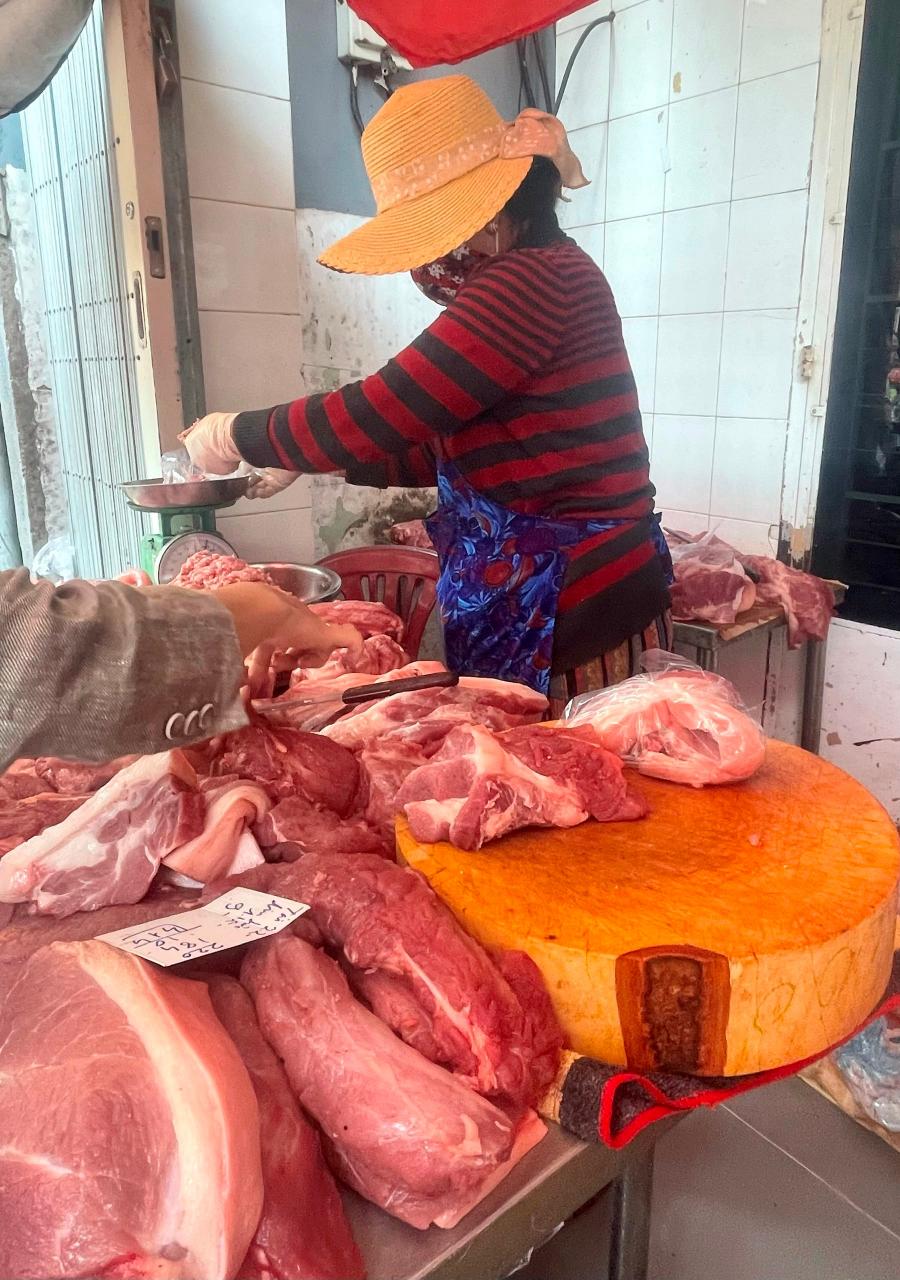
Ms. Nguyen Thi Tam, a pork vendor at Phu Thuy Market (Phan Thiet City), shared: "With Tet (Lunar New Year) approaching, pork consumption has started to increase compared to normal days. Some pork products, such as pig ears, sausages, and ham, are being purchased in large quantities by consumers for Tet dishes." Ms. Tam added that the price of live pigs, which was around 53,000 VND/kg, has now risen to approximately 55,000-56,000 VND/kg.
With encouraging signs from the market in the days leading up to Tet (Lunar New Year), livestock farmers in general, and pig farmers in particular, in the province are hoping and expecting that pork prices will continue to improve and purchasing power will increase, thus boosting their income.
According to the Department of Animal Husbandry - Ministry of Agriculture and Rural Development, pork prices are not expected to fluctuate significantly during the 2024 Lunar New Year. This is because the livestock situation of businesses and farms remains relatively stable at this time. The pig population and pork products are quite abundant.
It will shift in a positive direction.
Regarding the province's livestock farming trends, the Provincial Department of Livestock and Veterinary Medicine assessed that the province's livestock situation continues to remain stable. Total live meat production for the whole year of 2023 reached approximately 89,000 tons, achieving 100.6% of the plan. Entering 2024, the province's livestock farming situation continues to shift positively towards gradually reducing small-scale, household-based farming. Currently, there are over 212 concentrated livestock and poultry farming facilities in the province, including 63 large-scale farm-based facilities with biosafety certificates, comprising 45 pig farms (212,100 pigs, accounting for 60.8% of the total herd). Simultaneously, industrial and semi-industrial farm-based livestock farming with disease and environmental safety controls is increasing. Accordingly, large-scale farm animal husbandry has contributed to increasing the total annual output of various types of meat and the total number of livestock and poultry in the province.
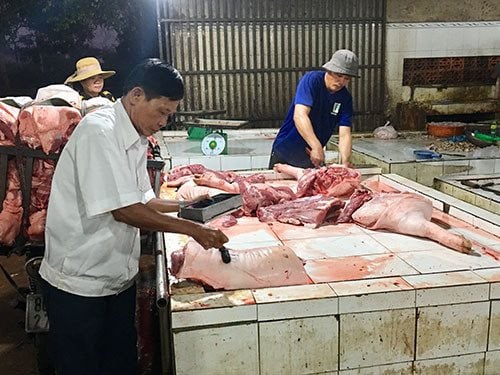
Regarding future livestock development orientation, the Provincial Department of Livestock and Veterinary Medicine stated that Binh Thuan will focus on developing livestock farming by leveraging the province's potential and advantages to transform it into a sustainable, marketable industry that adapts to climate change. Simultaneously, the province will develop and enhance added value, ensuring biosafety, disease control, environmental protection, and food safety to meet market demands both within the province and nationwide, creating jobs and increasing income for the people. Alongside this, support and facilitate the transition of traditional livestock farmers to large-scale, industrial-scale farming. In particular, the province will address environmental pollution caused by livestock farming, transportation, slaughtering, and distribution activities.
The Provincial Department of Livestock and Veterinary Medicine also predicted that in the first months of 2024, the animal disease situation would be complex, with a very high risk of outbreaks, especially of dangerous infectious diseases such as avian influenza, foot-and-mouth disease in livestock, and African swine fever. Therefore, the unit will coordinate with local authorities in the province to effectively implement a month-long comprehensive sanitation, disinfection, and environmental decontamination campaign. Emphasis will be placed on disinfection and decontamination in key livestock farming areas and high-risk areas to eliminate pathogens. Simultaneously, efforts will be made to encourage livestock farmers to gradually reduce small-scale, household-based farming; focusing on investing in farm-based livestock development to apply advanced technology and techniques, thereby reducing the scale of small-scale, household farming for better disease management. At the same time, there is a call for chain linkages in livestock farming to reduce costs and create stable outlets for farmers… The year 2024 is beginning and brings new expectations for the livestock industry in general and pig farming in particular to flourish.
Source






















![[INFOGRAPHICS] Phase 2 of the First Session of the 16th National Assembly: Considering and deciding on many important issues](https://vphoto.vietnam.vn/thumb/402x226/vietnam/resource/IMAGE/2026/04/20/1776678933182_20-4-anhquochoi2004.jpeg)




























































Comment (0)