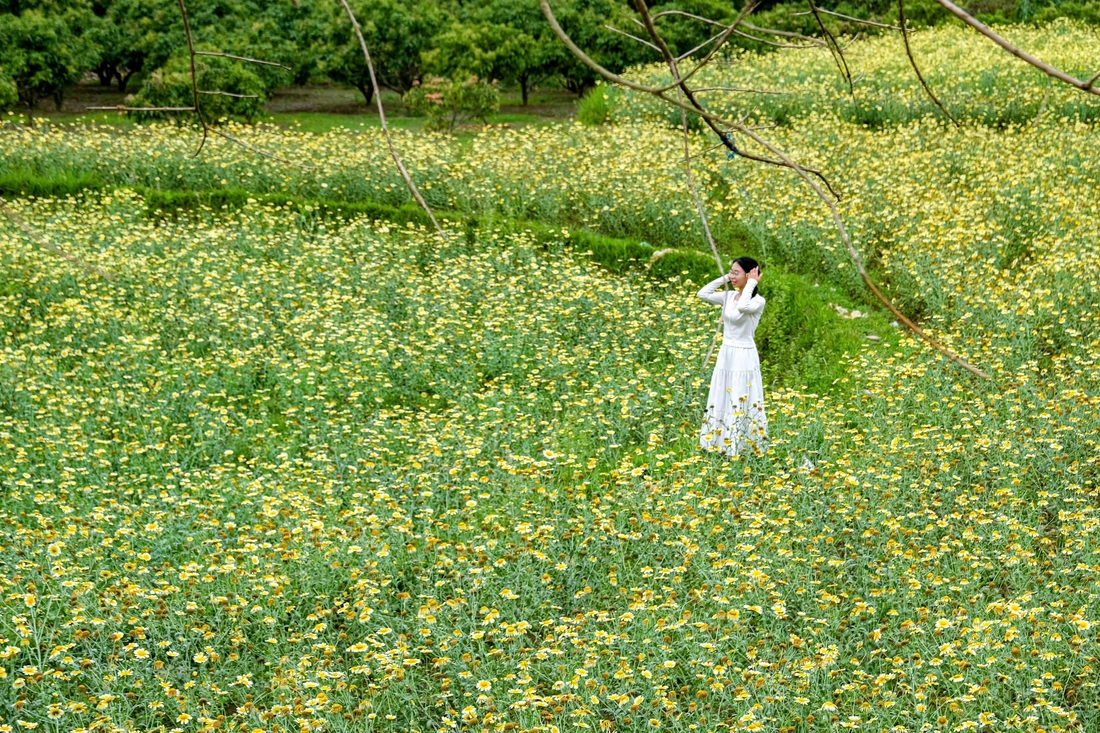
Lost amidst the vibrant yellow chrysanthemum fields of Bac Hoa - Photo: HA QUAN
In the early days of spring, Bac Hoa village (Tan Son commune, Bac Ninh province) once again attracts tourists with the rustic beauty of its traditional houses with earthen walls and ancient yin-yang tiled roofs, nestled beside fields of vibrant yellow chrysanthemums, creating a peaceful and captivating rural scene.
According to local advice, if departing from Hanoi , in addition to the familiar routes, to save time, tourists can travel by car on the Bac Giang - Lang Son expressway, then turn off at the intersection with National Highway 279 (after the toll booth) and then travel another 20km to reach Bac Hoa village.
This route unfolds into a picturesque landscape with vibrant red kapok trees lining both sides, some as tall as a 2-3 story building, standing out against the blue sky.
Nguyen Nga (residing in Luc Ngan, Bac Ninh) shared that she and two friends took advantage of the weekend to visit Bac Hoa to take photos, after seeing pictures of tourists checking in on social media.
The favorite photo spots for young girls are the vibrant yellow rapeseed flower fields in the village, the spring peach blossom garden in the village cultural center grounds, etc.
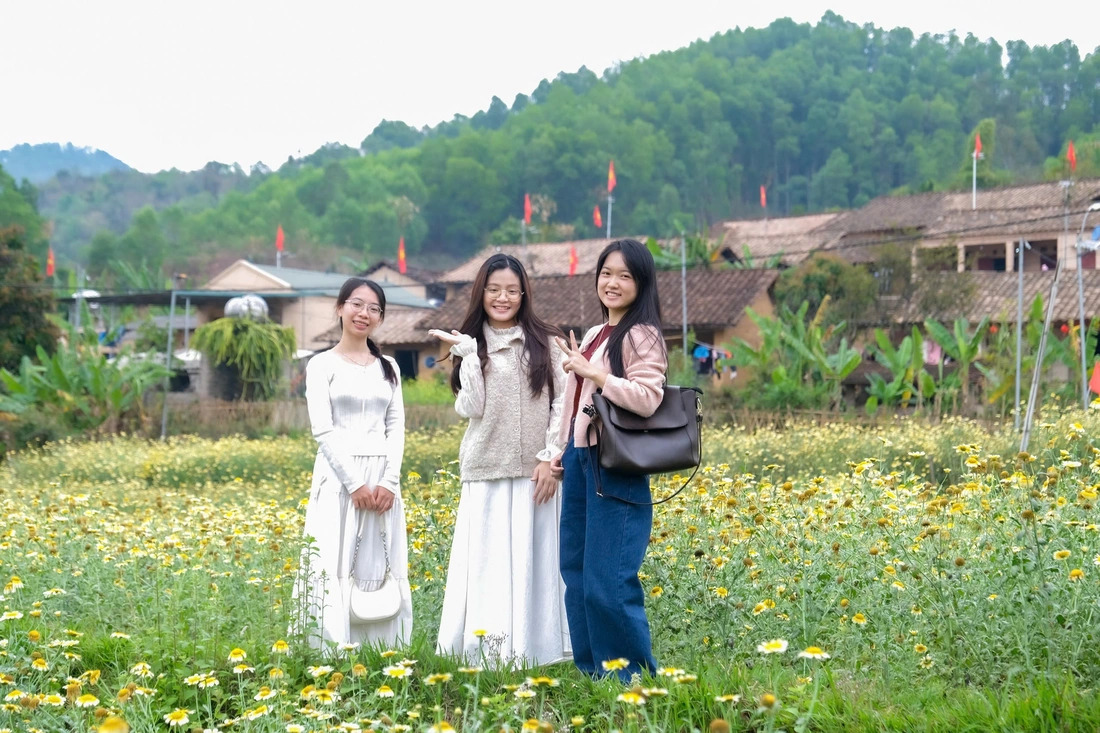
Nguyen Nga and her group of young friends pose in a field of yellow canola flowers, with the traditional earthen houses of the ethnic minority people in Bac Hoa village visible in the distance - Photo: HA QUAN
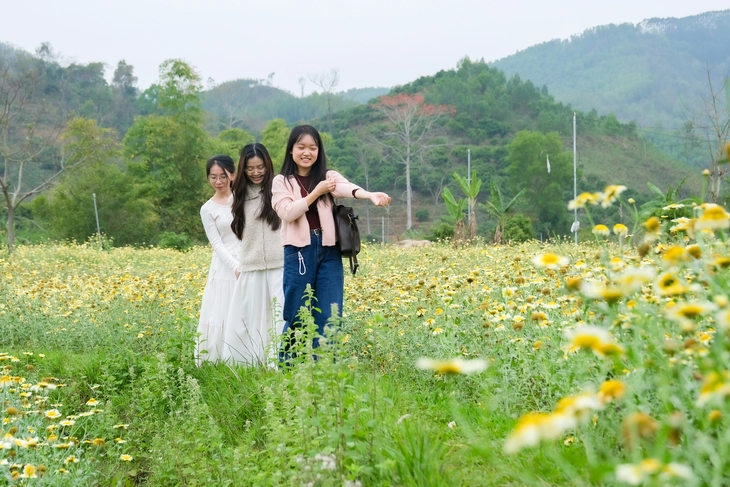
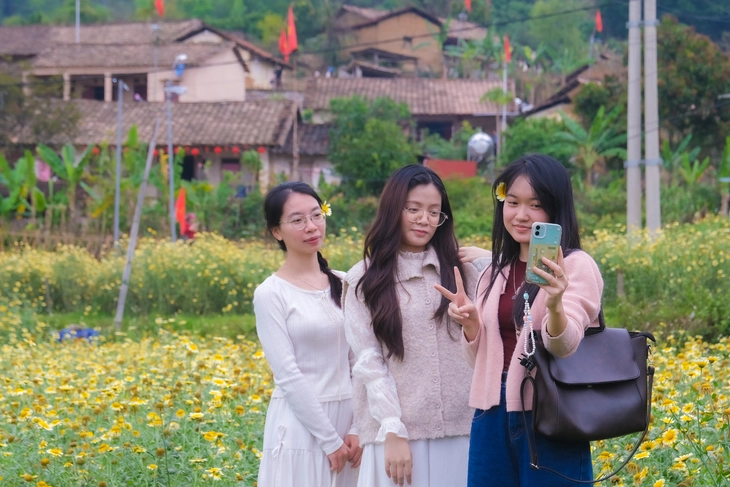
To get beautiful photos, the muses choose bright-colored outfits, perhaps dresses or jackets, to stand out amidst the field of yellow canola flowers - Photo: HA QUAN
Bac Hoa currently has nearly 160 households with over 700 inhabitants, mainly Nung ethnic people. Among them, 17 households still preserve the traditional rammed-earth house style.
For many tourists, an attractive photo spot is the traditional rammed-earth houses with clay walls. Mr. Lang Quoc Ky, a resident of Bac Hoa village, said that it takes the villagers from 3 months to more than half a year to complete a rammed-earth house, depending on the size.
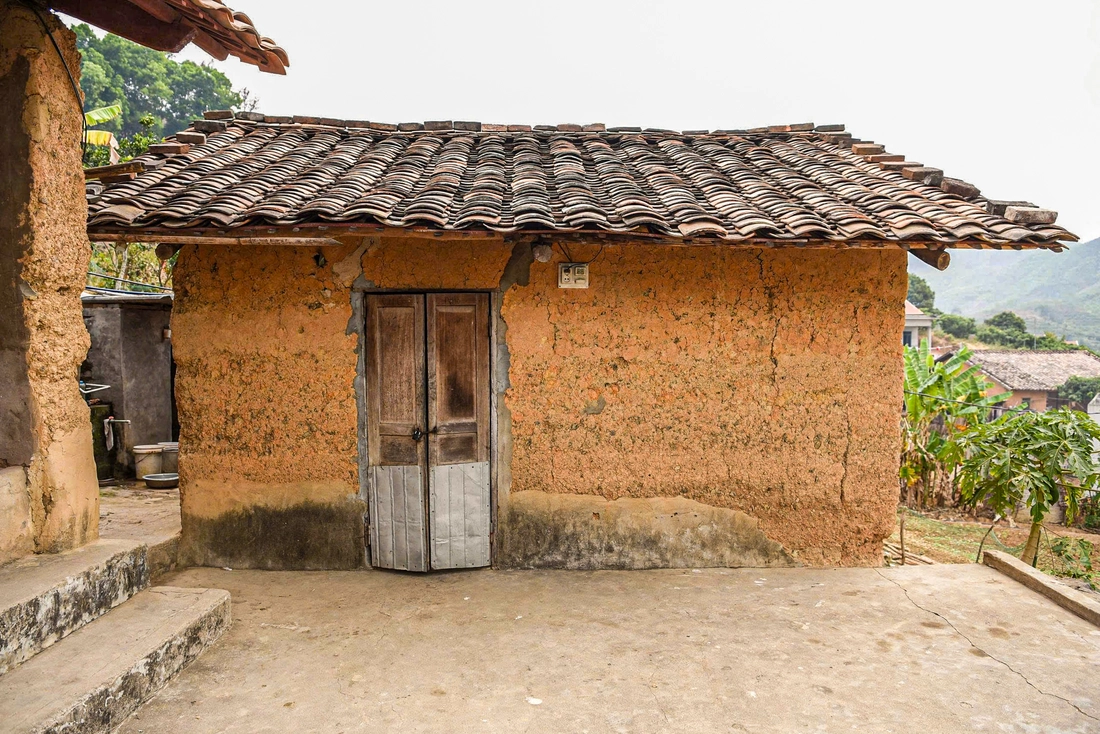
Layers of clay mixed with molasses, manually compacted, require patience and experience. The walls are about 40-50cm thick and 2-3m high. Thanks to this special structure, the house is warm in winter and cool in summer. - Photo: HA QUAN
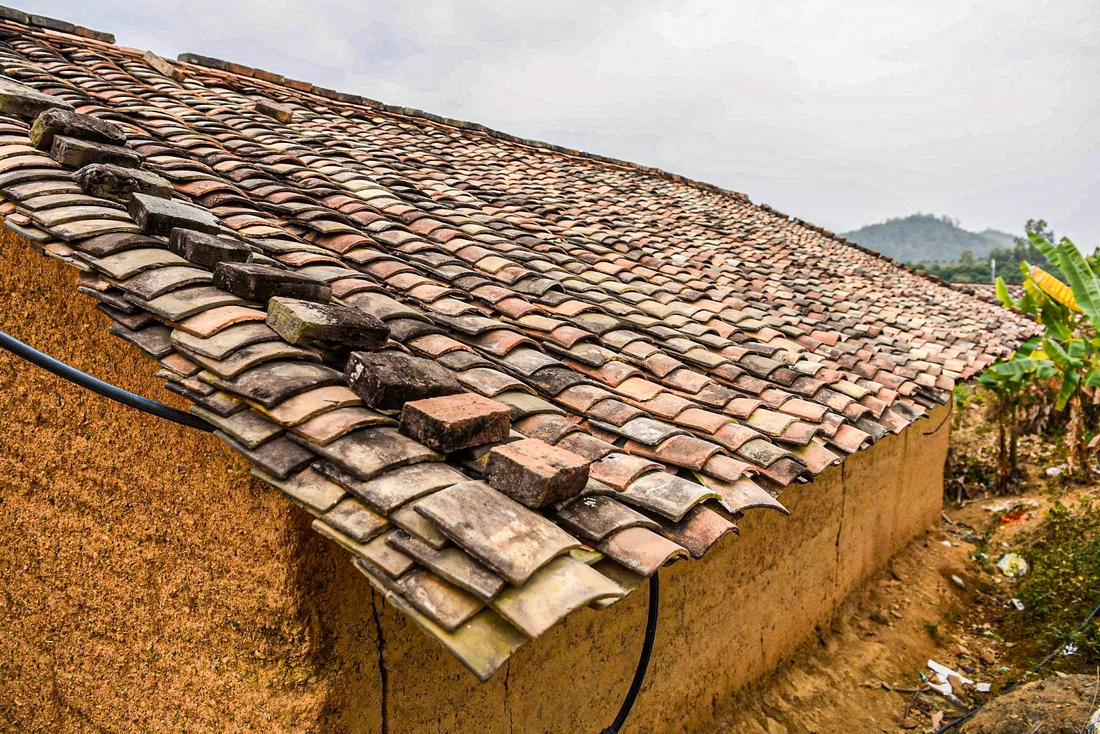
Along with earthen walls, yin-yang tile roofs are a distinctive architectural symbol of the Nung people. Each tile is handcrafted from clay and fired with firewood for many days and nights. There are two types of tiles: yin tiles (facing upwards) and yang tiles (facing downwards), laid alternately to create drainage channels and good ventilation. This roofing method also signifies harmony between heaven and earth, yin and yang, in the Nung people's philosophy of life. - Photo: HA QUAN
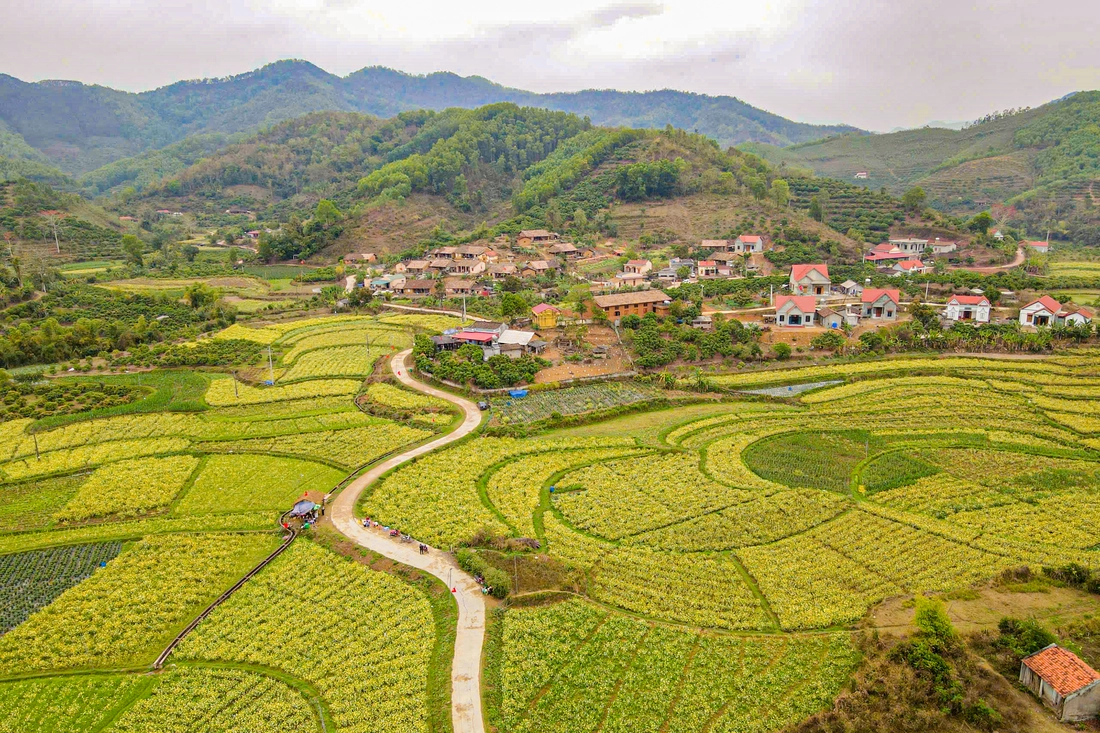
On sunny spring days, visitors can enjoy the endless expanse of golden rapeseed flowers, interspersed with blossoming peach trees, white plum blossoms, and old tiled roofs stained with the passage of time - Photo: HONG GIANG
Ms. Ngoc Tram (residing in Dong Da, Hanoi) also took advantage of the weekend to explore the ancient villages of Northern Vietnam and coincidentally came across Bac Hoa.
"I went with a friend, and luckily we arrived during the Sloong Hao singing festival and the highland spring market. The locals were very friendly and welcoming. If there's no traffic, the journey only takes about 2-2.5 hours, but there's a rather long and winding mountain pass that requires experienced and skilled drivers," Ms. Tram shared.
According to Mr. Vi Van An, Chairman of the People's Committee of Tan Son commune (Bac Ninh), in addition to Bac Hoa village, tourists can attend the Sloong Hao singing festival and the Tan Son commune highland spring market, held for three days from January 10th to 12th, 2016 (Year of the Horse).
The highlight of this year's singing festival is the courtship singing performances by 500 Sloong hao singing pairs with 1,000 people, from communes in the former Luc Ngan district and communes in Lang Son province.
Since ancient times, the Lazy Waterfall area has been considered the cradle of the Sloong Hao folk singing tradition. The simple yet evocative songs not only speak of labor and romantic love but also convey aspirations for prosperity and express a spirit of unity and community solidarity.
The songs and melodies of the people also praise the Party, President Ho Chi Minh, the homeland, and the people during the period of reform.

Hoang Huong, a young Nung woman, dons traditional attire in Bac Hoa village as peach blossoms bloom in the spring - Photo: HA QUAN
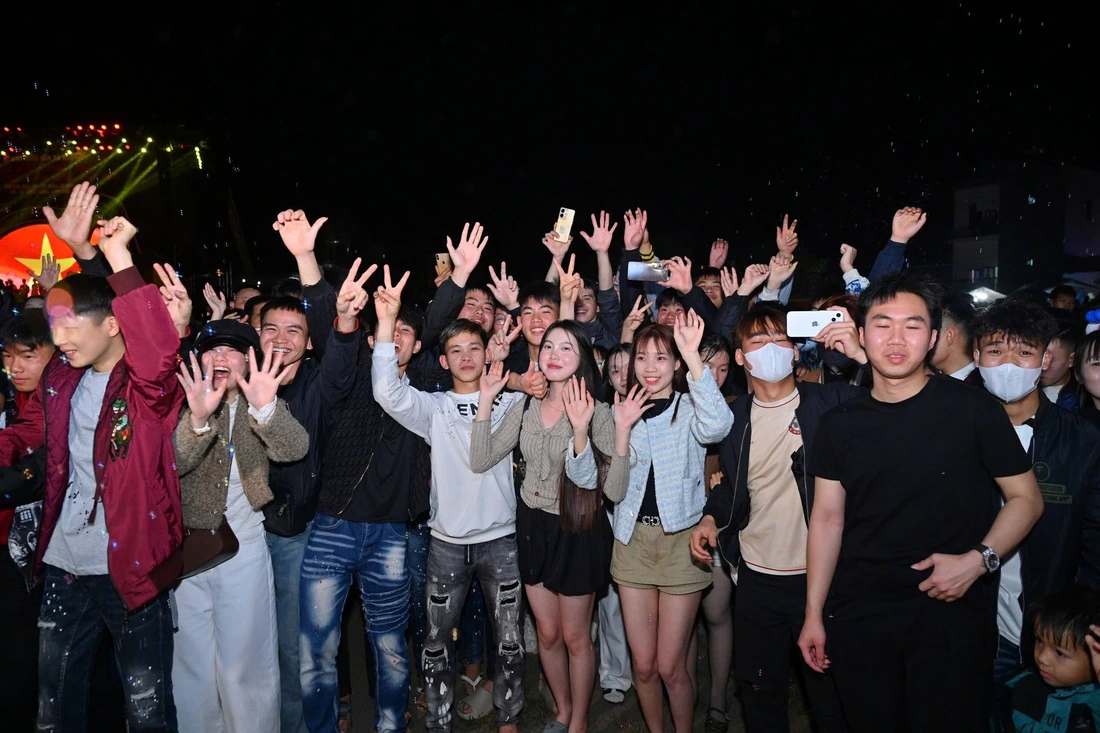
Tourists immerse themselves in the atmosphere of the Sloong Hao singing festival - Photo: NGUYEN VI

Visitors to Bac Hoa village shouldn't miss the famous local dishes such as roast duck, capon, and five-colored sticky rice - Photo: HA QUAN
HA QUAN
Source: https://tuoitre.vn/lac-buoc-giua-ban-bac-hoa-vang-ruc-mua-cai-cuc-2026022722530858.htm


![[Photo] General Secretary and President To Lam presides over a meeting on preparations for the review of one year of operation of the three-tiered government system.](https://vphoto.vietnam.vn/thumb/1200x675/vietnam/resource/IMAGE/2026/06/02/1780391821195_a1-bnd-4595-9717-jpg.webp)






















































































Comment (0)