

Innovation from mindset to method
In recent years, vocational training in Lai Chau has seen many positive changes, contributing to helping rural workers acquire more skills, improve their income, and access more stable employment. However, many difficulties remain, such as training programs not being truly aligned with market needs, uneven quality of graduates, and a reluctance among some young workers to pursue vocational training.
In the context of a rapidly changing labor market and increasingly demanding skill requirements, if training is not linked to practical applications, learners will find it difficult to find suitable jobs. Therefore, reforming vocational education has been identified by Lai Chau province as an essential requirement.
To concretize the determination to comprehensively reform vocational education in the direction of linking training with the actual needs of the labor market, the People's Committee of Lai Chau province issued the Vocational Training Plan for the period 2026 – 2030.
According to the plan, Lai Chau province aims to enroll approximately 4,700 trainees annually, prioritizing basic training and courses under 3 months for rural workers and people in remote areas. However, the new aspect lies not only in the enrollment target but, more importantly, in the shift in training mindset: focusing on the learner, the needs of businesses, and the ability to create jobs.
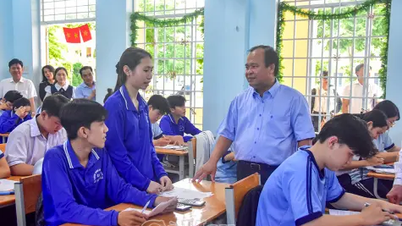
According to the new guidelines, vocational education institutions will update their training programs to increase practical training, reduce theory, and focus on vocational skills and adaptability after graduation. Many flexible, short-term training models will be implemented directly at the institutions to suit the conditions of each locality and facilitate people's participation in vocational training.
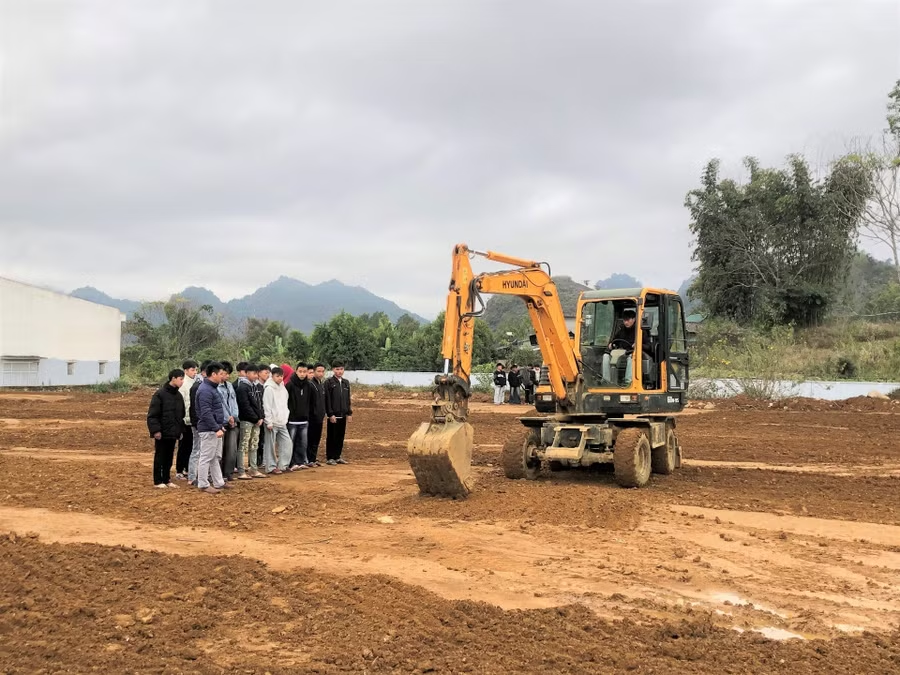
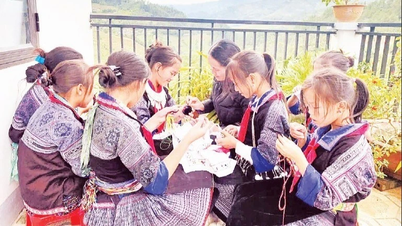
Industries that support local economic development, such as commercial agricultural production, agricultural product processing, community tourism, services, agricultural machinery repair, and production technology, will be prioritized. These are all sectors with real labor demand and are suitable for the development conditions of mountainous areas.
Mr. Lo Viet Tuyen, Principal of Lai Chau College, stated: "To encourage people to pursue vocational training, the training program must be linked to real-life needs. Learners need to clearly see what they can do after completing the course, what their income will be, and what job opportunities will be available."
New thinking in vocational training also necessitates a change in societal perceptions of vocational education. For many years, a significant number of people believed that a university degree was the only path to a successful career. However, current reality shows that the market is in dire need of skilled technical workers with good practical skills.
Along with vocational training for rural workers, Lai Chau will strengthen career guidance and student placement after lower and upper secondary education. Career counseling and awareness campaigns will help students and parents better understand job opportunities after vocational training, thereby changing perceptions about vocational education.
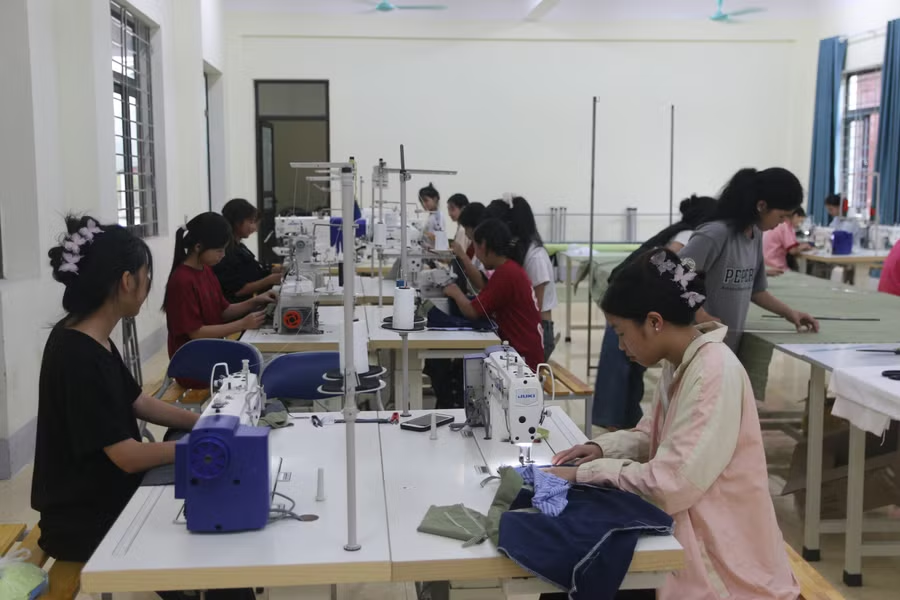
Bridging the gap between training and labor market needs.
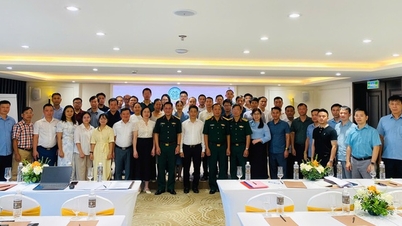
One of the key highlights in Lai Chau province's vocational training plan for the period 2026–2030 is strengthening the linkage between training institutions and businesses. This is considered a crucial solution to improve the quality of human resources and address employment issues after training.
Accordingly, vocational education institutions will coordinate with businesses to review recruitment needs and develop training programs suitable for each production, business, and service sector. Learners will not only study theory but also participate in practical training and internships at businesses to gain exposure to the real working environment.
Currently, many businesses in Lai Chau province, including those in construction, agricultural processing, tourism, and services, are seeking skilled workers but are struggling to find qualified personnel. The gap between training and labor market demands is one of the reasons why many vocational trainees still find it difficult to secure suitable employment.
Mr. Nguyen Anh Tuan, representing a manufacturing company in Lai Chau, commented: "Businesses need workers with practical skills, not just academic qualifications. If training institutions cooperate closely with businesses from the beginning, learners will find jobs more easily, and businesses will save time on retraining."
Linking training with employment not only improves the effectiveness of vocational training but also motivates workers to confidently participate in vocational training. Seeing clear job opportunities after training, learners will be more proactive in improving their skills and choosing suitable professions.
Besides innovating training programs, Lai Chau also aims to invest in modern vocational training facilities and equipment, in line with the digital transformation trend and new production needs. The province encourages skilled artisans, farmers, and businesses to participate in teaching and passing on their skills to local workers, thereby increasing the practical relevance of training.
According to Mr. Ngo Hong Kien, Chairman of the People's Committee of Muong Mo commune, Lai Chau province, vocational training not only helps workers find jobs but also contributes to promoting economic restructuring, increasing labor productivity, and achieving sustainable poverty reduction in mountainous areas. When people have stable jobs and improved incomes, their quality of life gradually improves.
With a comprehensive reform orientation, focusing on market needs and employment effectiveness, vocational training in Lai Chau is expected to create a strong shift in human resource development, meeting the requirements of integration and socio-economic development in the new era.
Source: https://giaoducthoidai.vn/lai-chau-doi-moi-tu-duy-trong-dao-tao-nghe-post778934.html
![[Image] Hanoi's urban life under the challenge of a "scorching hot" environment](https://vphoto.vietnam.vn/thumb/1200x675/vietnam/resource/IMAGE/2026/05/25/1779706979265_nang-nong-t5-2026-minh-duy-7-4636-jpg.webp)


![[Image] Close-up view of the interchange connecting the two expressways and Long Thanh Airport.](https://vphoto.vietnam.vn/thumb/1200x675/vietnam/resource/IMAGE/2026/05/25/1779703378210_ndo_br_z7863716673926-224453a31600126cce10622af6290afd-4549-jpg.webp)

















































































Comment (0)