

 |
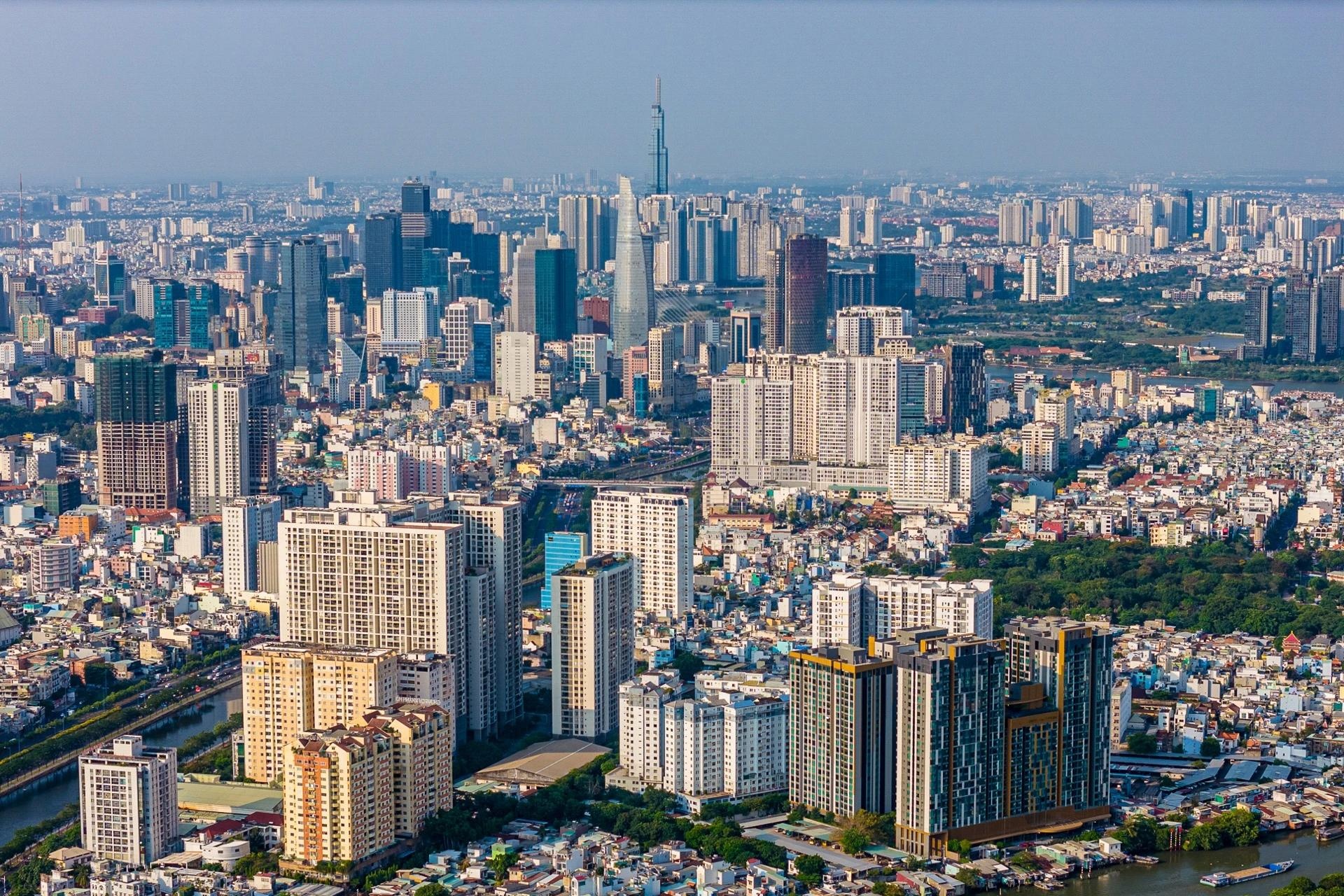
Mortgage interest rates after the preferential period are currently about 2 percentage points higher than they were in 2025. Photo: Nam Khanh . |
In early June, a survey of home loan interest rates at several commercial banks showed that the initial preferential interest rate commonly ranges from 8-10% per year, applicable for the first 6-36 months.
After the preferential period, loans typically switch to a floating rate mechanism, calculated as the benchmark/deposit interest rate plus a margin of 3-5%.
Interest rates on home loans are "more expensive".
In fact, mortgage interest rates are currently commonly at 11-15% per year after the preferential period, which is about 2 percentage points higher than the average in 2025. Some loans have even seen increases of up to 4 percentage points.
Notably, the market also witnessed a rare development where lending interest rates of state-owned banks are now equal to, or even higher than, those of some private banks. After two years of maintaining the lowest deposit interest rates in the system, state-owned banks have had to sharply increase deposit interest rates to attract capital, leading to an increase in input costs and lending interest rates.
Among state-owned banks, Vietcombank currently offers a home loan package with an interest rate of 9.6% per year for the first 6 months of the loan and 10.5% per year if the borrower chooses a fixed interest rate for the first 12 months. After the promotional period, the interest rate will float based on the 24-month savings interest rate plus a margin of 3.3% (or depending on the branch).
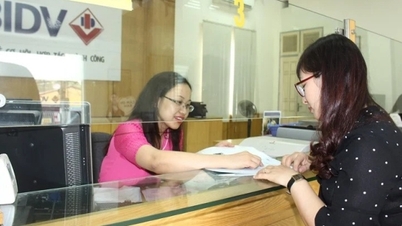
Similarly, BIDV currently offers a minimum home loan interest rate of 9.7%/year for the first 6 months, or 10%/year for 12 months, and up to 13.5%/year for a fixed-term 18-month package.
VietinBank has also raised interest rates on home loan packages, fixed for 24 months, exceeding 12% per year, while Agribank maintains a lower rate, ranging from 8-9.8% per year.
In the private banking sector, initial interest rates for home loans are generally more competitive, but the main difference lies in the formula for calculating the floating interest rate after the initial preferential period.
Accordingly, Techcombank currently offers a fixed interest rate loan package of 9.5% per year for the first 12 months, after which it will be calculated based on the 13-month term savings interest rate plus a margin of 3.5%.
 |
Interest rates on home loans have increased at many banks. Photo: Quynh Danh. |
VIB offers loan packages with interest rates ranging from 9.5% to 12% per year, depending on the fixed interest rate period. OCB currently applies an interest rate of 10.75% per year for home loans with a fixed interest rate for the first 6 months; or 11.5% per year for the first 12 months, after which it is calculated based on the 13-month base interest rate plus a margin of 3.25-3.5%. MB and ACB are currently among the banks with relatively competitive preferential interest rates, ranging from 9-9.5% per year (MB) and 9.5-10.5% per year (ACB) applied during the initial period of the loan.
Homebuyers face double pressure.
According to an analysis by Vietnam Investment Credit Rating Joint Stock Company (VIS Rating), the main reason for the increase in mortgage interest rates is the rising cost of capital for banks. After a long period of easing to support post-Covid-19 economic recovery, banks were forced to raise savings interest rates to retain deposits, thereby increasing the cost of lending.
Furthermore, real estate credit remains tightly controlled. The 2026 housing sector report by VIS Rating indicates that the State Bank of Vietnam continues to maintain its policy of restricting capital flows into real estate to reduce systemic risk. In the context of tightened credit while demand for home loans remains high, interest rates tend to increase according to the law of supply and demand.
VIS Rating forecasts that the average mortgage interest rate in 2026 could be 3-4 percentage points higher than the previous year. At the same time, the apartment absorption rate has decreased to 95% in 2025, reflecting a more cautious sentiment among buyers due to the pressure of capital costs.
Homebuyers are now facing pressure from both sides. House prices in Hanoi and Ho Chi Minh City have risen by around 20% year-on-year, while borrowing costs have also escalated. The combination of these two factors has led to a sharp increase in the overall cost of home ownership.
For example, with an apartment worth 3 billion VND , a buyer borrowing 70% of the property value, equivalent to 2.1 billion VND over 20 years, would have to pay approximately 20-21 million VND per month if the interest rate is 10% per year. When the floating interest rate increases to 13-14% per year, the monthly payment could increase by an additional 5-7 million VND.
Source: https://znews.vn/lai-vay-mua-nha-tang-post1656040.html

![[Photo] First session of the 14th Congress of the Vietnam Trade Union](https://vphoto.vietnam.vn/thumb/1200x675/vietnam/resource/IMAGE/2026/06/03/1780465947883_ndo_br_img-3852-jpg.webp)

![[Photo] General Secretary and President To Lam presides over a meeting with the Central Organizing Committee.](https://vphoto.vietnam.vn/thumb/1200x675/vietnam/resource/IMAGE/2026/06/03/1780482764658_a1-bnd-4741-3342-jpg.webp)
![[Photo] Secretary of the National Assembly Party Committee, Chairman of the National Assembly presides over the meeting of the Standing Committee and Executive Committee of the National Assembly Party Committee.](https://vphoto.vietnam.vn/thumb/1200x675/vietnam/resource/IMAGE/2026/06/03/1780480353201_ndo_br_bnd-2585-jpg.webp)

















































![[Video] Sunset at Lap An Lagoon – Where the sun sets over the fishing nets](https://vphoto.vietnam.vn/thumb/1200x675/vietnam/resource/IMAGE/2026/05/31/1780192137701_beach-landscape-sea-water-nature-grass-745871-pxhere-com.jpeg)








































Comment (0)