

 |
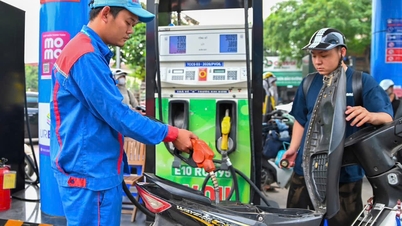
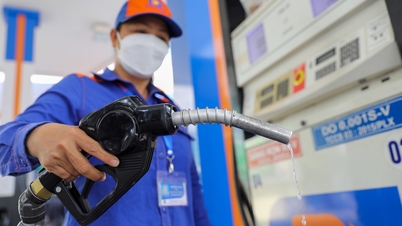
When E10 gasoline officially began circulating on June 1st, many car and motorbike users in Vietnam were still wondering whether their vehicles were compatible with E10 gasoline.
In this article, Tri Thức - Znews suggests several methods to help users check if their vehicle is compatible with this type of biofuel.
Consult with the manufacturer's technician.
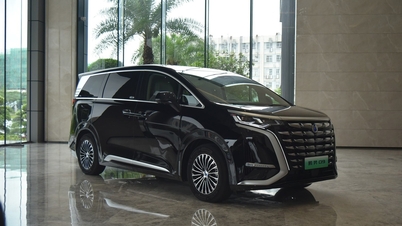
One option that customers may prefer is to contact the technical team of the car manufacturer where they own the vehicle.
The technicians from the manufacturers will be the ones who have thorough knowledge of the engine, the compatibility of E10 gasoline for each car model and year, and a deep understanding of the potential risks that may arise during the use of biofuel.
 |
Car owners should consult with a manufacturer's technician to determine compatibility with E10 biofuel. (Illustrative image: Phuong Lam) |
Therefore, consulting with a manufacturer's technician will give car owners peace of mind regarding their vehicle's compatibility with E10 gasoline.
The team of technicians will also provide users with specific instructions on maintenance, using E10 bioethanol fuel to optimize performance, minimize risks, and ensure warranty coverage for the vehicle when needed.
See the user manual.
As mentioned in previous articles by Tri Thức - Znews , different manufacturers will have different ways of informing customers about the compatibility of their vehicle engines with E10 bioethanol fuel.
Some manufacturers have announced that all cars currently sold in Vietnam are compatible with E10 gasoline, while others have issued specific recommendations for different engine types, such as fuel-injected (FI) engines or vehicles using carburetors. A few manufacturers have promptly listed specific compatible vehicles, while others have indicated models whose compatibility with E10 gasoline cannot yet be determined.
In addition to the information above, each vehicle owner can also proactively refer to the owner's manual that came with their vehicle to learn about its compatibility with E10 gasoline.
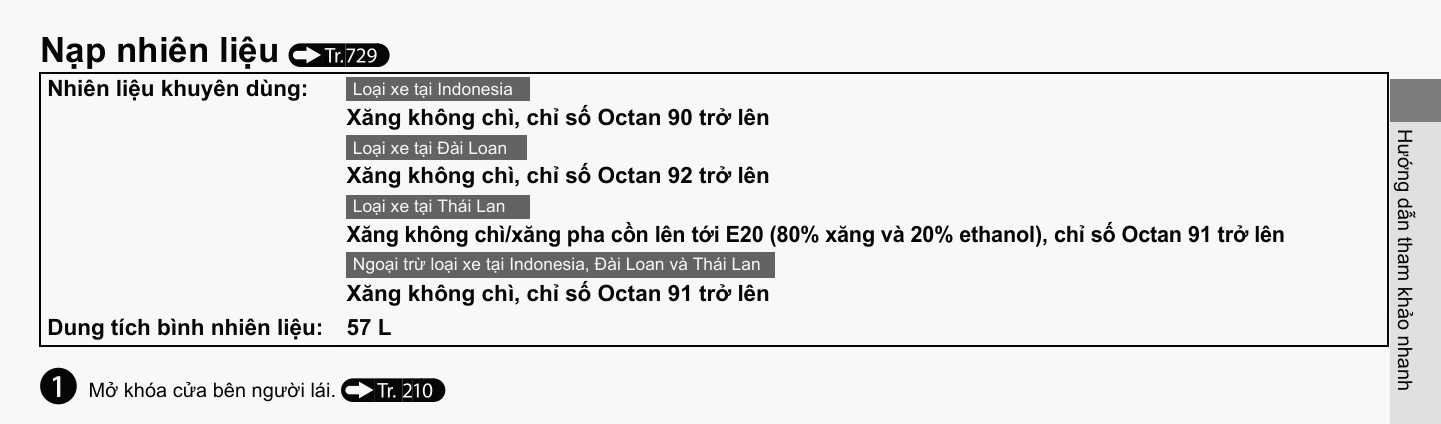 |
The vehicle's owner's manual will include a note about the recommended fuel type. |
For example, the Honda CR-V e:HEV owner's manual clearly states that for vehicles imported from Thailand, the suitable fuel is unleaded gasoline or ethanol-blended gasoline up to E20, with an octane rating of 91 or higher.
Similarly, the owner's manual for the Toyota Yaris Cross also mentions that it can use ethanol-blended gasoline with a maximum ethanol content of 10%, meaning it is compatible with E10 bioethanol fuel. Toyota also notes that the ethanol-blended gasoline must have an octane rating of 90 or higher.
In the Hyundai Creta owner's manual, the manufacturer advises customers to use unleaded gasoline with an octane rating of 91 or higher. Regarding the use of gasohol – described in the manual as a mixture of gasoline and ethanol – Hyundai recommends that customers avoid using gasohol containing more than 10% ethanol.
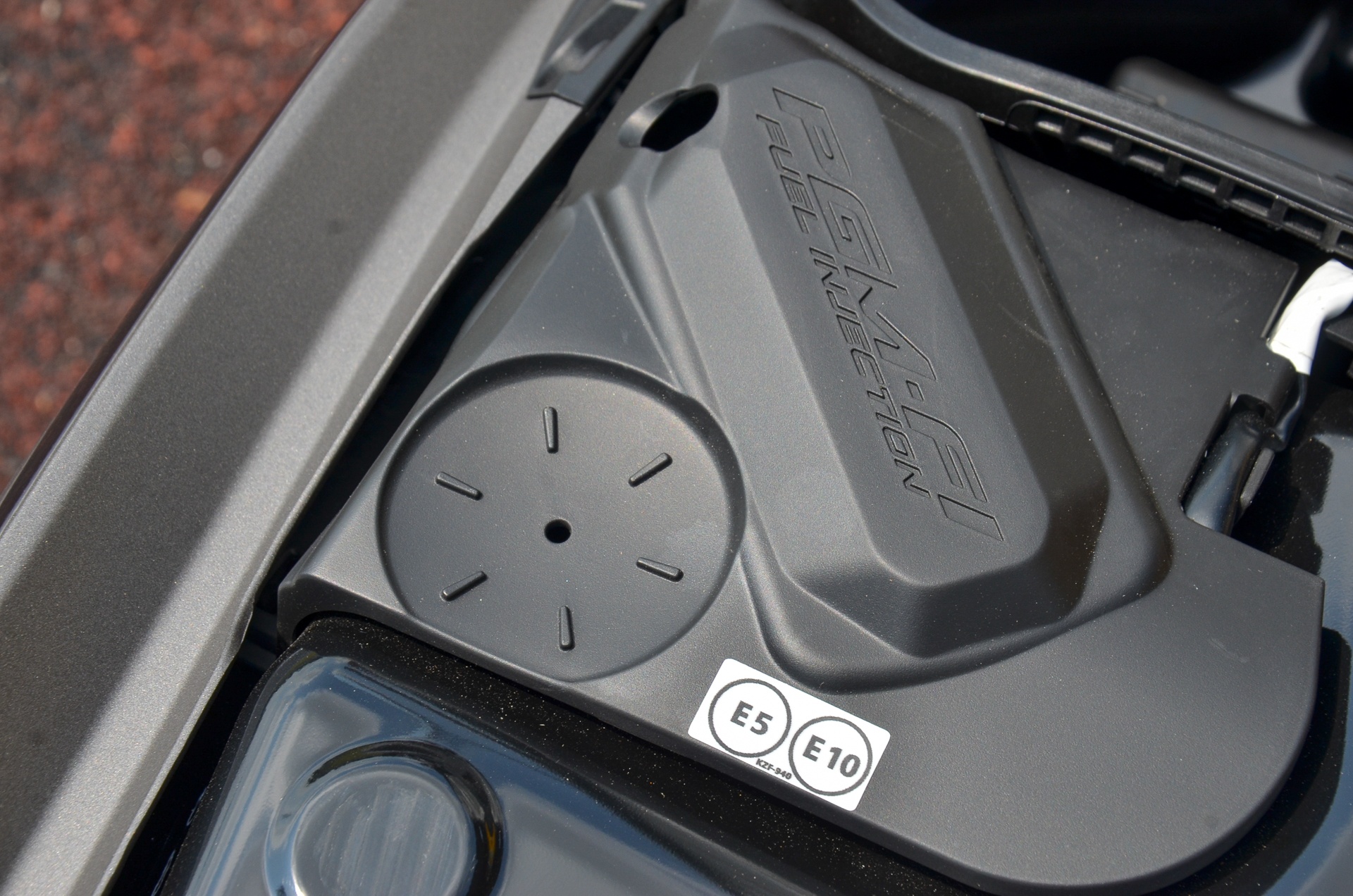 |
The E5 or E10 label near the fuel tank cap indicates whether the vehicle is compatible with E10 gasoline. Photo: Phuc Hau. |
Some imported motorcycles or cars in Vietnam have E5 or E10 labels near the fuel tank cap. These labels indicate that the vehicle is compatible with bioethanol fuel, which has an ethanol blend ratio of 5% or 10%, respectively. Users can observe these labels to get a general idea of their vehicle's compatibility with E10 fuel.
Online lookup
One way Vietnamese customers can check the compatibility of E10 gasoline is by searching on a website called XăngE10 (E10 Gasoline).
This website currently stores data on the E10 biofuel compatibility of over 880 cars and motorcycles in Vietnam. The website's creators state that the data is compiled from official announcements by 42 car manufacturers in Vietnam, the Vietnam Registering and Inspection Department, and updated information from the press.
This website also notes that the information provided here is for reference only and does not replace the manufacturer's recommendations. Users are advised to contact an authorized dealer immediately if in doubt.
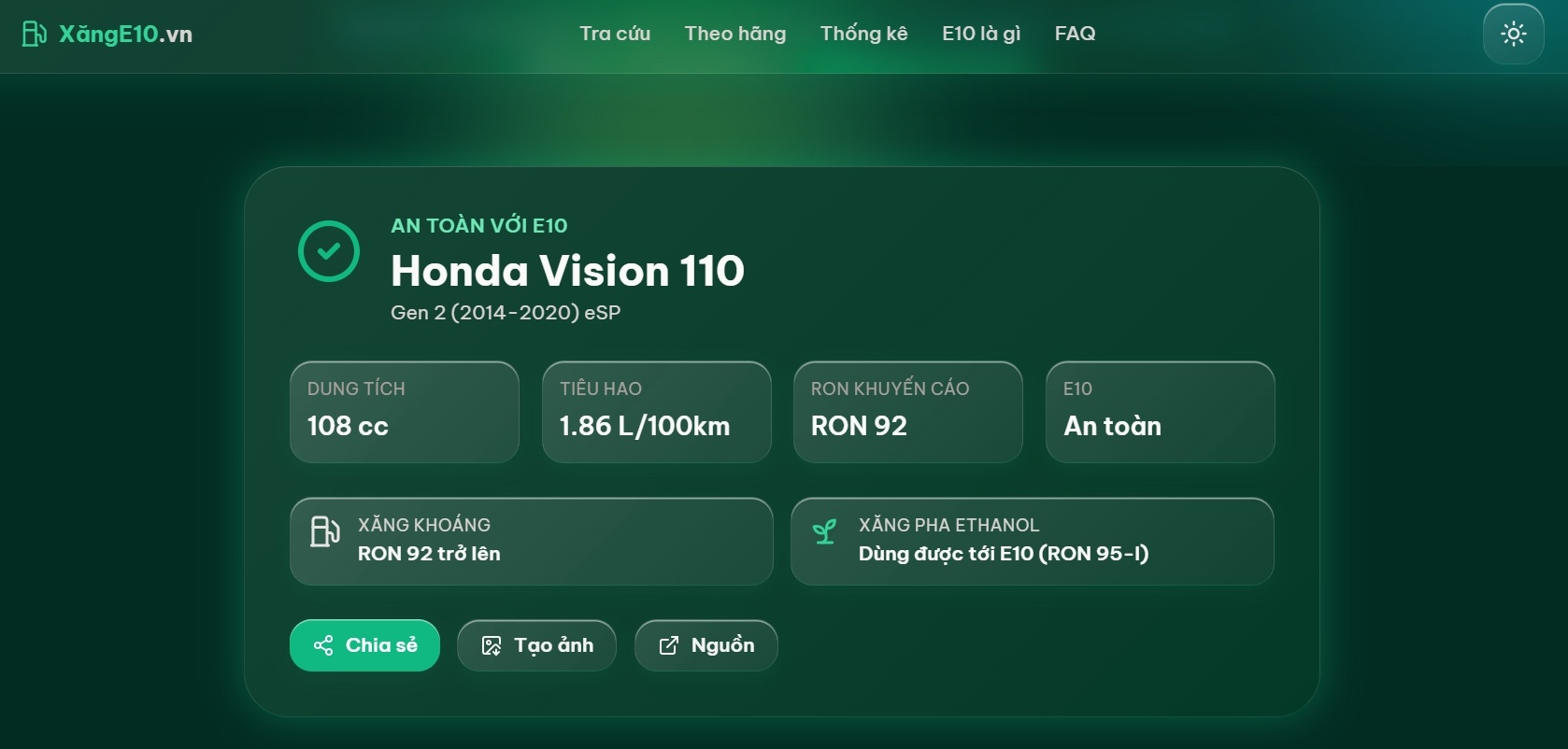 |
The information displayed on the website is for users to refer to. |
To search, users simply enter the vehicle name, then check the model year to select the appropriate option. The information displayed during the search includes safety with E10 gasoline, engine displacement, fuel consumption, recommended octane rating of the gasoline, and the maximum ethanol blending ratio in biofuel as recommended by the manufacturer.
On this website, users can also view a list of 51 vehicles that are not recommended to use E10 gasoline, or a list of 25 vehicles that require further testing for E10 compatibility. However, please note that all data on this website is for reference only and does not replace the recommendations provided by the manufacturers.
In general, car manufacturers operating in Vietnam say that most cars and motorcycles are compatible with E10 bioethanol fuel, and customers do not need to install additional equipment, make technical adjustments, or change special maintenance procedures when using this bioethanol fuel.
For older models, customers are advised to check compatibility with a manufacturer's representative, consult the owner's manual, or refer to the aforementioned compatibility check website. Users should also maintain their vehicles according to the manufacturer's recommended schedule to ensure optimal and stable vehicle performance.
Source: https://znews.vn/lam-cach-nao-biet-xe-dang-dung-co-tuong-thich-xang-e10-post1656314.html

![[Photo] General Secretary and President To Lam presides over a meeting on preparations for the review of one year of operation of the three-tiered government system.](https://vphoto.vietnam.vn/thumb/1200x675/vietnam/resource/IMAGE/2026/06/02/1780391821195_a1-bnd-4595-9717-jpg.webp)





















































































Comment (0)