

Tranh Khuc village, located in Duyen Ha commune, Thanh Tri district, about 20km south of Hanoi city center, is known for its traditional rice cake (banh chung) making.
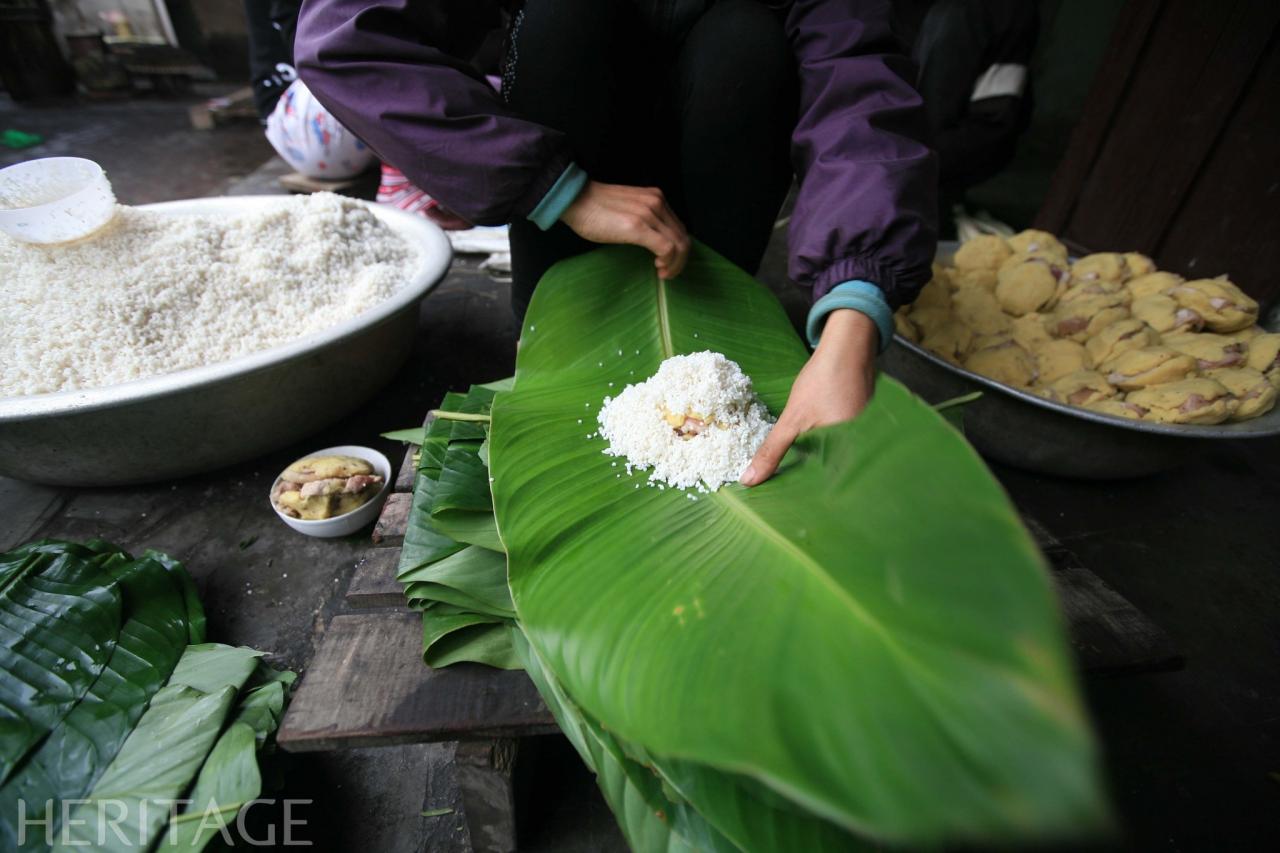
To this day, the sticky, fragrant banh chung (Vietnamese rice cakes) from Tranh Khuc are not only popular among Hanoi residents but are also well-known in many other places. Professional banh chung makers in Tranh Khuc don't need molds to make perfectly square, even, and beautiful cakes. When wrapping, the workers usually wrap tightly, following the correct specifications and weight, and cook for the right amount of time. Making banh chung may seem simple, but it actually requires high technical skill. Even a slight technical error, such as using unclean leaves, poor quality charcoal, or mixing the water at the wrong time, can affect the final product.

Making these cakes involves many steps and is done in large quantities, so most family members participate. The elderly and children wash and arrange the leaves, and mash the beans, while the younger generation handles the more technical and physical tasks.
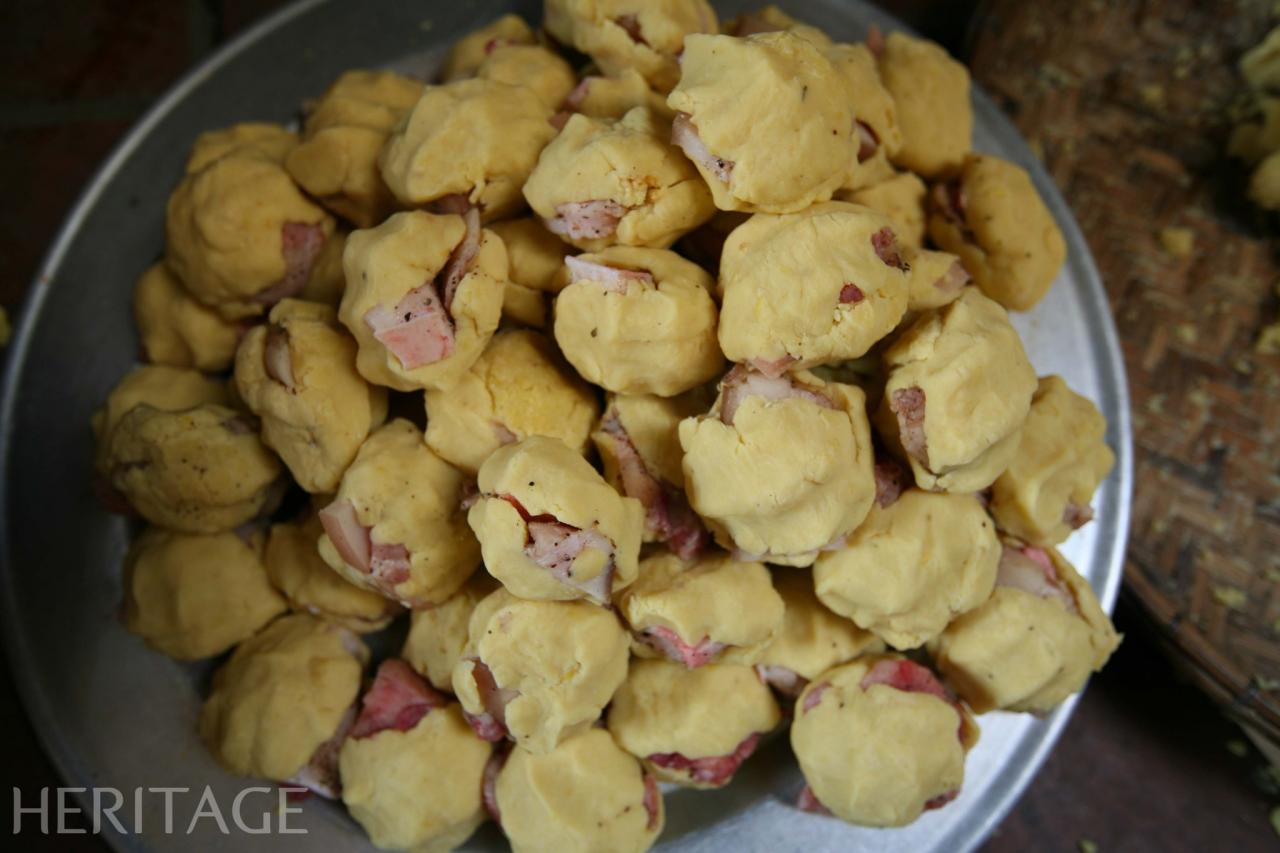
The village's secret to making banh chung (Vietnamese sticky rice cake) also lies in the ingredients: sticky rice, mung beans, and pork wrapped in dong leaves. However, making delicious banh chung requires meticulous attention to detail, from selecting the leaves, rice, and beans.
 Even something as simple as choosing the number of leaves depends on the weather. If the weather is favorable and cold, just enough leaves are needed, usually 6 leaves per wrap. But when it's humid and hot, you have to wrap it more thickly, sometimes 10 leaves. This will help preserve the cake better.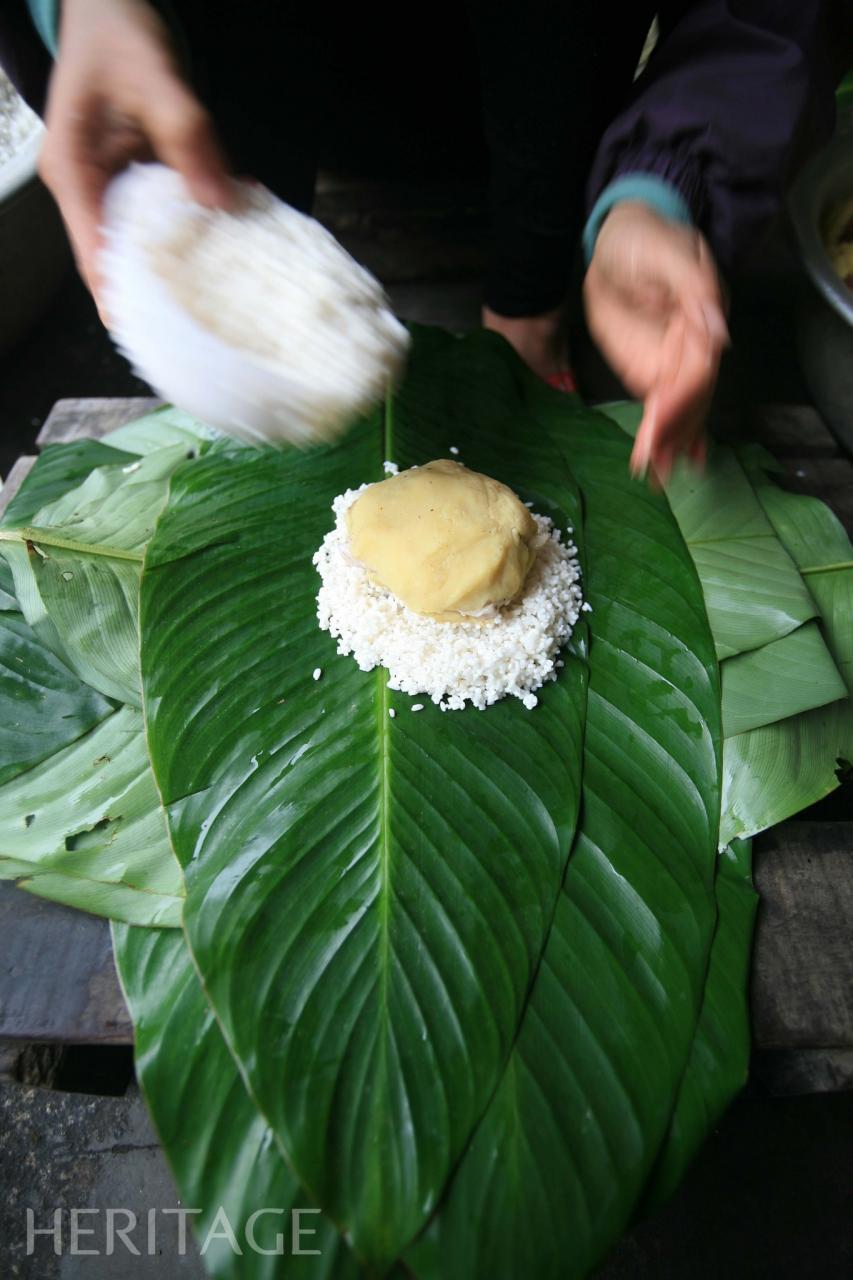
The villagers usually choose the glutinous rice variety from Hai Hau to make the filling for the cakes because the rice from this region has round, fragrant, sticky, white, uniform grains that don't break easily. Before wrapping the cakes, they only need to wash the rice an hour beforehand and let it drain; soaking it overnight is not necessary. The mung beans must also be of good quality and sticky. In the past, before pre-crushed mung beans were available, the villagers used to choose the dark-colored, pepper-sized mung beans, which were tastier and more fragrant than the larger, softer, and stickier beans.
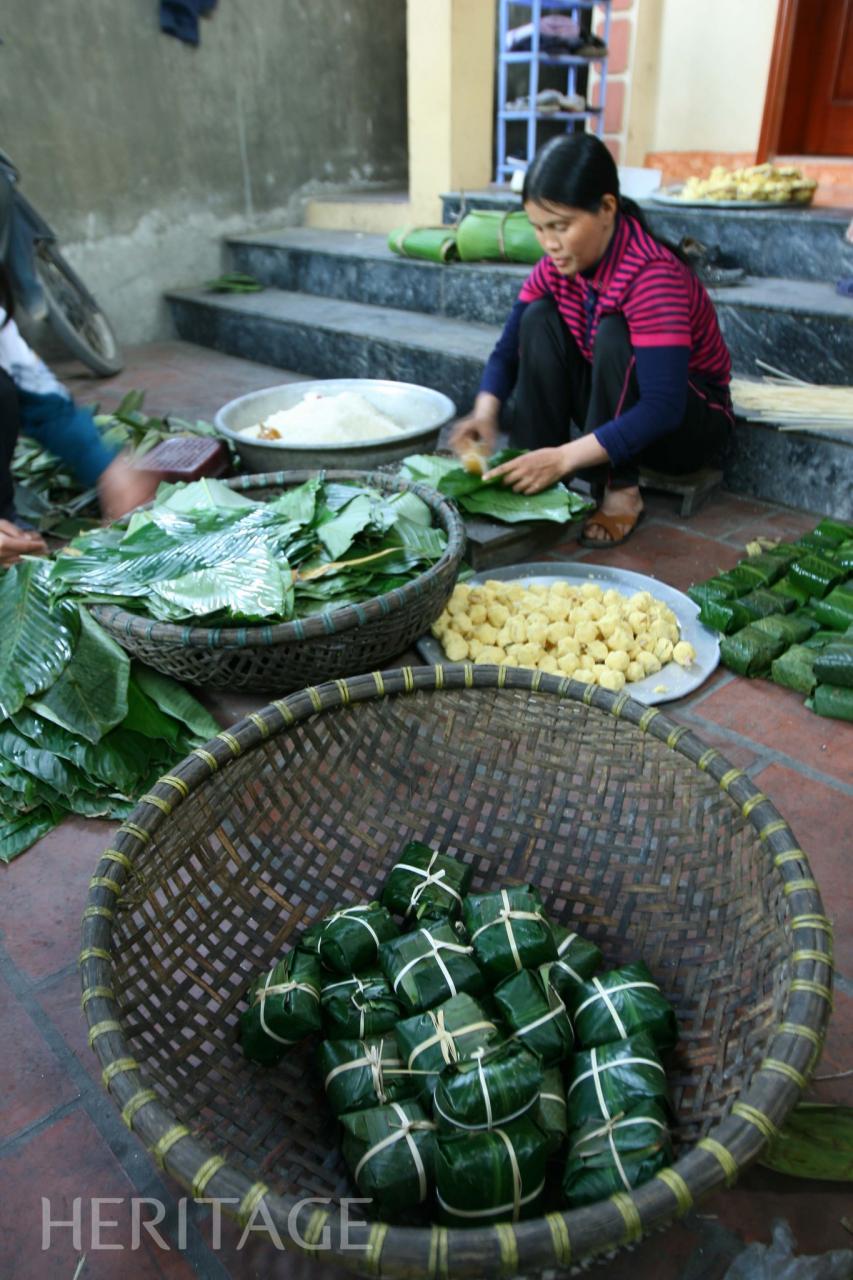
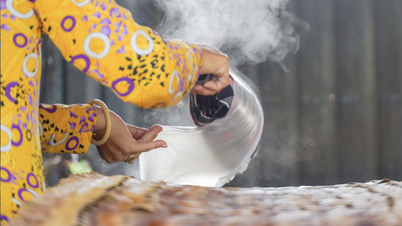
The deliciousness and richness of banh chung (Vietnamese sticky rice cake) partly depend on the pork, usually pork belly. When preparing the filling, the meat is blanched in hot water before slicing; this ensures the meat is clean and firm. It's then seasoned with pepper, fish sauce, and salt. The cakes must be tightly wrapped and tied before being boiled for 8-10 hours. Once cooked, the bakers usually rinse them with cold water to clean them and prevent the leaves from drying out. Then, a bamboo mat is used to press the cakes down so they expand evenly, ensuring all corners are firm. The leaf preparation is usually done in the morning, wrapping in the afternoon, and cooking in the late afternoon. Every household's stove burns brightly all night. In the morning, the cakes are taken out, pressed, and shipped. A good banh chung should be firm when sliced, but the rice grains should be soft and chewy, with a fragrant and rich flavor.
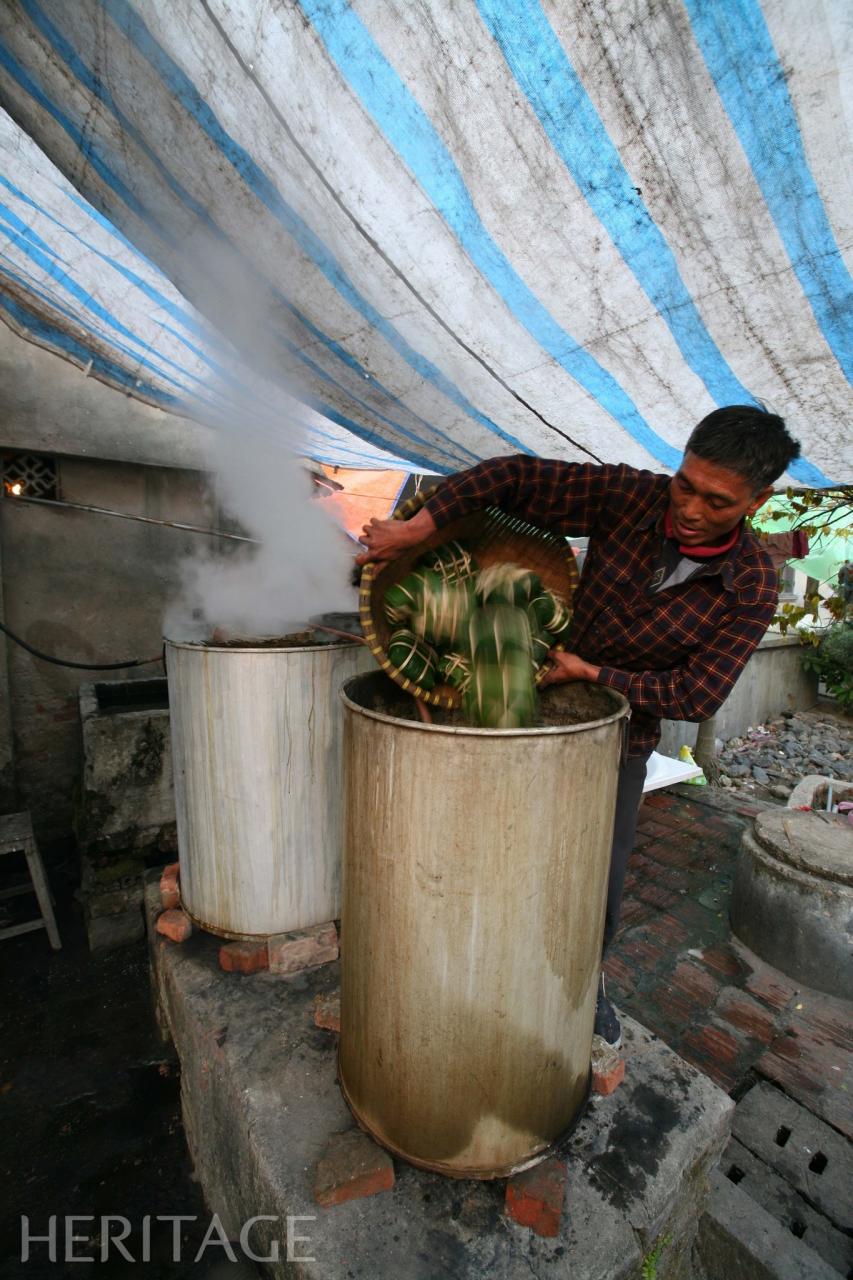
The spring atmosphere has permeated every corner of Hanoi, and therefore, the villagers are busier than ever with wrapping and transporting rice cakes to various streets and neighborhoods, serving the needs of the capital's residents for Tet shopping and celebrations.





































![[Video] Sunset at Lap An Lagoon – Where the sun sets over the fishing nets](https://vphoto.vietnam.vn/thumb/1200x675/vietnam/resource/IMAGE/2026/05/31/1780192137701_beach-landscape-sea-water-nature-grass-745871-pxhere-com.jpeg)






















Comment (0)