

Cultural heritage in the heart of Hanoi
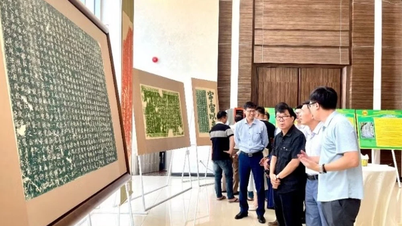
Bac Bien Pagoda, also known as An Xa Tu, later called Phuc Xa Pagoda, houses a large bronze bell, 1.2 meters high and 0.65 meters in diameter at the base, cast in the year Canh Ngo, the 11th year of the Chinh Hoa reign (1690). Remarkably, the entire bell is densely inscribed with over 5,500 Chinese characters, preserving the content of nine royal decrees from various dynasties: from Mac Quang Hoa (1544-1545) to Le Trung Hung (Vinh To, Duc Long, Phuc Thai, Thinh Duc, Chinh Hoa). The most significant value lies in the decree from the first year of the Thinh Duc reign (1653). The inscription clearly states: “The Secretary of the Imperial Secretariat, Court Officer, and Marquis of Quan Chau bestowed the four-nation surname Ly Thuong Kiet… Annually, the land is established as the ancestral land.” This is the official document from the imperial court confirming that An Xa village (the old name of Phuc Xa - Bac Bien) is the birthplace of the Grand Marshal of Viet Quoc Cong Ly Thuong Kiet.
The royal decree also recounts King Ly Thai To's relocation of the capital from Hoa Lu to Dai La in 1010: An Xa village, originally located within the Thang Long citadel, obeyed the order to move to the sandbank in the middle of the Red River to make way for the construction of the capital. The villagers, lacking rice paddies, lived by cultivating mulberry trees and raising silkworms, and were granted exemption from all taxes, dike maintenance, and military service by the king.
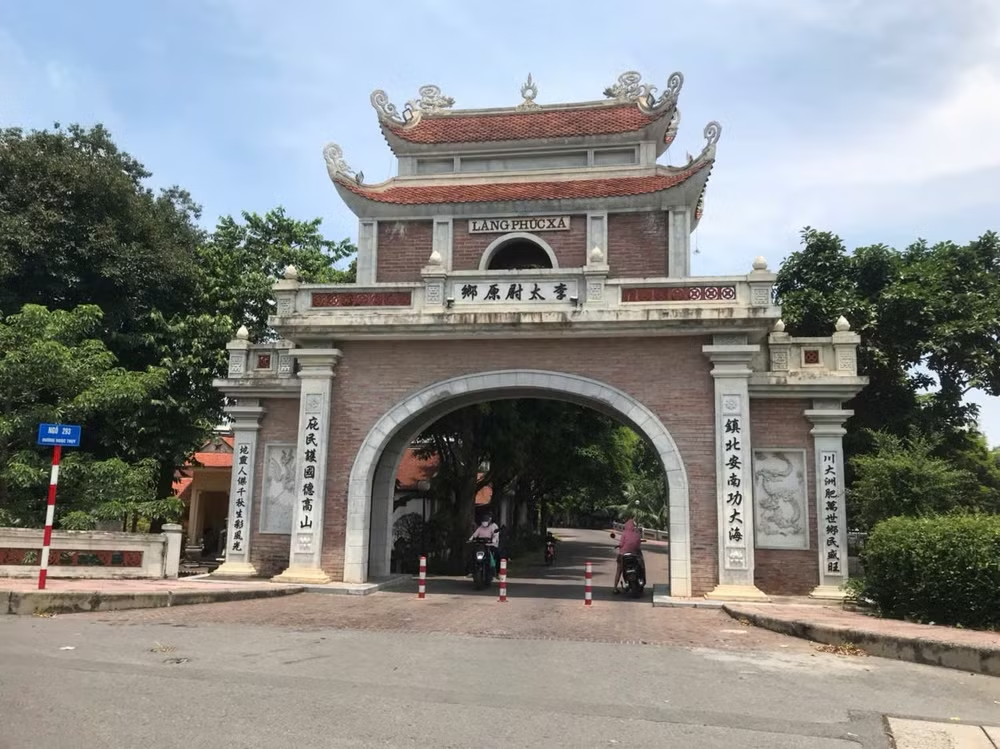
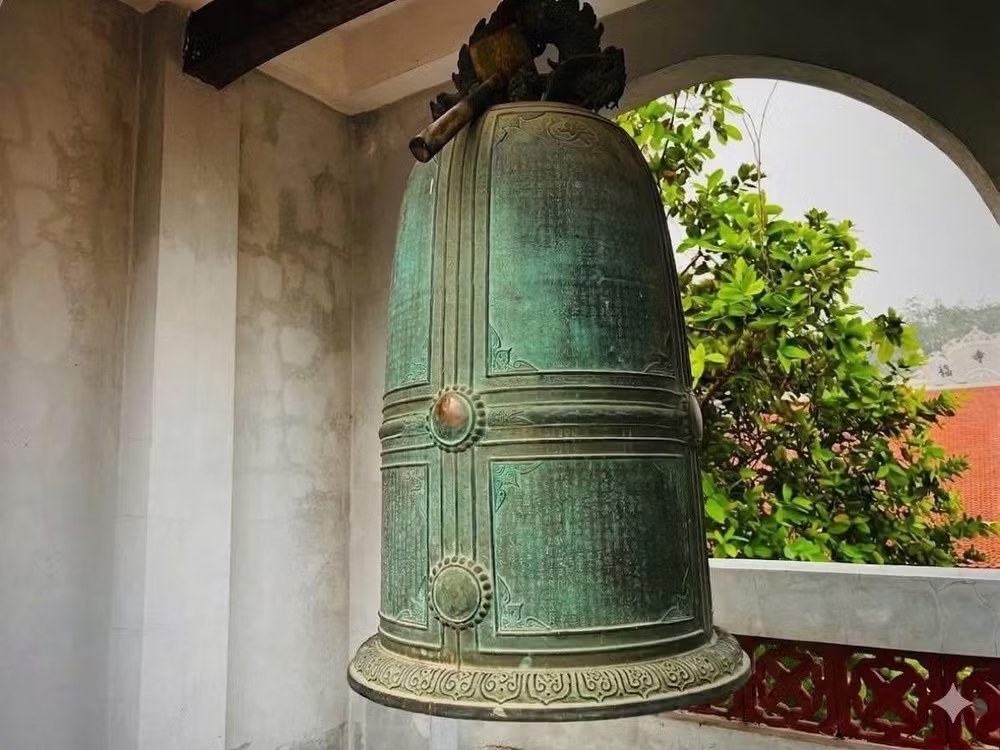
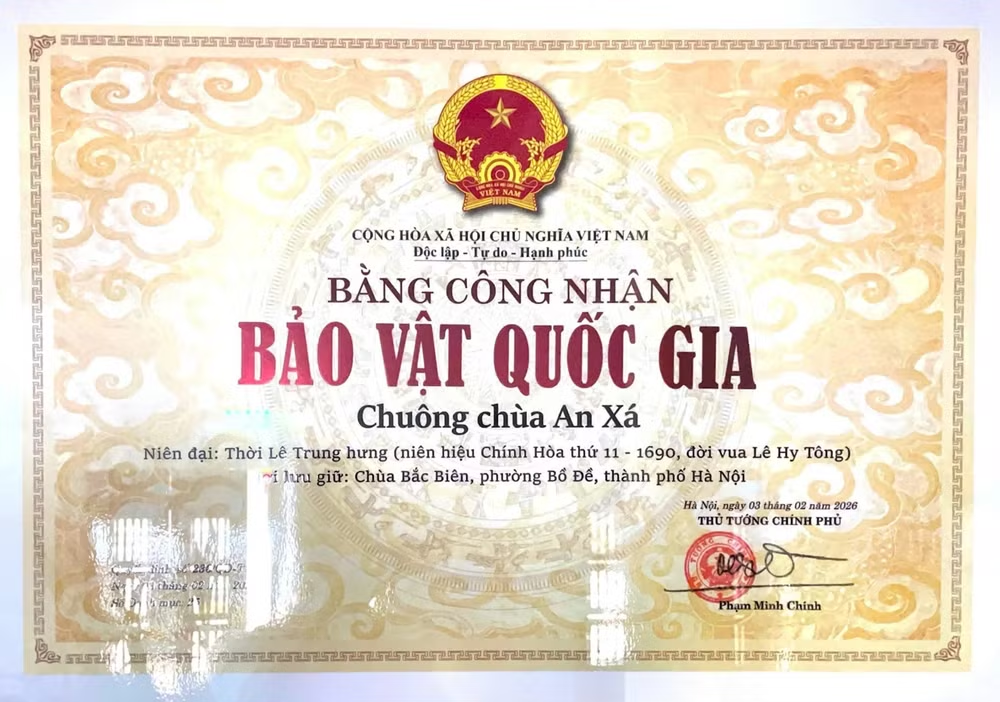
Most ancient bells in Vietnam only have inscriptions, dates, or the names of benefactors engraved on the outer surface of the bell. However, with the An Xa ancient bell, the ancient script is meticulously cast and engraved, deeply recessed into both the outer surface and the entire interior space of the bell.
The entire system of inscriptions recording the history of the village's founding, the privileges of the alluvial land, and especially the content of nine royal decrees from various feudal dynasties, are all fully engraved within the bell. This bell is a priceless "bronze chronicle," the highest legal evidence from the feudal era acknowledging the sovereignty over the alluvial land, the legitimate and long-standing residential territory of the people of Phuc Xa.
Bac Bien is also the birthplace of Grand Marshal Ly Thuong Kiet (1019 - 1105) - the greatest general of the Ly Dynasty, author of the poem "Nam Quoc Son Ha," considered the first Declaration of Independence of the Vietnamese nation. He commanded the victorious "Preemptive Strike" attack, directly assaulting Song territory, destroying all enemy logistical bases and storage depots in the three provinces of Ung, Kham, and Liem to halt the Song invaders' strength (1075 - 1076). This was a proactive self-defense counterattack into enemy territory in Vietnam's history of resistance against foreign invasion, shaking the Song court and defeating the invading Song army at the Nhu Nguyet River defense line (1077), firmly protecting the independence of Dai Viet. At Phuc Xa communal house, where Ly Thuong Kiet is worshipped, it's evident that the worship isn't "reverence from afar," but rather a direct tribute to him in his birthplace, honoring him as a talented son of his homeland.
Next to the pagoda is Phuc Xa Temple, also known as Bac Bien Temple, situated on a spacious, elevated plot of land facing an ancient lotus pond. The temple is dedicated to three village guardian deities: Minh Khiet Dai Vuong, Bao Trung Dai Vuong, and Hieu Cong Dai Vuong; and two princesses, Hung Nuong and Hao Nga, who transported food supplies for King Ly Thanh Tong.
Along with the worship of various deities, the temple also houses the shrine of General Dao Ky, a great marshal under the Trung Sisters, revered as the Valiant and Benevolent King. General Dao Ky bravely sacrificed himself at Co Loa in 43 AD and has been worshipped by the villagers for generations. As for Grand Marshal Ly Thuong Kiet, the villagers have honored him as the village's guardian deity and ancestral figure. The temple also preserves a pair of couplets inscribed with his merits: "Defeating the Song, pacifying the Champa, supporting the Ly dynasty / Helping the people and saving the country, bringing glory to Co village."
Upon entering Phuc Xa Temple, the connection between the ancient village space and the spirit of Ly Thuong Kiet evokes deep emotion. Unlike other opulent temples, the space here retains the tranquil atmosphere of the alluvial plain along the river. The couplets praising the military achievements of Grand Marshal Ly Thuong Kiet are not merely dry historical records, but a source of pride passed down through generations of villagers, recounting the story of their "outstanding son." This very element of "worshiping him in his ancestral homeland" elevates the historical and archaeological value of the Bac Bien (Ngoc Thuy) relic complex, transforming it into a vibrant living museum of the Ly Dynasty.
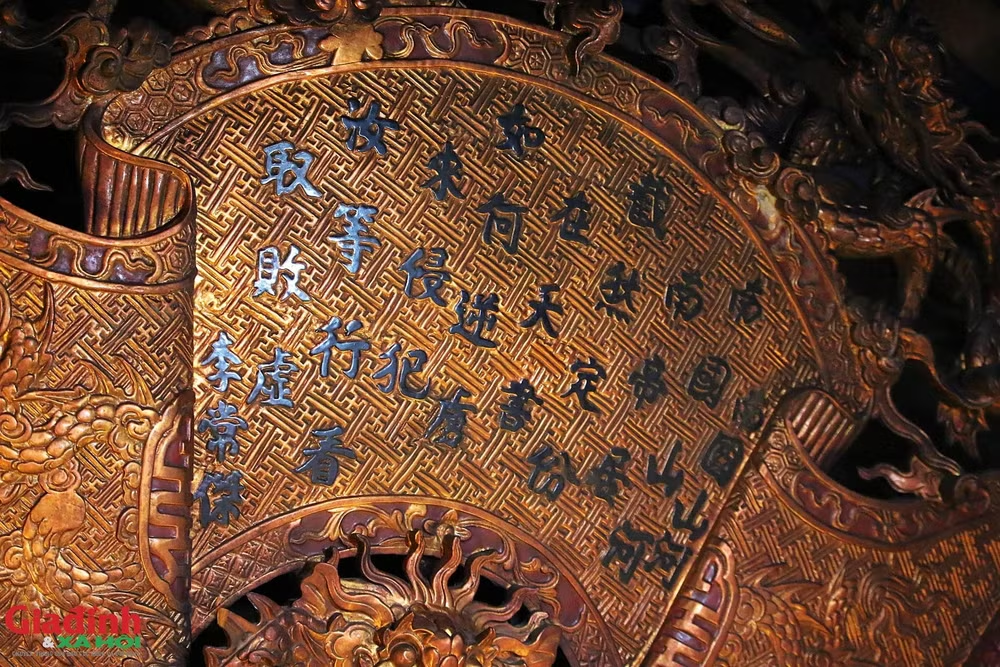
What is particularly noteworthy is that Bac Bien village also possesses spiritual value with its diverse and distinctive structure of well-preserved communal houses, temples, and shrines. Besides the historical complex of communal houses and temples within a narrow geographical area, the village also boasts many famous and long-standing religious structures. These temples clearly reflect the unique characteristics of the local inhabitants. Along with Phuc Xa communal house, surrounding Bac Bien village are the Rung Temple (dedicated to the Mother Goddess Thuong Ngan), the Nui Temple, the Mau Thoai Temple (dedicated to the Mother Goddess who governs rivers and waters), and the Duc Ong Temple.
This is not a random collection of places of worship, but a deliberate spiritual structure based on the ancient Vietnamese worldview: Mau Thoai is associated with the Red River, Mau Thuong Ngan adds the element of mountains and forests, Ly Thuong Kiet represents the element of human heroism – a national hero, and the village communal house is the central deity protecting the community. This structure of Heaven – Earth – Humanity, Mountain – Water – Humanity fully reflects the consciousness and worldview of the Vietnamese people in the Red River Delta. Notably, the worship of the Three and Four Mother Goddesses was recognized by UNESCO as an Intangible Cultural Heritage of Humanity in 2016, and the Mau Thoai Temple in Bac Bien is one of the rare original Mau Thoai temples in Hanoi – that is, a temple dedicated to the Mother Goddess who governs the rivers and waters, situated right beside the river where she is worshipped.
Traditional festivals rich in cultural identity
Bac Bien is not only diverse in ancient relics, but it also preserves many traditional festivals that reflect the unique characteristics of the local culture. Phuc Xa communal house is not only a sacred place of worship, but also hosts annual traditional festivals such as the prayer for peace ceremony and the commemoration of the village's tutelary deity. These activities not only contribute to preserving the beauty of folk culture but also strengthen community solidarity and foster national pride in future generations; it is a significant destination for agencies, organizations, and people from all over to visit and offer incense; and it serves as a traditional educational environment for students and young people from all over to visit and learn about the tradition of "drinking water, remembering the source."
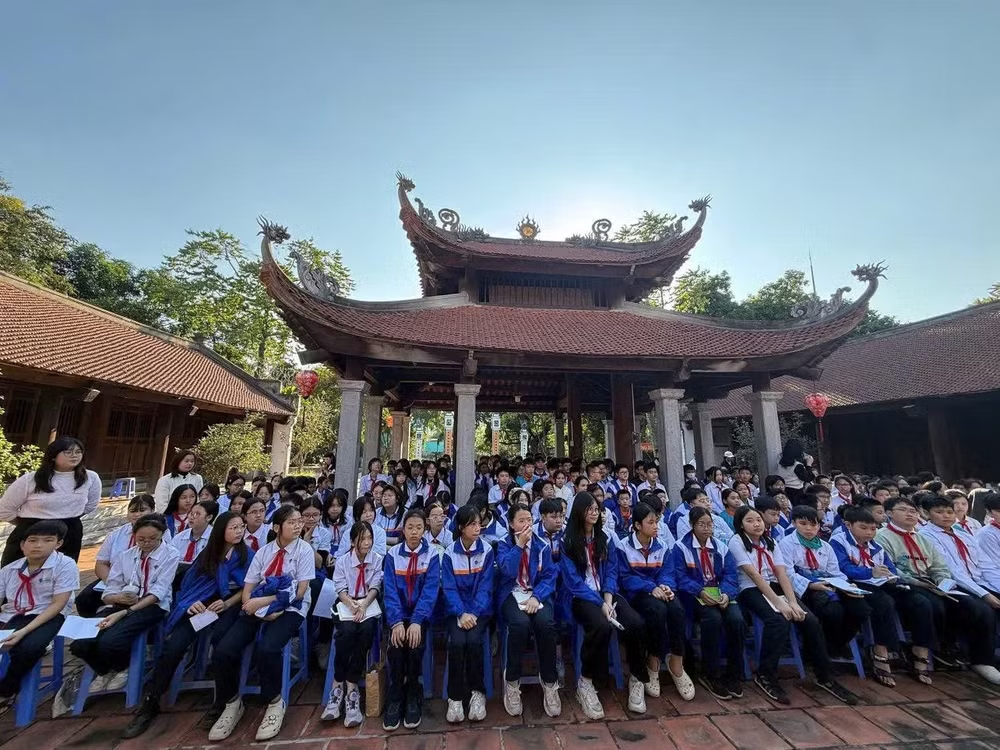
The village's traditional festival takes place on the 6th day of the 3rd lunar month and the 2nd day of the 6th lunar month every year, featuring the unique ritual of carrying water to worship the deity on the Red River and the procession of ceremonial texts. The procession of ceremonial texts holds significant cultural value, praising the great contributions of the village's patron deity, Grand Marshal Ly Thuong Kiet – the village's founding ancestor. A distinctive feature of the ceremony is the wonderful blend of spiritual rituals and civilized self-governance, becoming a strong bond that unites the consciousness of thousands of villagers across generations. During the festival days, religious and folk cultural activities are preserved, passed down, and shared with future generations as an integral part of the spiritual life of the people here.
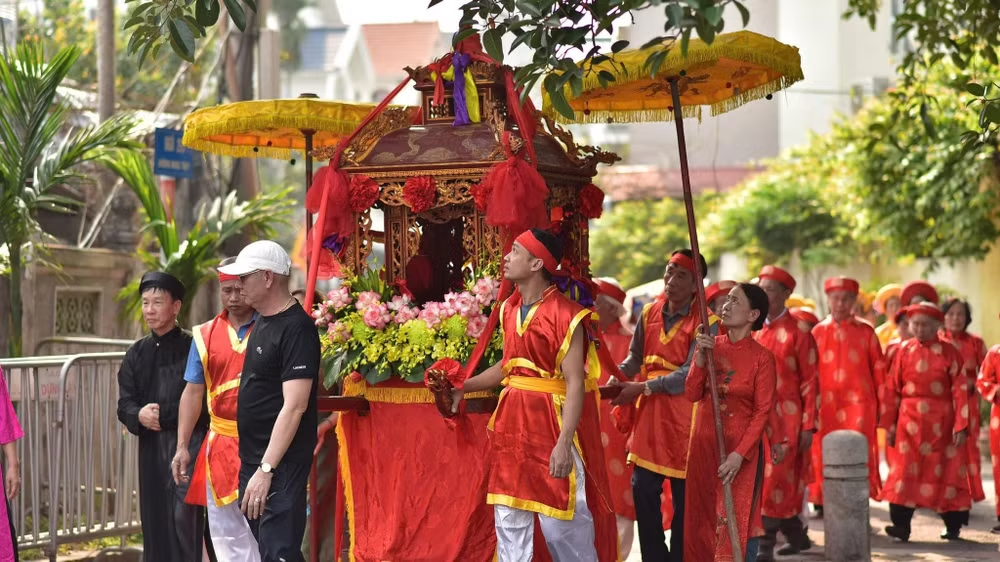
Through the vicissitudes of time, these festivals have remained intertwined, contributing to the enduring and rich cultural life of Bac Bien. The people of Bac Bien village have a tradition of patriotism and a resilient spirit in resisting foreign invaders, so throughout the thousand-year history of development, this tradition has always been nurtured, promoted, and has always preserved the essence of the land and people of Thang Long - Hanoi.
Keywords:
Source: https://congluan.vn/lang-co-bac-bien-dau-an-lich-su-va-van-hoa-ngan-nam-post348517.html
![[Photo] General Secretary and President To Lam presides over a meeting with the Central Organizing Committee.](https://vphoto.vietnam.vn/thumb/1200x675/vietnam/resource/IMAGE/2026/06/03/1780482764658_a1-bnd-4741-3342-jpg.webp)

![[Photo] Secretary of the National Assembly Party Committee, Chairman of the National Assembly presides over the meeting of the Standing Committee and Executive Committee of the National Assembly Party Committee.](https://vphoto.vietnam.vn/thumb/1200x675/vietnam/resource/IMAGE/2026/06/03/1780480353201_ndo_br_bnd-2585-jpg.webp)


![[Photo] First session of the 14th Congress of the Vietnam Trade Union](https://vphoto.vietnam.vn/thumb/1200x675/vietnam/resource/IMAGE/2026/06/03/1780465947883_ndo_br_img-3852-jpg.webp)







































![[Video] Sunset at Lap An Lagoon – Where the sun sets over the fishing nets](https://vphoto.vietnam.vn/thumb/1200x675/vietnam/resource/IMAGE/2026/05/31/1780192137701_beach-landscape-sea-water-nature-grass-745871-pxhere-com.jpeg)





































Comment (0)